Today was a busy day and I have a lot of photos and a much information to write up.
We had a 10:30 a.m. reservation for Frank Lloyd Wright’s Falling Water situated about half an hour from our campground at Ohiopyle. We got up and out early hoping to get an earlier tour (success) as we have a lot to do and see today.
Falling Water [ src: wikipedia]
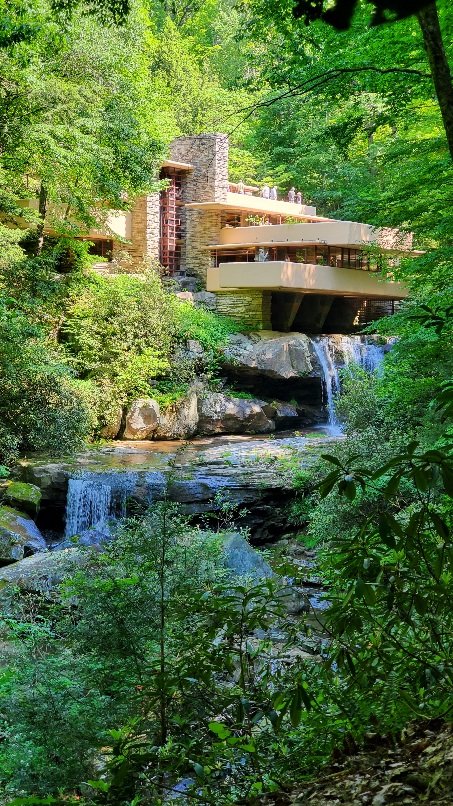
Fallingwater is a house designed by the architect Frank Lloyd Wright in 1935 in the Laurel Highlands of southwest Pennsylvania, about 70 miles (110 km) southeast of Pittsburgh. It is built partly over a waterfall on Bear Run in the Mill Run section of Stewart Township, Fayette County, Pennsylvania. The house was designed to serve as a weekend retreat for Liliane and Edgar J. Kaufmann, the owner of Pittsburgh’s Kaufmann’s Department Store.
After its completion, Time called Fallingwater Wright’s “most beautiful job” and it is listed among Smithsonian‘s “Life List of 28 Places to See Before You Die”. The house was designated a National Historic Landmark in 1966. In 1991, members of the American Institute of Architects named Fallingwater the “best all-time work of American architecture” and in 2007, it was ranked 29th on the list of America’s Favorite Architecture according to the AIA.
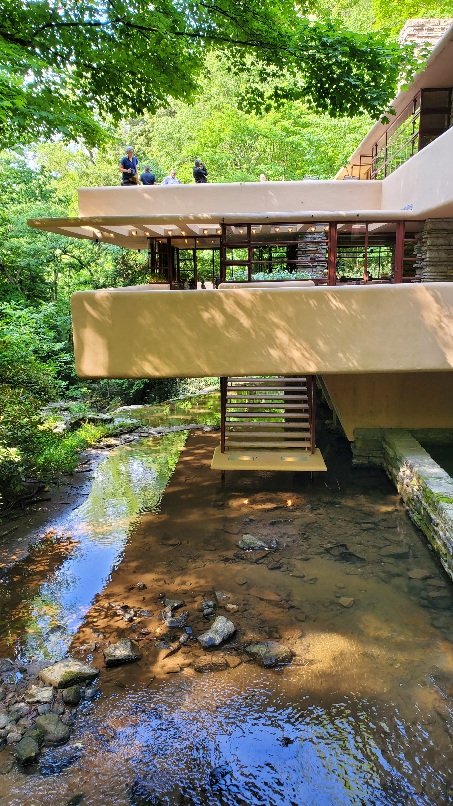
The house and seven other Wright constructions were inscribed as a World Heritage Site under the title, “The 20th-Century Architecture of Frank Lloyd Wright“, in 2019.
Comments from the writer
My personal comments only: from an artistic creative perspective this is an amazing architectural feat and should be considered a work of art. From a practical point of view the maintenance is, as a personal dwelling which this is, prohibitive in costs. All the outside decking and roofing are flat collecting leaves, water and snow that need constant removal. Areas of the interior have leaking roofs (a FLW design flaw in many of his buildings), and some of the floors are permanently wet.
Beautiful… yes. Practical… not at all.
Fallout 76, Morgantown West Virginia.
For the rest of the day, we followed the route of FO76.. Morgantown and Grafton. We had planned visiting Pricketts Fort but we didn’t have time.
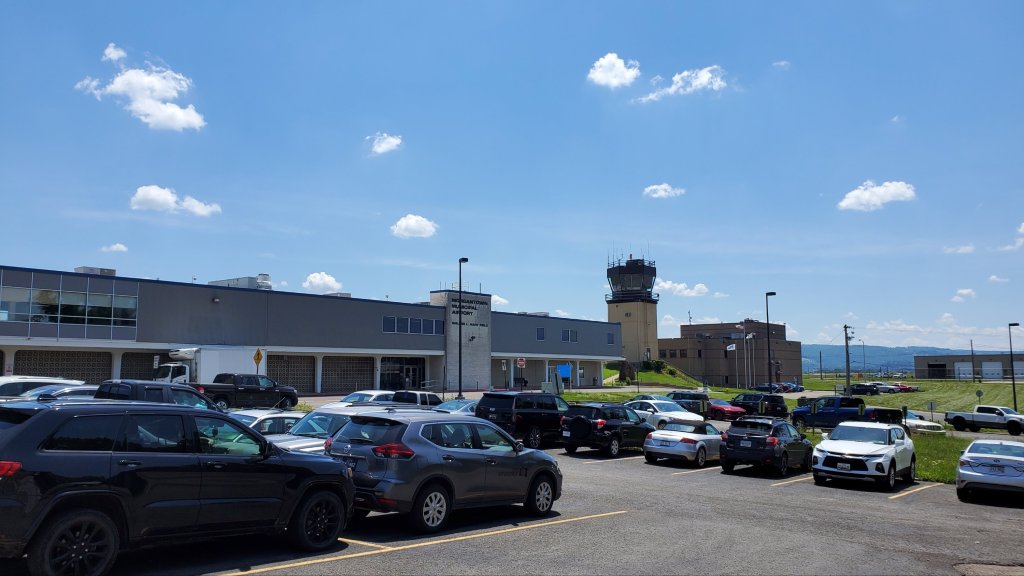
Morgantown: The only thing I was interested in here was getting a photograph of the municipal airport because I spend a lot of time here in the FO 76 game with my oldest daughter and her husband. The airport building in the game is a reasonable facsimile of the real thing minus the scorched and the military tents.
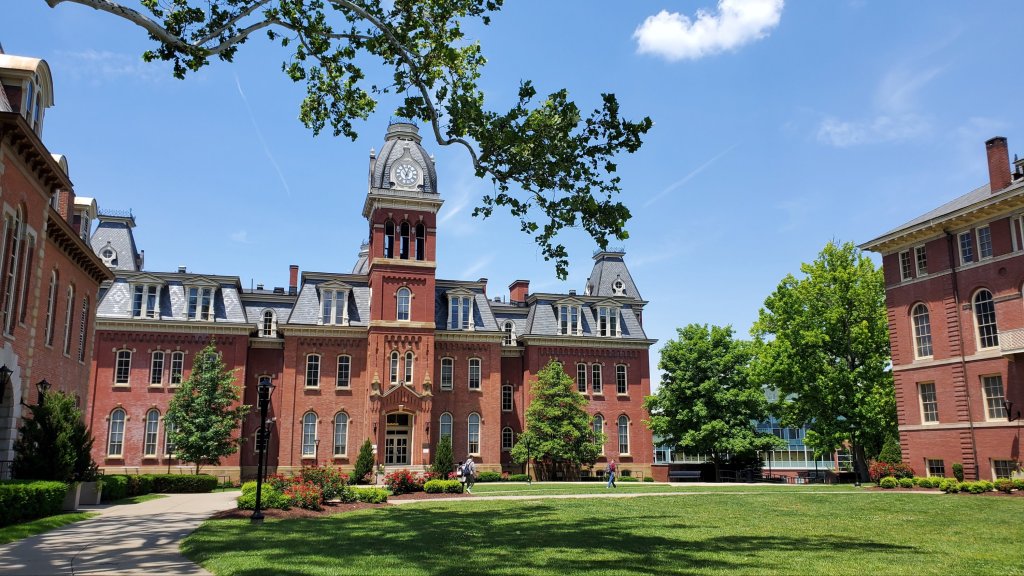
Woodburn Hall
This iconic building is part of the Woodburn Circle, a historic group of buildings in the downtown campus of West Virginia University. First known as University Hall, Woodburn Hall was constructed between 1874 and 1876 and is the largest of the circle’s buildings. The designers of the game FO 76 added their own touch to the grounds by placing their mascot, Vault Boy, as a statue in front of the hall.
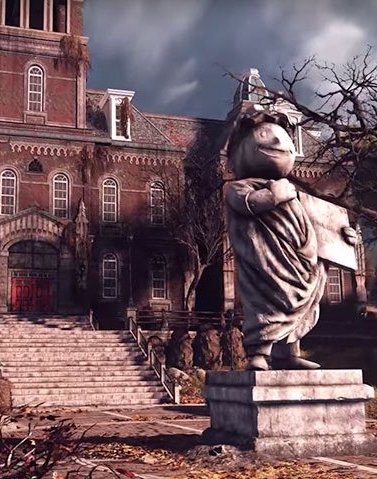
WVU is a beautiful campus.
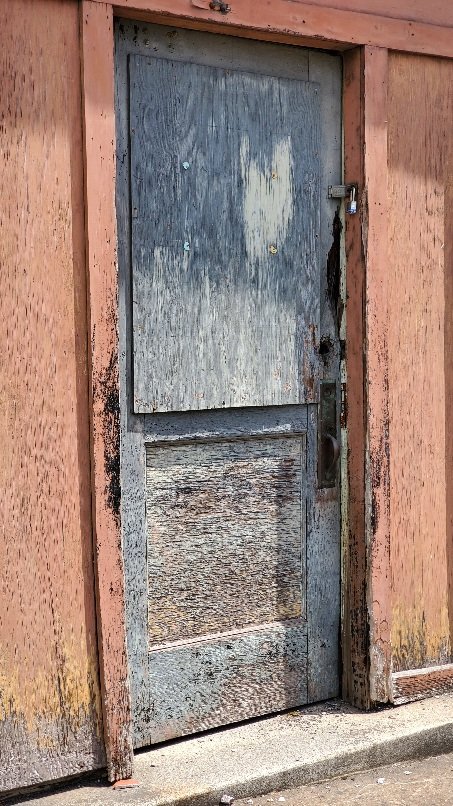
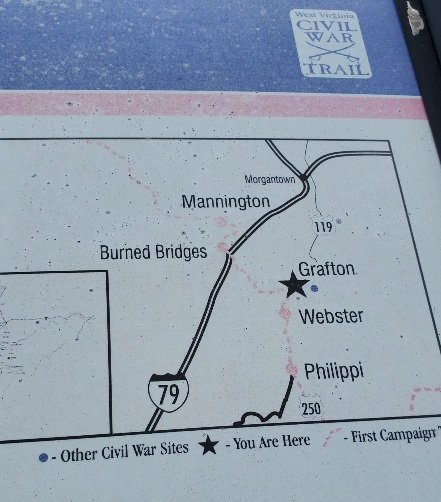
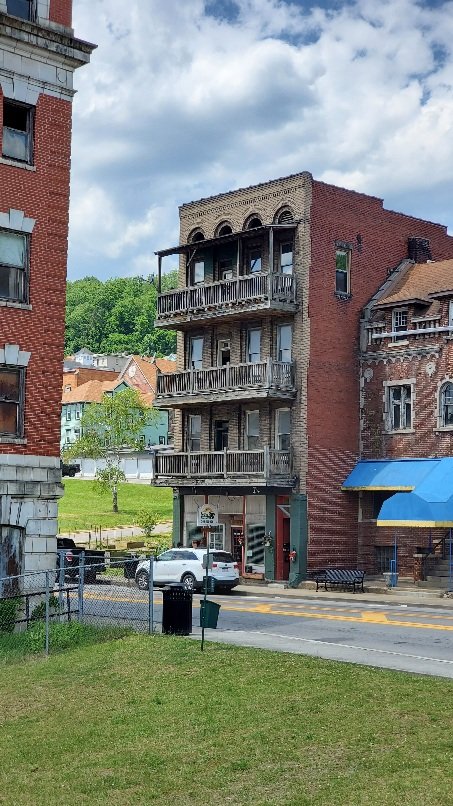
Grafton, WV
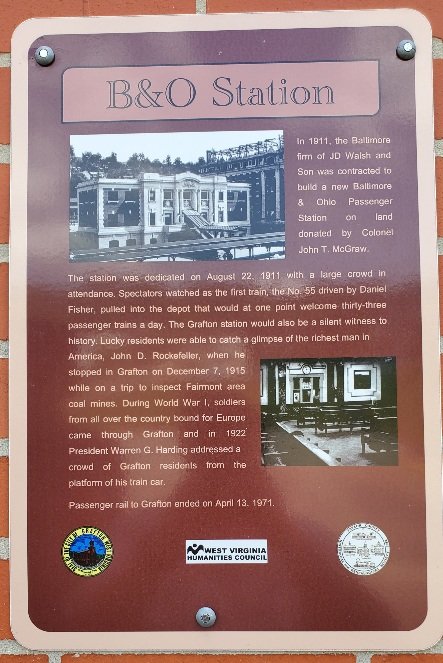
Apart from the Grafton Monster, Grafton has an interesting history. It originally developed as a junction point for the Baltimore and Ohio Railroad, serving numerous branches of a network that was vital to the regional coal industry.
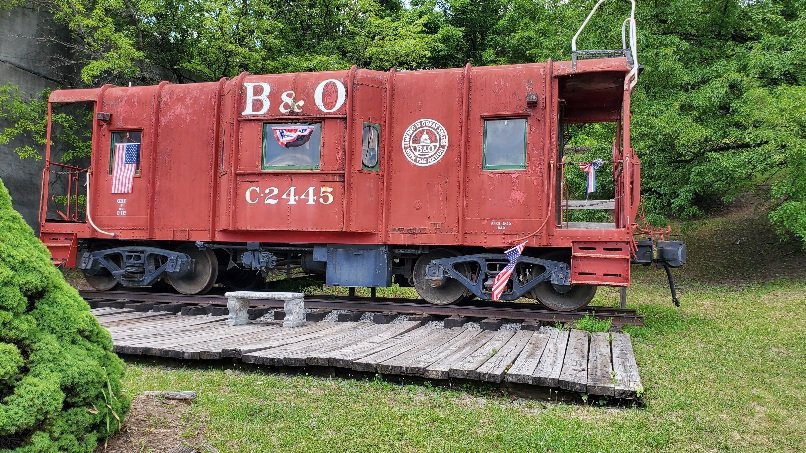
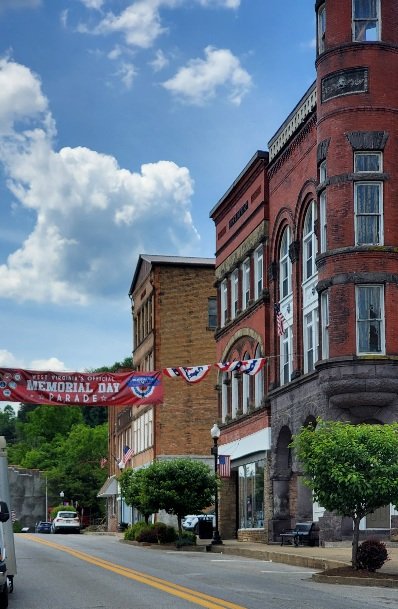
Grafton is the home of both of West Virginia’s national cemeteries, and was where the West Virginia Equal Suffrage Association formed in 1895. Mother’s Day was founded in Grafton on May 10, 1908, and the city is home to the International Mother’s Day Shrine. Grafton was also among the first cities in the United States to observe Memorial Day and is home to one of the earliest Memorial Day Parades.
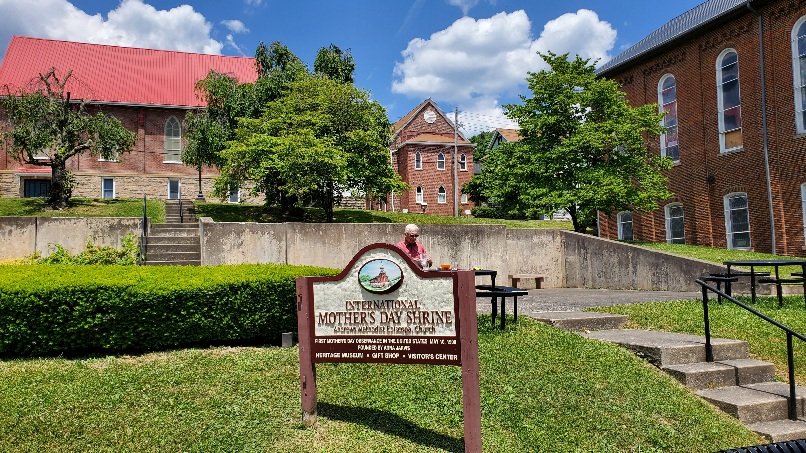
Andrews Methodist Episcopal Church, the “mother church” of Mother’s Day, was incorporated as the International Mother’s Day Shrine on May 15, 1962, as a shrine to all mothers. It is best known for being the place that Anna Jarvis conceived of the idea of Mother’s Day. Anna Jarvis, the founder of Mother’s Day, conceived the idea as a way to venerate “a mother’s private service to her family.” This reflected Anna’s desire to use Mother’s Day as a sentimental way to remember her own mother, Ann Maria Reeves Jarvis, following her mother’s death in 1905. Following the original celebrations of Mother’s Day in 1908 in Grafton, West Virginia and Philadelphia, Pennsylvania, Jarvis’ holiday quickly gained support across America. Jarvis campaigned for recognition of Mother’s Day as an official holiday. Anna chose the second Sunday in May as the annual date for the holiday because it marked the anniversary of her mother’s death. The white carnation became a symbol of the day, and was selected by Jarvis to honor her mother’s favorite flower. The celebration also extended to many foreign countries within only a few years of its conception. In 1914, President Woodrow Wilson proclaimed that flags be flown “on the second Sunday in May as a public expression of our love and reverence for the mothers of our country.”
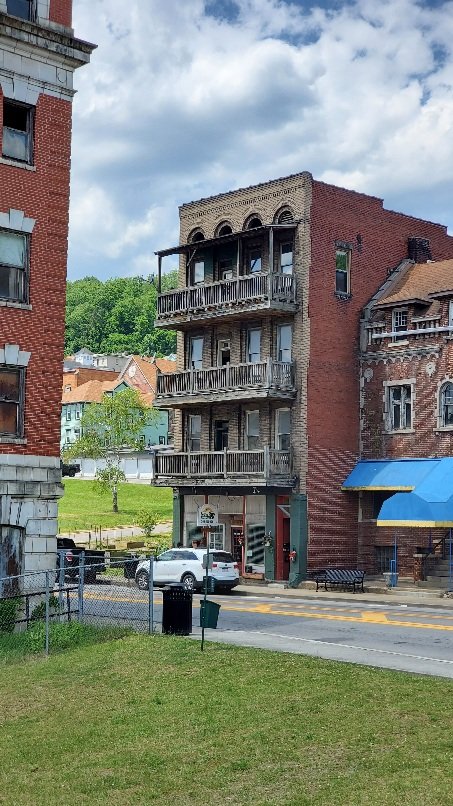
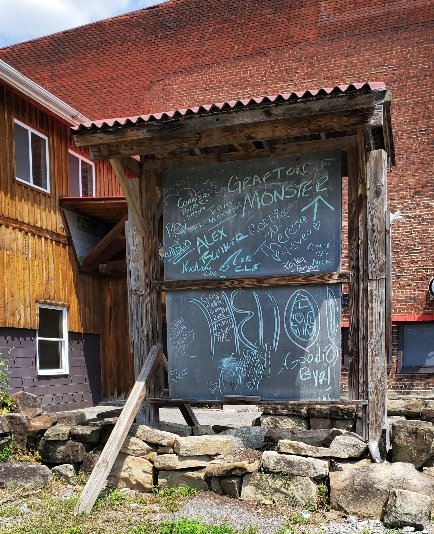
The Grafton Monster, also known as the “Beast of Grafton,” is a large humanoid cryptid that’s said to stalk the forests outside the town of Grafton, West Virginia- a former railroad boomtown located in the United States. It was originally sited in 1964 by Robert Cockrell, who worked as a reporter for the Grafton Sentinel.
According to Cockrell, the monster was “huge,” had no visible head, and had slick, seal-like skin. His account was dismissed by the editors at his work, but news of the monster soon gained popularity throughout West Virginia, leading to large search parties aimed at finding the creature. Today, the monster is still a popular cryptid in the area, and Grafton is a tourist stop for cryptid enthusiasts.
Our campsite tonight is Blackwater Falls State Park. One of the noted waterfalls in the state it does not appear in the game. I have no idea if there is any relation to the Blackwater Mine in the game.
Tomorrow we will try to visit Seneca Rocks, Greenbank Observatory (Fort Atlas?), Cranberry Glades, the Pearl Buck birthplace and other cool sites.
 Louise and Brian McLeod Travel Blog
You must be logged in to post a comment.