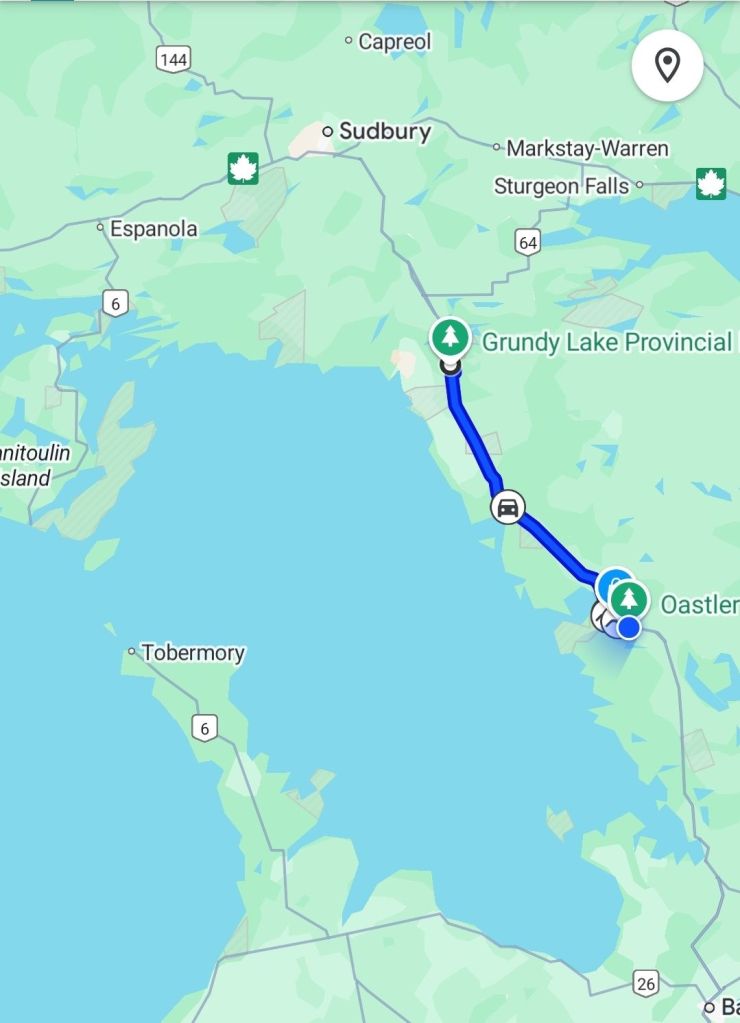
We didn’t have far to go today so there is no hurry to pack up. After a walk, we got away from Grundy Lake PP around 10:30 and mosied on down the highway towards Parry Sound through parts of the UNESCO 30,000 island biosphere.
Bird sitings: sandhill cranes, mink in the parking lot of the marina in Parry Sound,
The Georgian Bay Biosphere is a UNESCO-designated biosphere reserve located along the eastern coast of Georgian Bay in Ontario, Canada. Recognized in 2004, it encompasses over 30,000 islands and coastal habitats of the 30,000 Islands archipelago, making it one of the largest freshwater archipelagos in the world.

Home to rare species and habitats, such as Eastern Massasauga rattlesnake (threatened) and Dwarf lake iris (endangered), Alvar and cliff ecosystems unique to the Great Lakes Basin. The landscape includes forests, wetlands, rocky shorelines, and clear lakes.
This is perfect country for beaver, white water lilies and bears.
Nobel, Ontario just north of Parry Sound, became a major site for cordite production during World War I and World War II. British Cordite Ltd., established in 1916 with investment from the British government, and Canadian Explosives Ltd. operated large-scale plants in the area, using both imported and local resources. Nobel, named for Alfred Nobel (the inventor of dynamite), played a critical role in supplying propellants to the Allied forces. Cordite is a smokeless propellant made from nitroglycerin, nitrocellulose (also known as guncotton), and petroleum jelly or similar stabilizers. These ingredients were manufactured through chemical processes that often relied on mined or industrially produced materials, such as sulfur, nitrates, and petroleum derivatives.
Parry Sound, the gateway to the 30,000 islands biosphere, was a former lumber mill town, now a tourist destination on the east coast of Georgian Bay. Named after William Parry, an English Artic explorer. Parry Sound is the hometown of Canadian hockey player Bobby Orr.


Busy in town today. It’s the start of a long weekend in Ontario, the Civic Holiday. Lots of weekenders here shopping for a few days partying in cottage country. The wine store was packed, as was the food store. It took us the better part of 2 hours to buy food and wine today. A trip to Canadian Tire was almost futile. It reinforces our preference to shop online.

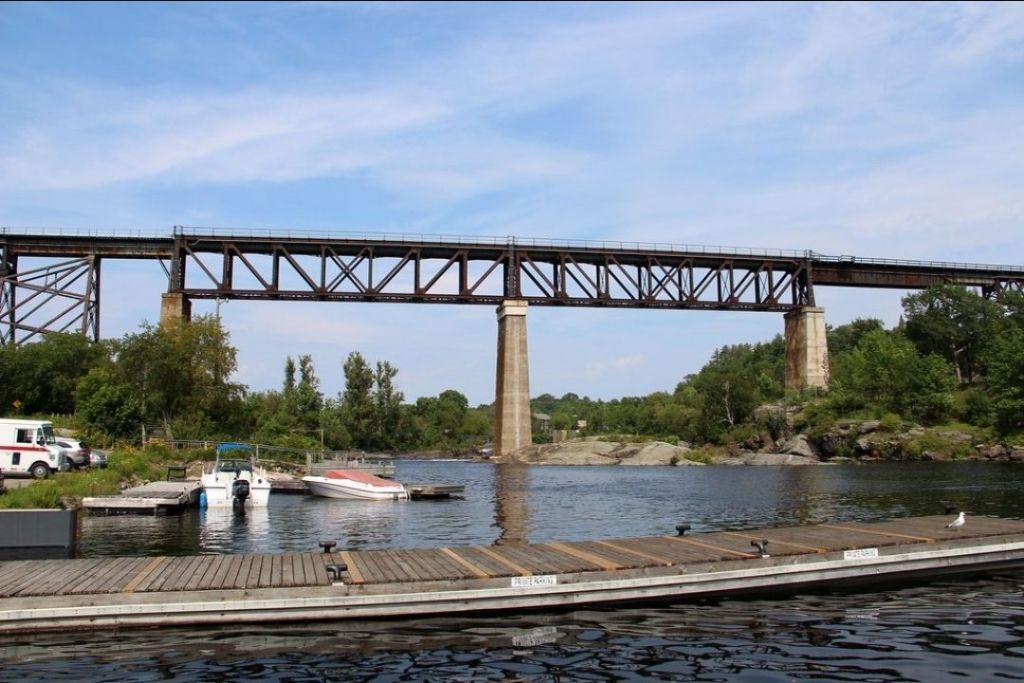
The trestle spans approximately 1,695 feet (517 meters) and stands about 105 feet (32 meters) above the valley floor—a remarkable engineering feat from the early 20th century. Known among railfans and photographers as one of Ontario’s most dramatic rail crossings, the trestle offers panoramic views over Georgian Bay, especially from Tower Hill Lookout and waterfront vantage points.
The Massasauga Rattler
This area is home to the Massasauga rattlesnake (Sistrurus catenatus), Ontario’s only venomous snake. It is a shy, secretive reptile most commonly found along the eastern Georgian Bay coast, particularly in areas like The Massasauga Provincial Park, the Bruce Peninsula, and the Wainfleet Bog. These snakes prefer habitats such as wetlands, rocky outcrops, and boreal forest edges, where they prey on small animals like mice and frogs. Typically measuring between 50 and 75 centimeters in length, the Massasauga has a thick body with grey or brown coloring and distinctive dark blotches. Its triangular head, vertical pupils, and a tail tipped with a small keratin rattle help distinguish it from non-venomous species.
Although the Massasauga is venomous, bites are rare and almost always defensive. The snake usually prefers to flee rather than strike when threatened. There are no recorded deaths from Massasauga bites in recent decades, thanks to medical awareness and access to treatment.
Ostler Lake Provincial Park
We are camped tonight in a beautiful provincial park just south of Parry Sound on Ostler Lake. Our campsite isn’t directly on the beach but it might as well be. Facing west, maybe we will a sunset for a change.
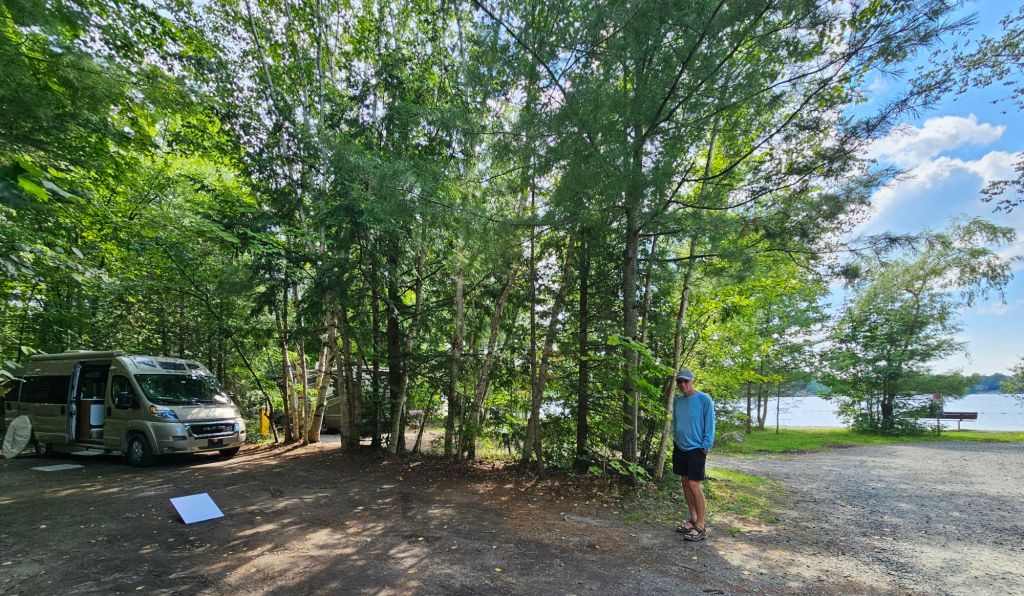

We are still in bear country and all the precautions about leaving food around are in place.

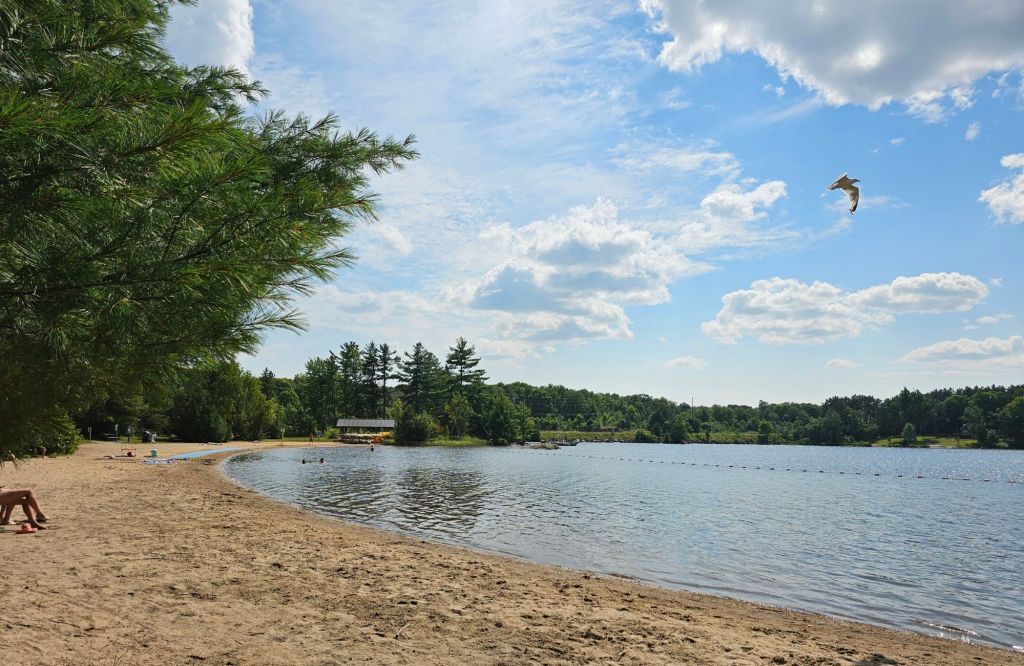
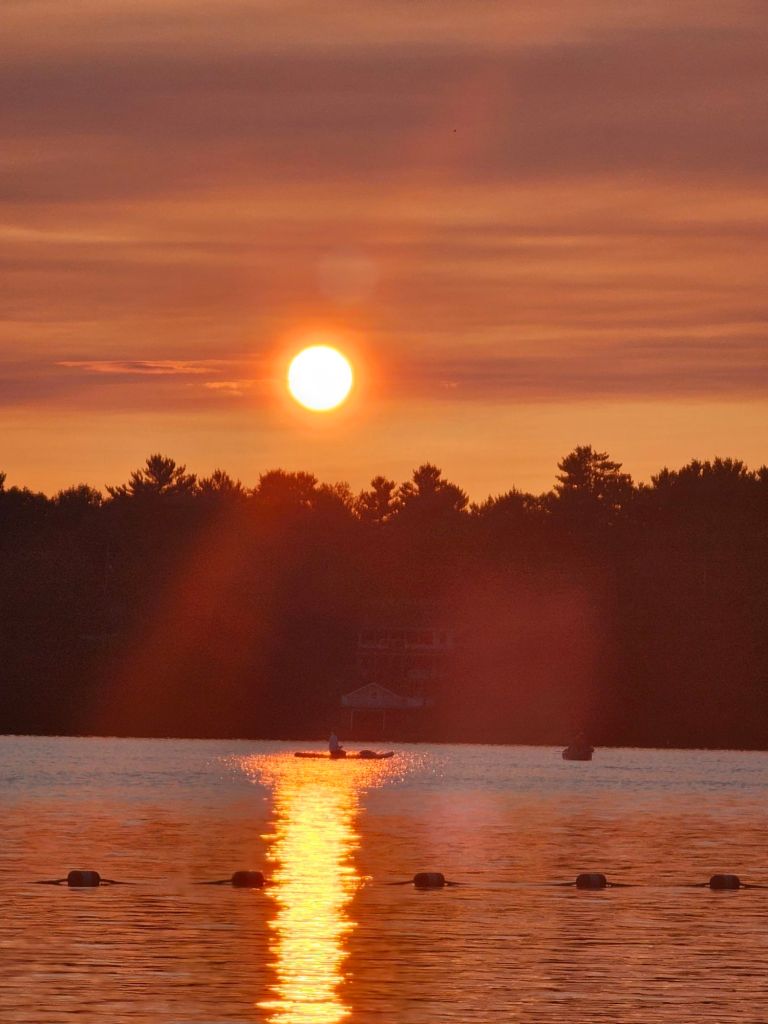
To end a great day, we also have a beautiful evening. There are several families down here at the beach at 8:30 pm. Isn’t this what summer is all about?

This morning, we spotted a mink running through the parking lot of the marina in Parry Sound. We used to have mink on the lake where we had a cottage north of Montreal. They are part of the weasel family and are semi-aquatic. I used to find remains of their nocturnal feedings on the floats underneath our dock.

The other unusual sighting I had today, along the road just south of Grundy Lake PP was two Sandhill Cranes feeding. They are very large birds. Pretty hard to confuse with something else. We used to make pilgrimages to New Mexico to photograph these birds in their winter feeding grounds in January/February and am always surprised when I find them elsewhere. On looking them up to see whether they are indeed found in Ontario and not just lost, I discovered that there are about 100,000 of them here and they are a major nuisance for farmers. They are prolific eaters of seed crops such as corn and wheat and also potatoes. There are suggested changes to legislation to permit hunting these birds in restricted areas beginning in 2026. Apparently they are good to eat, similar to steak or duck breast. They are dubbed ‘the Rib-eye of theWho knew?

 Louise and Brian McLeod Travel Blog
You must be logged in to post a comment.