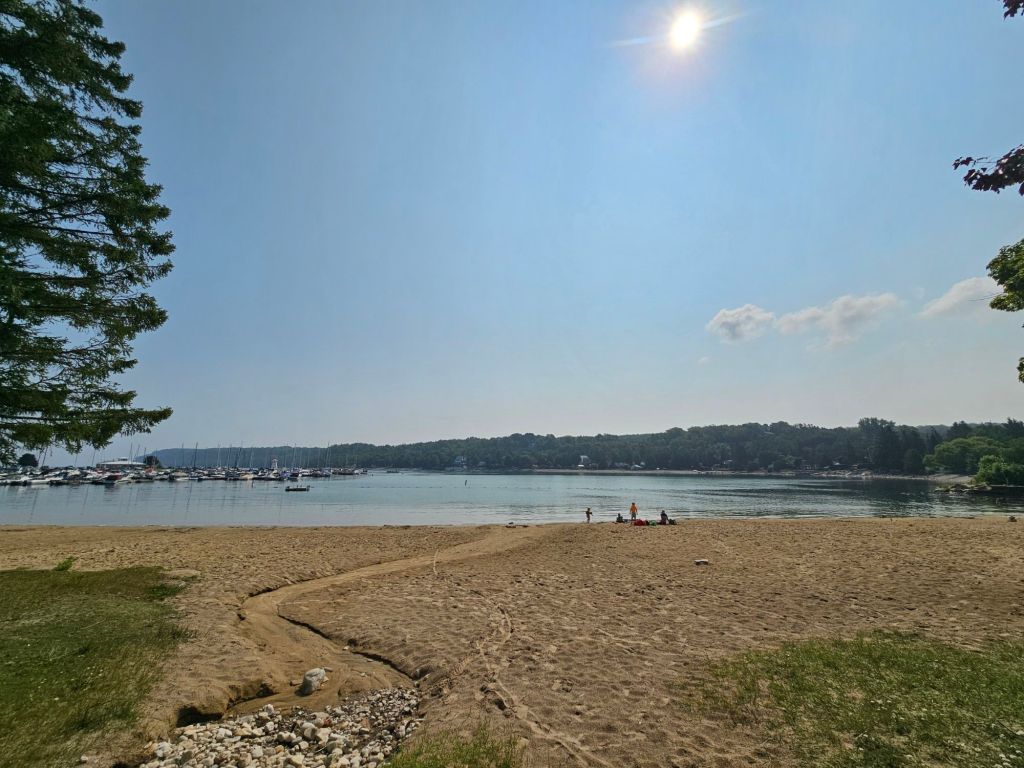
Another beautiful morning. Short trip today into Tobermory and our nearby campground. We stopped in at Lions Head for a bit of nostalgia for my husband. Lions Head was named for the lion shaped Head on the escarpment, now fallen into the Bay.
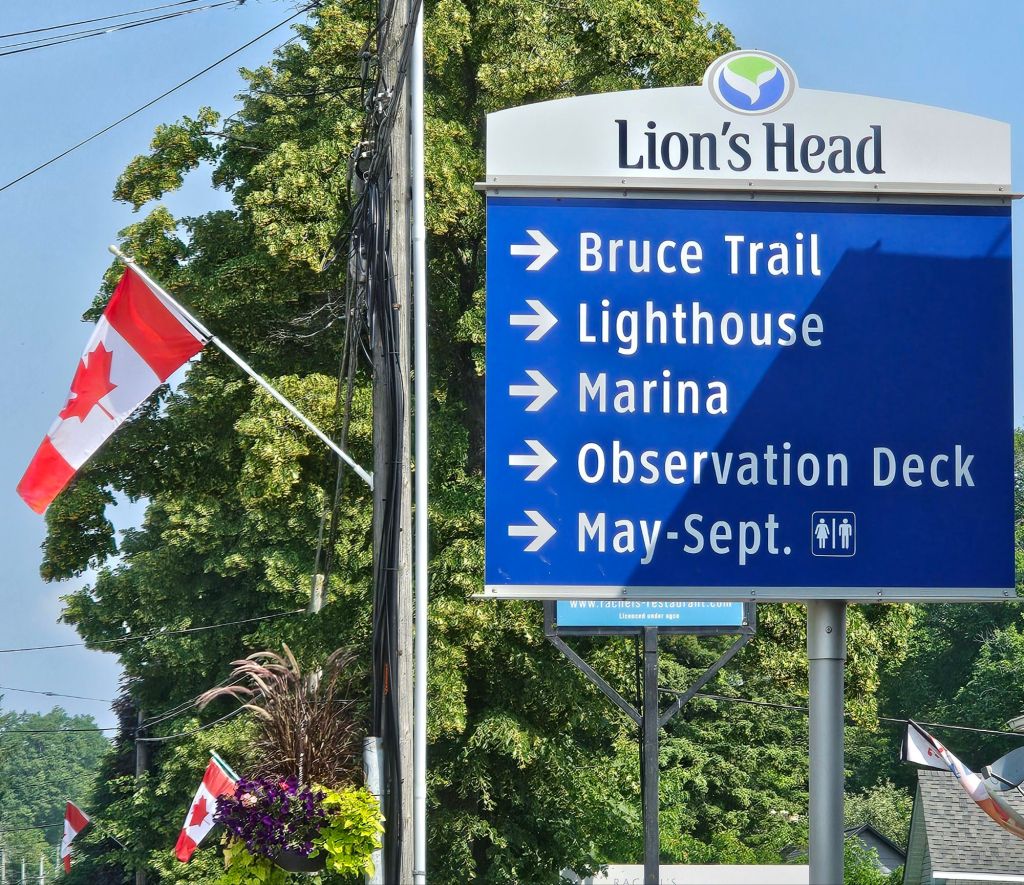
The Bruce Trail is Canada’s oldest and longest marked footpath, stretching approximately 890 kilometers along Ontario’s Niagara Escarpment from Queenston near Niagara Falls to Tobermory on the Bruce Peninsula.
Following the UNESCO World Biosphere Reserve of the Niagara Escarpment, the trail showcases diverse landscapes including ancient cedar forests, limestone cliffs, wetlands, and stunning views of Georgian Bay and Lake Huron. The escarpment is a 400-million-year-old geological formation creating dramatic cliff faces and unique ecosystems.
The trail crosses both public land (62%) and private property made accessible through landowner agreements. It accommodates day hikers and end-to-end adventurers, with the full journey typically taking 4-6 weeks. Popular sections include Devil’s Pulpit, Dundas Valley, and Tobermory’s dramatic coastline.
Tobermory, Ontario
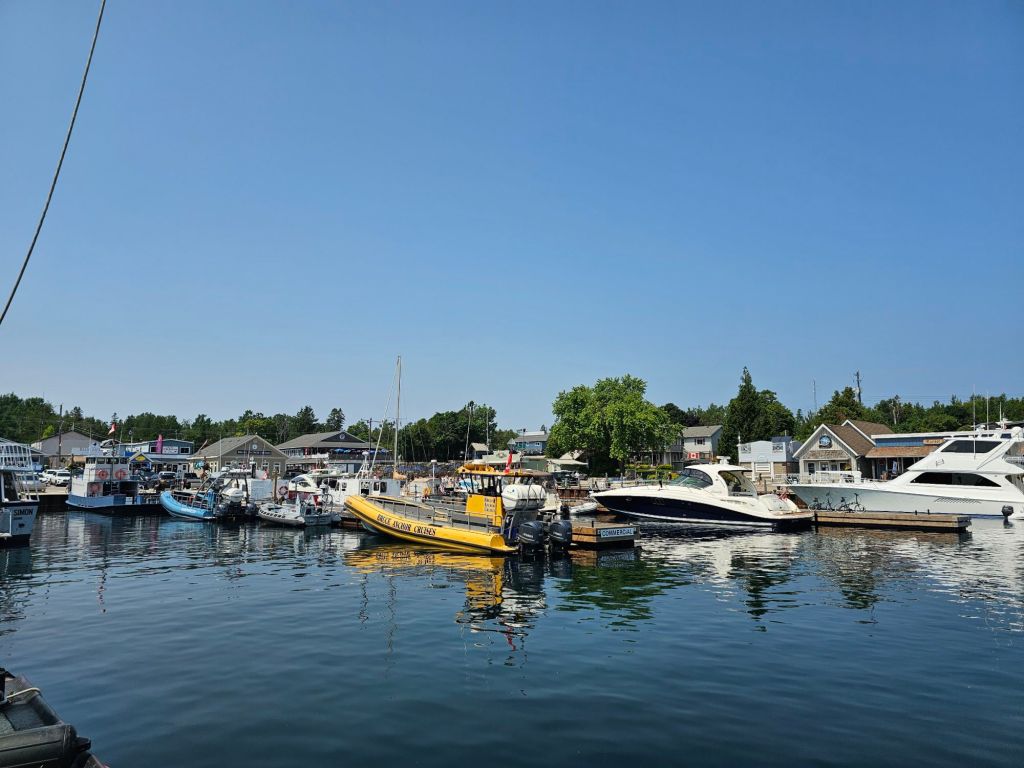
Located at the northern tip of the Bruce Peninsula, this small town sits where Georgian Bay meets Lake Huron, surrounded by the dramatic limestone cliffs of the Niagara Escarpment. It’s known for its crystal-clear waters, excellent diving opportunities (including several shipwrecks), Flower Pot Island and as the gateway to Bruce Peninsula National Park and Fathom Five National Marine Park.
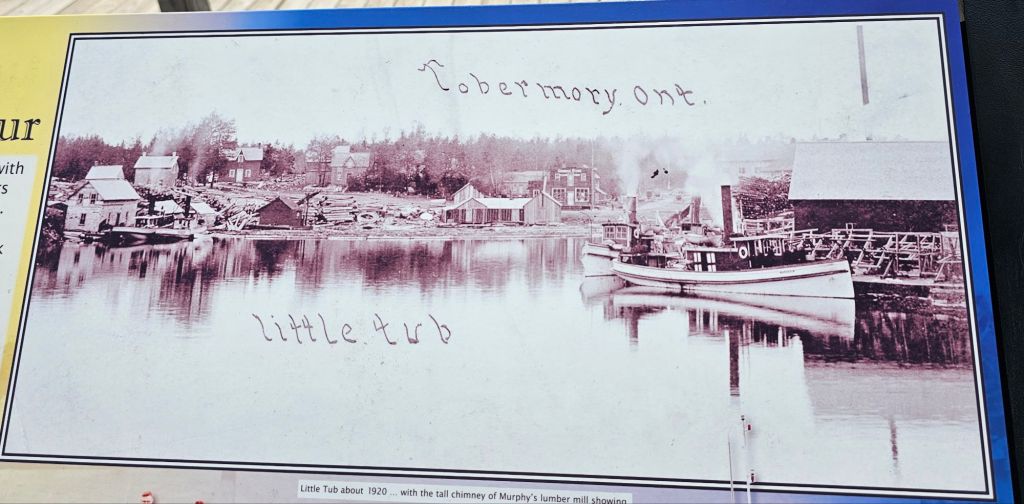
The community’s identity was shaped by its twin natural harbors, known locally as “Big Tub” and “Little Tub,” which provided crucial shelter for ships navigating the treacherous waters where Georgian Bay meets Lake Huron. Fishermen began dropping nets into Tobermory’s deep natural harbours, Big and Little Tub in the late 1800s.
The first known peoples were the Ojibwa, Odawa, and Potawatomi nations who inhabited this region long before European contact. Today, the Bruce Peninsula is home to the Saugeen Ojibway Nation, which consists of two distinct First Nations communities that collectively represent the Indigenous peoples of this region. These are Anishinaabek peoples, specifically Ojibway (also known as Ojibwe or Chippewa), who are part of the broader Three Fires Confederacy that includes Ojibway, Odawa, and Pottawatomie Nations.
We had lunch at a local fish restaurant where we supposedly had Whitefish, a great lakes fish.
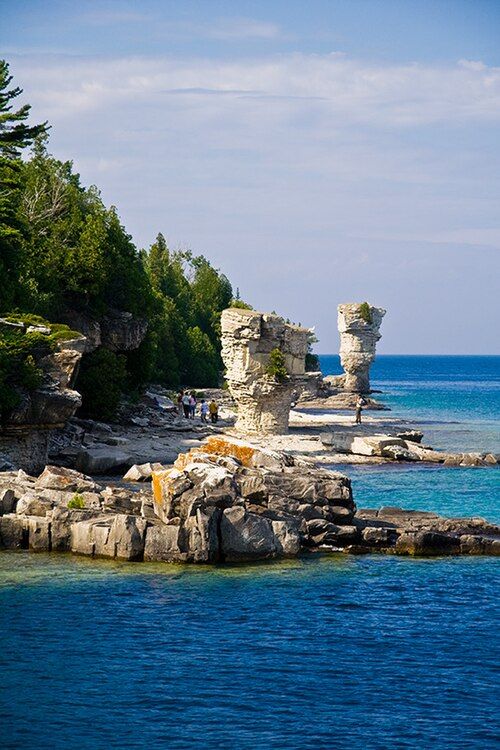
Flowerpot Island is a part of Fathom Five National Marine Park. The name of the island comes from two rock pillars on its eastern shore, which look like flower pots. A third flowerpot once stood, but tumbled in 1903. This island is a major tourist attraction here. We did not do this but I wanted to talk about it anyway.
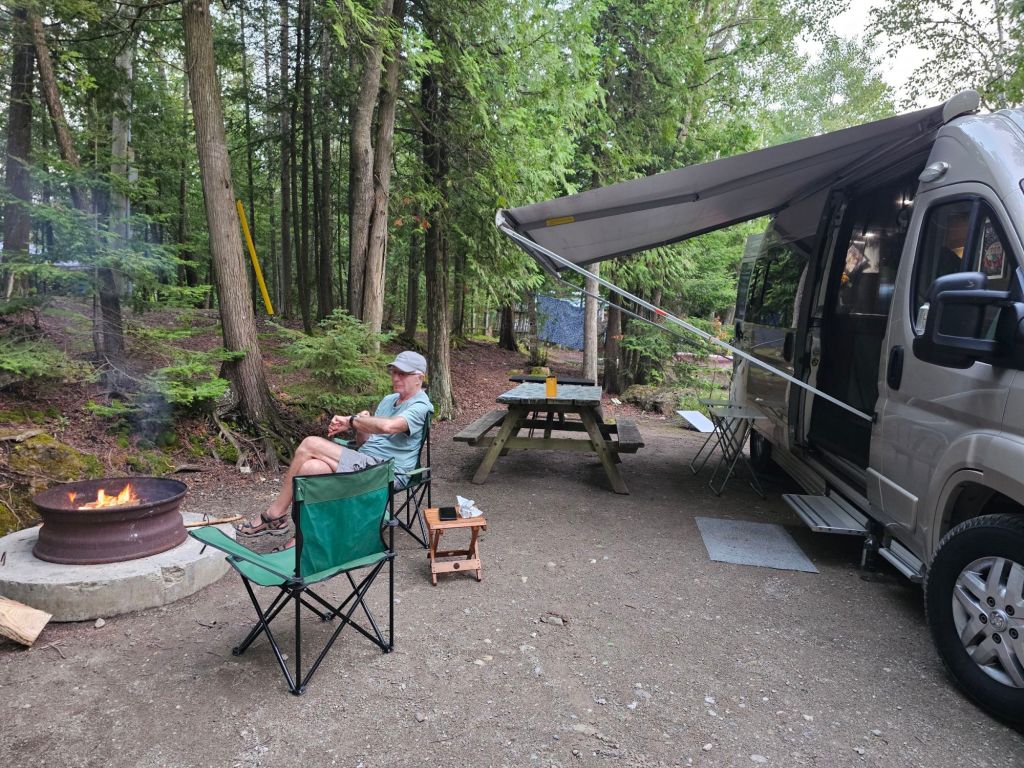
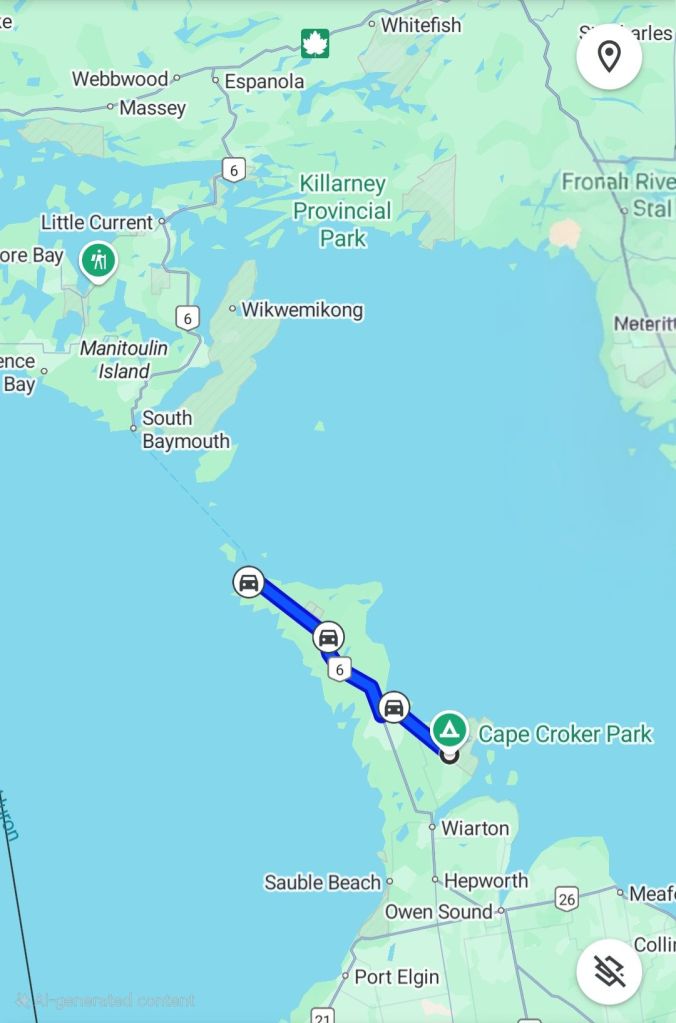
Our campsite has its own beach. This is a private wooded campground, very nice. Dinner was a snack meal of cheese, pate, Serrano ham, crackers, raw veggies and tatziki, fresh peaches and blueberries. After dinner we took a nice long walk and finished up with a campfire.
Tomorrow is a day in camp. Looking forward to not taking the vehicle out, walking down to the beach and relaxing.
 Louise and Brian McLeod Travel Blog
You must be logged in to post a comment.