We had company last night for dessert and campfire, our oldest daughter and her husband who live about half an hour from here. As a professional environmentalist, she delighted in watching the bats feeding at sunset.
Lovely morning and breakfast outside. I like to report the outside breakfast because on previous trips, outdoor breakfasts were rare.
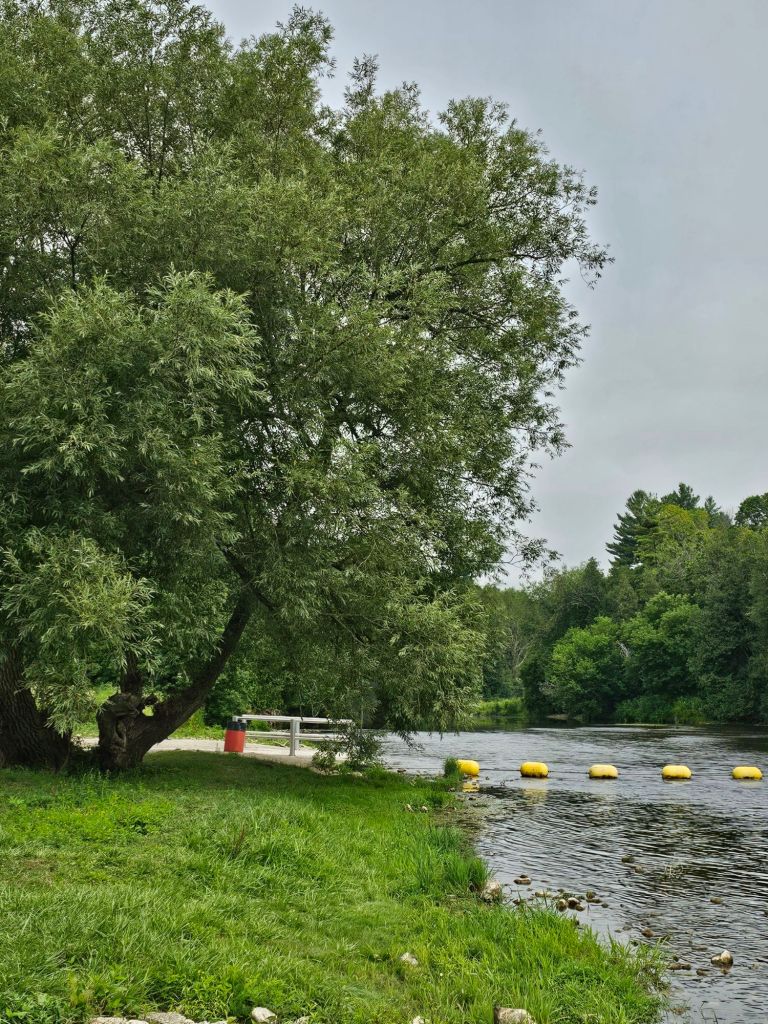
It is going to be hot again today but we did get in a walk along the Grand River at Elora Gorge before heading off for the day.
Our destination is the Bruce Peninsula, that spit of land that divides Lake Huron on the west and Georgian Bay on the east. We’ll spend a couple of days there before taking the ferry from Tobermory to Manitoulin Island. I’ll talk about the Bruce Peninsula as we travel as it has some unusual geological formations and a UNESCO biosphere designation.
First some wild flowers:



Our drive up to the Bruce Peninsula followed what we now are calling ‘Google routes’ where we let Google decide how to take us cross country. This one took us through lush farm country and enormous fields separated by picturesque wood lots with ripening corn and soybeans and ripened wheat being harvested. Judging by the prosperous looking and well maintained red farm buildings and the amount of expensive farm equipment in the fields and in the road, farming life is good here.
We stopped in Wiarton, the gateway to the Bruce Peninsula to buy food and wine and a eat a nice lunch at the Green Door Cafe on the main street of town. Wiarton is famous for its Wiarton Willy Festivals. Wiarton Willy is to Ontario as Punxatawny Bill is to Pennsylvania ie he’s a white groundhog that predicts the arrival of spring.

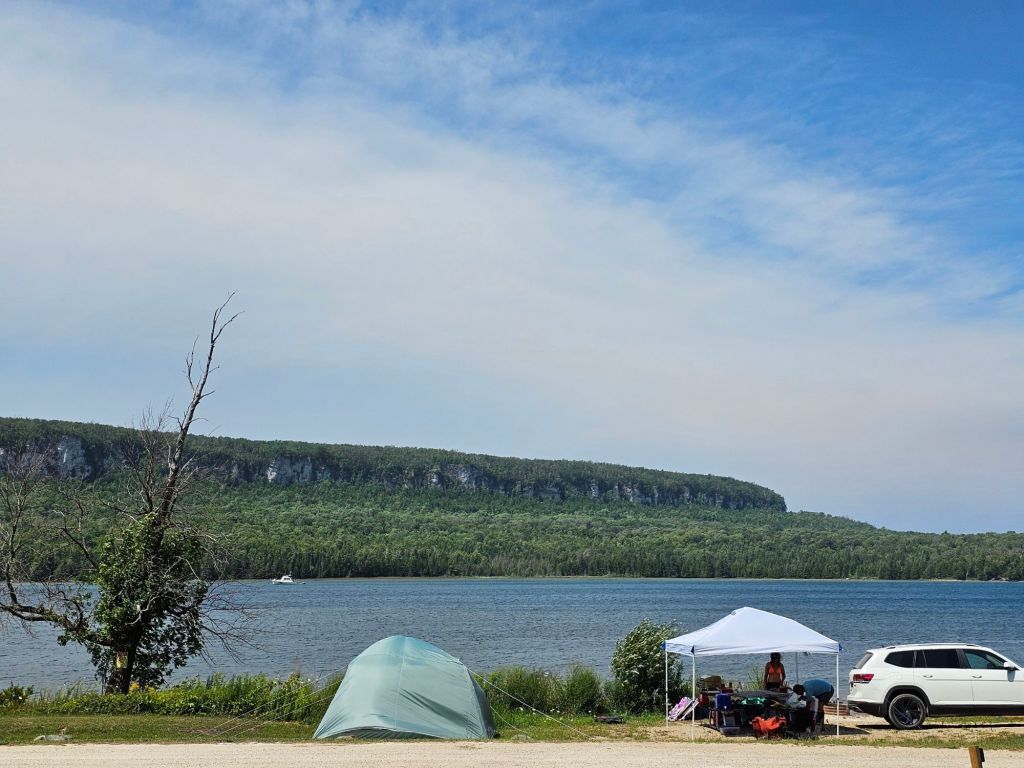

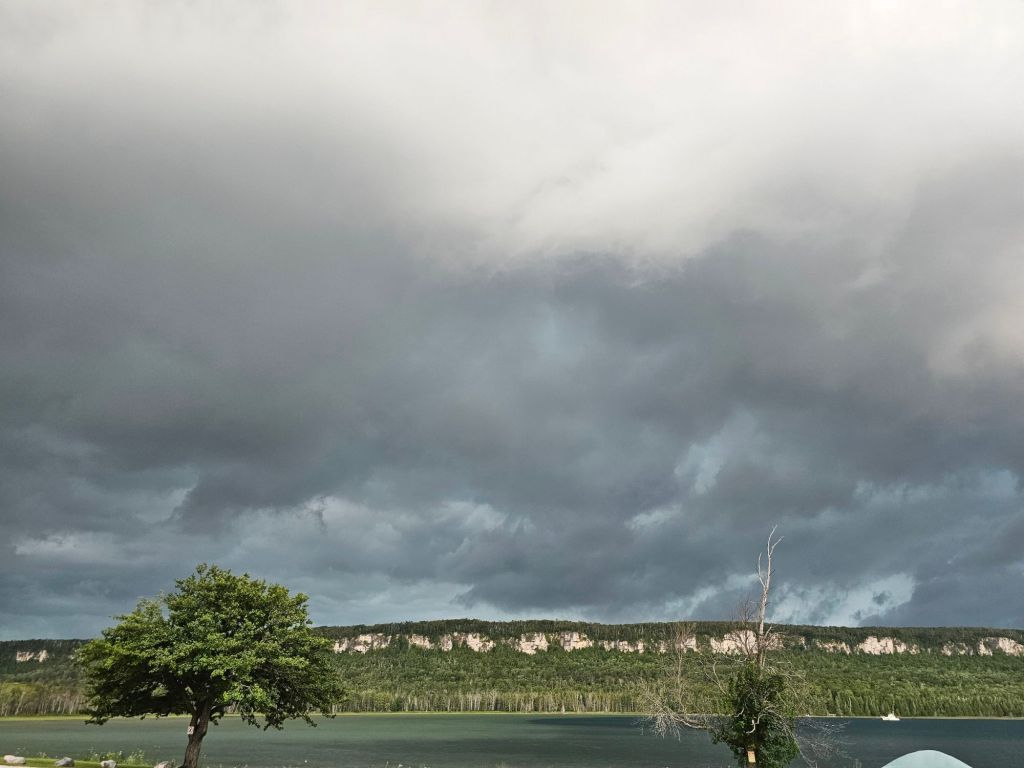
This is a beautiful campground. It was very hot on arrival. We paddled in the water to cool off.
Storm warnings for late afternoon caused campers to take down dining shelters, pull in awnings, and get everything stored safely in vehicles and campers. Quite a level of pre-storm activity for tenters who spend most of their time and store all of their equipment outdoors. it hit us about 4 pm. It was sweltering inside the van. We actually had to turn on the A/C, something we rarely do. Its like being inside a turbine engine when its on. Storm over, the temperature having dropped about 10 degrees, everyone moved back outdoors as if nothing happened. No tents were lost.

From out campsite, we watched loons and grebes diving and fishing. Grebes are small duck-like birds (but they aren’t ducks) that dive to feed but they also have unusual behaviors in that they look as though they run across the water. Very intriguing.
An egret flew by as well. That caught my attention. Egrets in Ontario? Turns out that Nottawasaga Island nearby is a breeding ground for colonies of great blue herons, egrets and night herons.
Lovely dinner of BBQ salmon, a nice bottle of Ontario white wine (can’t by ANY U.S. produced alcohol here) and fresh local peaches followed by a long walk along the beach and around the campsite before bed.

 Louise and Brian McLeod Travel Blog
I had to pull up a map to find the Bruce peninsula—never been there. Also never been to the island you’re headed to. Looks interesting…..
Sent from the all new AOL app for iOS
LikeLike
Neither have we and we grew up relatively speaking not far away.. time to do some exploring while we still can.
LikeLike