Not much of interest today. It’s a travel day. Starting our trek back north. Tomorrow we spend two nights in New Bern, NC visiting a friend.
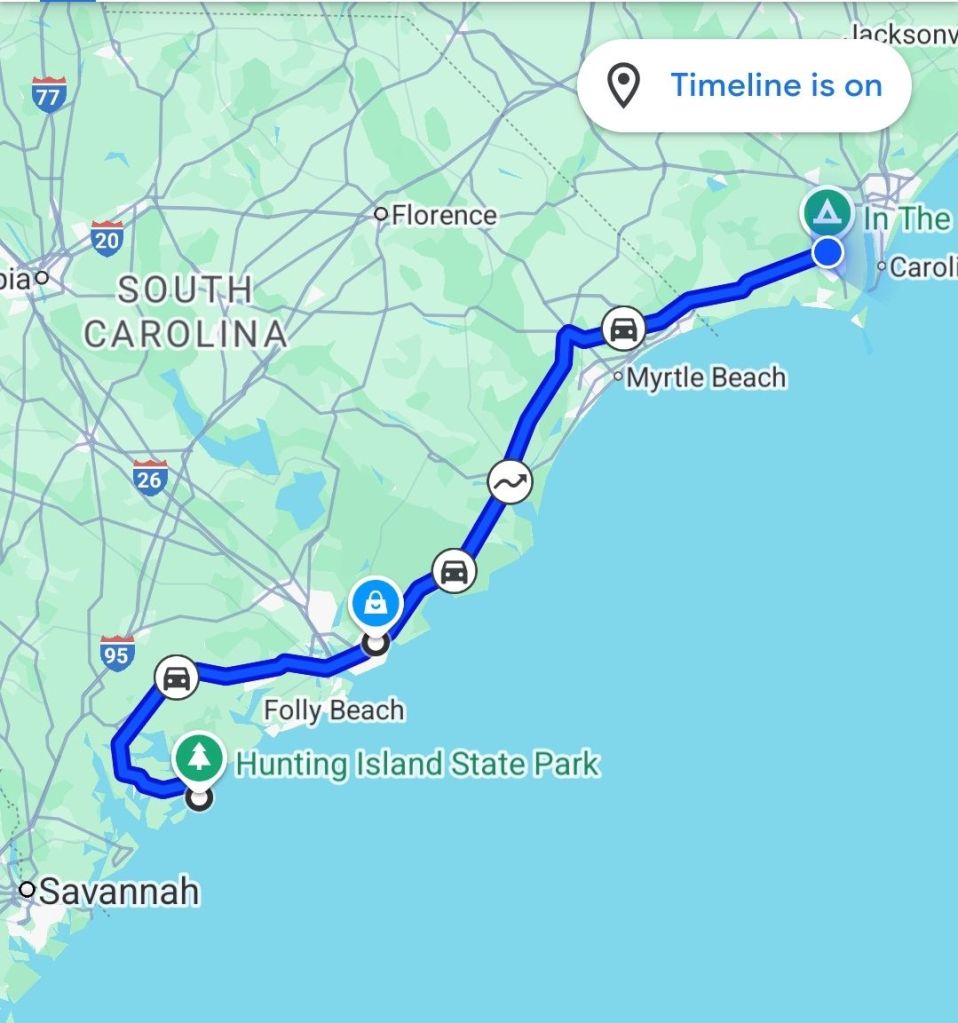
Trying to avoid interstates and Myrtle Beach, Google took us on an ‘interesting’ route. We couldn’t avoid driving through Beaufort and Charleston. I have come to realize that Google maps don’t quite have a good handle on the ‘low country’. We talked to neighbors in our campsite tonight hauling a trailer who actually got lost getting from i95 to the campground. You don’t want to get lost hauling a trailer.
Harriet Tubman: In the Beaufort, SC area, I noted several references to Harriet Tubman, and wondered how she had gotten this far south, and when.
Harriet Tubman, best known for her role in the Underground Railroad, also played a crucial role in the Union Army during the Civil War. As an abolitionist and former enslaved person, she used her knowledge of the South to serve as a spy, scout, and nurse for the Union forces.
In 1862, Tubman traveled to South Carolina, where she worked with Union troops in Port Royal. She assisted fugitive enslaved people who had escaped to Union-controlled areas and provided critical intelligence on Confederate movements. Her most notable military contribution came on June 2, 1863, when she helped lead the Combahee River Raid. Working alongside Colonel James Montgomery, she guided Union gunboats through Confederate-controlled waters, leading a surprise attack on several plantations. The raid freed over 700 enslaved people, many of whom later joined the Union Army. This operation made Tubman the first woman in U.S. history to plan and lead a military expedition.
In addition to her scouting missions, Tubman also worked as a nurse, caring for Black soldiers and newly freed enslaved people suffering from disease and malnutrition. Despite her significant contributions, she received little compensation from the government and had to fight for a military pension for decades.
Tubman’s work with the Union Army highlighted her courage, strategic mind, and unwavering commitment to freedom. Her efforts not only helped the Union cause but also solidified her legacy as one of the most influential figures in American history.
Just when you thought you knew your history!
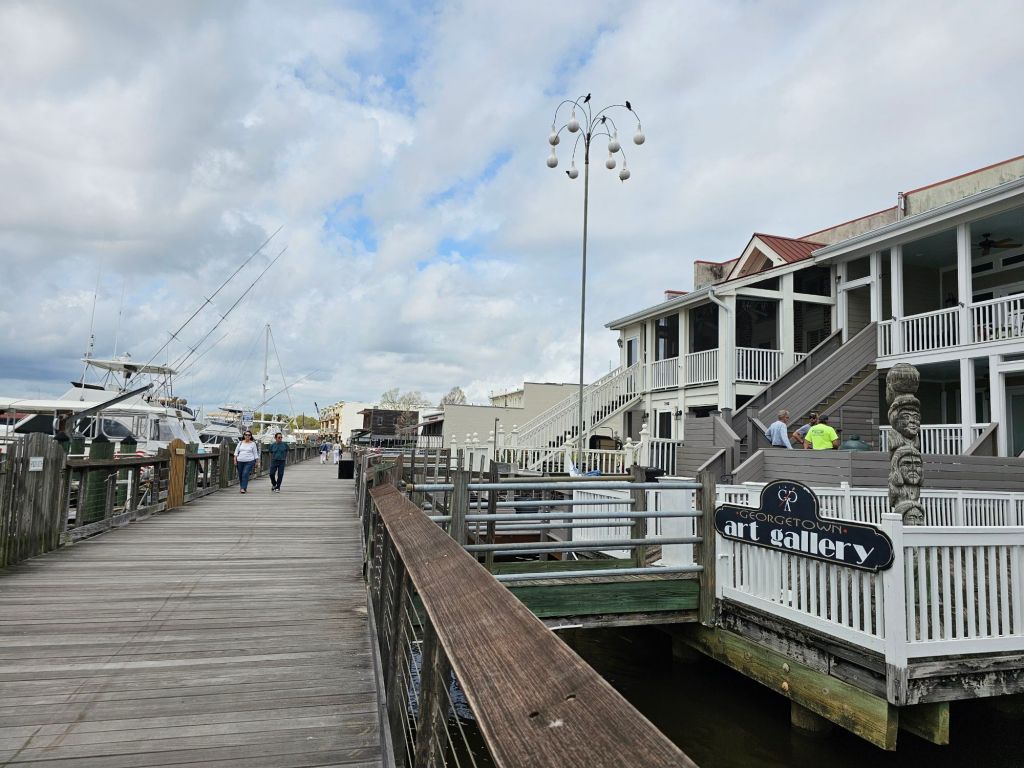
The only stop of note along the way way was Georgetown, SC where we stopped to change drivers and have lunch.
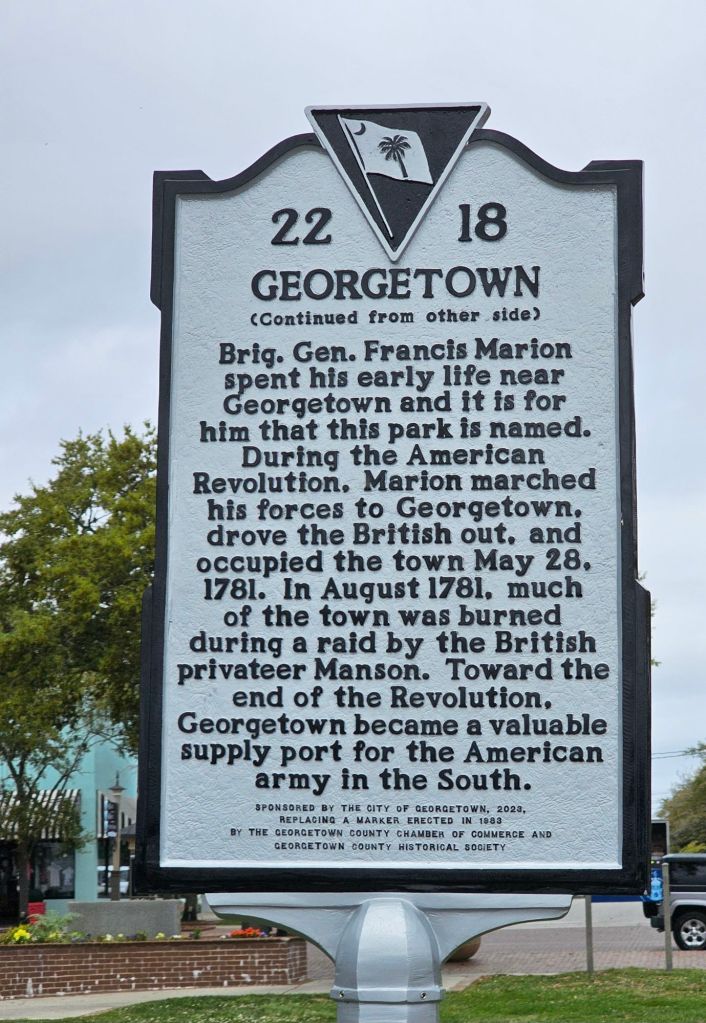
Georgetown, South Carolina, is one of the state’s oldest cities, with a history dating back to the early colonial period. Originally inhabited by the Waccamaw and Winyah Native American tribes, the area saw early Spanish exploration in the 16th century before the English established permanent settlements in the late 1600s. Officially founded in 1729, Georgetown quickly became an important economic hub due to its location along Winyah Bay. During the 18th and 19th centuries, the city thrived on the production of indigo and later became one of North America’s largest rice-producing regions. Enslaved Africans, many from the West African Rice Coast, played a crucial role in the cultivation of rice, bringing advanced agricultural techniques to the region.
During the American Revolution, Georgetown was a site of guerrilla warfare led by Francis Marion, known as the “Swamp Fox.” The city also played a strategic role in the Civil War, where the Union Navy blockaded its port, leading to economic decline after the war and the abolition of slavery. In the early 20th century, Georgetown shifted from agriculture to industry, with the establishment of a major lumber mill and later a steel mill.
The fire ban has been lifted. We decided that if we were going to have a campfire on this trip, tonight’s the night. We also took advantage of the great facilities in this campground by doing laundry and having showers.
The gnats are out again. They are a nuisance, but they don’t bite like black flies. They just get in your hair.
This trip has gone by quickly. 2 weeks isn’t nearly long enough.
 Louise and Brian McLeod Travel Blog
You must be logged in to post a comment.