Bird sightings: Cardinal, brown Pelicans, red winged blackbirds, crows, ravens, Carolina wren.
After breakfast and a long walk, we packed up and headed to Charleston, SC. We decided to visit the city on our way through it rather than coming back to it from our campsite tonight.
The traffic was extremely heavy with a lot of construction in the historic area (hurricane damage?). Parking was limited as a result. We finally found a parking spot in the main historic part which allowed us to find a good place for lunch (shecrab soup and gumbo). We didn’t walk past the historic houses, but we have been here before anyway.
We passed the boat launch to Fort Sumter, the birthplace of the Civil War. It’s an island.
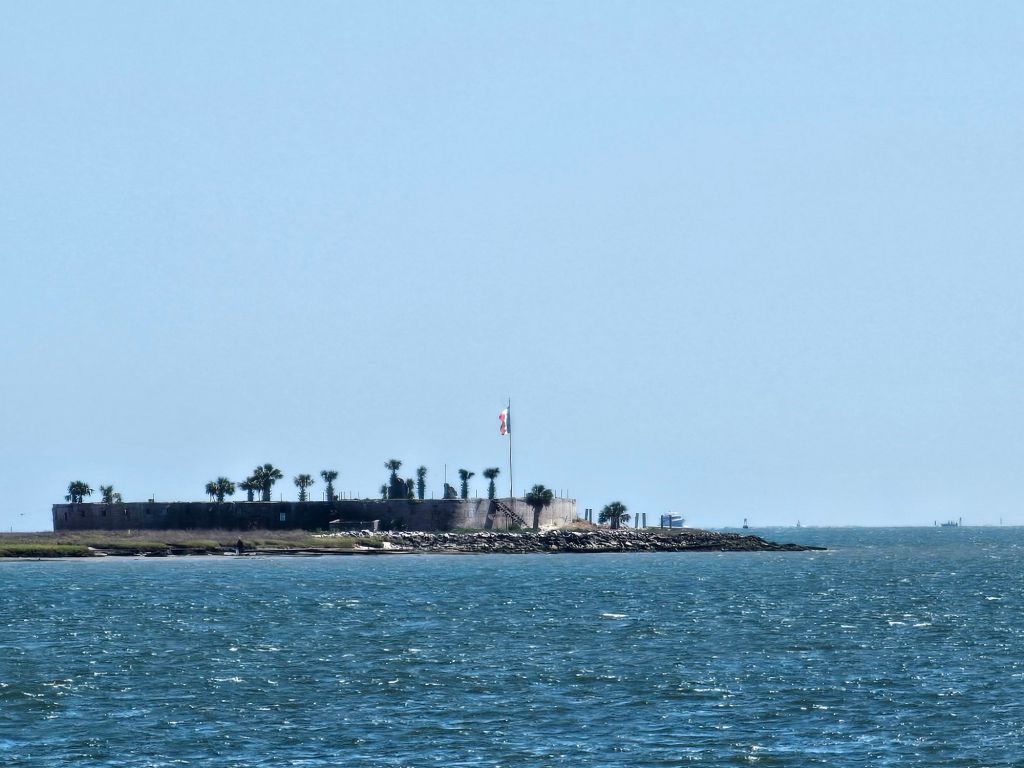
Fort Sumter is a historic fort in Charleston Harbor, best known as the site where the first shots of the American Civil War were fired on April 12, 1861. Built after the War of 1812 to strengthen coastal defenses, the fort was still unfinished when tensions between the North and South escalated. In late 1860, South Carolina became the first state to secede from the Union, and by early 1861, Confederate forces demanded that Union troops evacuate Fort Sumter. When they refused, Confederate artillery bombarded the fort for 34 hours, forcing Union Major Robert Anderson to surrender.
The battle at Fort Sumter marked the official start of the Civil War. The Confederacy held the fort for most of the war, using it as a defensive stronghold against Union naval attacks. Despite heavy bombardments, Fort Sumter remained in Confederate hands until February 1865, when General William T. Sherman’s forces marched through South Carolina, leading to its evacuation.
Today, Fort Sumter is a National Historic Park, accessible by boat from Charleston.
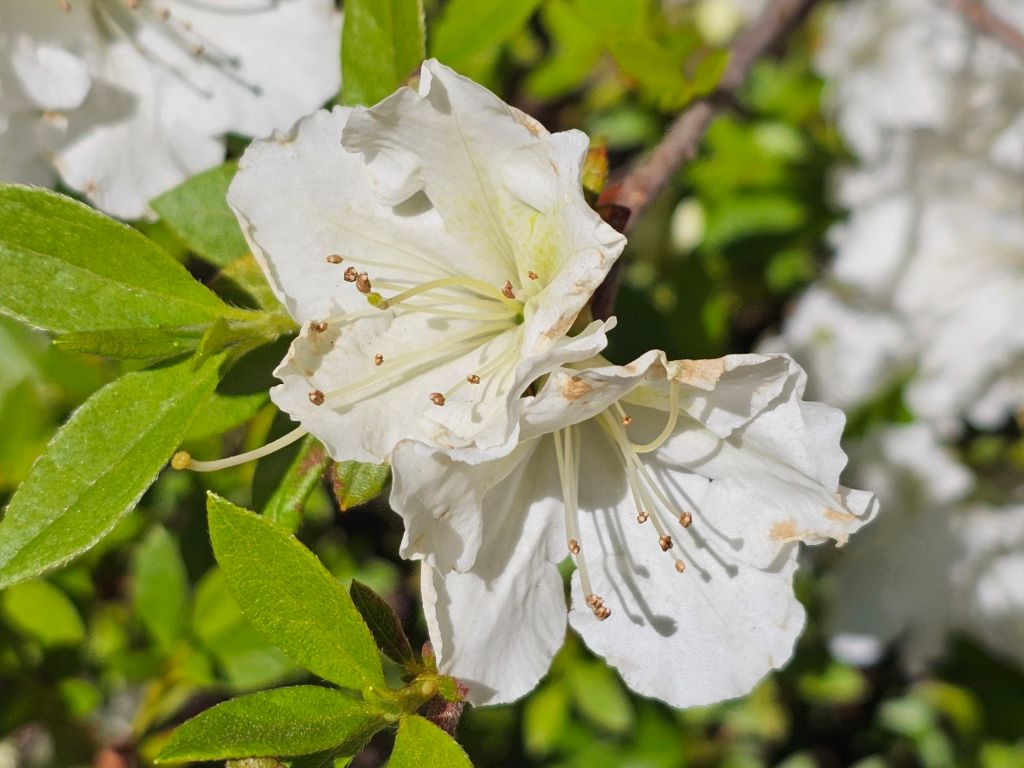
Charleston, South Carolina, was founded in 1670 as Charles Town in honor of King Charles II and quickly became a major colonial port, thriving on the trade of rice, indigo, and enslaved people. By the 18th century, it was one of the wealthiest cities in the American colonies and played a key role in the Revolutionary War, enduring a British siege in 1780. In the antebellum period, Charleston remained a center of Southern culture and commerce, heavily reliant on enslaved labor. The Civil War began here in 1861 with the Confederate attack on Fort Sumter, leading to years of Union bombardment and economic devastation. After the war, Charleston struggled through Reconstruction but retained its historic charm. The 20th century brought civil rights struggles, urban growth, and a focus on historic preservation, turning the city into a major tourist destination.
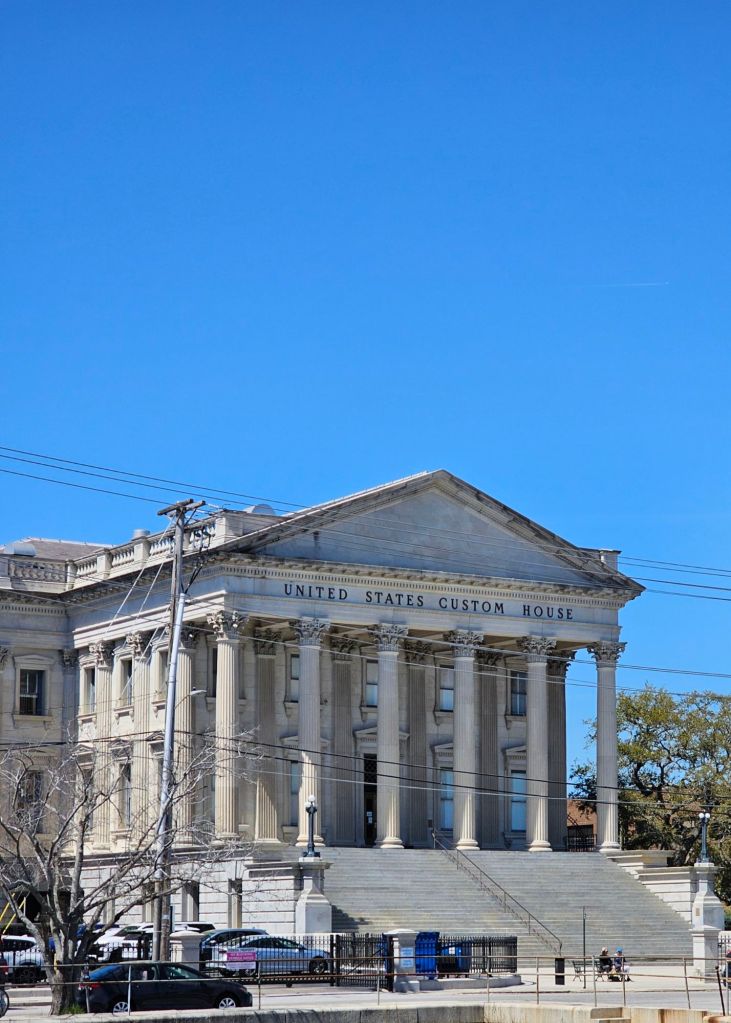
The Construction of the Charleston Custom House began in 1853 but was interrupted by the Civil War, delaying its completion until 1879. The neoclassical structure was designed to serve as the city’s main customs office, facilitating trade in one of the busiest ports in the South.
During the Civil War, work on the building halted as Charleston became a focal point of Confederate defense and Union attacks. After the war, the federal government resumed construction, and the Custom House became an important hub for regulating maritime commerce and collecting tariffs.
Today, the Charleston Custom House remains an iconic landmark along the city’s waterfront and still in use by the U.S. government.
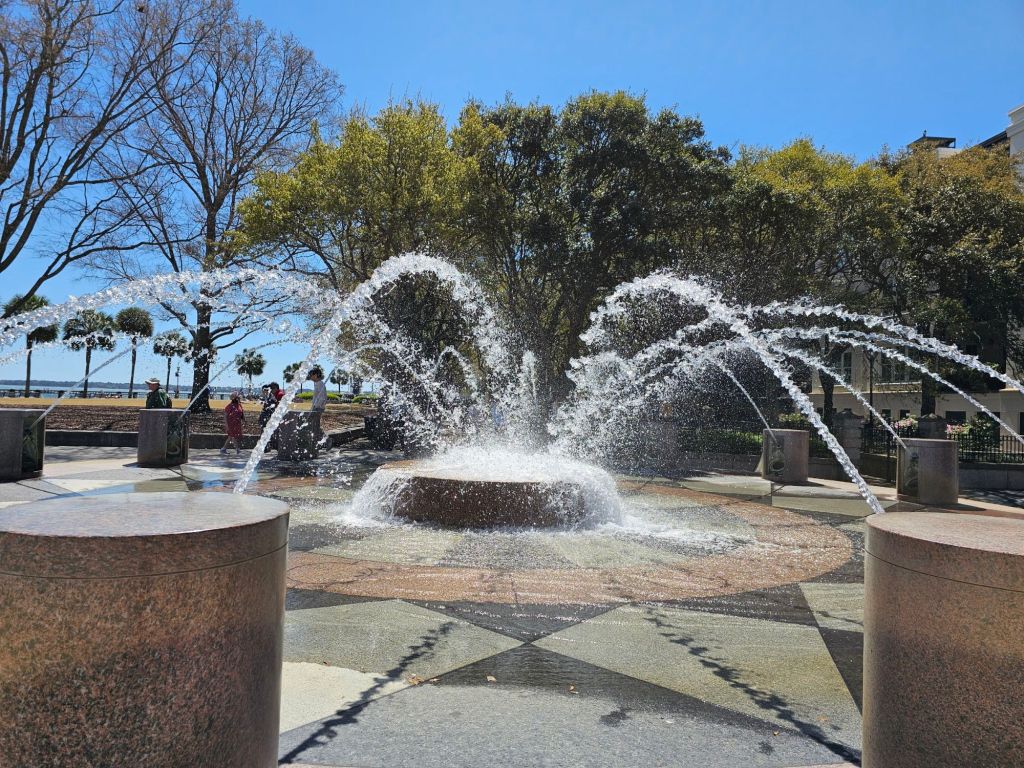
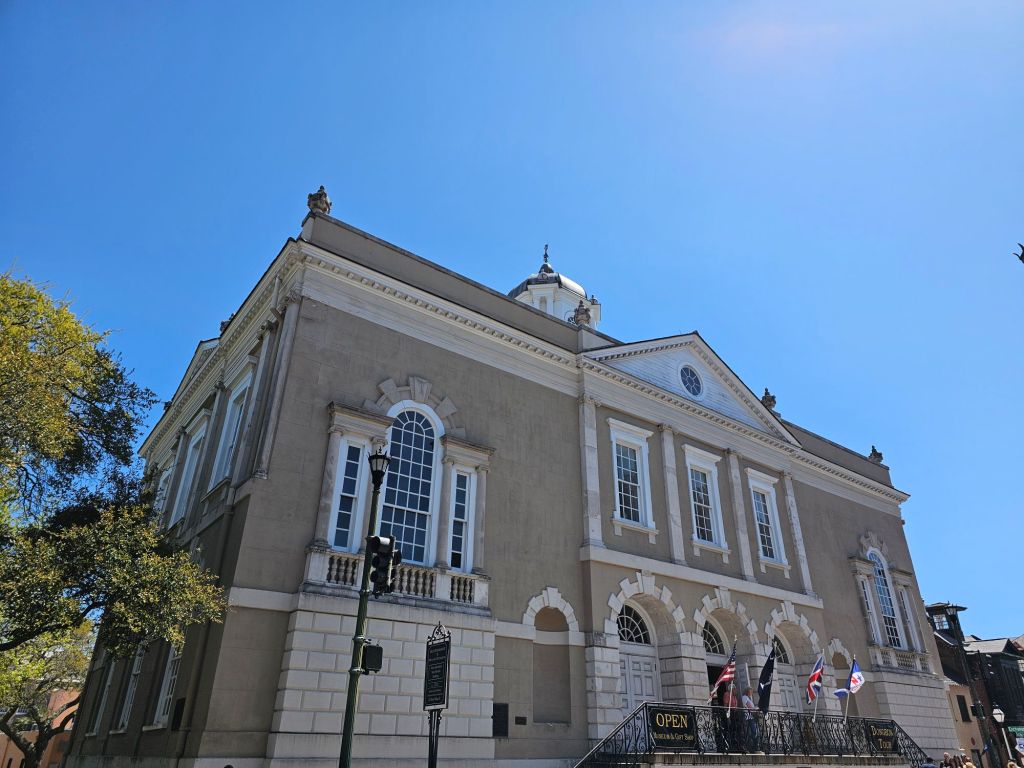
The Charleston Exchange, also known as the Old Exchange and Provost Dungeon, is one of Charleston, South Carolina’s most historic buildings. Built between 1767 and 1771 by the British, it originally served as a customs house and commercial exchange, playing a crucial role in the city’s colonial economy. It later became a key site during the American Revolution, where British forces used the basement as a prison for American patriots.
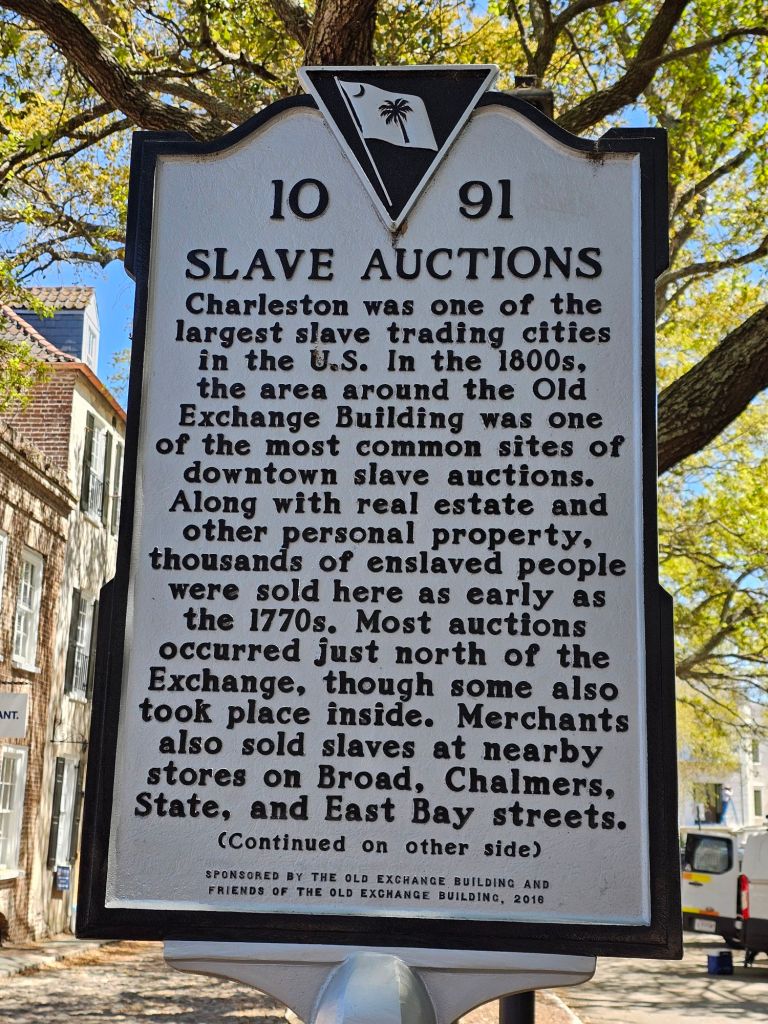
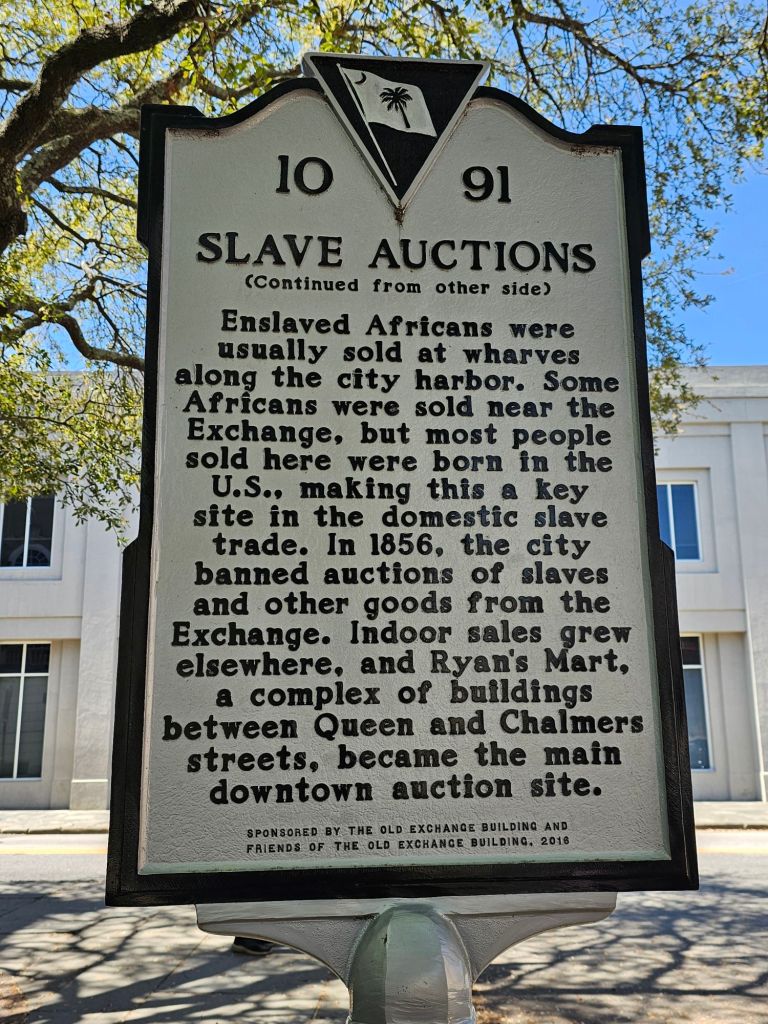
After the war, the building hosted important events, including South Carolina’s ratification of the U.S. Constitution in 1788. It also functioned as a post office, military headquarters, and even a slave auction site. Today, the Old Exchange is a museum open to the public.
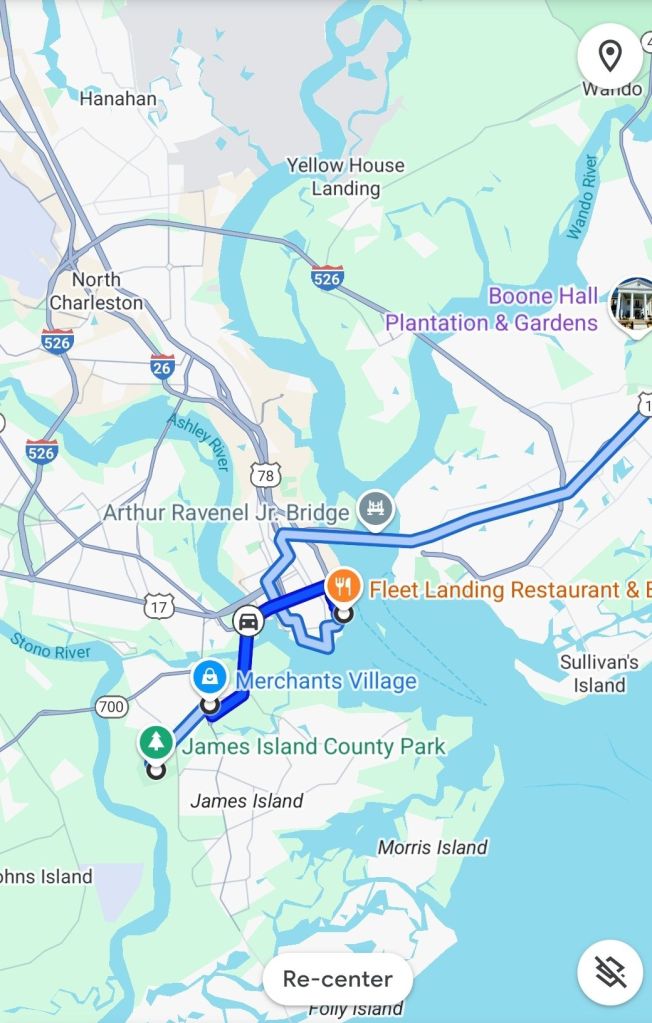
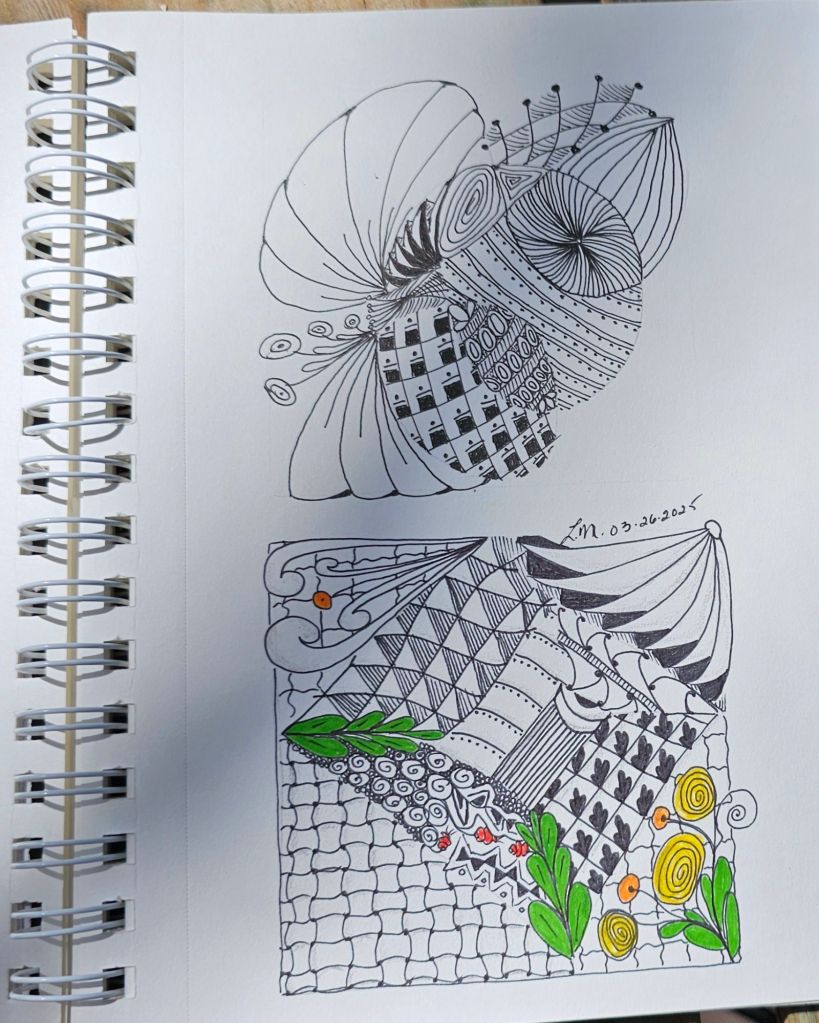
Our campground for 2 nights is James Island county park, a well appointed campground just south of Charleston. We relaxed in the sun with our books and handicrafts.
We departed from the normal today for dinner. As usual after a lunch out, we don’t need a big meal in the evening. We had bought an ‘artisinal’ pesto and mozzarella pizza in a Food Lion the day before. Heated up in the toaster oven, it was delicious. There is enough left for lunch tomorrow.
There are gnats here now. Just when it gets nice enough to enjoy the outdoors, the bugs come out too! Oh well. I have bug deterrent.
Tomorrow we relax in the campsite. No driving.
 Louise and Brian McLeod Travel Blog
Sounds like you’re relaxing 😎. We have the same birds
LikeLike