It was reasonably chilly overnight and I forgot to put the extra quilt on the bed when I made it up. Tonight I won’t forget.
I misspoke when I said yesterday we haven’t done anything new in the van this year. We did. We replaced our old stove top expresso coffee maker with an electric model and a new set of much better-looking plastic dishes.
Beautiful clear blue sky. Perfect for the Chesapeake Bay bridge and tunnel. What a spectacular piece of engineering! See my previous blogs about this tunnel/bridge system.
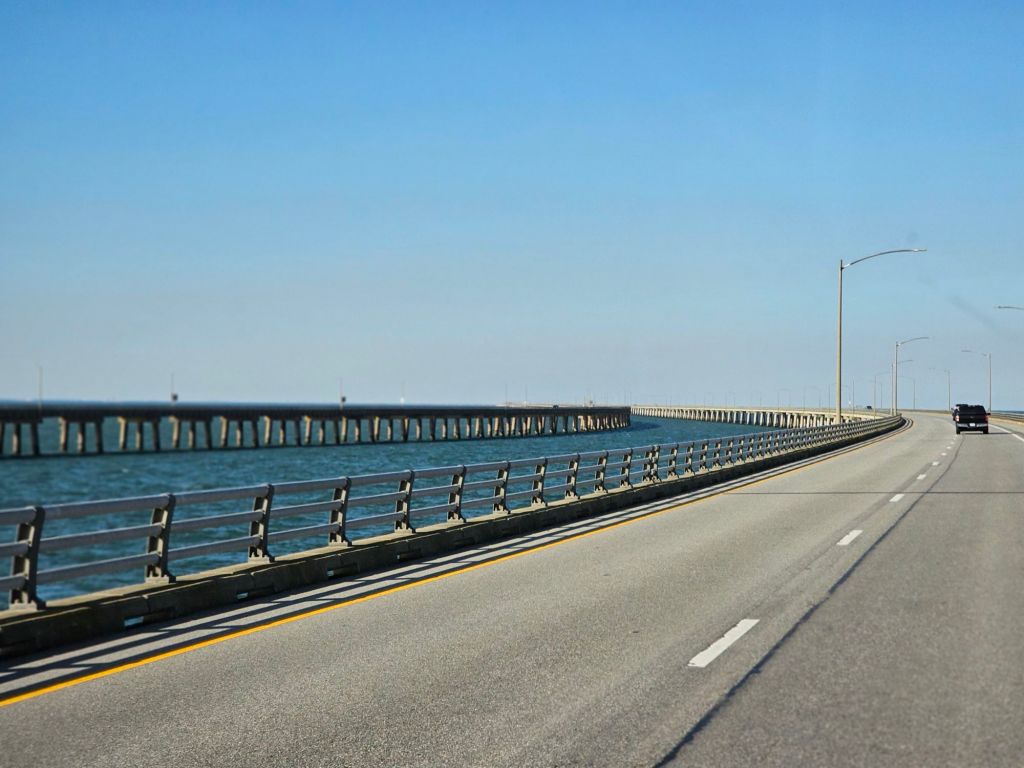
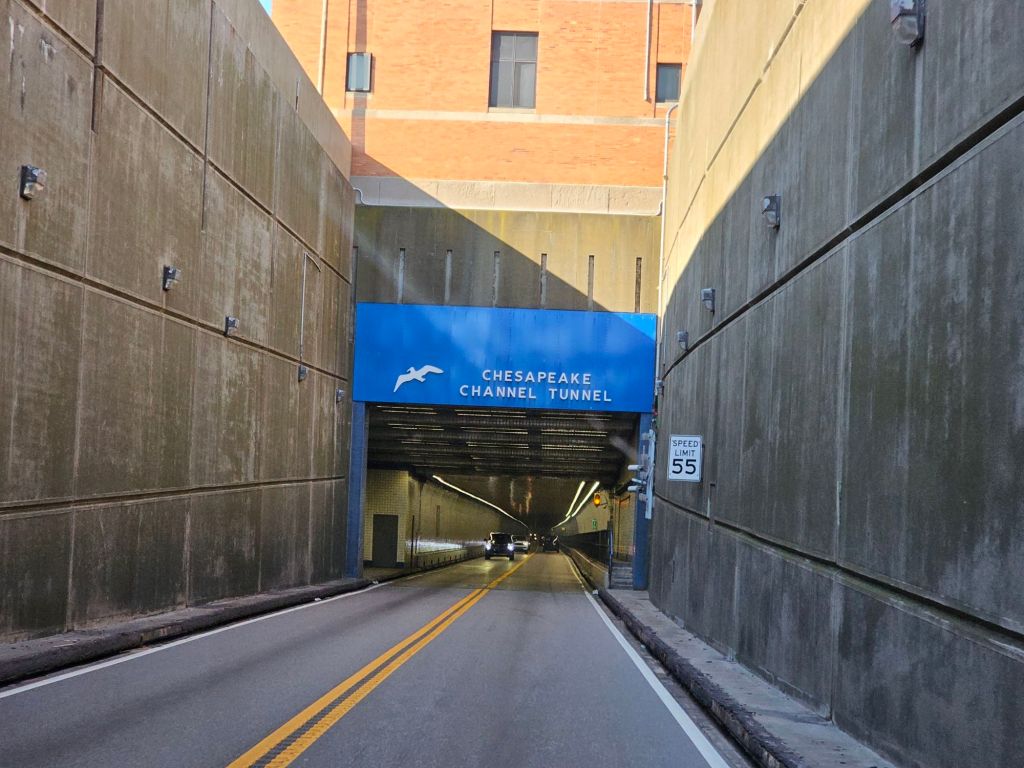
On our approach to the bridge i was fortunate enough to spot an American Bald Eagle, a Red Tailed Hawk, Terns, Cormorants, and Northern Vultures.
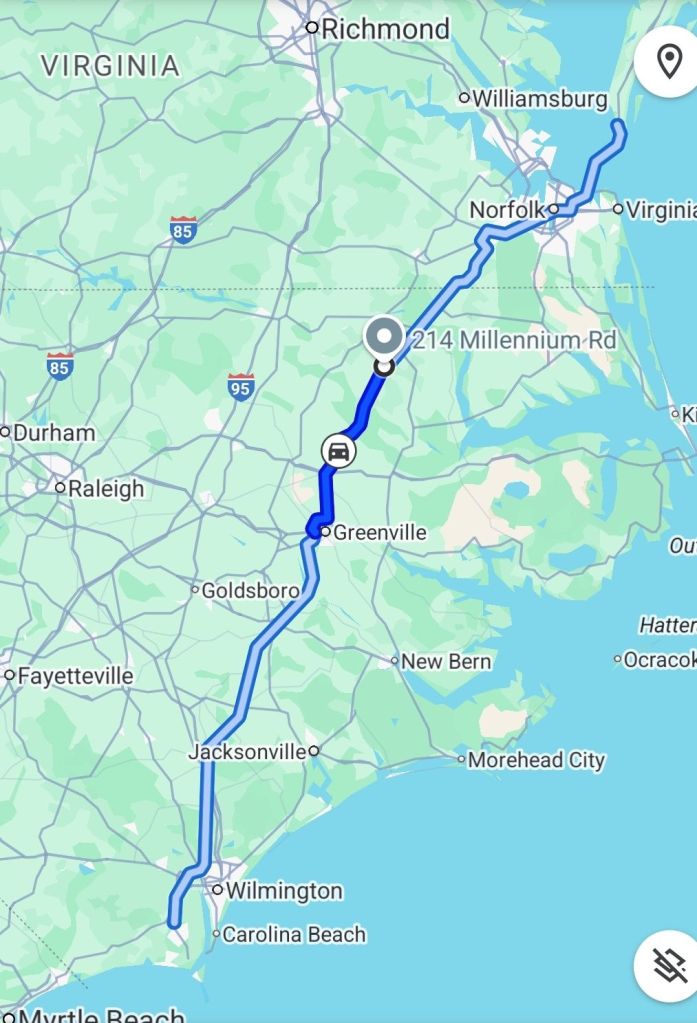
This is a travel day to get us down to where we want to spend the next 10 days. We didn’t stop anywhere other than a quick lunch of a shared chicken sandwich at a Royal Farms gas mart.
That being the case, I let my mind wander as we passed landmark names. I think we could learn a lot about the history of an area if we paid attention to the local nomenclature. One in particular made me ask myself some questions.
Pitch Kettle Rd. What’s its history? This part of the U.S. is flat and sandy. Perfect growing area for pine trees. Obviously a pitch kettle is used to melt pitch, and pitch is used for what? Caulking boats? So was there a pitch producer at some point on this road working with who? Fishermen? Military purposes in colonial times?
The most predominant pine tree along this coast is the Loblolly Pine that thrives in the sandy, coastal environment. However, the best pine tree for pitch is the Long Leaf Pine that was used for pitch in colonial times. Once found along the coast in abundance, it is rarely found now due to over logging but is being reintroduced.
In colonial times, pitch was a crucial material, primarily used in shipbuilding and maintenance. It was derived from the resin of pine trees, especially longleaf pine and slash pine, and was a key product of the naval stores industry, which thrived in the American South, including Virginia and North Carolina. Pitch was used for caulking ships, protecting ropes and rigging, candle making, medicines and wound dressings, barrel sealing, building construction.
We finally found spring. Cherry trees (pink and white) and Redbuds in full bloom along the route. The grass is greening up.
We are camping for two nights just north of Southport, NC. It’s a brand new private campground, the only place we could find within our 5-hour daily driving limit. The rest of the trip we are in state parks. As usual, we are surrounded by monstrous RVs, but we are very happy with our little unit. It only takes us 8 minutes to set up, which mostly involves plugging in to electric and water ( when available), setting up the satellite dish, and putting the chairs and mat outside. Voila!
Temperatures start very cool overnight and morning but are getting up to the low 70s during the day.
In this time of upheaval and worries about the future, I am endeavoring to find at least one thing every day that makes me feel positive whether it’s learning something interesting from our past, a feat of engineering, interactions with people or something in nature. Today, there were several.
 Louise and Brian McLeod Travel Blog
You must be logged in to post a comment.