We have a few miles to cover today and an activity that will take a few hours. We were up and out of the campsite by 8:30.
I had originally booked the Western Brook Pond boat tour for yesterday, but today promised better weather and I changed the reservation. I need to explain why this is such a special thing to do here.
Western Brook Pond is one of Newfoundland’s stunning and best known ‘fiords’, stunning natural features located off the wastern coast of Newfoundland and Labrador. It is also a UNESCO World Heritage Site.
The majestic Newfoundland fjords were sculpted by glaciers during the last Ice Age, deep, narrow inlets cuttimg into the rugged coastline of Newfoundland.
Other notable fjords in Newfoundland include Bonne Bay, also located within Gros Morne National Park, as well as St. Alban’s Bay and Bay of Islands. These are true salt water fiords.
The nutrient-rich waters of the salt water fjords support a wide variety of marine life, including whales, seals, seabirds, and fish. The fjords are also home to unique plant species that have adapted to the harsh conditions of this coastal environment.
Western Brook Pond is a freshwater fjord surrounded by towering cliffs that rise up to 600 meters above the water. Visitors can take boat tours through the fjord. However, the boat dock is not on the highway, but 3 km.(1.8 m) inland. To protect the fragile ecoscape, one must either walk or take a golf cart to the dock. It’s an easy walk along a gravel road through peat bogs and around a small pond. The wildflowers were magnificent. I have included 2 more here I haven’t photographed yet. It took us about 35 minutes to walk in, and 45 minutes to walk out (reading signs and taking pictures). By the time we walked out, the pathway was quite busy with people walking in both directions and the golf cart running back and forth. At $10 a head for the ride, someone has a good little business going. It holds 8 people. It was about 2:00 pm by the time we’d done the walks, the boat tour and had a snack lunch out of our own cupboards. We had taken nuts, tangerines and water with us.

The movement of massive ice sheets carved out the deep, narrow fjord that we see today, creating a breathtaking landscape that is unlike any other in the region. This valley has seen 40 glaciation periods. It was once salt water, making it a true fjord. Over time, the western end was sealed off from the ocean and the ‘fiord’ became a fresh water body of water, making it technically a lake. It is one of the purest sources of fresh water on earth. While it is highly oxygenated, the lack of debris in the water renders it almost sterile and little resources to support aquatic life. As a result, no birds either.


After our snacks lunch, we enjoyed a beautiful drive up the coast. We were in and out of fog. It is truly mysterious. We stopped to look at the geological formations at Arches Provincial Park.
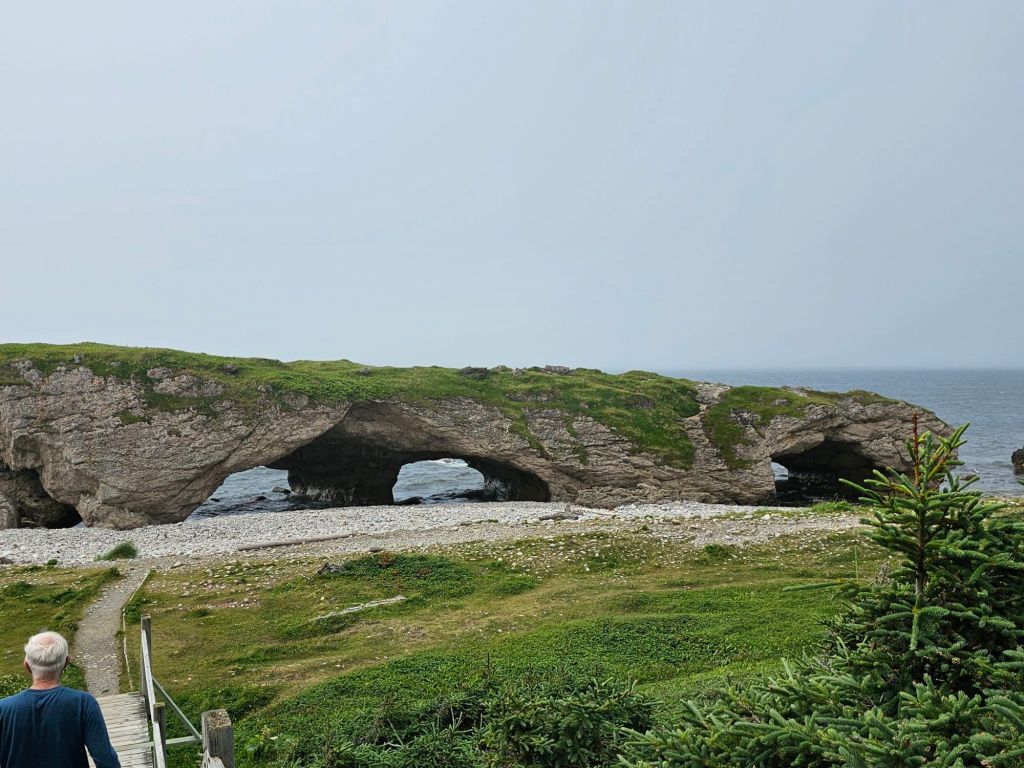
We arrived at our destination, Port Aux Choix, about 45 minutes before the National Historic Site here closed. We had time to view the exhibits in the Visitor Centre and drive out to the Pointe Riche Lighthouse.

Port au Choix National Historic Site has been inhabited for thousands of years, with evidence of human presence dating back over 4,500 years. The site contains a wealth of archaeological artifacts, including burial sites, tools, and pottery, that provide valuable insights into the lives and customs of the ancient inhabitants.
One of the most notable features of Port au Choix is the abundance of well-preserved ancient burial sites. These burial grounds contain the remains of the Maritime Archaic people who lived in the area over 3,000 years ago. The site also features ancient dwelling sites and evidence of hunting and fishing practices. For over 5,500 years, this place has been a crossroads for indigenous and European cultures. This was an important place for Newfoundland’s first people, followed by Groswater and Dorset (from Baffin Island), who focused on harp seal hunting. Later the Beothuk emerged. Several hundred years later came the Basques, French and English.


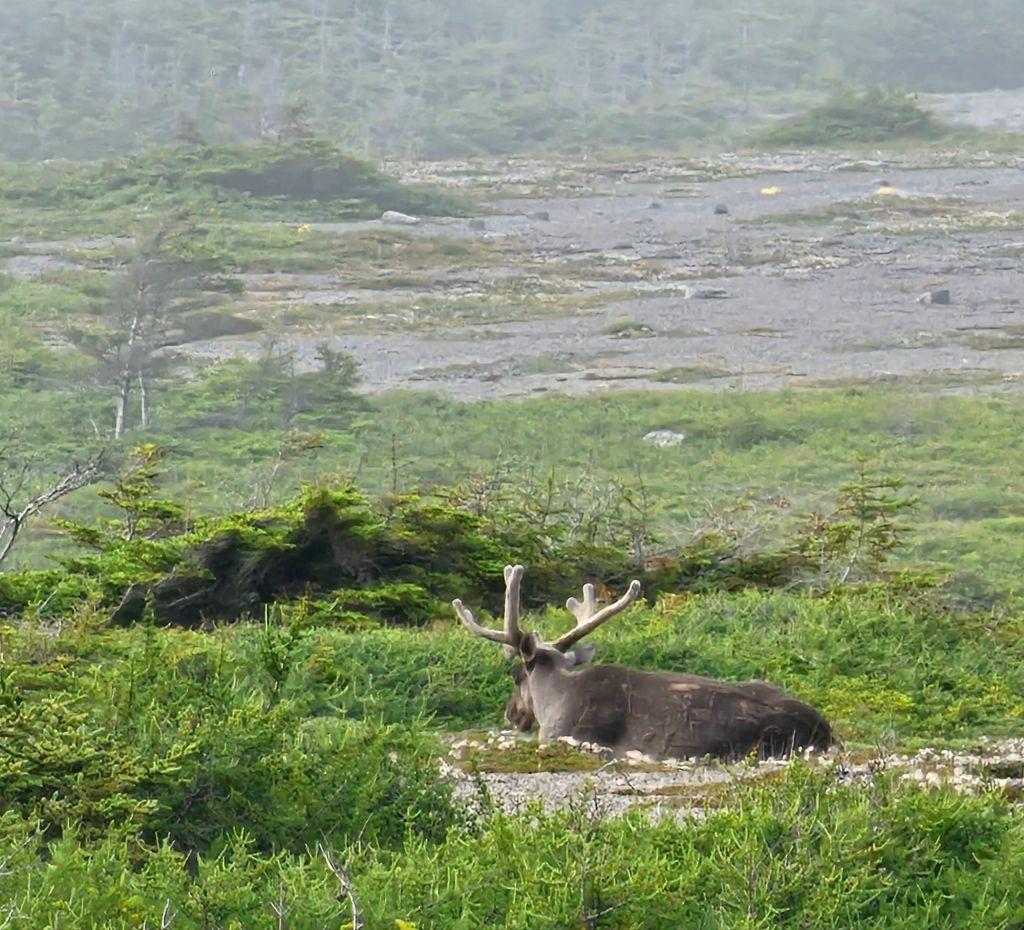

We spotted Caribou on our way out. A first for us. Caribou are paler and appear to be smaller than elk or moose. Very exciting to see one.
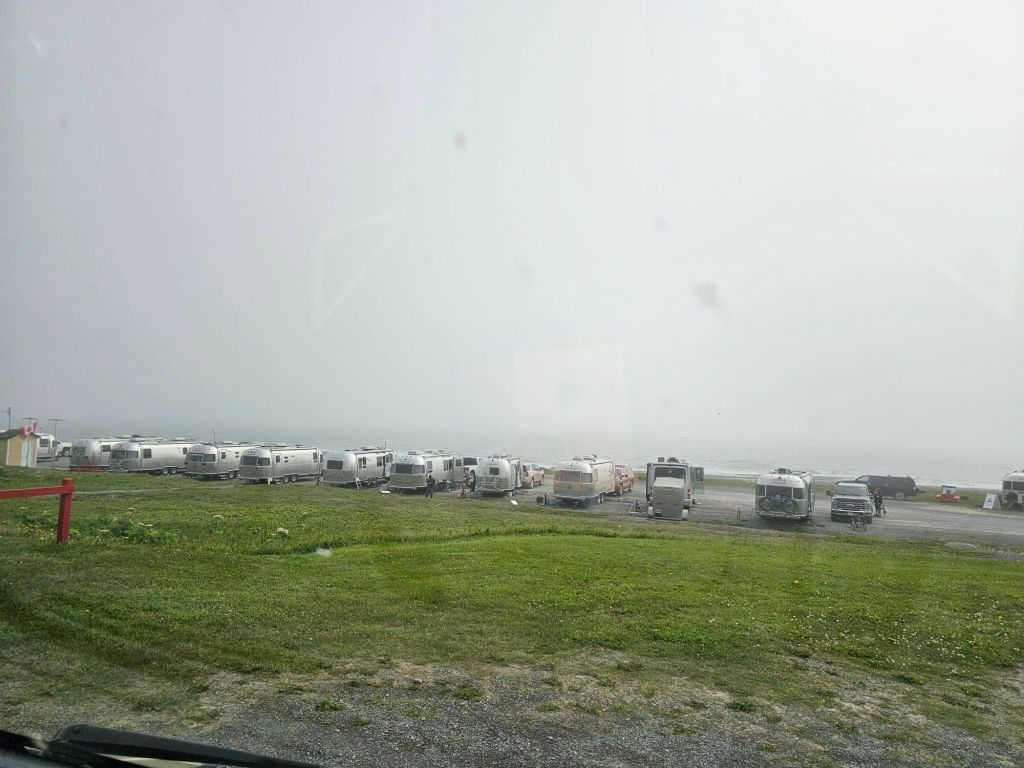
We had trouble finding a campsite in this area and when we got to this one we think we know why. Brian finally managed to find a site oceanside in Port aux Choix and it’s full of Airstreams travelling together. We don’t exactly fit in. It’s cool, foggy and very windy. An inside night for sure.

 Louise and Brian McLeod Travel Blog
You must be logged in to post a comment.