Happy July 4th to all my American friends.
We arrived in camp around 10 pm last night. There was no point hooking up utilities only to unplug it all in the morning. That meant no internet and we have no cell network here either.
We tried to sit outside for a while to enjoy the rest of the evening but the mosquitoes had other plans. We just went to bed instead.
Lovely sunny morning to enjoy a leisurely breakfast outside. You already know what we usually eat.
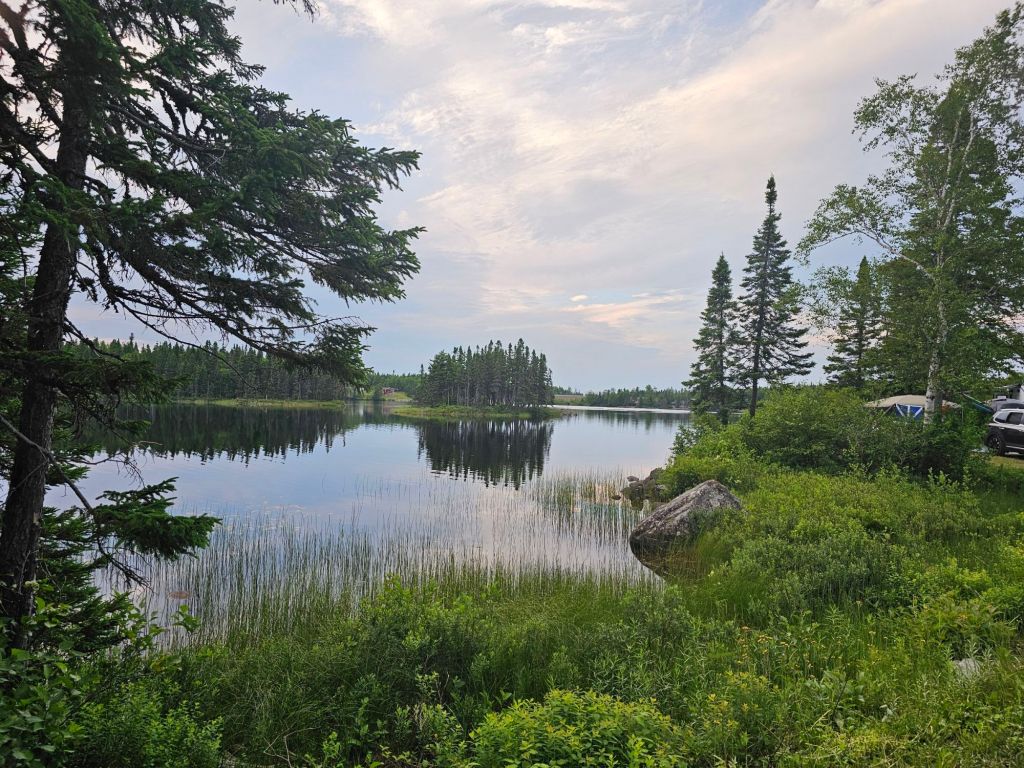
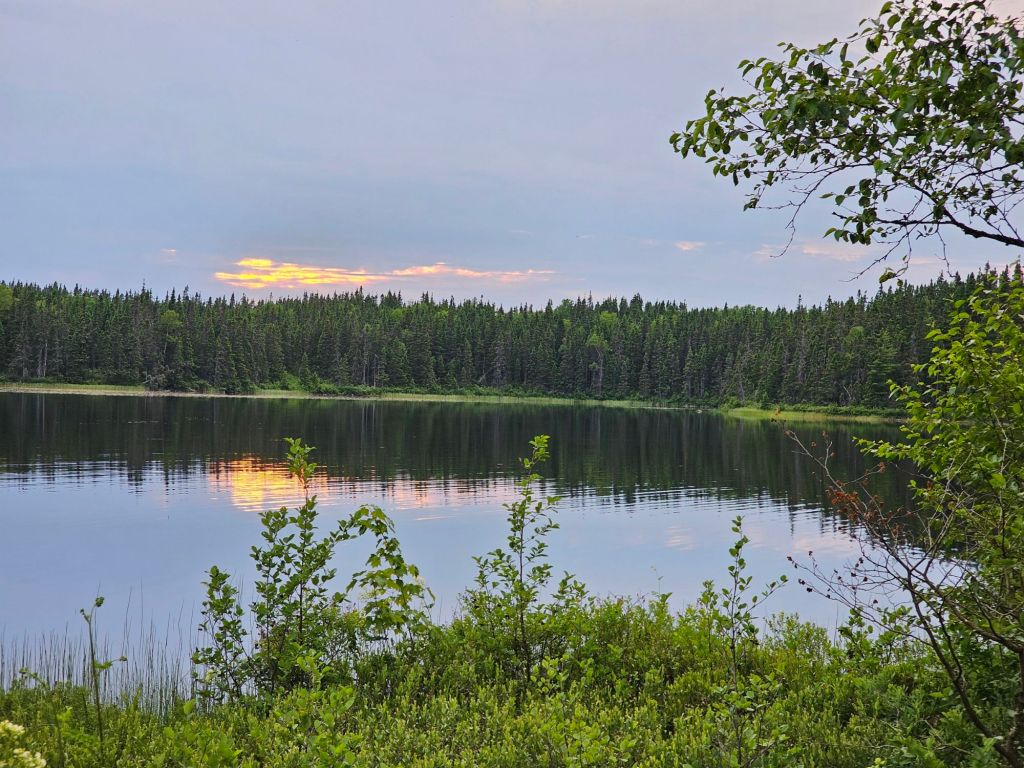
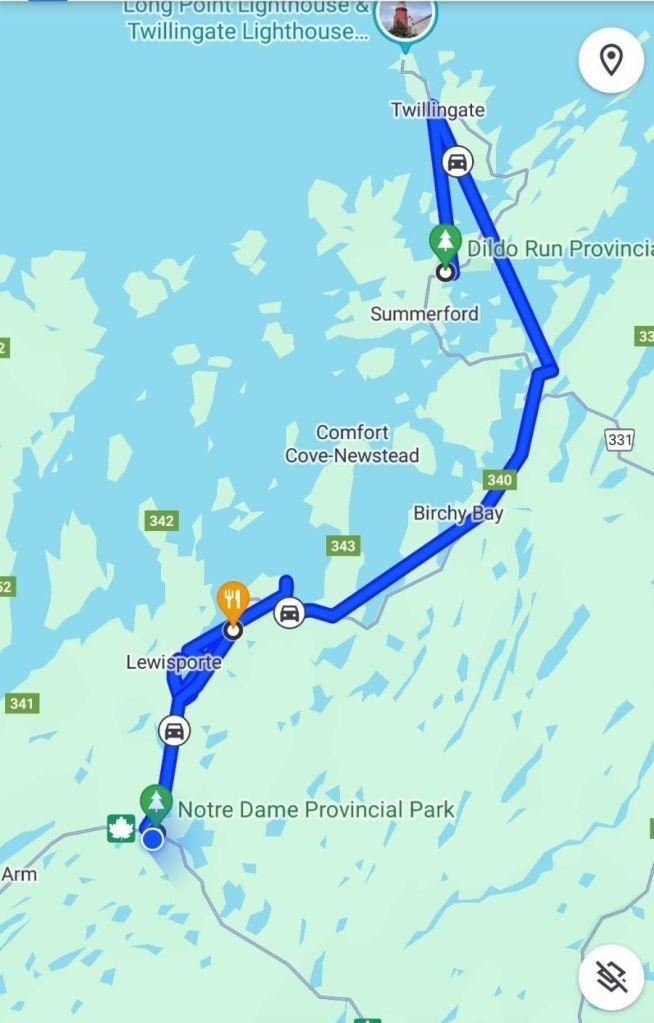
Our destination today is Notre Dame Provincial Park, not far.
On our way out of Dildo Run, we stopped to visit the Beothuk Interpretation Center in Boyds Cove.
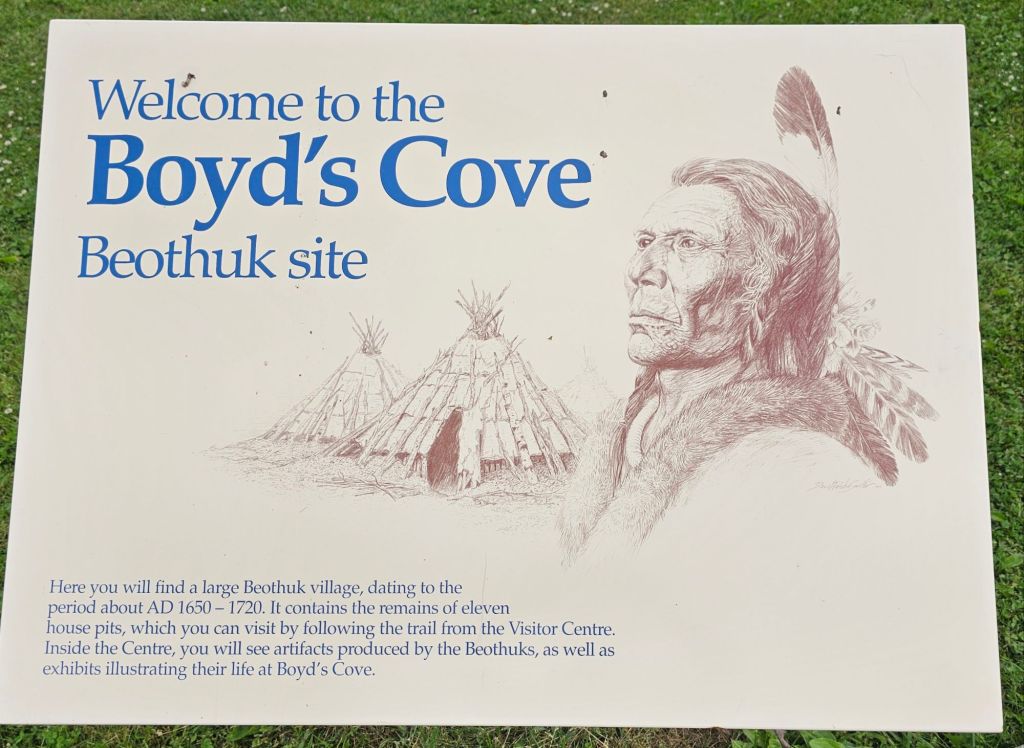
What is thought to be remains of a Beothuck village were found at Boyd’s Cove. Unlike other indigenous peoples, the Beothuk avoided the Europeans. The early fisherman only camped here in the summer months allowing the Beothuk to scavenge for metal and other items after they returned to Europe in the fall. Once the Europeans started settling and fishing permanently along the coasts, the Beothuk were driven inland, where there was little food supply.
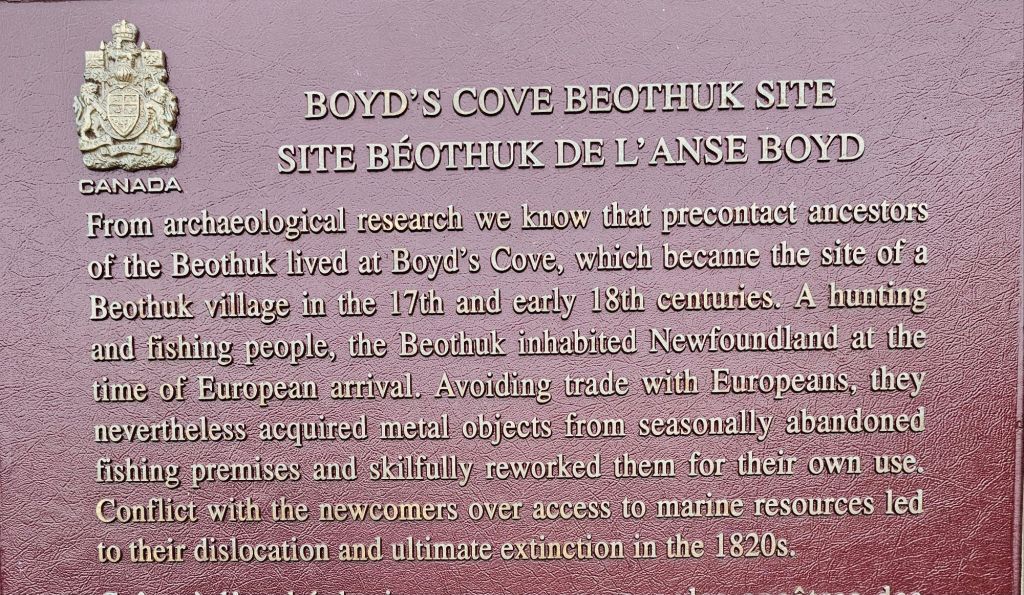
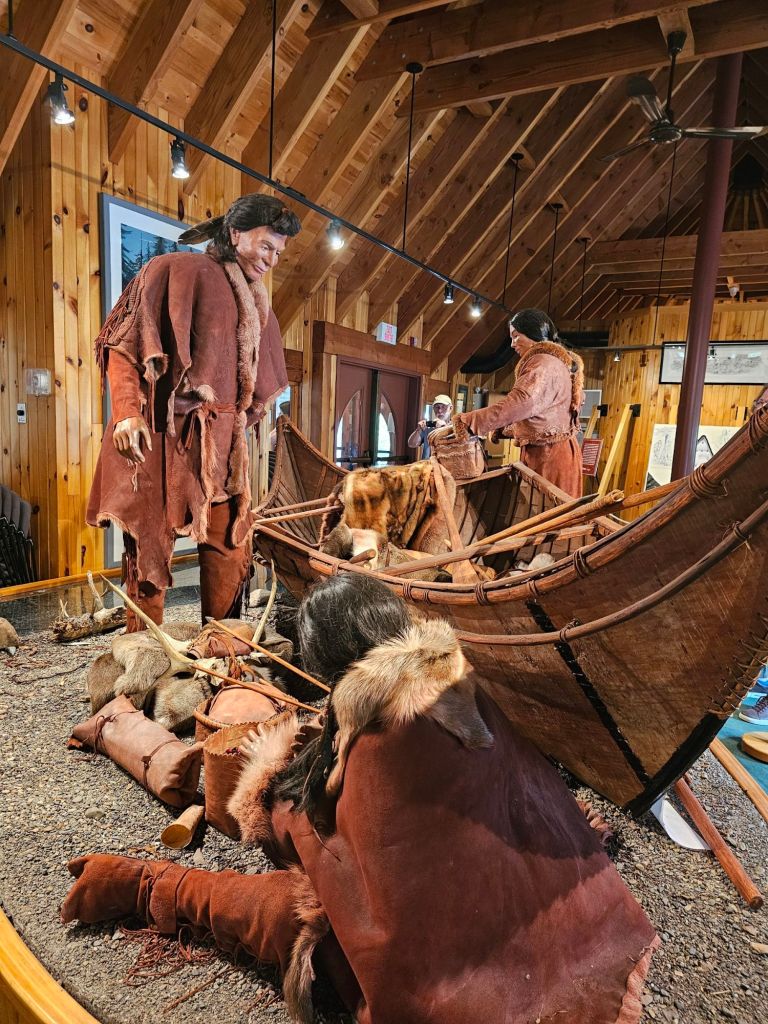
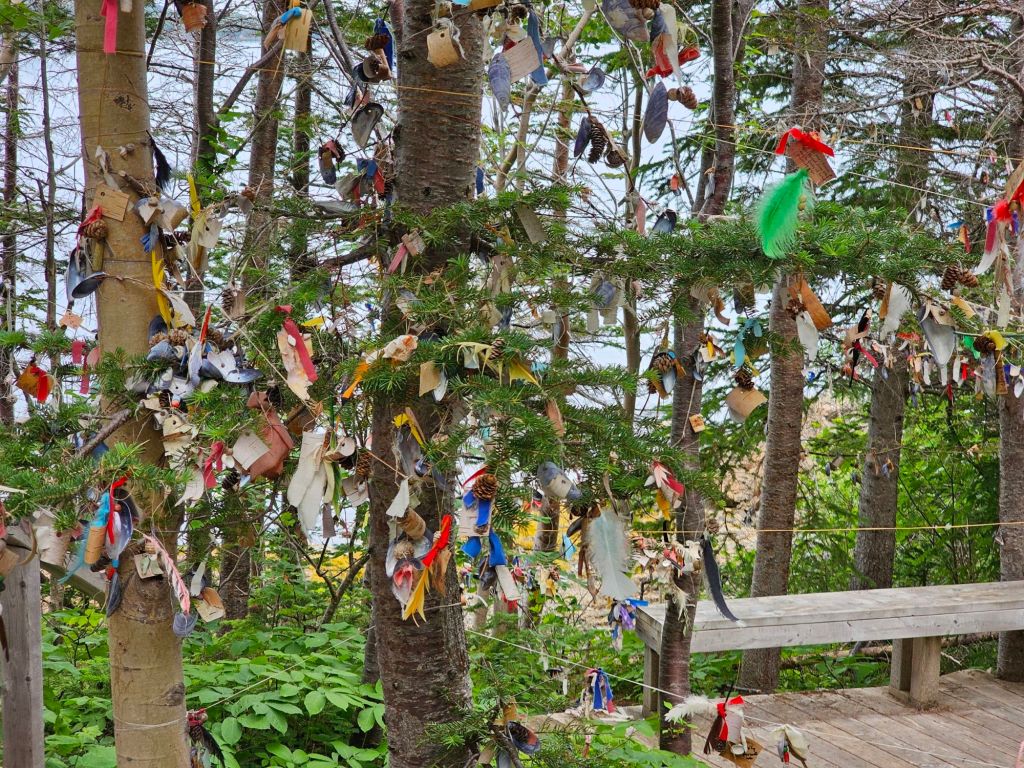
The Beothuks were an Indigenous people who were the original inhabitants of the island of Newfoundland. They are believed to have lived on the island for over a thousand years before European contact. The Beothuks were a hunter-gatherer society, relying on fishing, hunting, and gathering wild plants for their sustenance.
The Beothuks were known for their distinctive way of life and culture. They often painted their bodies and possessions with red ochre, a practice that led to them being called the “Red Indians” by early European settlers. They also made distinctive tools and implements, including bone and antler harpoons for hunting seals and other marine animals.
Unfortunately, the Beothuks’ way of life was severely disrupted by the arrival of European settlers in the 16th century. The introduction of firearms and other European technology led to the depletion of the Beothuks’ traditional food sources, such as seals and fish. European diseases also took a heavy toll on the Beothuk population, as they had no immunity to illnesses like smallpox and influenza.
By the early 19th century, the Beothuk population had been reduced to just a few individuals, and by the mid-19th century, they were believed to be extinct. The last known Beothuk individual was a woman named Shanawdithit, who died in 1829.
Shanawdithit’s story is a poignant reminder of the devastating impact of colonization on Indigenous communities. She was captured by European settlers in the early 19th century and lived out the remainder of her days in captivity. Despite efforts to preserve her culture and language, Shanawdithit was the last living Beothuk, and with her passing, an entire way of life was lost forever.
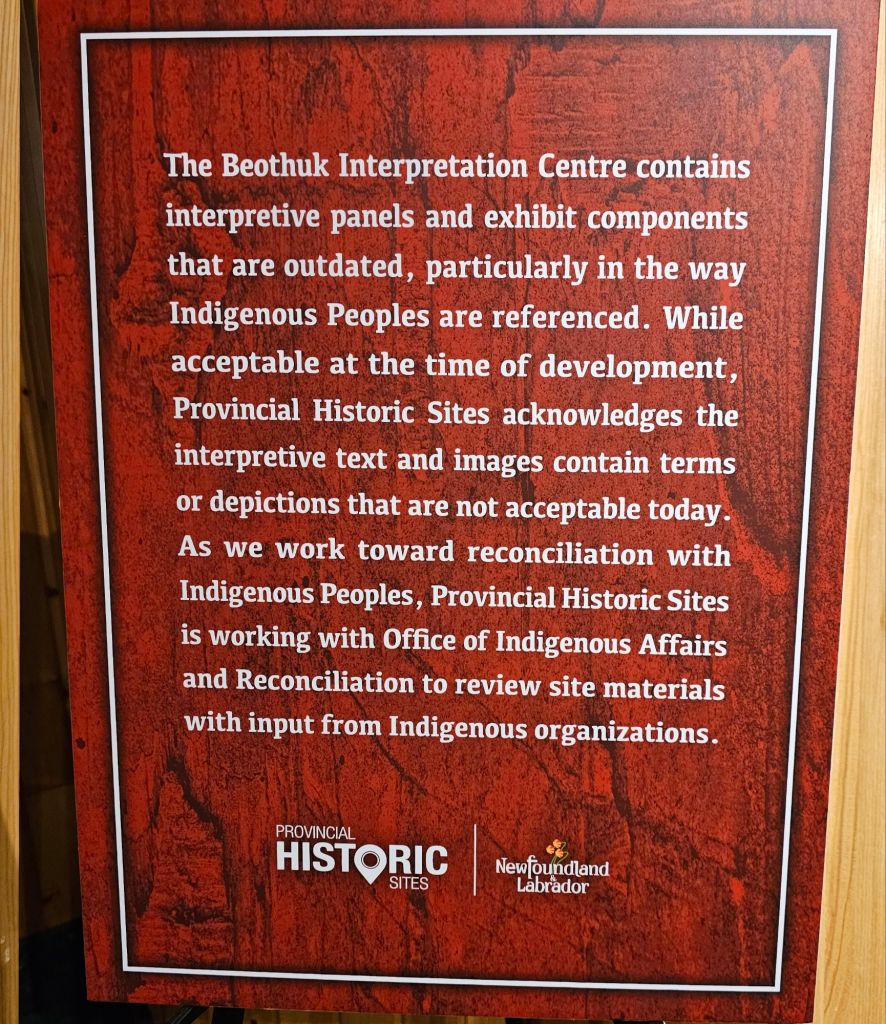
The Beothuk left no written records and few artifacts behind. The story of the Beothuk people serves as a stark reminder of the devastating impact that European colonization had on Indigenous cultures and societies in North America.
On our way out of the interpretation center, we ran into one of the couples we had dinner with last night. We continued our conversation for another pleasant half hour or so.
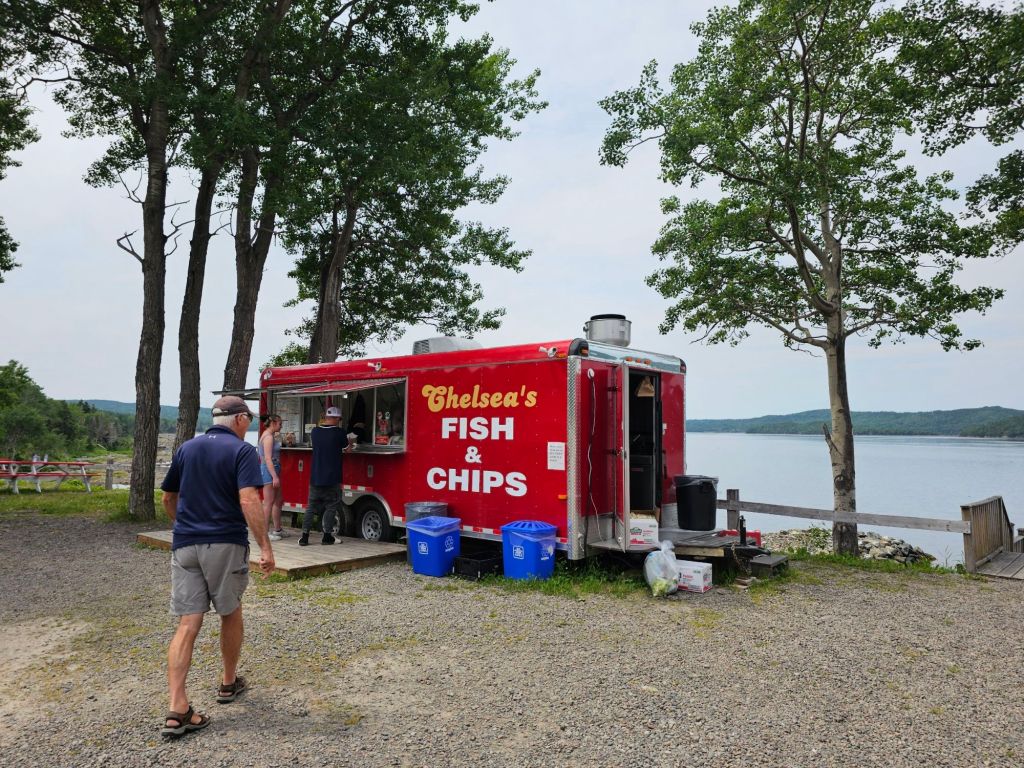
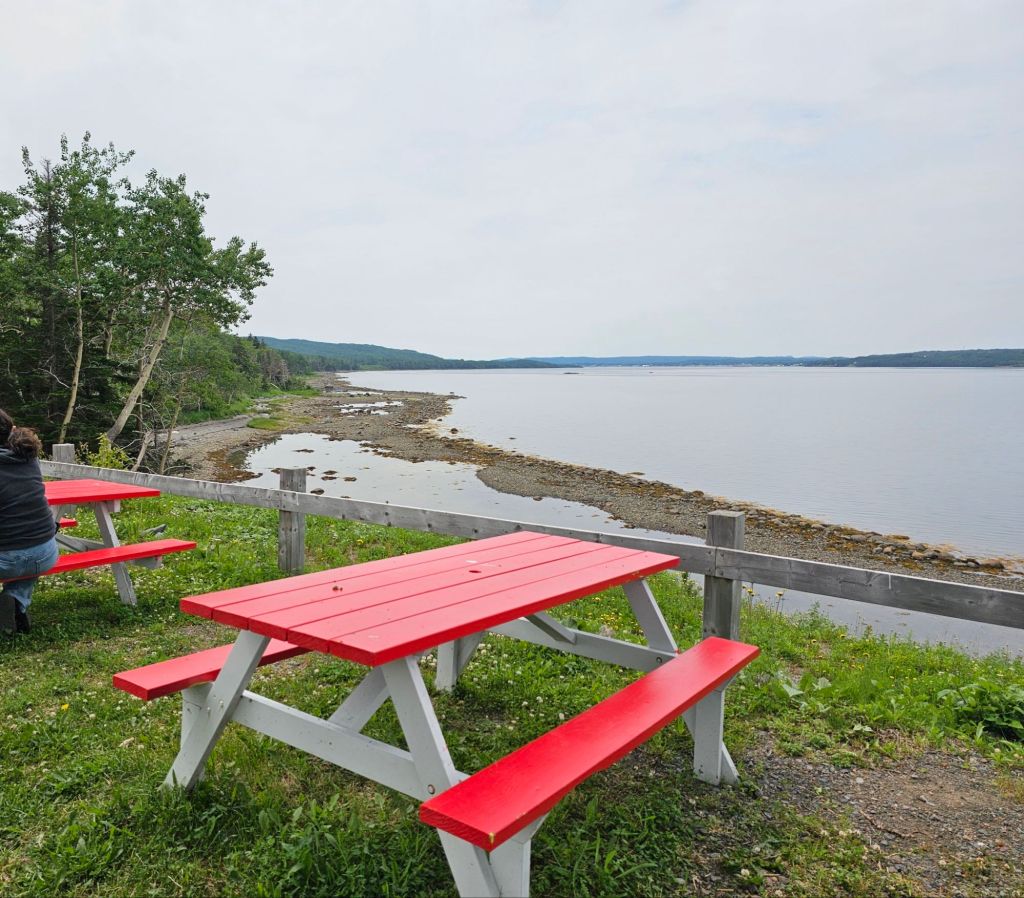
We slowly made our way back to the TransCanada Highway poking in and out of small towns. We stopped at a waterside Fish and Chips truck / Diner for lunch. Great food with an excellent view. Brian had a crab 🦀 sandwich. It was delicious.
Setting up camp today was a little disconcerting. After getting things out of the van as per our usual routine, we discovered the electrical box wasn’t working. We did want electrical tonight. Fortunately we were able to move to another site but not without some ‘rearranging’ / inconvenience.
It’s warm and the mosquitoes are out. So happy for our little tent.
After we each had a nice shower, we celebrated July 4th with a beer 🍺 and an icecream cone out of our freezer.
We’ve spent the last hour or so in our little tent sipping wine and listening to Canadian music. I had forgotten how many great musicians, composers and singers have come from Eastern Canada.
We had good news today. The last part of our trip was to be the Labrador Highway ending up in Baie Comeau, Quebec and parts of Quebec on the north shore of the Saint Lawrence River, then on to family in Quebec and Ontario. Churchill Falls, a critical gas stop along the route, was evacuated due to wildfires. We learned today that the gas station is now open (and people can return to their homes thankfully). Otherwise we would have been looking at a significant detour through New Brunswick and the dreaded ferry back to Nova Scotia through Port aux Basques.
Time for a walk.
 Louise and Brian McLeod Travel Blog
I love taking this trip with you (but not having to deal with the mosquitoes!) The photos are beautiful, the history lessons are amazing – so much work goes into these blog entries – they must take time away from your adventures but they are really appreciated. What a great advertisement for what seems like a super interesting area of the world. Must plan a trip of my own out there! Thanks for all the sharing, elise
LikeLike