As predicted, we had a lot of rain last night. It had stopped by the time we got up and we could pack up without getting wet. We finish the Cabot Trail today. It’s warm but cloudy/misty.
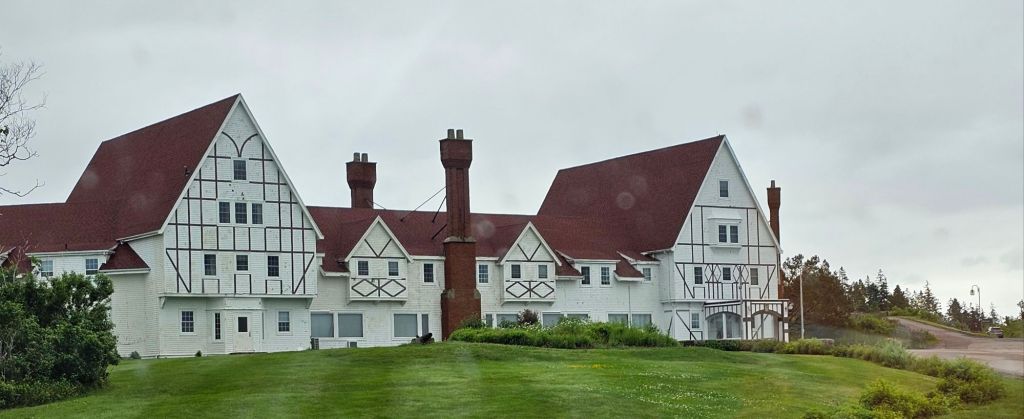
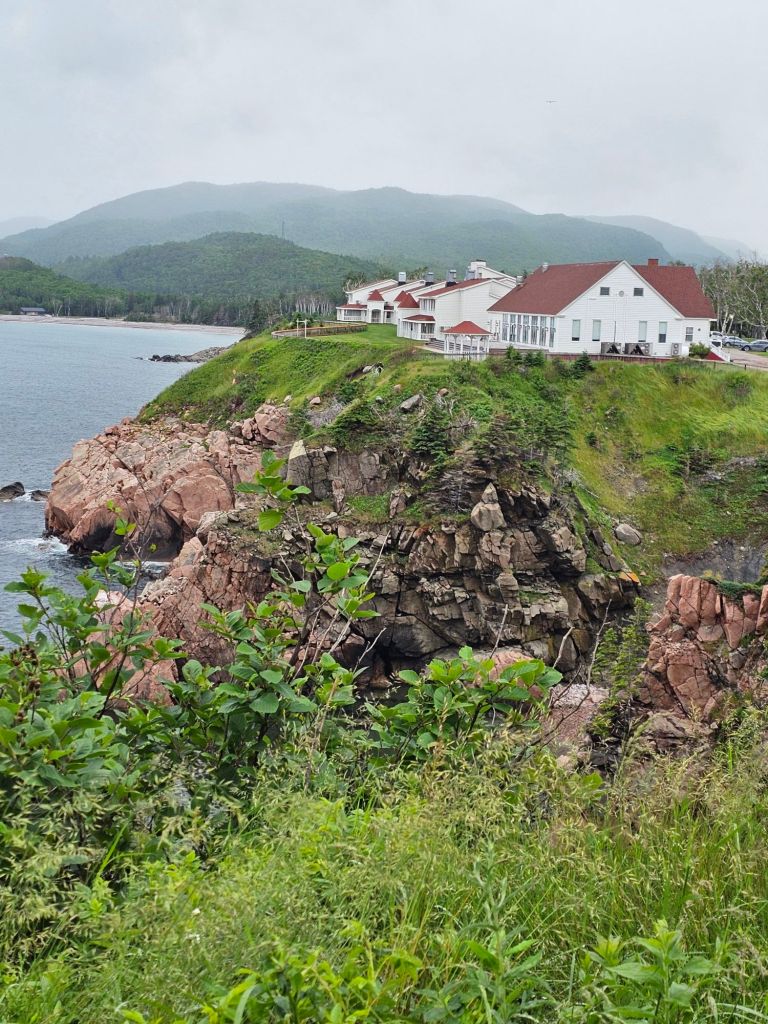
Our first stop was a quick visit to Keltic Lodge, an iconic 1940s lodge and legendary golf club. The main lodge was recently closed due to its deteriorating condition and the massive funding needed for renovations. But the restaurant building and cottages are still available along with the Golf course which is rated number 4 in Canada.


Today, we are definitely touring the Scottish side of Cape Breton. Only in Canada is there such a variety of bilingual road signs … on the west side of Cape Breton, English and French … on the east side, English and Gaelic.
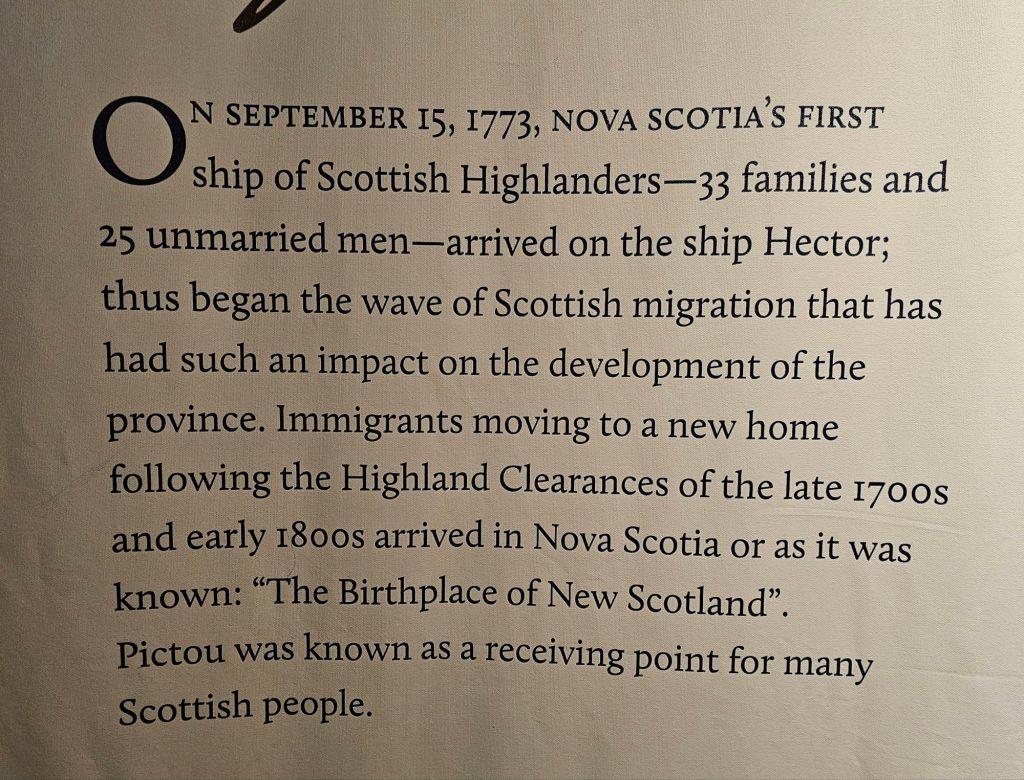
Now on to the history of the Scots in this part of Canada and why it’s called Nova Scotia (New Scotland).
Between 1650 and 1775 many thousands of Scots were banished to the American colonies for political, religious, or criminal offenses and a series of events called the Highland Clearances.
The Highland Clearances were a series of forced displacements of the Scottish Highlanders in the 18th and 19th centuries. These clearances were primarily carried out by landlords and landowners, who sought to replace traditional agricultural practices with more profitable forms of land use, such as sheep farming and large-scale agricultural production. Thousands of families were evicted from their ancestral lands and homes, leading to widespread poverty, destitution, and the loss of traditional ways of life.
Many Highlanders were forced to leave their homeland and emigrate to other parts of Scotland or abroad, leading to the dispersal of communities, a decline of the use of Gaelic language, music, and the loss of other aspects of Highland culture.
Between 1650 and 1775 many thousands of Scots were also banished to the American colonies for political, religious, or criminal offenses. Oliver Cromwell had many criminals sent to Virgina for example.
Between 1770 and 1850, thousands of Highlanders arrived at Cape Breton and most settled at Inverness County on the island’s western shore. Migrants came from many places in the Scottish Highlands, but the major source areas appear to have been Moidart, Morar, and the Isle of Canna on Scotland’s west coast.
Today, Nova Scotia is home to the largest Scottish Gaelic-speaking community outside of Scotland, with a small number of native speakers in Pictou County, Antigonish County, and Cape Breton Island, and the language is taught in a number of secondary schools throughout the province. In 2018 the government launched a new Gaelic vehicle licence plate to raise awareness of the language and help fund Gaelic language and culture initiatives. They estimated that there were 2,000 Gaelic speakers in the province.

We visited the Cape Breton Gaelic College in St. Anne’s where there is a Clan Museum and gift shop. Very interesting and educational especially since there is a family historical relationship.
The gift shop specializes in tartans, all of them, so if you need a kilt, this is the place!

The museum here includes the history of the Scots in Cape Breton. Of interest to me was the story and purpose of the tartans. In addition to comfort and warmth, the plaids also indicated class, the more the colors in the weave, the higher you were on the social scale. There were also different tartans for different purposes. The original wools were dyed using locally available resources, eventually leading to the differentiation among clans.


The Cape Breton Gaelic College, also known as “Colaisde na Gàidhlig” in Scottish Gaelic, is a renowned institution located in St. Ann’s. Established in 1938, the Gaelic College is dedicated to the preservation and promotion of the Scottish Gaelic language, culture, and traditions, particularly within the Cape Breton Island community.
The college offers a wide range of programs and courses focused on Gaelic language learning, traditional music, dance, crafts, and storytelling. One of the highlights of the Gaelic College is the award-winning summer school program, which attracts participants from around the world. During the summer months, the campus comes alive with the sounds of Gaelic music and the sight of dancers practicing traditional steps. Events such as the “Feis an Eilein” Gaelic Festival and the “KitchenFest!” music series bring together musicians, dancers, artisans, and Gaelic enthusiasts to share their talents and celebrate the vibrant Gaelic culture of Cape Breton.
It is the only institution of its kind in North America.

It started to rain just as we were leaving the college. Not many places for eating on a Monday. We finally opted for Jane’s restaurant in Little Bras d’Or, a local diner with pizza on the menu, with a local twist. Brian just had to try the pickles and bacon pizza. It was actually very good. No tomato sauce, just butter and lots of cheese with sliced dill pickles and bacon. Don’t mock it until you try it.


We managed to get into camp and set up before the rain decided to get serious. It’s been thundering for about an hour. This weather system seems to be stuck on the eastern shore of Cape Breton and shows no sign of moving further out to sea.
Update on the Newfoundland Ferry: the ferry service called this morning both to confirm the new route and give us a significant refund. Brian is still remaking reservations, and some campsites in Gros Morne NP are already full. We are now getting into July, tourist season. We have definitely dismissed travel plans to the Avalon Peninsula and St.Johns.
Late afternoon: It is now pouring with rain. No more outside activities for today. Guess it’s time to get a book out once I finish this blog.

The weather decided to settle in with pouring rain most of the evening and night. We couldn’t even go for an evening stroll it was raining so hard. I spent the remainder of the afternoon with my Audible book and played Minecraft. About 6 pm Brian was needing a distraction with music or something on the TV. I had installed a brand new Amazon Firestick before we left home in anticipation of daily internet availability through our Starlink system. Although we do have a Smart TV, the firestick provides more services. With a little sleuthing through the menu system, I found LIVE News, not just streaming after-the-fact news. We got caught up on the news from Home.
After a dinner of smoked salmon, crackers, and ginger carrot soup courtesy of President’s Choice, we settled down to a movie while snacking on pears and cookies.
We bought firewood.. hah… funny…
 Louise and Brian McLeod Travel Blog
You must be logged in to post a comment.