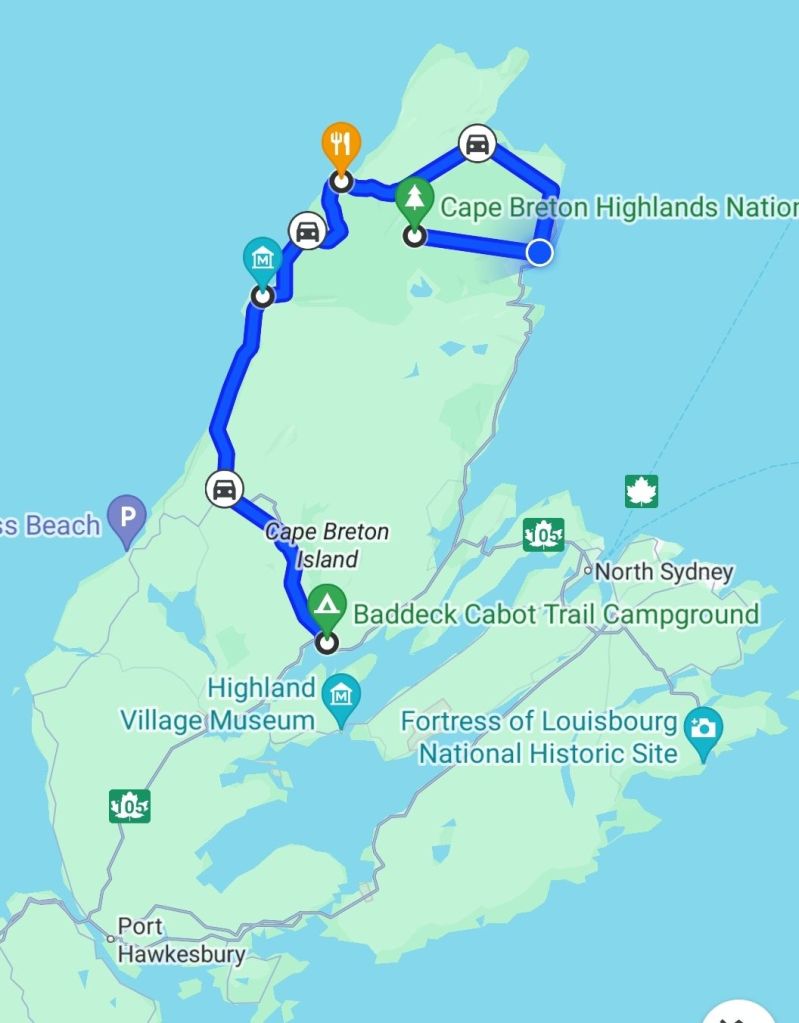
Today we started touring the Cabot Trail ending with camping in Cape Breton Highlands National Park tonight. We’ll finish the rest of it tomorrow.
Today is mainly scenery, some local history including a stop at the Acadian museum in Cheticamp. Honestly, as a crafter, this museum completely blew me away. It’s more than a museum, it’s an art gallery!
Cheticamp, NS
I have been writing about the Acadians since we first started the trip, how they settled in Port Royal around 1604 and their expulsion by the British in the 1750s. Today we drive through the charming village of Cheticamp on the Cabot Trail in Cape Breton where some of the expelled Acadians re-established their way of life, their language, culture, and traditions. The Acadians in Cheticamp maintained strong ties to their Acadian heritage, passing down their stories and customs from generation to generation.
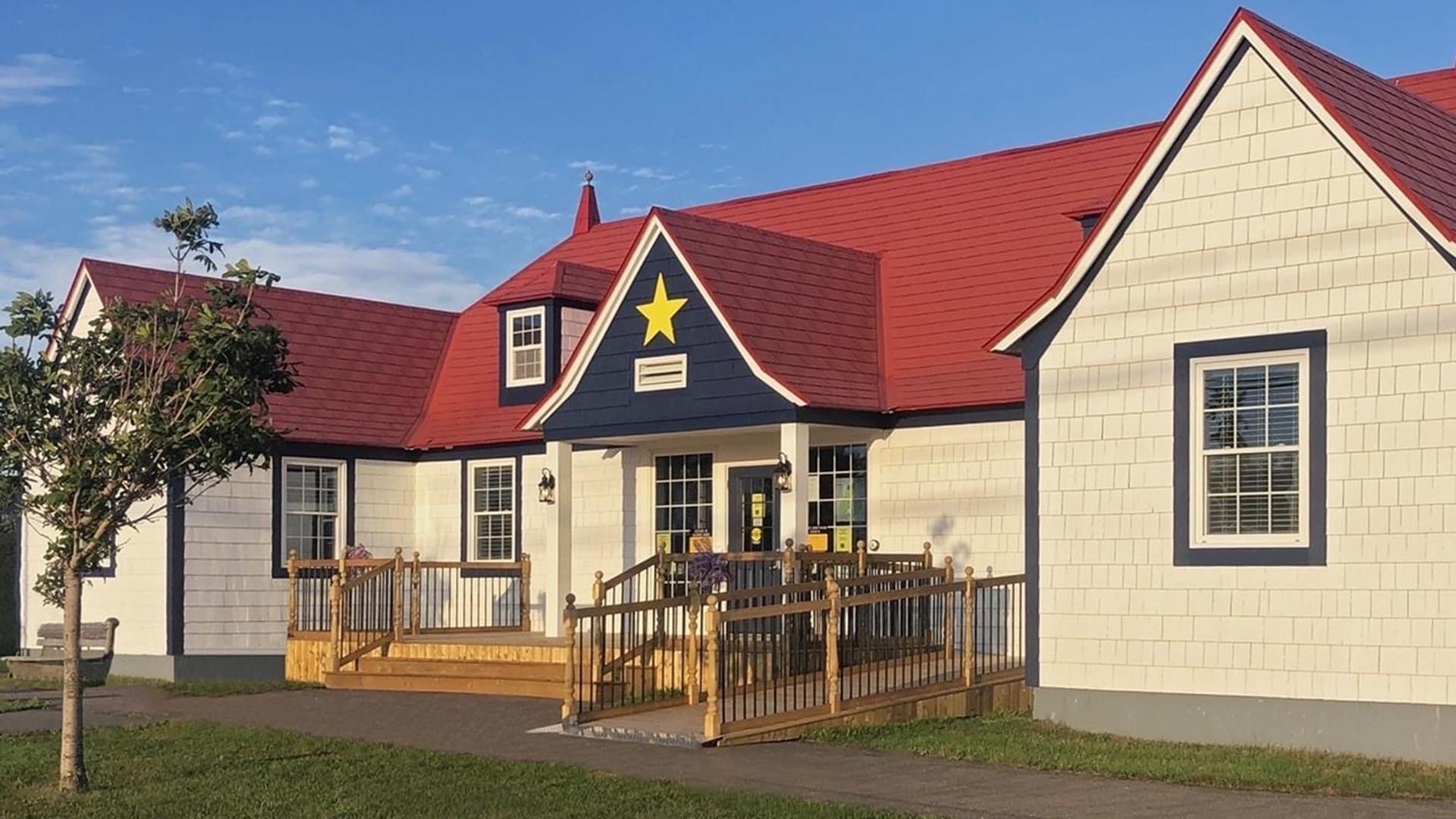
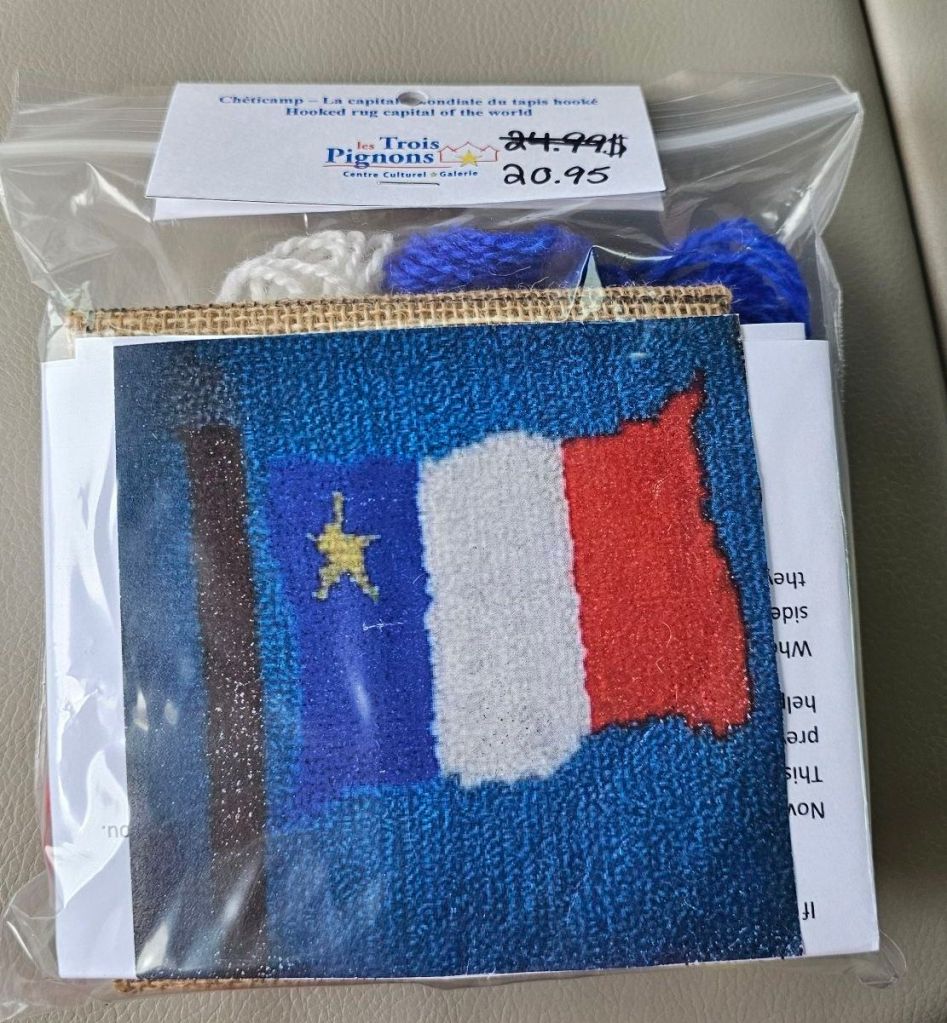
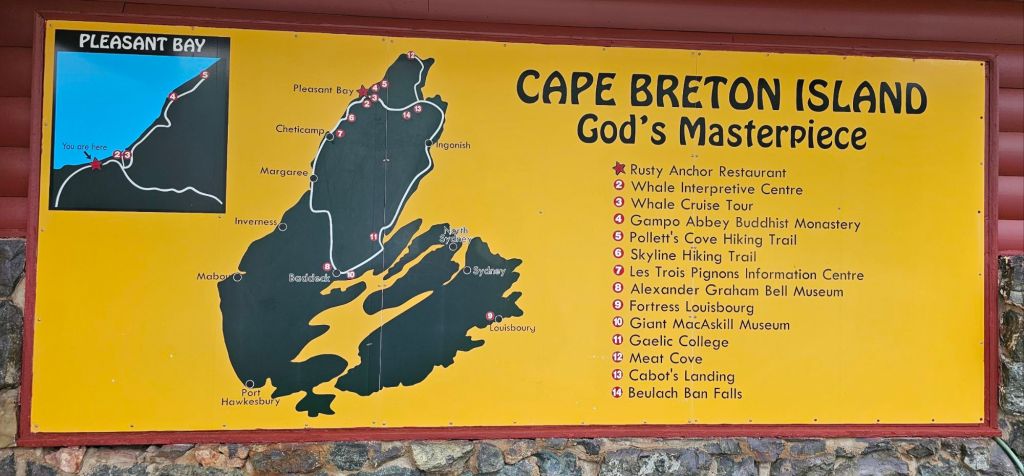
We visited Les Trois Pignons Museum in Cheticamp dedicated to the Acadian women who perfected the art of Rug Hooking and to the Acadian way of life.
The docent, who was demonstrating the art form, explained to me that the women would have raised their own sheep, skirted and washed the wool, dyed and spun it. All very labor intensive and time consuming. Once the rug hooking became a business, they purchased the wool because the commodity was the rugs themselves, not the work involved in making the wool. However, colors are restricted with purchased wool so if more colors were needed, the artisr had to die their own, and dye enough at the beginning of a project to be able to complete it. As a spinner and a weaver, I can completely understand this.
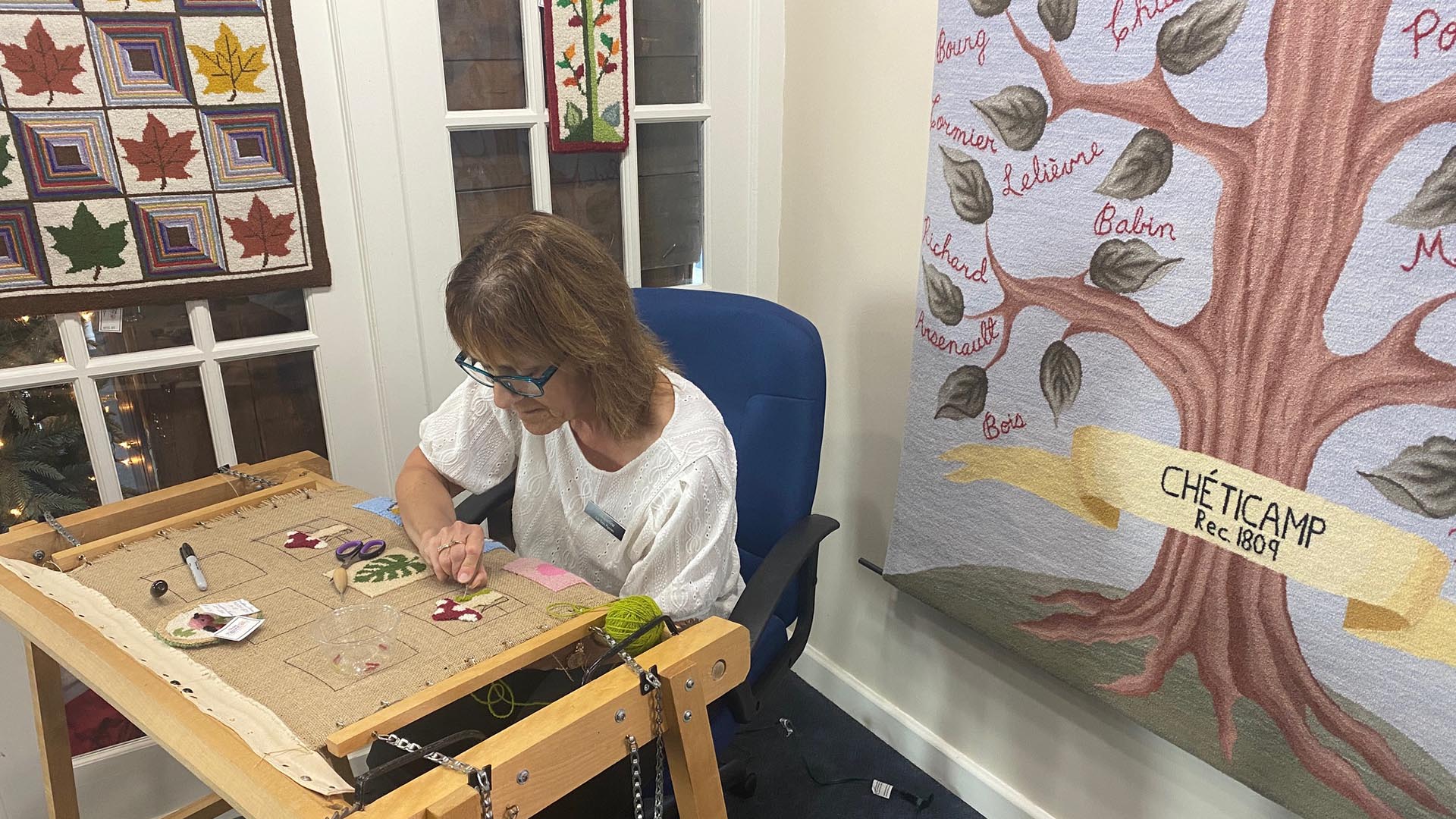
She also explained that the frames used to stretch the burlap while in use are called Cheticamp Frames. The burlap is stretched on all 4 sides. They look something like a small loom without the harnesses and heddles and, unfortunately, are no longer being made. The burlap is also not as easily available in the desired quality. The weave needed is 144 / square inch (12×12 warp and weft). They only get it now through craft shops and the quality is inconsistent. In times past the artisans would have used potato sacks, flour and sugar sacks etc but always burlap.
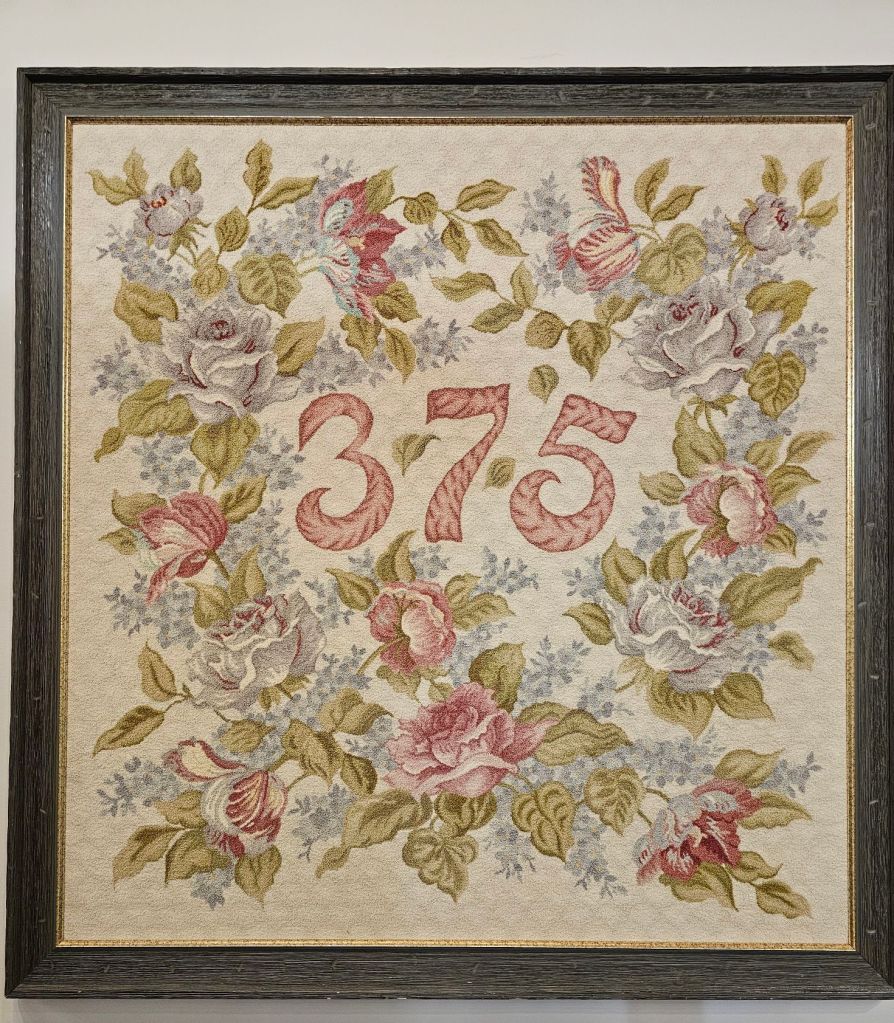
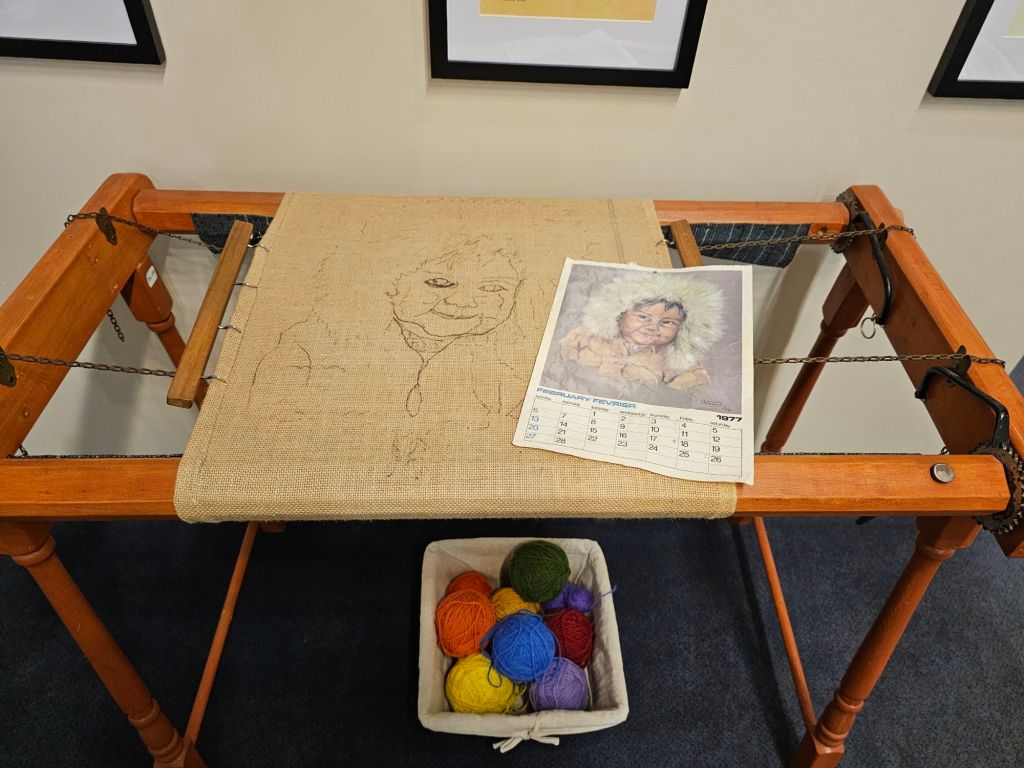
A history of the craft of Rug Hooking in Cheticamp, NS
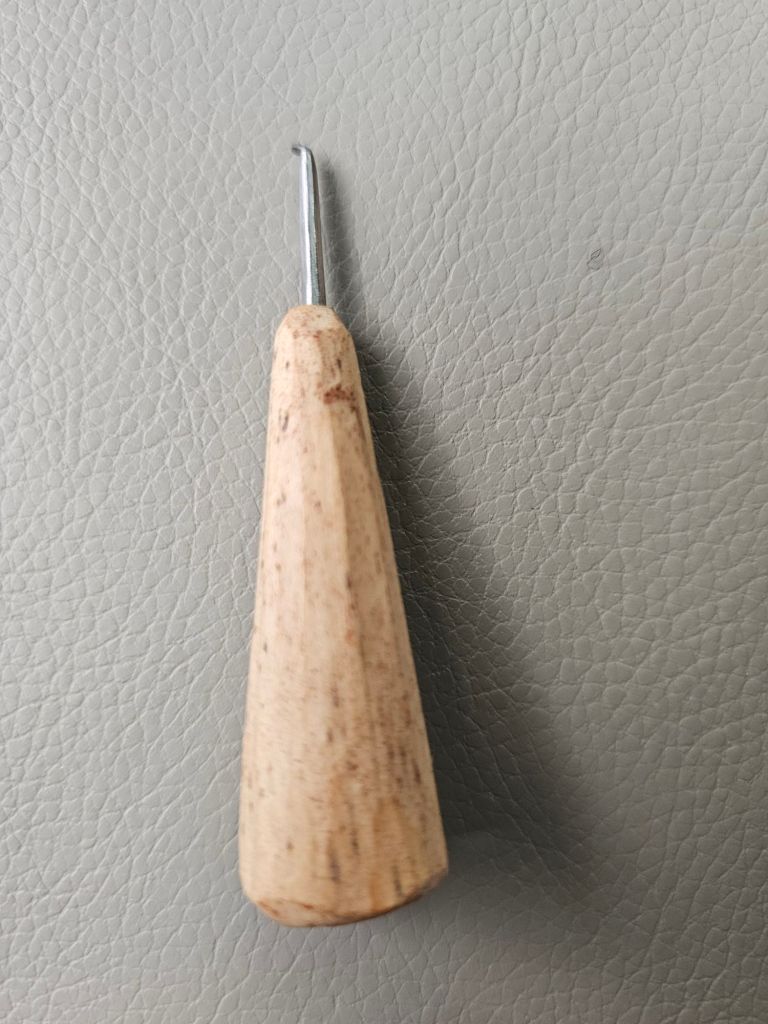
At first, Chéticamp rugs were made for household use, using worn-out clothing cut into long strips, hooked into burlap grain and feed bags. Rug hooking is both an art and a craft where rugs are made by pulling loops of yarn or fabric through a stiff woven base such as burlap, linen, or rug warp. The loops are pulled through the backing material by using a crochet-type hook mounted in a handle (usually wood) for leverage
In the 1920s. Washington-born artist Lilian Burke came for a visit and saw an economic opportunity. She began to commission locals to weave rugs for sale in her posh New York art gallery.
The rugs were a hit, creating a cottage industry in Chéticamp. It is believed at one point that 250 local rug hookers worked to meet the international demand for hooked rugs. The largest of these commissions covered an entire wall and required the collaboration of a dozen people. Realising the economic value of their labour, the Chéticamp rug hookers organised cooperatives and opened their own shops to sell rugs and mats to tourists.
Buckingham Palace, the White House, the Vatican, and the Museum of Civilization in Ottawa all have Chéticamp rugs. In 1998, a group of rug hookers from Chéticamp created a 15 ft x 10ft rug for the Canadian Room at Rideau Hall, the residence of Canada’s Governor-General. This rug includes the wildflowers of the ten Provinces and two Territories adorned with a leafy scroll border on a natural wool background.
Today, artisans and groups like the Trois Pignons Museum, run by the Society Saint-Pierre, continue this great Chéticamp tradition.
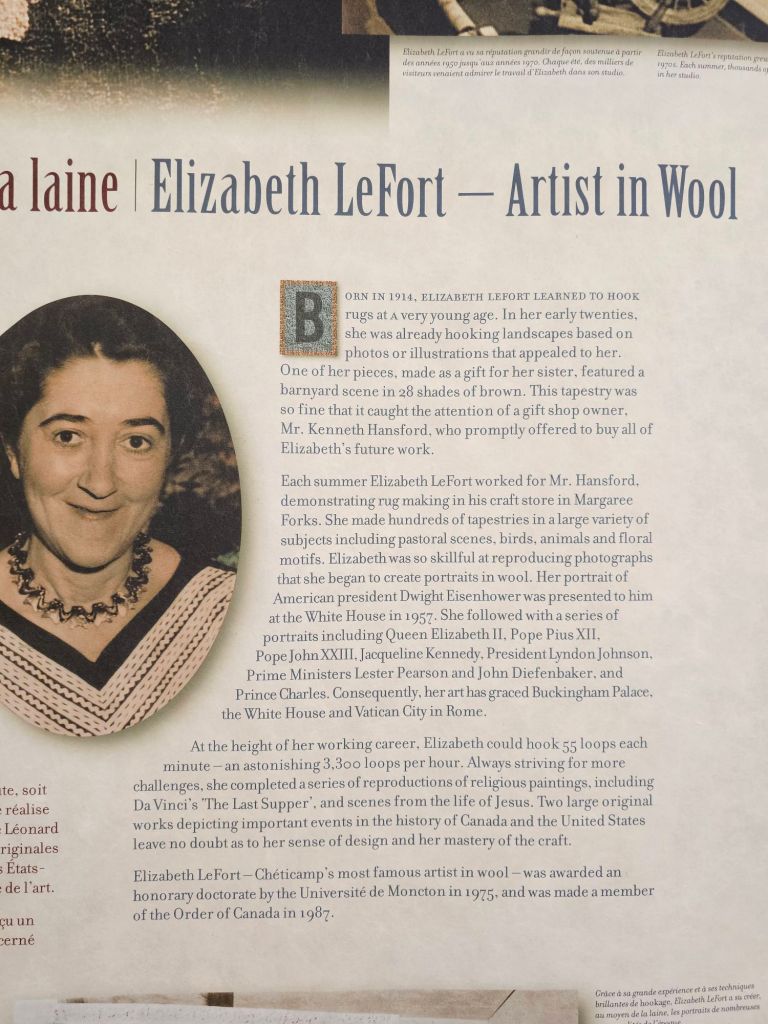
Elizabeth LeFort
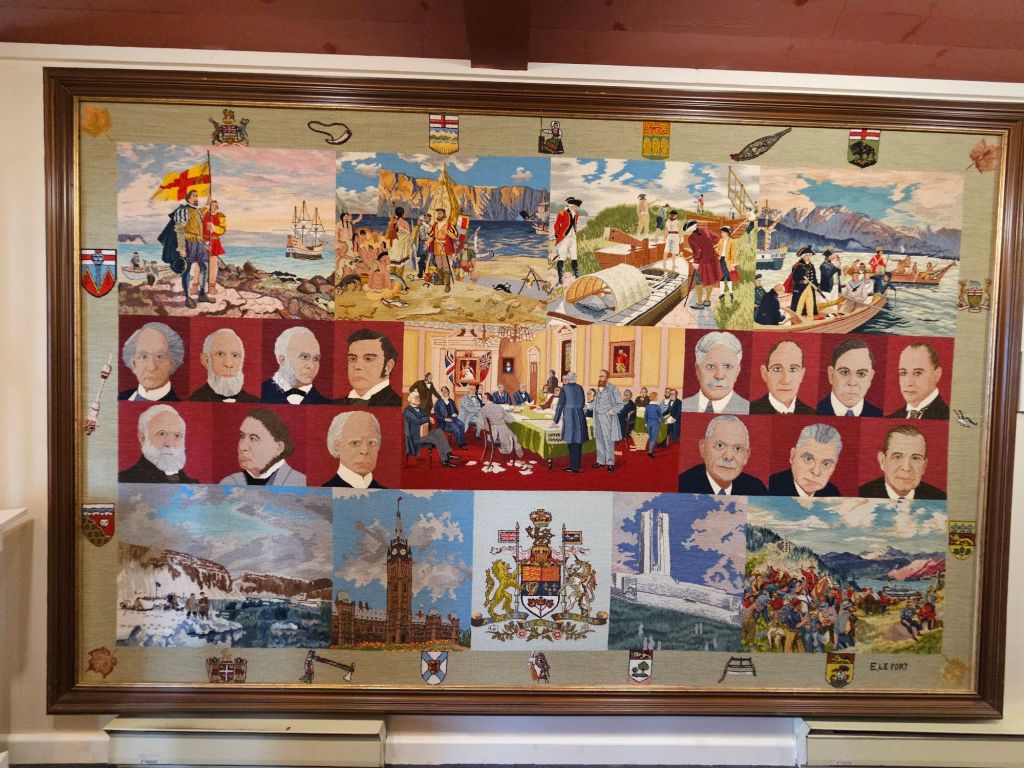
Elizabeth LeFort learned rug hooking from her mother at a young age. She continued to develop her own skills, experimenting with composition and colour. LeFort’s process later included hand dyeing all her own colours for designs that she sketched. Initially she worked in landscapes, drawing from existing photographs and illustrations. Particularly skilled at replicating photographs, LeFort was the first to create highly detailed portraits with wool. Some of her most known works include portraits of Pope Pius XII, President Eisenhower, Queen Elizabeth, President John F. Kennedy, and Prime Minister Pierre Elliott Trudeau … LeFort’s work is held in the Vatican Fine Arts Gallery, the White House and Buckingham Palace.
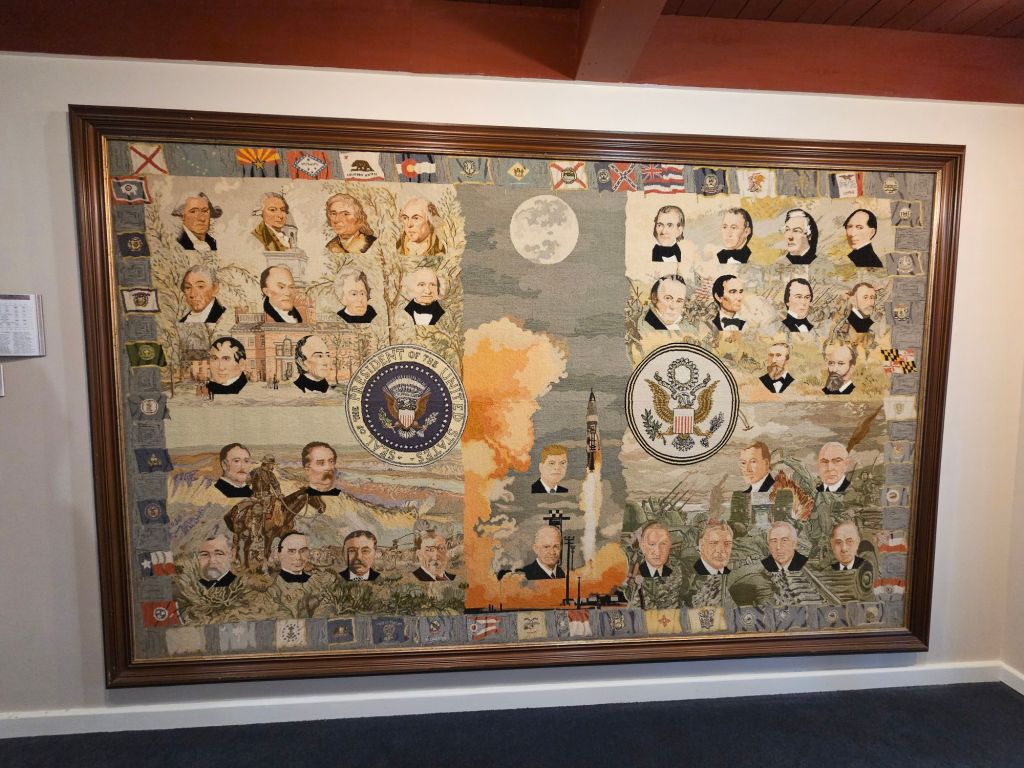
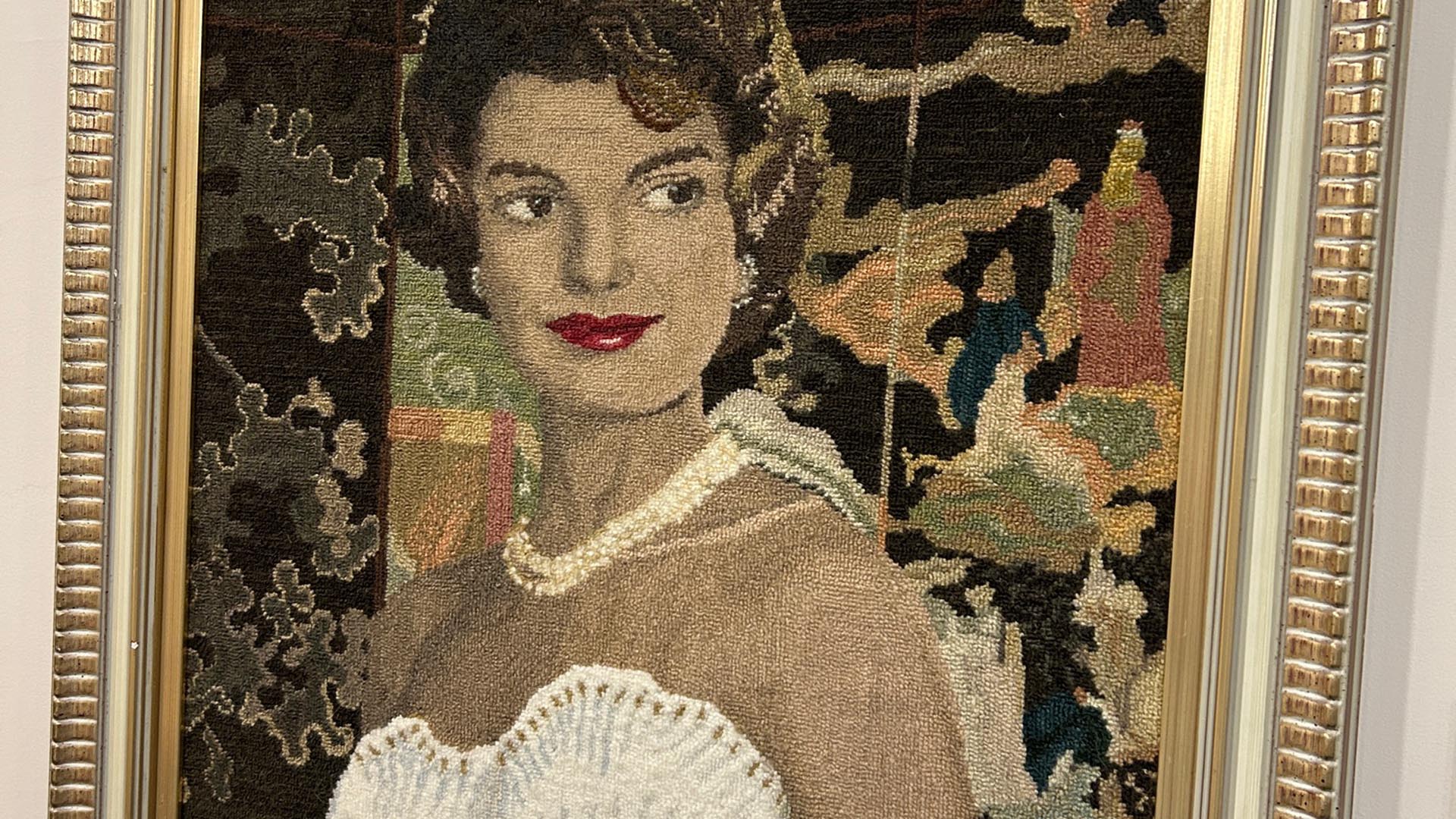
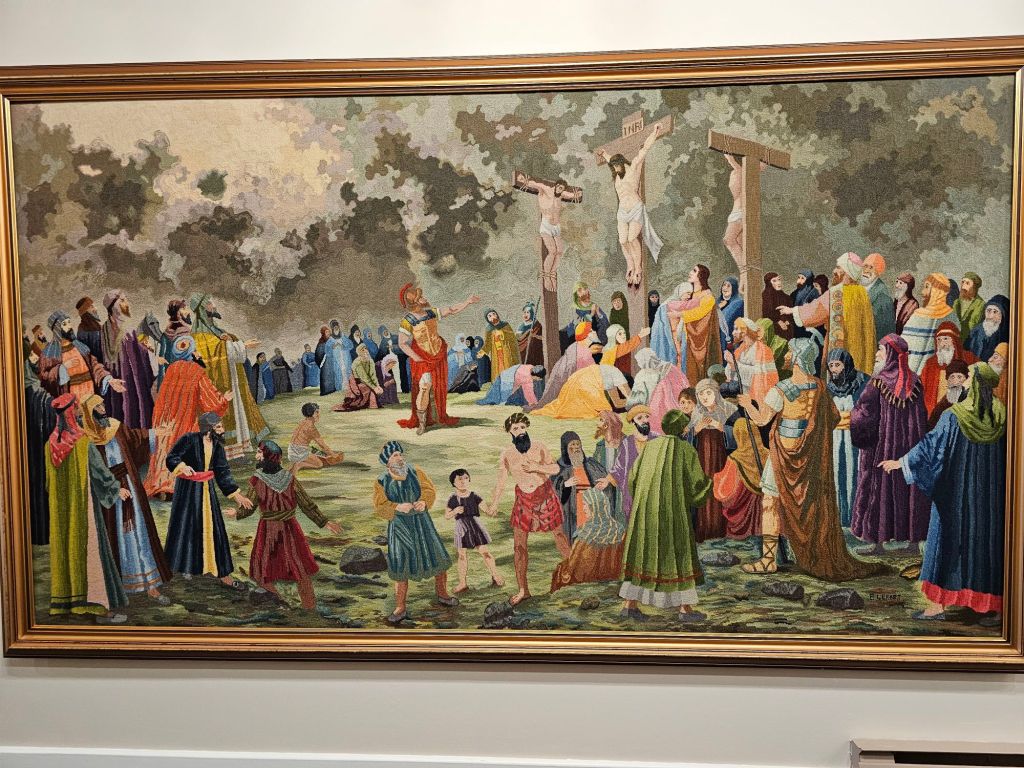
Her work has been shown in Toronto, Montreal, St. John, Moncton, Sydney, San Diego, Phoenix, and other places. The Dr. Elizabeth Lefort Gallery, located in Les Trois Pignons Museum, holds the largest collection of her work, including “The Crucifixion” which spans 3m x 1.7m and required the dyeing of some 510 colours. She was appointed a member of the Order of Canada in 1987 and received an honorary doctorate from the Université de Moncton in 1975.
Elizabeth’s piece titled Canadian Centennial 1967 features 416 colors, was 8 months in the making, used 7 miles of yarn and has 1,750,000 stitches hooked. The tapestry measures 3.2m x 2.0m (68 sq. ft.).
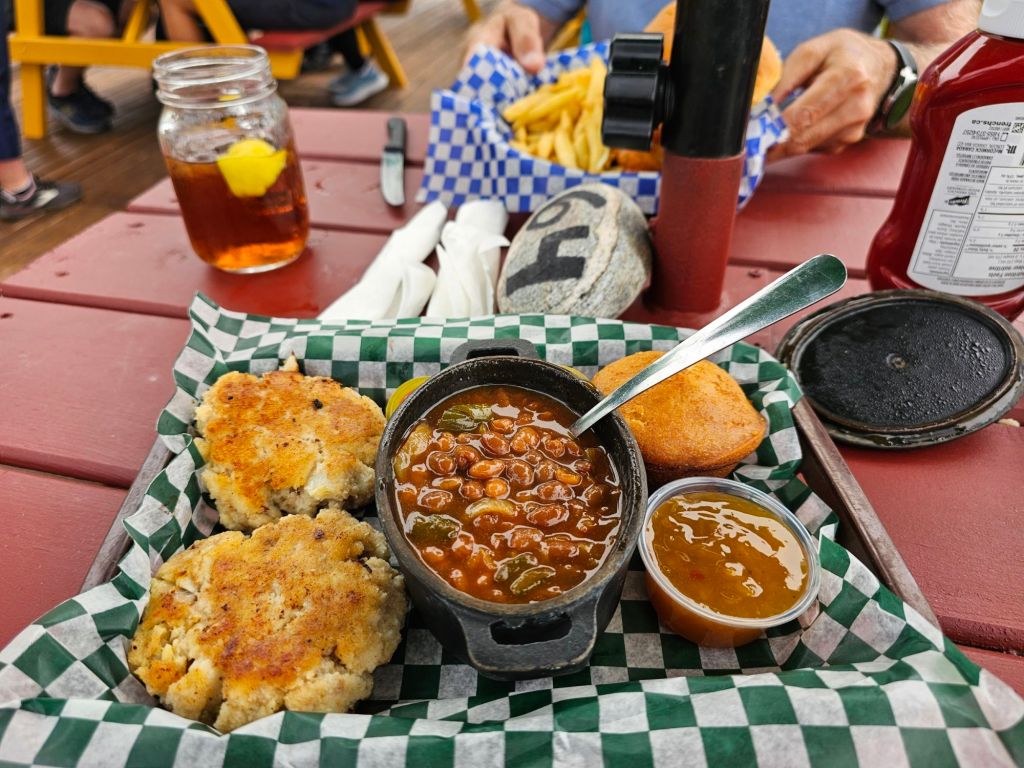
We stopped for lunch at the Red Anchor and sat outside overlooking the water. I had fish cakes this time as a change of pace.
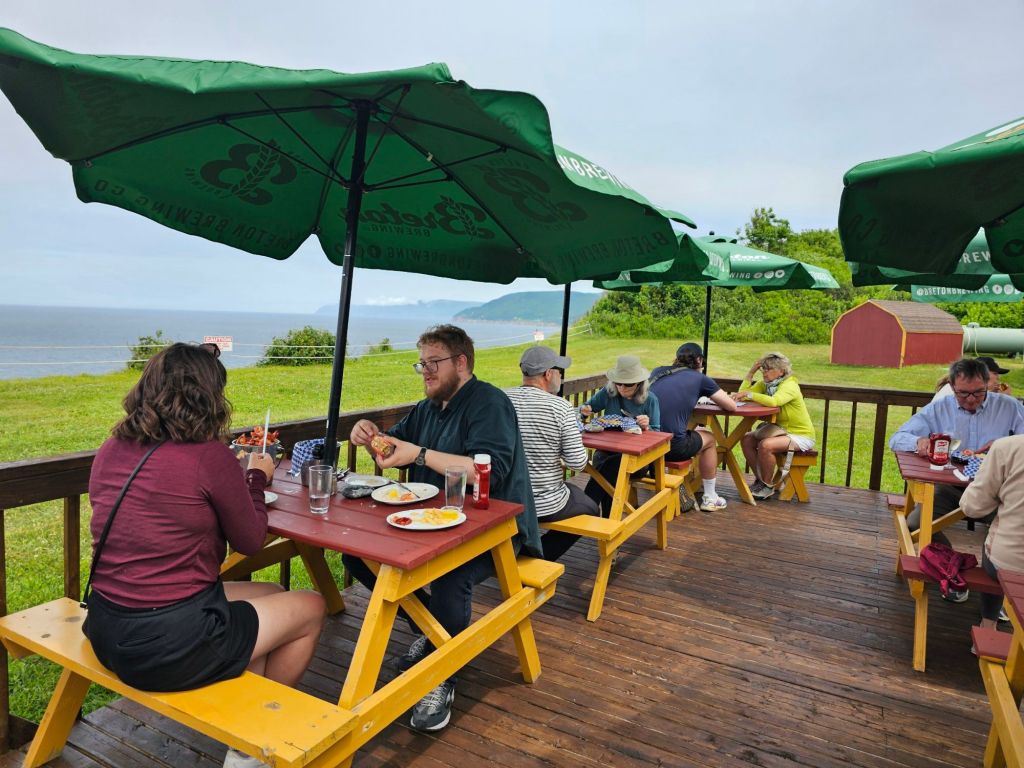
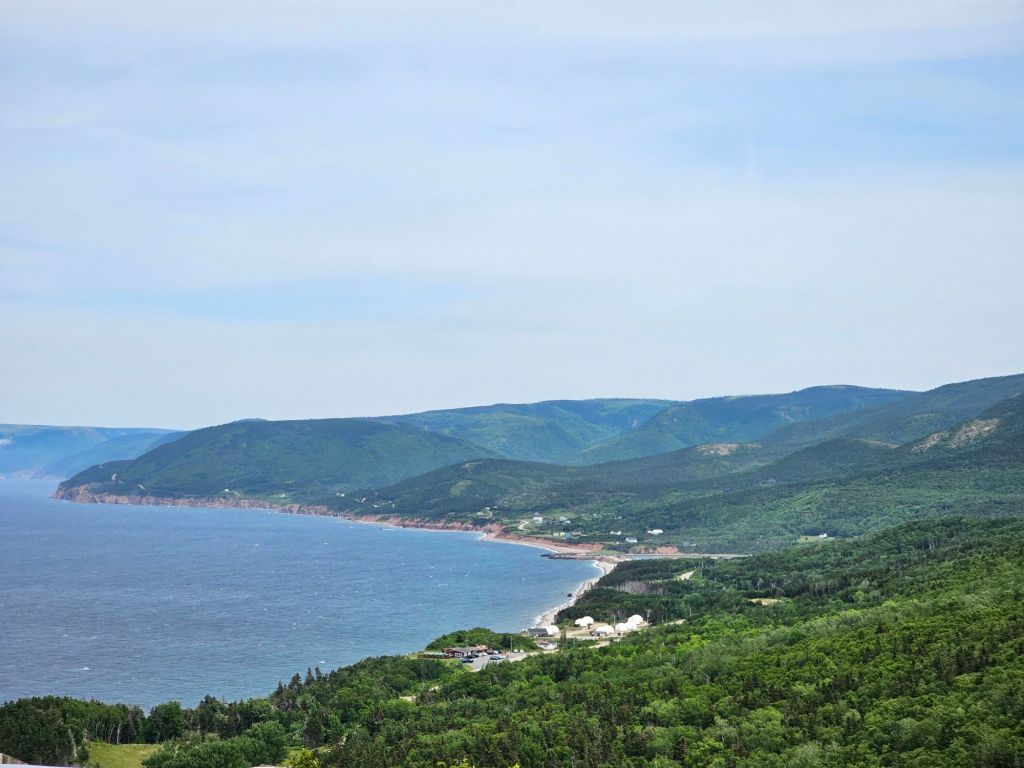
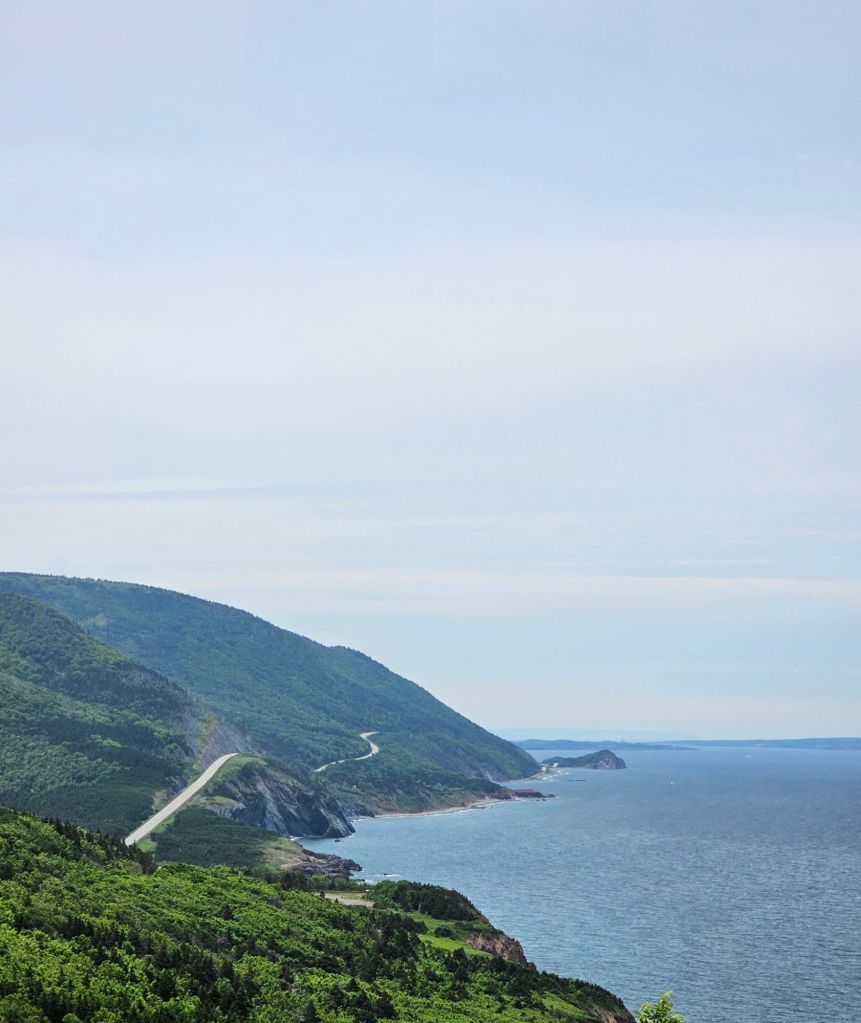
The rest of the day was driving through the park, stopping for photos here and there. Once we set up camp, we went for a half hour walk in the woods. It’s supposed to start raining about 6:30.
Brian is still wrestling with reservations for Newfoundland. You can feel the rain moving in and the temperature is dropping. Eating inside with a movie tonight is probably the main event. Rain is expected for most of tomorrow as well.
 Louise and Brian McLeod Travel Blog
You must be logged in to post a comment.