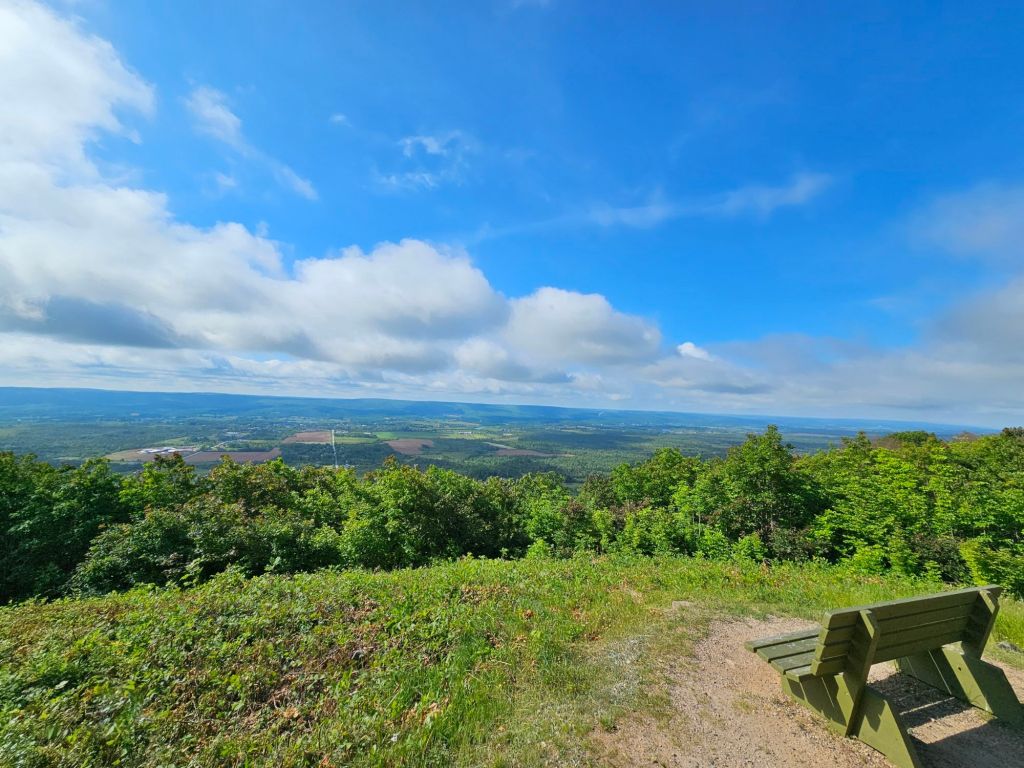
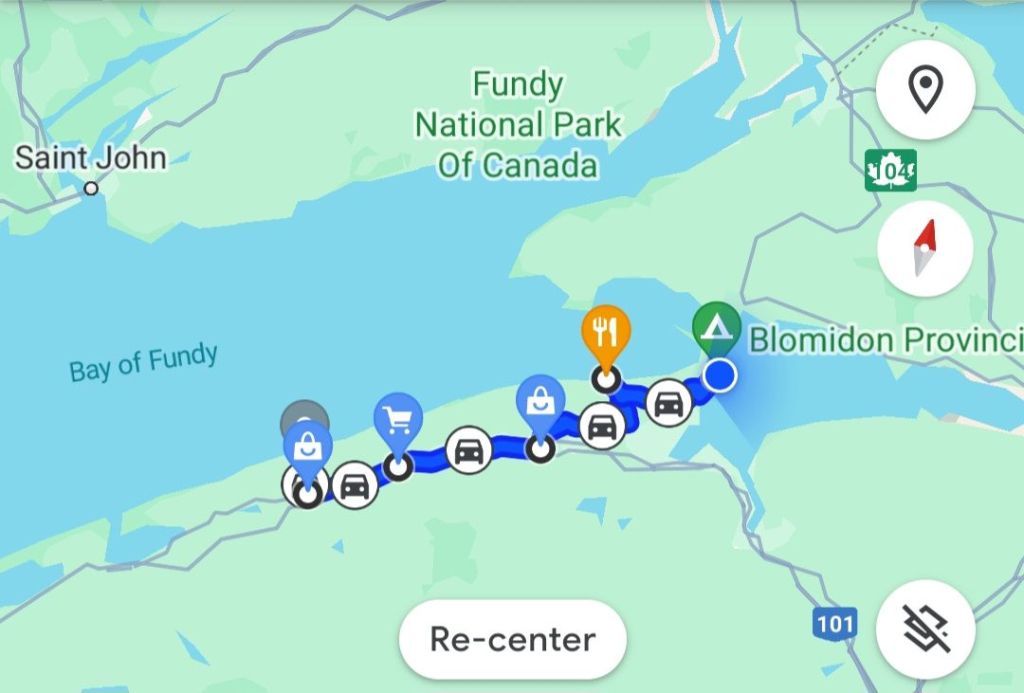
Our campsite last night was up on a ridge with a view of the Annapolis Valley and close to the Bay of Fundy. We woke up to inevitable morning fog but a little warmer than it has been so far.
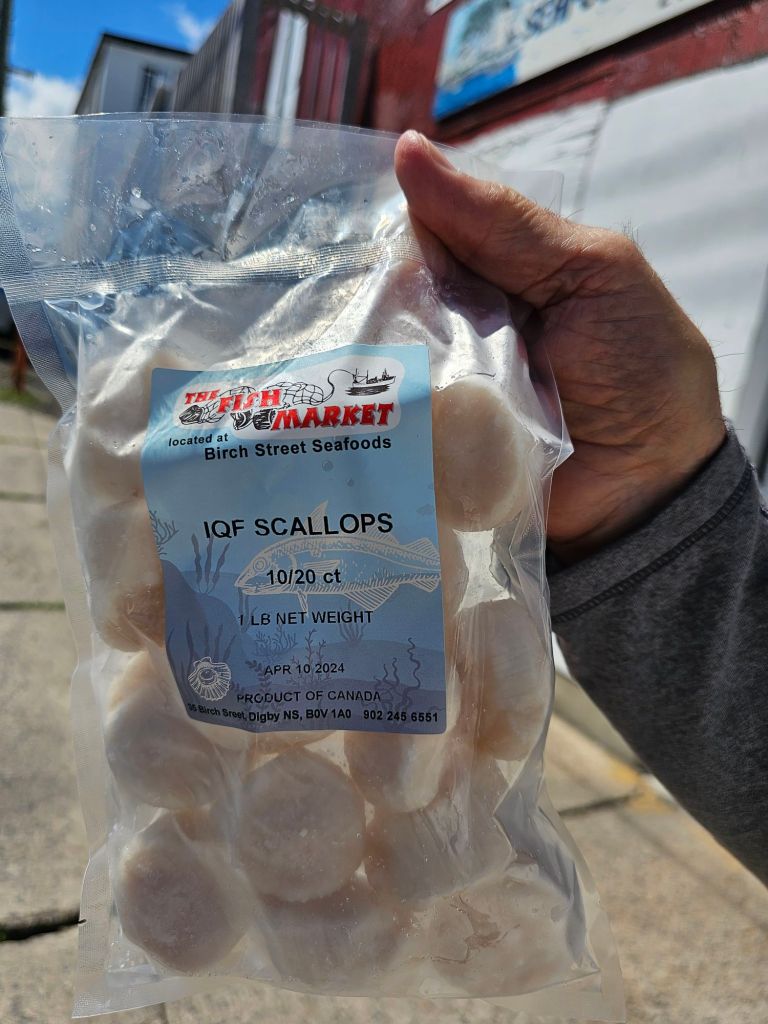
I have been asked to write a little more about food especially what we eat in the van and how we manage with 1 burner, a microwave, a small toaster oven, ( used only for baking ) and a portable Bbq. We do try to buy local food / produce as much as possible. Hence the scollaps last night.
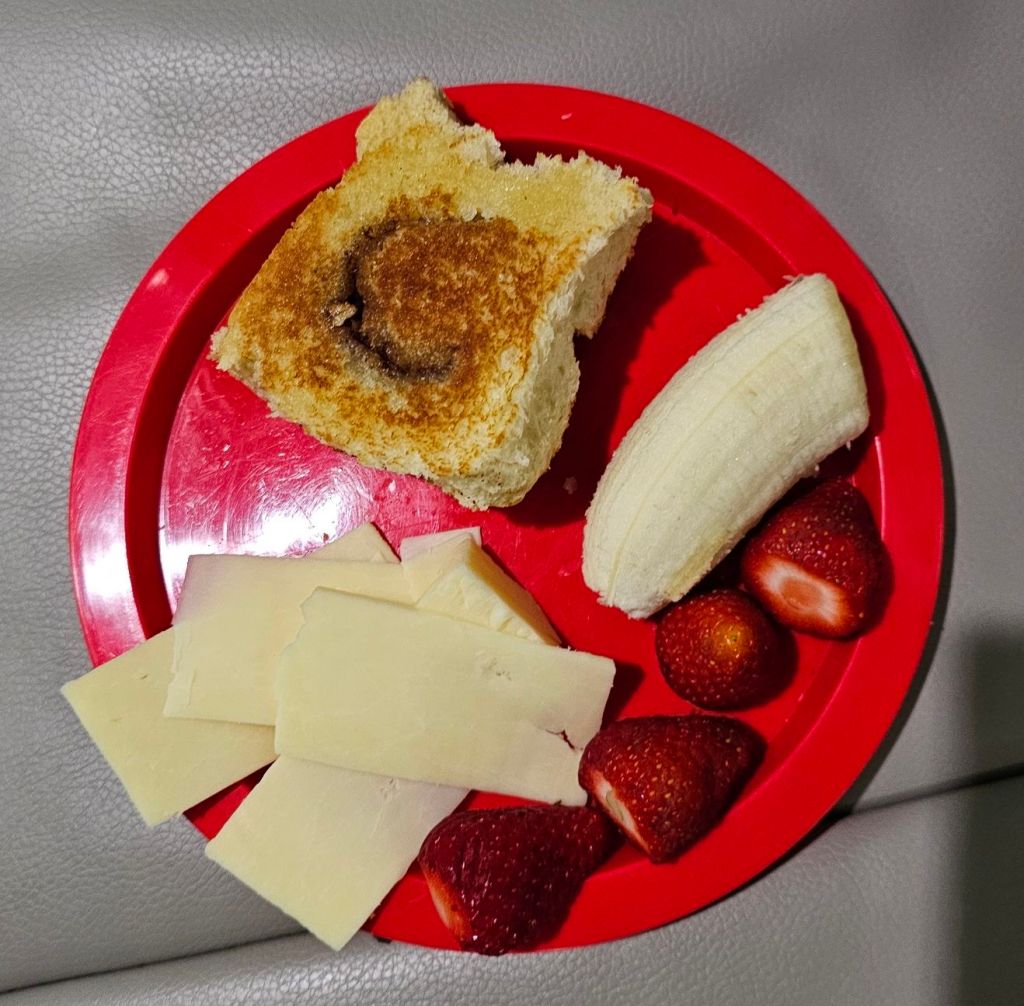
I mentioned that we start out with a freezer full of home baking. When we run out, I bake up some muffins using pancake mix as the base. This morning’s breakfast included locally grown strawberries from the market in Saint John, cheddar cheese that we bought directly from the local cheese factory that we visited in Vermont, my home baked cinnamon rolls slightly toasted in the frying pan with a bit of butter, and half a banana. Along with the usual latte.
Africans arrive in Canada
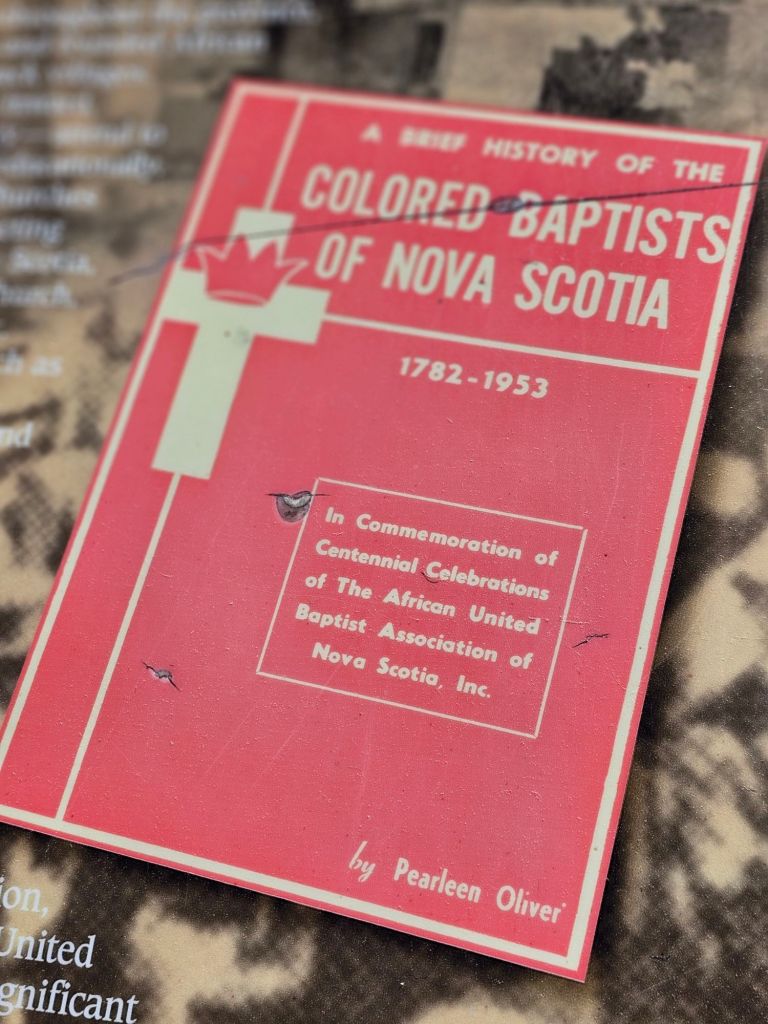
The things we learn while we are traveling. There was a historical sign at the viewpoint in our campground about the first Africans to settle in the Annapolis Valley in the late 1700s.
Mathieu da Costa, was the first recorded free black person to arrive on the territory of today’s Canada, an Afro-French member of the exploring party of Pierre Dugua, the Sieur de Monts, and Samuel de Champlain that travelled from France to the New World in the early 17th century. Da Costa’s translation and communication skills helped reduce the cultural gap between early French explorers and the First Nations.His work in Canada is honoured at the Port-Royal National Historic Site in Nova Scotia, Canada. His portfolio of languages is thought to have included Dutch, English, French, Portuguese, Mi’kmaq, and pidgin Basque, the dialect many Aboriginals used for trading purposes. So, how long have the Basques been visiting this part of the world?
We stopped at the Home Hardware store in Bridgetown and bought a new mat for the kitchen area ( keeps the floor warmer for bare feet in the morning) and a weather station, something we’ve been wanting for a while.
We spent what was left of the morning meandering along the valley finally finding the promised orchards east of the apple capital, Berwick. We stopped to buy some bananas in a local farm market. It’s a little early in the season for local produce but I did find dulse, a local product.
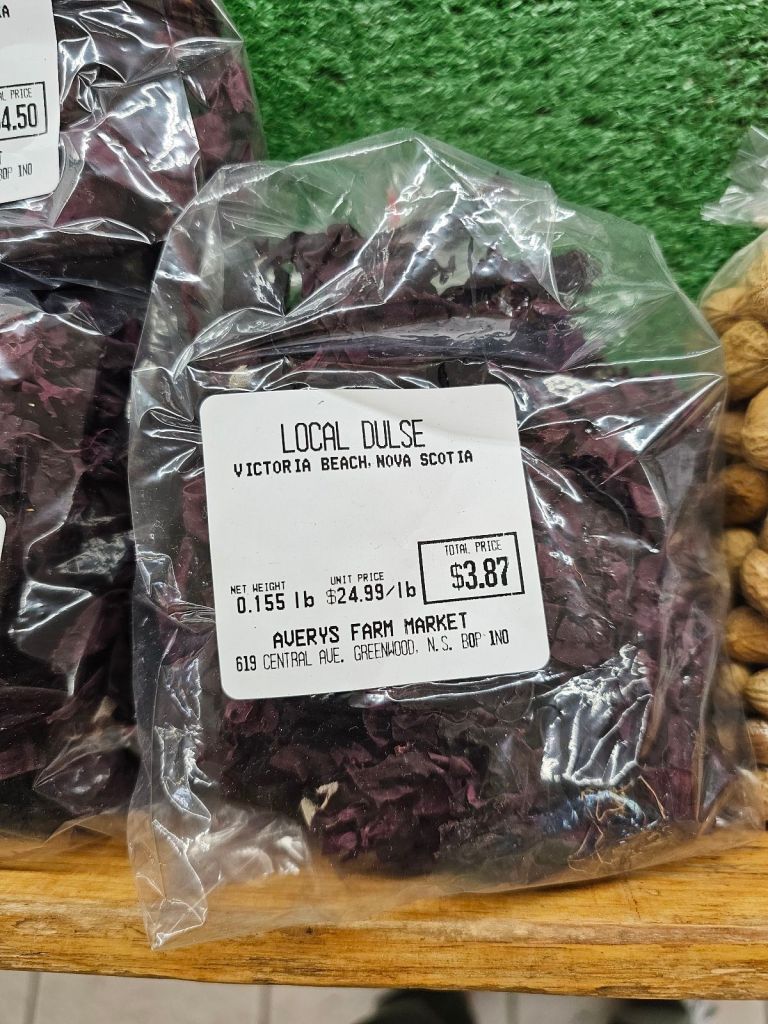
Dulse (Palmaria Palmata) is a type of red algae that keeps its red-purple colour even
when dried. Dulse thrives in the cold turbulent
waters of the Atlantic, and has been significant in the foodways of the British Isles,
since Celtic times. Dulse is also prevalent in North American waters, and is a
traditional food of the Mi’kmak First Nations. Forbes Dulse is sustainably harvested
and naturally dried in Nova Scotia, where high tides of the Bay of Fundy create
optimal growing conditions. It can be eaten on its own as a snack, added to salads, soups, or stir-fries, or used as a seasoning or flavoring in various dishes…. and no, even after Nova Scotian friends tried to convince me that it’s delicious. I haven’t tried it.
The Annapolis Valley
Stretching approximately 145 kilometers from Digby in the east to Windsor in the west, this beautiful valley is bordered by the Bay of Fundy to the north and the North Mountain range to the south, creating a unique microclimate that is ideal for agriculture and tourism.
The Annapolis Valley is renowned for its fertile soil, making it one of the most important agricultural regions in Nova Scotia. The valley’s mild climate, ample rainfall, and fertile land have made it a prime location for growing a wide variety of crops, including apples, strawberries, blueberries, grapes, and various other fruits and vegetables. The region is also home to numerous vineyards and wineries, producing award-winning wines that have garnered international acclaim.
In addition to its agricultural significance, the Annapolis Valley is steeped in history, with a rich tapestry of cultural heritage that dates back centuries. The area was originally inhabited by the Mi’kmaq indigenous people, and later became a strategic location for European settlers during the colonial era. The town of Annapolis Royal, one of the oldest European settlements in North America, was founded in 1605 and served as the capital of Acadia.
Lobster today
Yesterday was scallops, today it’s lobster. Our daughter had researched this part of Nova Scotia for her own trip later this summer. We are piggy backing on her research. She found this town called Hall’s Harbour noted for its lobster / seafood restaurant.
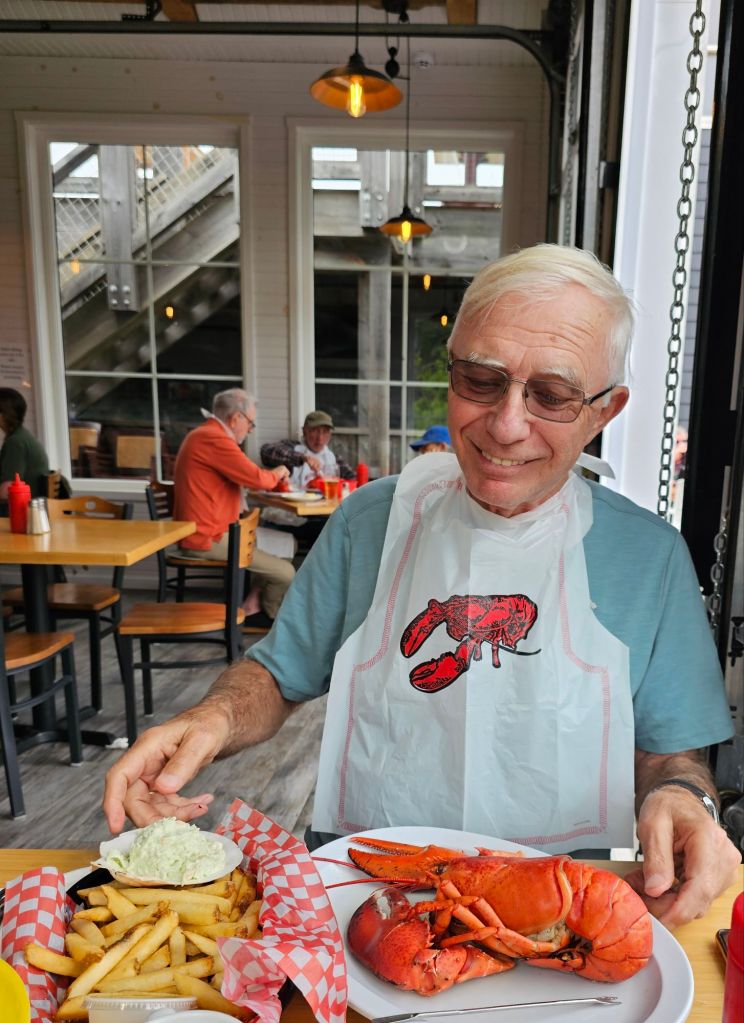
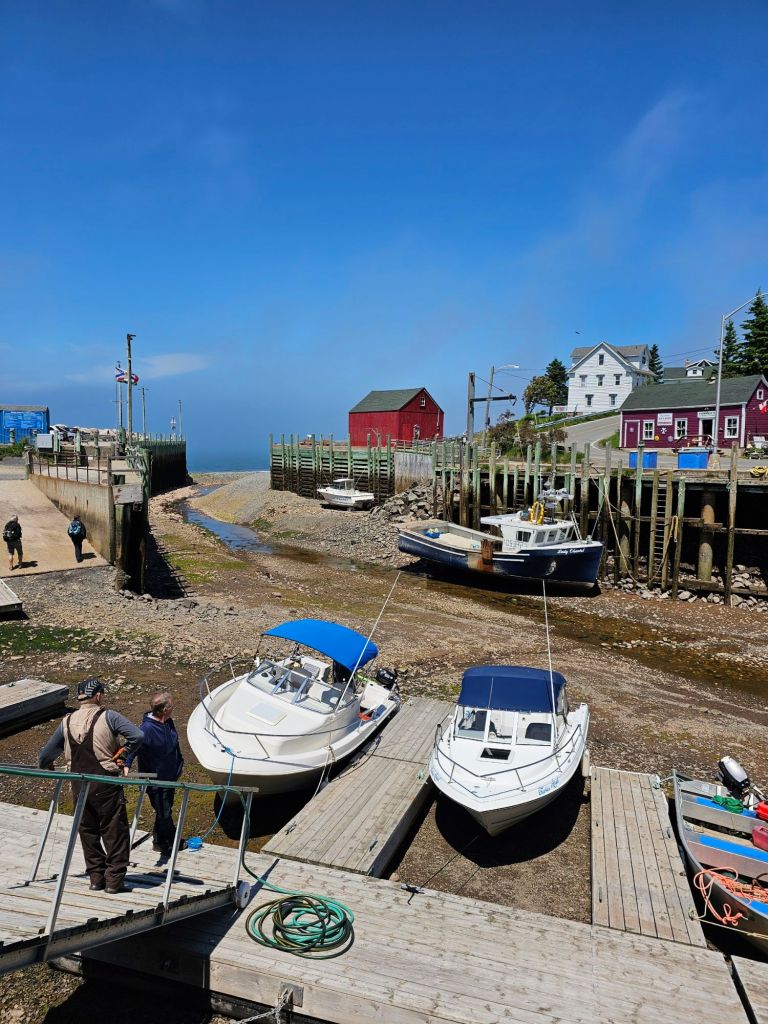
This is our destination for today and we have stopped for a lobster lunch.
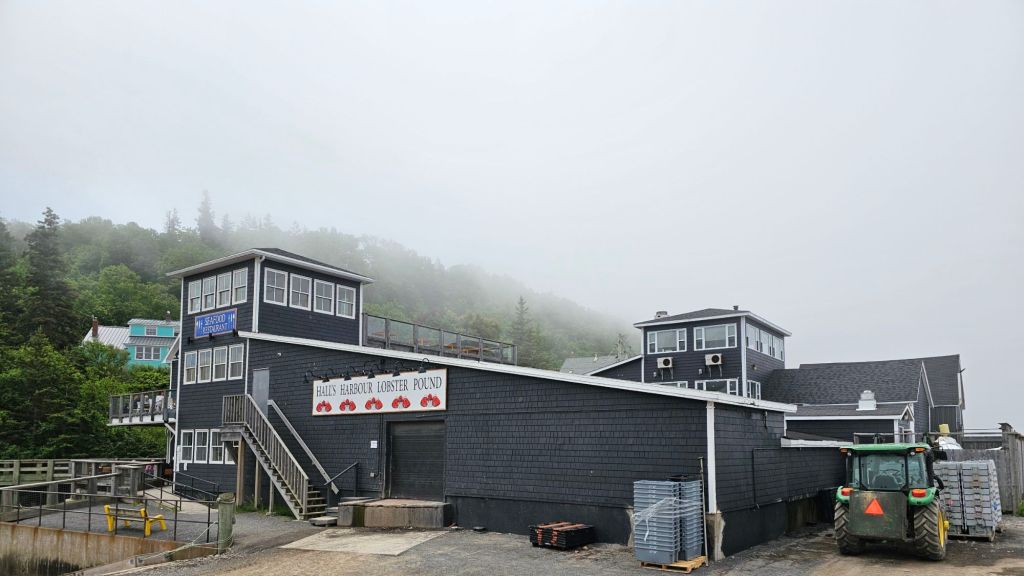
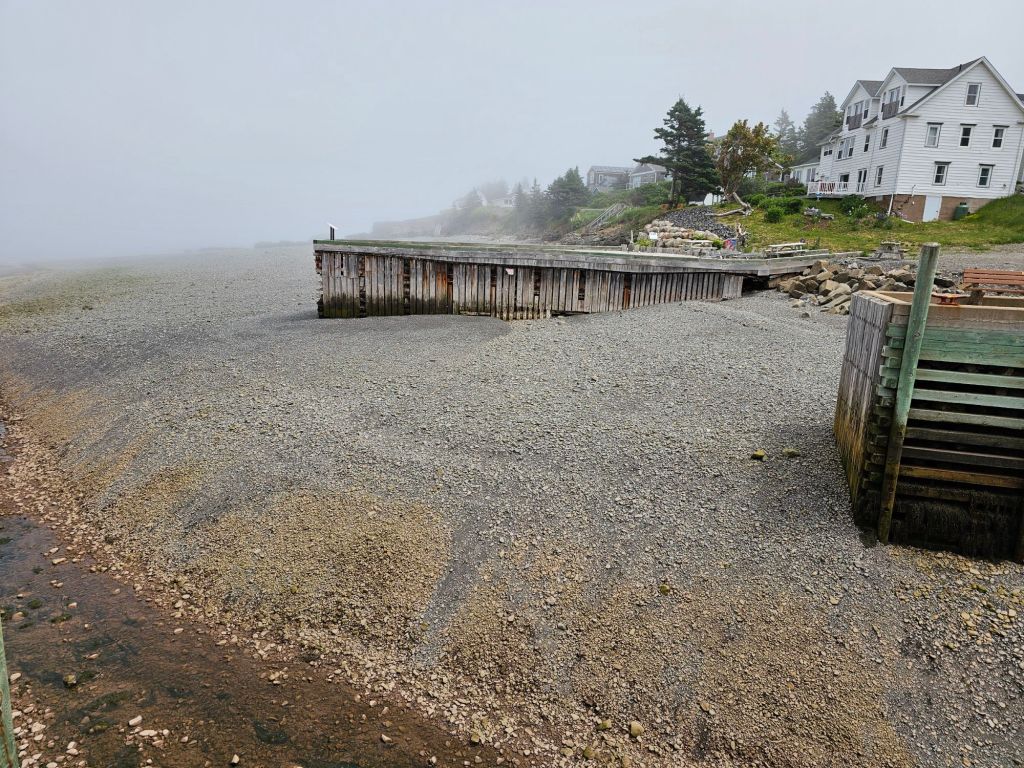
Hall’s Harbour is a pretty little town. The tide is out and the boats are resting on the ground, tied up of course. We went from bright sunshine at the top of the hill before entering town unto dense fog. The temperature dropped 7F.
Hall’s Harbour
Hall’s Harbour is believed to be named after Samuel Hall, an American privateer in the American Revolution who used the cove to raid settlements in the Annapolis Valley but was forced to flee and abandon his ship in the harbour by pursuing militia in 1779. Various legends grew up about the privateer raid, attracting treasure hunters who are said to have left abandoned pits deep in the woods surrounding the harbour.
Back in Camp
Camp tonight is Blomidon Provincial Park high on the bluffs of the Bay of Fundy. It’s windy but our campsite is protected.

Nova Scotia parks have interesting rules. No campfires before 7 pm and our firewood won’t be delivered before then … and no alcohol before July 3 (???). Plastic glasses it is then.
We installed the weather station in about 5 minutes. The outdoor remote sensor we put in the outdoor shower bin (keeps it dry and out of rain etc and at the correct height). It Bluetooths to the readout that we mounted on a hook that we already had in the sleeping area. No more guessing about outside temperatures. Yeayyyy.
Yesterday I finished the Pierre Berton book about the War of 1812 that I started reading on our Louisiana trip. I had two rather long book club books to read in the meantime and couldn’t get back to it until now. Unfortunately Pierre Berton didn’t write anything about Atlantic Canada, that I can find anyway. My goal now is to work through some of the many books I’ve started but not finished before book club season starts again.
After the delicious ‘feast’ at lunch, dinner is pancakes, bacon and strawberries.
Campfire tonight and hopefully a family zoom call if we can coordinate the time zone difference.
 Louise and Brian McLeod Travel Blog
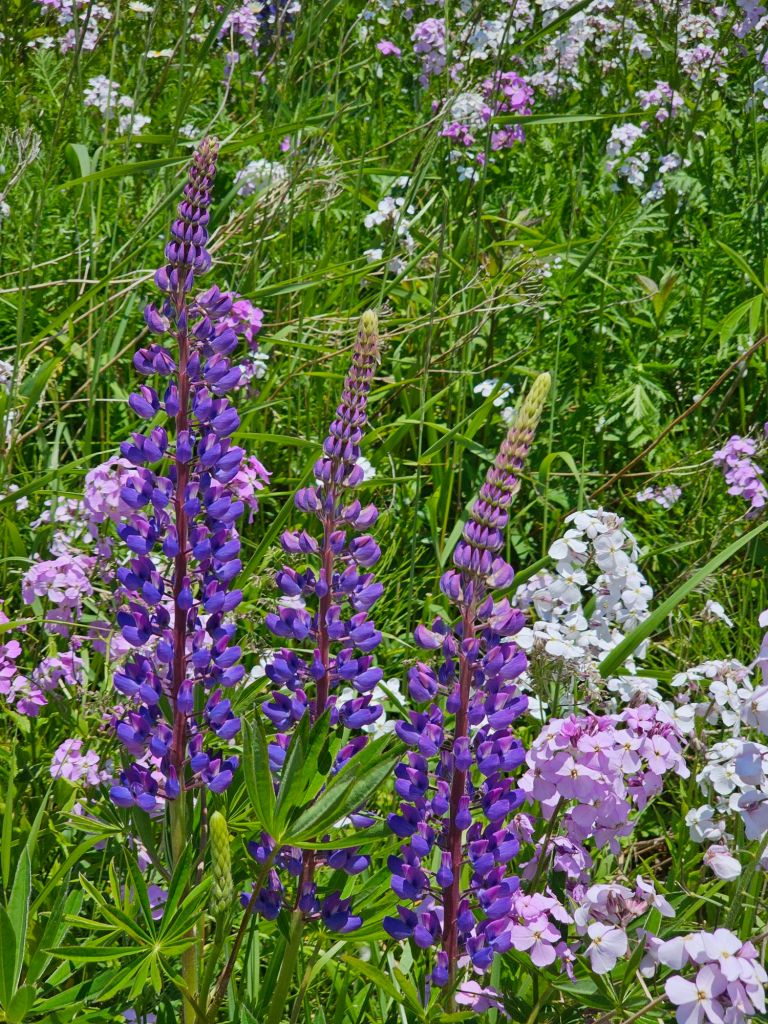
What a lobster! Wow. Brian does look pleased. Lots of work though! So the Micmaqs are indigenous Canadians. On our way to Harvey’s Memorial before Plumstead, on the left, there is a beautiful field of lupines.
LikeLike