Continuing our route along the Gulf Coast, we drove through Gulfport, Biloxi and then into Alabama ending the day across the bay from Mobile Alabama.
The 26 miles stretch of white sand beaches along the Mississippi Gulf coast is man-made by the US Army Corps of engineers. Judging by the amount of beach rearranging equipment we saw, it takes a lot of effort to maintain. In Mississipi, the road ran right along the coast with beaches on one side and magnificent homes on the other.
The Mississippi Gulf Coast, also known as the Mississippi Gulf, a popular tourist area. refers to the southern shoreline of the state of Mississippi along the Gulf of Mexico. The region includes cities such as Gulfport, Biloxi, and Pascagoula, and is known for its beautiful white sandy beaches, warm climate, and vibrant coastal culture.


In addition to tourism, the Mississippi Gulf Coast is economically important due to industries such as shipping, manufacturing, and seafood production. The region’s ports play a significant role in trade and commerce, and the seafood industry, including shrimp and oyster harvesting, is a key part of the local economy.
Biloxi, MS
Biloxi, in addition to being what I call the Atlantic City of the south, is also home to Beauvoir and the presidential library of Confederate President Jefferson Davis. This was an interesting stop for us and we spent more than 2 hours here including a tour of the house and a 30 minute movie on the property and the housing of the Confederate veterans. It is very sobering to see another point of view than the one we see in the north. Indeed Jefferson Davis was quite an accomplished individual.
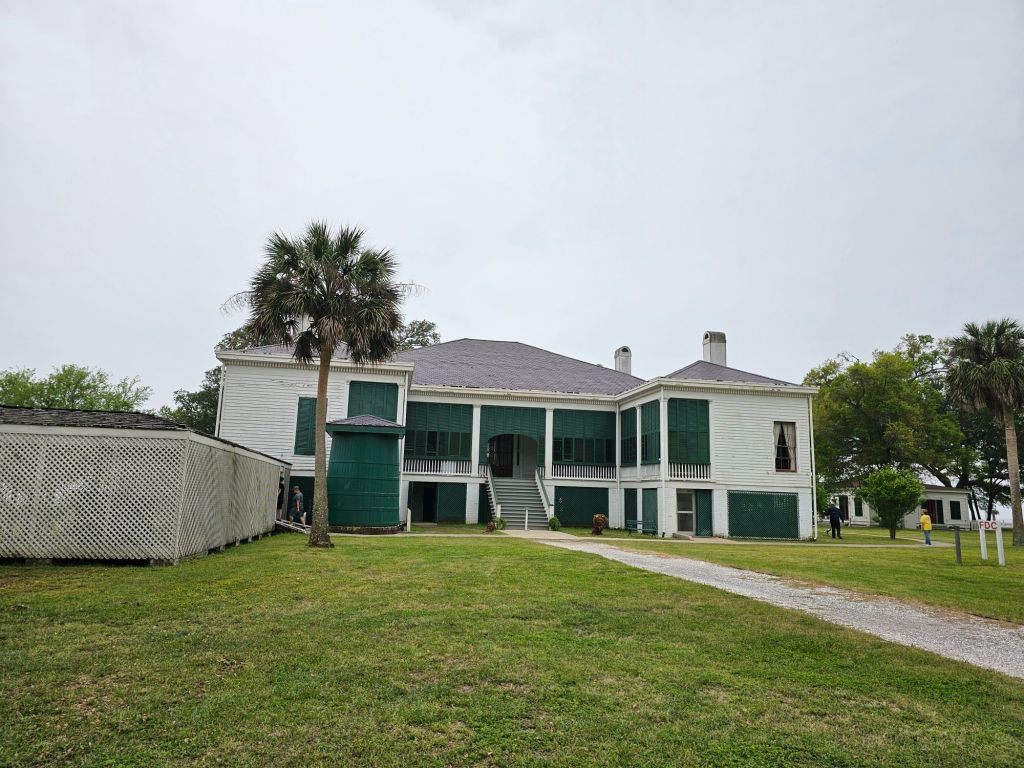
Beauvoir
Beauvoir is a historic home located in Biloxi, Mississippi, that holds significance as the last home of Confederate President Jefferson Davis. The house was constructed in the mid-19th century by plantation owner James Brown as a summer home. Following the Civil War, the property was purchased by the United Confederate Veterans, and it later became home to Jefferson Davis and his family.
Jefferson Davis lived at Beauvoir from 1877 until his death in 1889. During his time there, he wrote his memoirs and became involved in various social and political activities. After his death, the property passed through several hands before being acquired by the Mississippi Division of the Sons of Confederate Veterans in the early 20th century.
After his release from jail, Jefferson and his family sought refuge in Montreal.
In 1903, Jefferson’s wife Varina sold the Beauvoir property to the United Confederate Veterans. Two conditions of the sale were (1) that the property is used as a home for Confederate veterans, their wives or widows, and their servants; and (2) that the property be a memorial to Jefferson Davis in perpetuity.
The property was used as a Confederate home from 1903 until 1957. During that period, more than 2,000 veterans, wives, widows, and servants resided as inmates of the home and 771 of these inmates are buried in the Beauvoir cemetery.
Today, Beauvoir is maintained as a historic site and museum dedicated to preserving the memory of Jefferson Davis and the Confederate States of America. The property includes the restored home, a library, museum exhibits, and a Confederate cemetery.

Hurricane Camille struck on August 17, 1969. The 20-foot storm surge (which was eight feet higher than the ground level of Beauvoir) ripped the front and back stairs off of Beauvoir house, gutted the Davis family museum, and flooded the Brick Hospital Confederate Soldiers Museum. The surge heavily damaged the Library Cottage and the Hayes Cottage, destroyed the manager’s house, destroyed the last Confederate veterans’ barracks, and toppled many stones in Beauvoir Cemetery. Total damage was estimated at $700,000. The shrine reopened in January 1970.
On August 29, 2005, Hurricane Katrina devastated Beauvoir. The 24-foot storm surge (which was 12 feet higher than the ground level of Beauvoir) not only ripped off the steps of Beauvoir house but also the front and side porches. The back porch collapsed as thirty –one of sixty-two brick piers fell. Waves in excess of a foot entered the house, causing the furniture to float and strike against the walls. Paintings and artifacts fell into the swirling waters. The battering waves annihilated the Library Cottage, the Hayes Cottage, the Brick Hospital Confederate Soldiers Museum, the director’s house, and the replica veterans’ barracks built on the site of the original that had been destroyed by Camilleltgen
Then in 2018 Hurrican Michael blew the slates off the roof and damaged the beautiful hand painted ceilings.
Photos from the Library / Museum


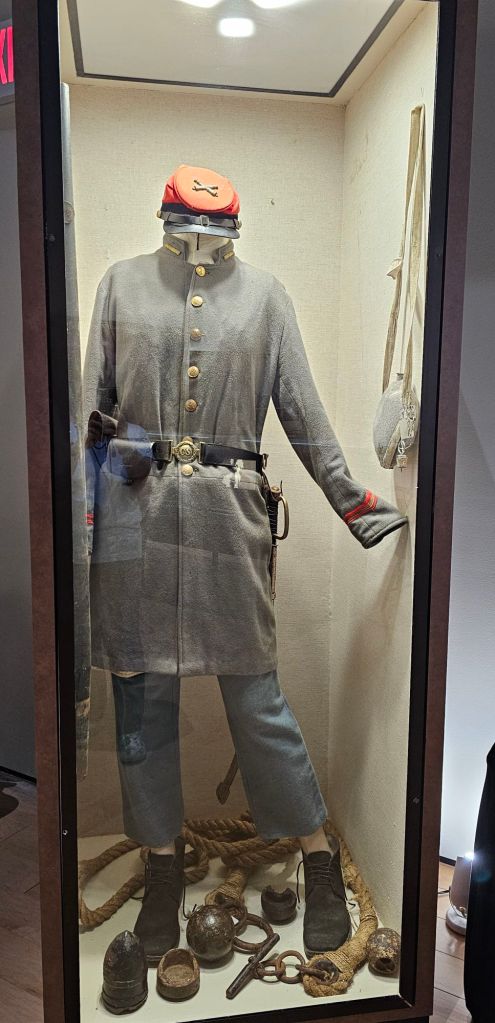
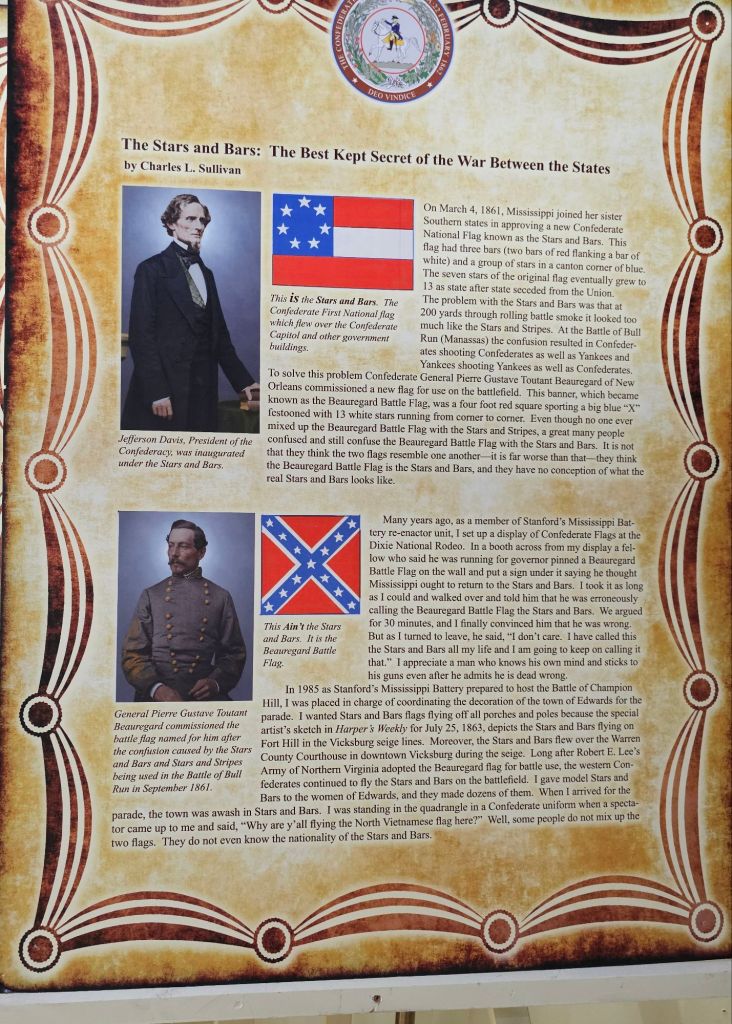

Jefferson Davis
His history: Jefferson Davis was an American political leader who served as the President of the Confederate States of America during the American Civil War. He was born on June 3, 1808, in Kentucky, and grew up in Mississippi. Davis attended the United States Military Academy at West Point and later served in the military during the Mexican-American War.
After the war, Davis entered politics and served as a United States Senator and Secretary of War under President Franklin Pierce. In 1861, following the secession of Southern states from the Union, Davis was chosen as the President of the Confederate States of America. He served in this role throughout the duration of the Civil War, leading the Confederacy in its fight against the Union forces.
Following the Confederacy’s defeat in 1865, Davis was captured by Union troops and charged with treason. He was imprisoned for two years but was eventually released on bail. After his release, Davis lived in retirement, writing and speaking in defense of the Southern cause. He died on December 6, 1889, in New Orleans, Louisiana.
His accomplishments: Jefferson Davis was an American politician who served as the President of the Confederate States of America during the American Civil War. Some of his notable accomplishments include:
- Serving as a United States Senator and Secretary of War before becoming the President of the Confederacy.
- Leading the Confederate States through the Civil War, during which he faced significant challenges, including managing the war effort, dealing with internal divisions, and facing off against the Union forces led by Abraham Lincoln.
- Implementing policies and strategies to try to secure the independence of the Confederate States, including efforts to raise funds, manage resources, and maintain public support for the secessionist cause.
- After the Civil War, Davis wrote extensively about his experiences and perspectives on the war and the role of the Confederacy in American history.
It’s important to note that Jefferson Davis’s legacy is a controversial and complex topic due to the historical context of the Civil War and the issues of slavery and states’ rights that it raised.
The Confederate States of America, also known as the Confederacy, was formed by the following 11 states:
- South Carolina
- Mississippi
- Florida
- Alabama
- Georgia
- Louisiana
- Texas
- Virginia
- Arkansas
- North Carolina
- Tennessee
These states seceded from the United States following the election of Abraham Lincoln as President in 1860, leading to the American Civil War.
Pascagoula, Mississippi and the Legend of the Singing River
The myth of Pascagoula, also known as the Singing River, is a Native American legend that originates from the Pascagoula tribe in Mississippi. According to the myth, the Singing River got its name from the sorrowful song of a beautiful Native American maiden named Pascagoula.
The legend goes that Pascagoula fell in love with an enemy warrior from another tribe, and their love was forbidden. In defiance of their tribes, the young couple decided to flee and be together. However, tragedy struck when they were pursued by their tribesmen. As they reached the Singing River, rather than be captured and separated, the lovers chose to embrace each other and jump into the river, hand in hand.
It is said that the spirits of Pascagoula and her lover still reside in the waters of the river, perpetually singing their love song. Some believe that the sound of the river’s currents and the wind blowing through the trees create a mysterious, haunting melody that echoes the eternal love of the two young lovers.
The myth of Pascagoula’s Singing River serves as a reminder of the enduring power of love and the tragic consequences of forbidden romance. It is a poignant tale that has been passed down through generations, contributing to the rich folklore and cultural heritage of the Pascagoula tribe and the surrounding region.
Mobile, Alabama
Mobile, Alabama, has a rich and diverse history that dates back centuries. Here is an overview of its early history:
- Native American Settlements: The area that is now Mobile was originally inhabited by Native American tribes, including the Mobile tribe, for whom the city is named. These tribes lived in the region for thousands of years before the arrival of European explorers.
- European Exploration: In 1519, Spanish explorer Alonso Álvarez de Pineda was the first European to explore the area that would later become Mobile. The Spanish established a presence in the region in the early 16th century.
- French Colonization: In 1702, French colonists founded the city of Mobile as the first capital of French Louisiana. The city grew as a trading post and military outpost.
- British Rule: The British took control of Mobile in 1763 following the French and Indian War. The city remained under British rule until the end of the American Revolutionary War.
- American Control: Mobile became part of the United States in 1813 when it was captured by American forces during the War of 1812. It was officially incorporated as a city in 1814.
- Antebellum Era: In the mid-19th century, Mobile became a major port city and hub of the cotton trade. It was a center of commerce and culture in the South, with a thriving economy based on agriculture and shipping.
- Civil War and Reconstruction: During the Civil War, Mobile was an important Confederate stronghold. The city was heavily fortified and saw several battles before being captured by Union forces in 1865. The post-war Reconstruction era brought significant changes to the city’s social and economic structure.
This is just a brief summary of Mobile, Alabama’s early history.
Mobile sits on the Mobile-Tensaw River delta. The Mobile–Tensaw River Delta is the largest river delta and wetland in Alabama. It encompasses approximately 260,000 acres (110,000 ha) in a 40-by-10-mile (64 km × 16 km) area and is the second largest delta in the contiguous United States. This large river delta is approximately 45 miles long and averages 8 miles wide, being 16 miles wide at its widest point. It covers approximately 300 square miles. Of its 260,000 acres, 20,000 acres consist of open water, 10,000 acres of marsh, 70,000 acres of swamp; and more than 85,000 acres of bottomland forest. It drains an area of about 44,000 sq miles, which includes 64% of Alabama and small portions of Georgia and Mississippi.
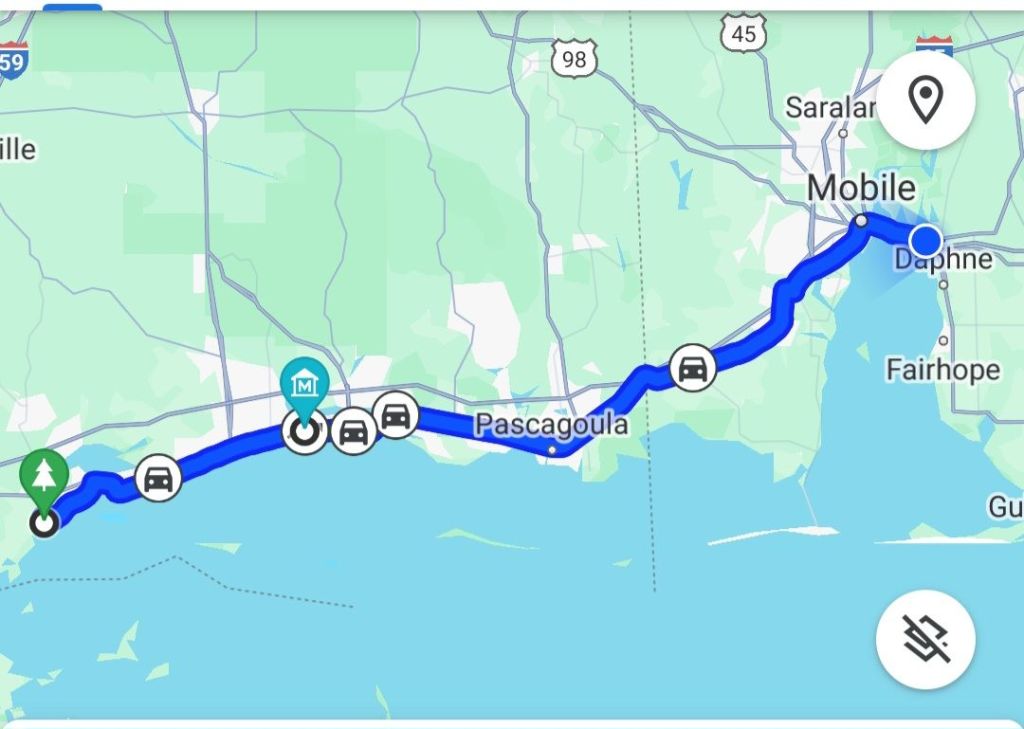
We have settled into camp for the rest of the day. Tomorrow we start the trek north and home.
 Louise and Brian McLeod Travel Blog
You must be logged in to post a comment.