
We don’t have far to go today. We had a leisurely breakfast in our gazebo. We finished up the homemade cinnamon roles and bran muffins I brought and just about finished with the homemade Irish Soda bread. Heaven forbid I should have to buy breakfast carbs at some point but that’s life.
On yesterday’s boat tour, we passed the Chalmette Battlefield, famous for its role on the American War of 1812. It’s on the way to our campsite so we stopped forva visit.
Now, we learned a different perspective on the War of 1812. Coming from Canada and having lived in the Niagara area and the St. Lawrence River, we have a totally different viewpoint of this War and the Loyalists. I am now going to read more written by Pierre Burton.
Chalmette Battlefield Historic National Park
Chalmette Battlefield is a national historic site located in Chalmette, Louisiana. It is the site of the Battle of New Orleans, a decisive American victory over the British during the War of 1812. The battlefield is now maintained by the National Park Service and features a visitor center with exhibits on the battle, as well as a monument marking the location of the American defensive line.

The American War of 1812
Source Chatbot AI
Title: The American War of 1812: A Complex and Contentious Conflict
The American War of 1812, also known as the Second War of Independence, was a pivotal moment in the history of the United States, shaping the nation’s identity and relationships with other global powers. Fought between the United States and Great Britain from 1812 to 1815, the conflict arose from a combination of grievances, including trade restrictions, impressment of American sailors, and British support for Native American tribes resisting American settlement in the Northwest Territory.
One of the key factors leading to the war was the British practice of impressment, or the seizure of American sailors and forcing them to serve in the British navy. This violation of American sovereignty and the rights of its citizens became a rallying cry for those advocating for war. Additionally, British trade restrictions and blockades aimed at disrupting American commerce further fueled anti-British sentiment and calls for military action.
The war itself was marked by a series of military engagements on land and at sea, with notable battles such as the Battle of New Orleans, the Battle of Baltimore (which inspired the writing of the US national anthem, “The Star-Spangled Banner”), and the Battle of Lake Erie. Despite early setbacks and a lack of preparedness on the part of the United States, American forces achieved some significant victories, boosting national morale and demonstrating the young nation’s resolve.
One of the lasting legacies of the War of 1812 was the sense of national unity and identity it fostered among Americans. The conflict brought together different regions and factions, strengthening the bonds of patriotism and pride in the fledgling nation. Furthermore, the war served as a catalyst for the growth of American industry and military capabilities, laying the groundwork for future expansion and influence on the world stage.
The Treaty of Ghent, signed on December 24, 1814, effectively ended the war, restoring the pre-war status quo and failing to address many of the issues that had sparked the conflict in the first place. Nevertheless, the War of 1812 had far-reaching implications for both the United States and Great Britain, reshaping their relations and setting the stage for future developments in North America.
In conclusion, the American War of 1812 was a complex and contentious conflict that tested the young nation’s resilience and determination. While it may not be as well-known or celebrated as other conflicts in American history, its impact on the shaping of the nation’s identity and its place in the world cannot be underestimated. The war served as a crucial test of American independence and sovereignty, laying the foundation for the continued growth and development of the United States as a global power.
The Battle of New Orleans
The Battle of New Orleans was a pivotal event in American history, marking the end of the War of 1812 between the United States and Great Britain. This decisive battle took place on January 8, 1815, near the city of New Orleans, Louisiana. The American forces, led by General Andrew Jackson, achieved a stunning victory over the British troops, despite being outnumbered and outgunned.

The War of 1812 had been raging for over two years, with both sides struggling for control of key territories in North America. The British, fresh from their victory over Napoleon in Europe, sought to assert their dominance over the United States and its western territories. New Orleans was a strategically important port city, and its capture would have given the British a significant advantage in the conflict.
General Jackson, a seasoned military leader and future President of the United States, was determined to defend New Orleans at all costs. Despite facing a well-trained and well-equipped British force, Jackson’s ragtag army of soldiers, frontiersmen, and local militia put up a fierce resistance. The terrain around New Orleans, including swamps and marshes, played to the Americans’ advantage, as they were able to launch surprise attacks and ambushes on the British forces.
The Battle of New Orleans culminated in a fierce and bloody confrontation on the banks of the Mississippi River. The British launched a frontal assault on the American positions, but they were met with withering fire from Jackson’s troops. The British suffered heavy casualties, while the Americans held their ground and inflicted significant losses on the enemy.
In the end, the British were forced to retreat, having suffered a crushing defeat at the hands of Jackson’s determined defenders. The Battle of New Orleans was a resounding victory for the United States, boosting national morale and solidifying American control over the Mississippi River and the Gulf Coast.
The significance of the Battle of New Orleans cannot be overstated. It not only marked the end of the War of 1812 but also helped establish the United States as a formidable military power on the world stage. General Jackson’s leadership and the bravery of his soldiers have gone down in history as a shining example of American resilience and determination in the face of adversity.
In conclusion, the Battle of New Orleans was a turning point in American history, showcasing the courage and tenacity of the American people in the face of a formidable foe. The victory at New Orleans remains a proud moment in the nation’s history, commemorated as a symbol of American strength and unity.
Hmm.. a little different point of view than what we were taught. Interesting. We all know that history is more perspective than actual truth.


Isleños
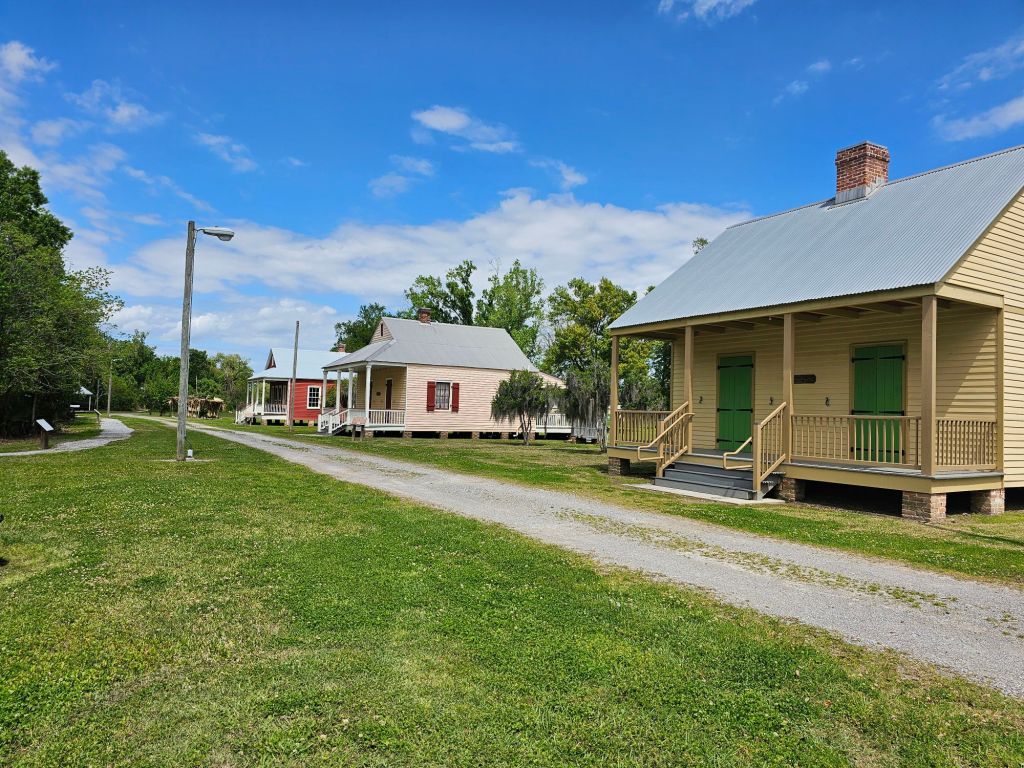
Nearby to our campground in St Bernard Parish, we came across a museum dedicated to the Isleños who came here from the Canary Islands.
The Isleños are descendants of Canary Islanders who emigrated to Louisiana in the late 18th century. They are known for their unique Spanish language, cuisine, and culture that they have preserved over the generations. The Isleños settled in areas such as St. Bernard Parish and Plaquemines Parish, where they have maintained strong ties to their heritage through traditions like the annual Los Isleños Fiesta. The community has faced challenges such as displacement due to hurricanes and industrialization, but they continue to celebrate and honor their roots in Louisiana.
Here are photos of some of their homes.


Gorgeous day. We stopped for lunch at the Fish Shack where we had the best fried shrimp and fish so far. We picked up some chicken and sausage gumbo for dinner.
We spent the afternoon relaxing, reading and quilting. We spent a good hour chatting with neighbors from Quebec who have the same RV that we do. They have been travelling since January, true Quebecers seeking warmth.
The mosquitoes came out with a vengeance tonight. First time since we left home. We are eating inside. It’s cooling off anyway.
Gumbo
Gumbo is a type of stew or soup that originated in Louisiana, particularly in the Creole and Cajun cultures. It typically consists of a strongly flavored stock, meat or shellfish, vegetables, and a thickener like okra or filé powder. Gumbo is often served over rice and is known for its rich and complex flavors.
Jambalaya
Jambalaya is a popular dish from Louisiana, typically made with a mixture of rice, vegetables, spices, and a variety of meats such as sausage, chicken, and shrimp. It is known for its bold flavors and is often considered a staple of Creole and Cajun cuisine.
Cajun cooking
Cajun cuisine is a style of cooking that originated in Louisiana, particularly among the French-speaking Acadian or “Cajun” people. It is known for its bold flavors, heavy use of seasoning, and the “holy trinity” of onions, bell peppers, and celery as a base for many dishes. Cajun dishes often include ingredients like Andouille sausage, crawfish, shrimp, and traditional spices like cayenne pepper, paprika, and garlic. Popular Cajun dishes include gumbo, jambalaya, étouffée, and boudin.
Creole Cuisine
Creole cuisine is a style of cooking that originated in Louisiana, particularly in New Orleans. It is a blend of French, Spanish, West African, Caribbean, and Native American influences. Creole dishes often feature a combination of bold flavors, spices, and ingredients such as okra, bell peppers, tomatoes, and seafood. Popular Creole dishes include gumbo, jambalaya, red beans and rice, and beignets.
étouffée
Étouffée is a French word that means smothered or suffocated. It’s also a cooking technique commonly used in Creole and Cajun cuisine, where ingredients are cooked in a covered pan with little or no added liquid. This process helps to create a flavorful sauce or gravy. Étouffée sauce is a flavorful and complex sauce commonly used in Cajun and Creole cuisine, particularly in dishes like étouffée which typically features seafood or other meats simmered in a rich, flavorful sauce. The sauce is usually made by cooking down a roux (a mixture of flour and fat), onions, bell peppers, and celery, as well as various herbs and spices, with broth or water until it thickens into a delicious base for the dish. It’s a staple in many Louisiana-style dishes and adds a deep, savory flavor to anything it’s added to.
Boudin
Boudin is a type of sausage originating in France, typically made with pork and rice. It is often flavored with onions, bell peppers, and various seasonings. Boudin is usually served cooked and can be found in both fresh and smoked varieties.
 Louise and Brian McLeod Travel Blog
You must be logged in to post a comment.