Last night was drizzly after a day of rain. Although we were camped on a lake again, we didn’t get to appreciate it. And the Starlink paid for itself as we could snuggle inside and imfirtably watch a movie.
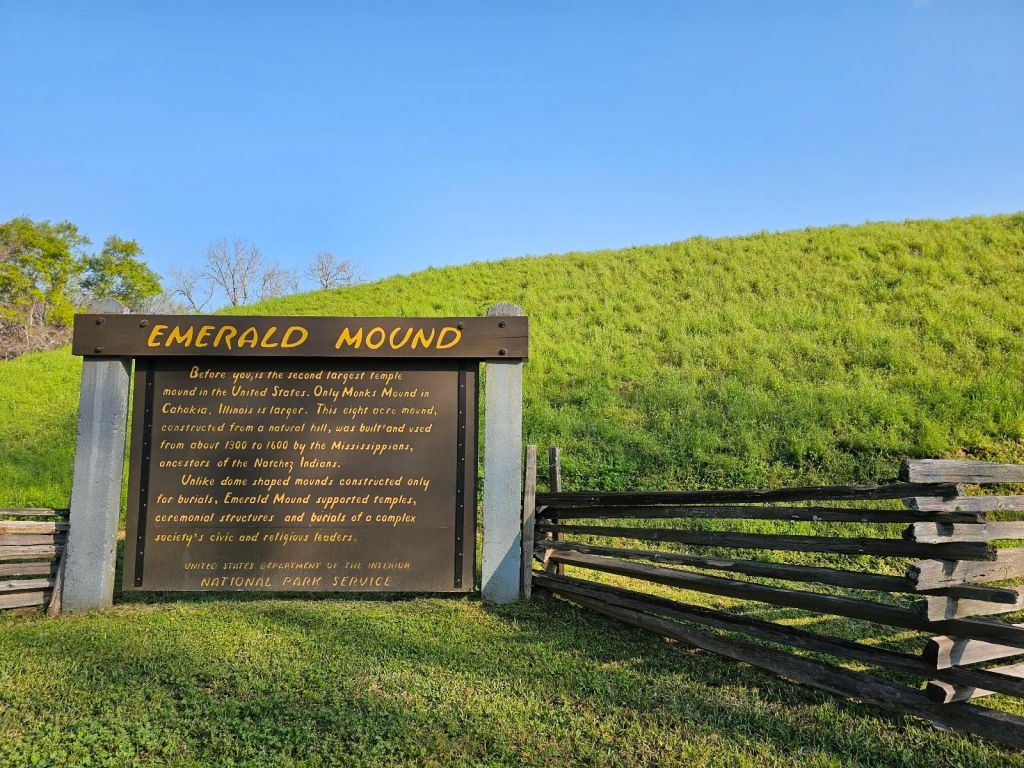
Today is a beautiful day and we are exploring Natchez, MS starting with the Emerald Mound and the Natchez Trace.
The Emerald Mound
The Natchez Trace
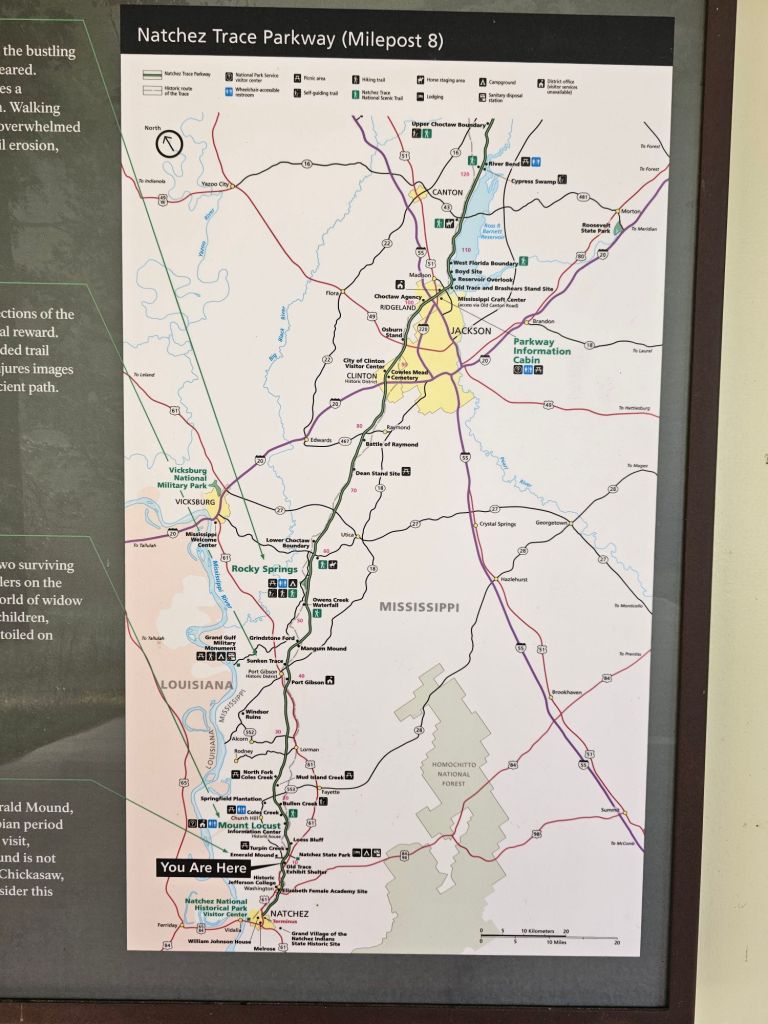
The Natchez Trace is a historic forest trail that runs from Natchez, Mississippi, to Nashville, Tennessee. It was originally created and used by Native American tribes for trade and travel purposes. Later on, it became an important route for early European-American settlers and frontiersmen, especially the Kaintucks, who used it to transport goods and livestock between the Ohio River and the deep south.
The Kaintucks were early American settlers who traveled down the Ohio and Mississippi rivers to settle in the frontier regions of the Southeastern United States, particularly in Tennessee and Kentucky. These settlers often traveled on flatboats or keelboats, transporting goods and supplies to new settlements while also searching for new land to homestead.
The Natchez Trace played a significant role in the westward expansion of the United States, serving as a vital link between the frontier settlements and the established eastern cities.
Natchez, MS
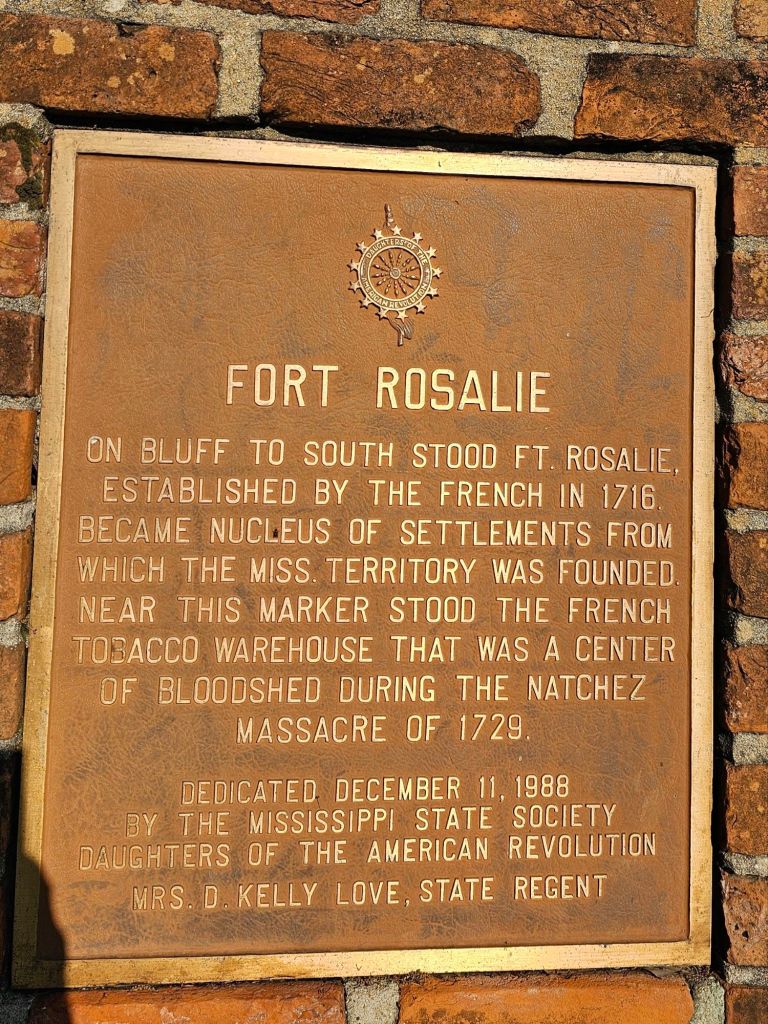
The area was originally inhabited by Native American tribes, including the Natchez people, before the arrival of Europeans. French colonists established Fort Rosalie in the area in 1716, and the settlement soon became an important trading post and hub for the slave trade.
During the antebellum period, Natchez was known for its large plantations and wealth, much of which was built on the backs of enslaved African Americans. The city was a major center of cotton production and a key player in the southern economy.
Natchez was also a key site in the Civil Rights Movement, with major events such as the Natchez Bus Boycott in 1965 leading to significant progress in the fight for civil rights and desegregation.
Today, Natchez is known for its well-preserved antebellum architecture, including historic homes and buildings that attract visitors from around the world. The city’s history is a complex tapestry of triumphs and tragedies, reflecting the broader story of the American South.
Forks of the Road
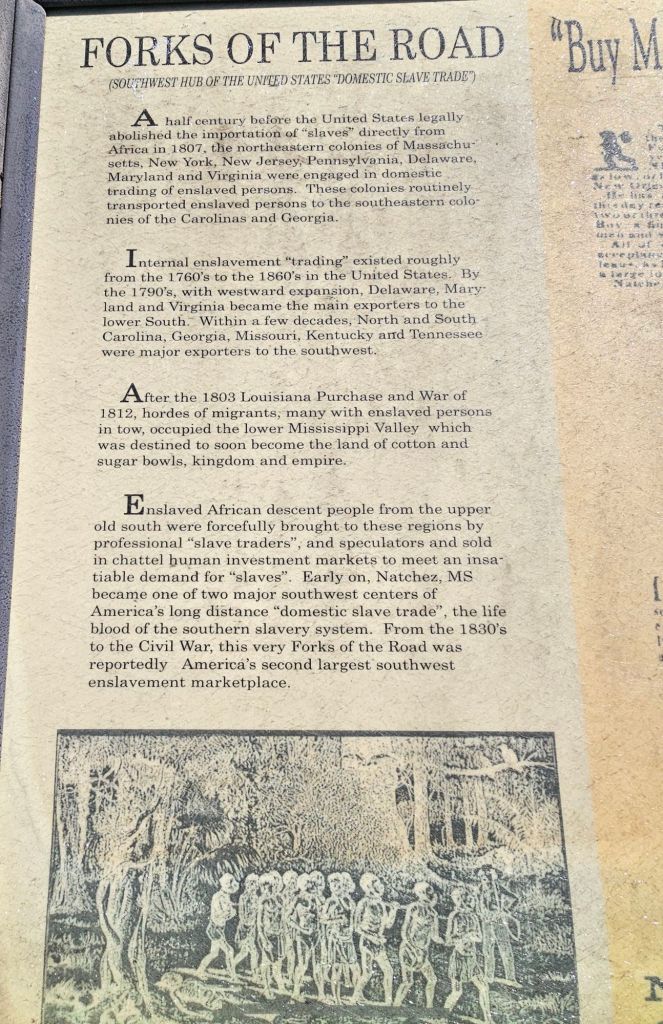
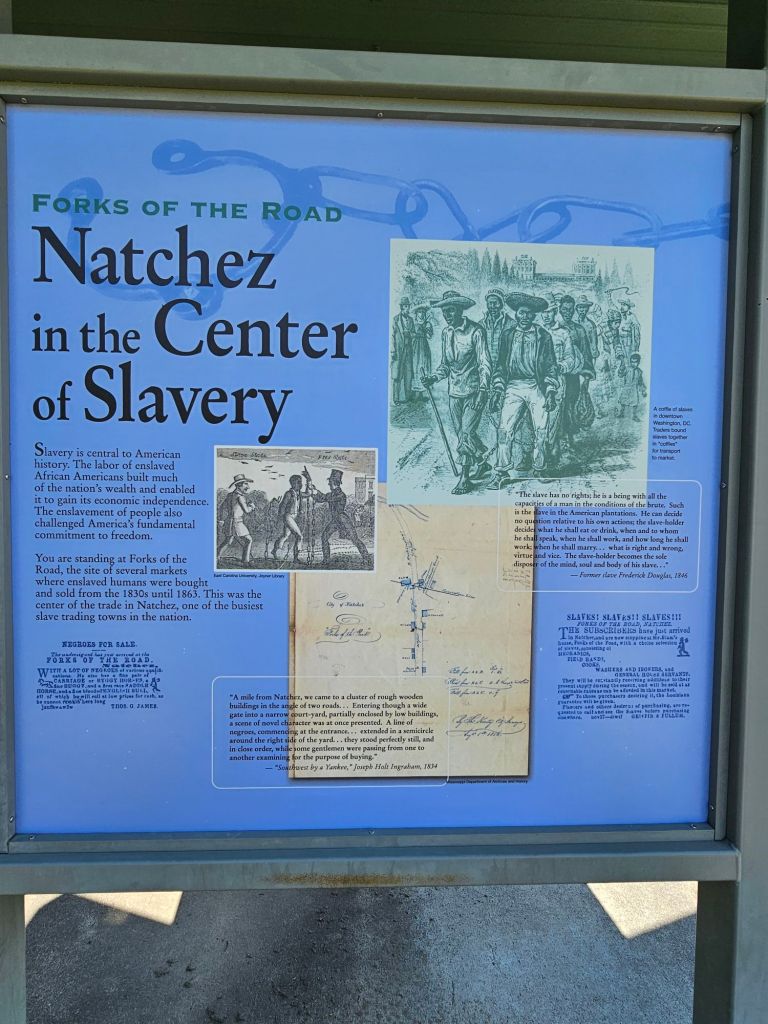
Forks of the Road was once one of the busiest slave markets in the southern United States, second only to New Orleans.
The site got its name due to its location at the intersection of two major roads that led to the city of Natchez. From the early 19th century until the Civil War, Forks of the Road was a significant hub for the domestic slave trade, with thousands of enslaved people being bought and sold at the market.
Today, Forks of the Road is a recognized historic site that serves as a reminder of the dark legacy of slavery in America. Efforts have been made to preserve the site and educate visitors about its history, as well as the broader impact of slavery on American society.
Rosalie and Fort Rosalie
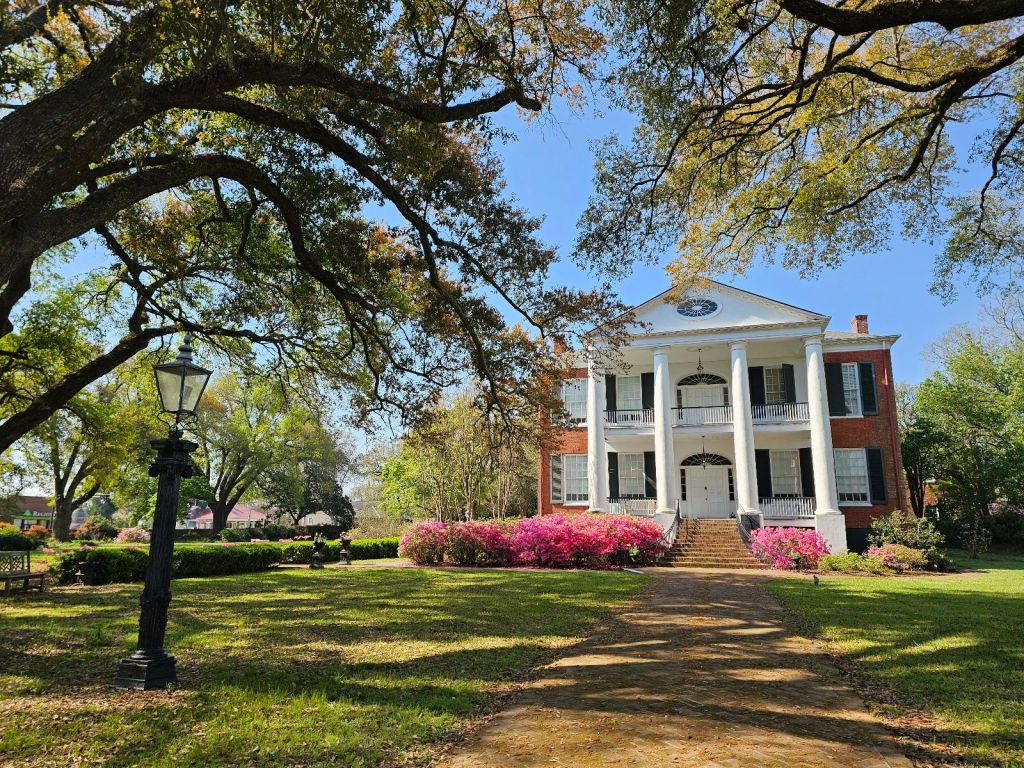
The Melrose estate
We took a tour of the main house on the Melrose estate and learned more about antebellum economy and the wealthy northerners who made a fortune in the south on the backs of the slaves. Natchez was the seat of business and the place where the northern wealthy came to ‘be seen’.
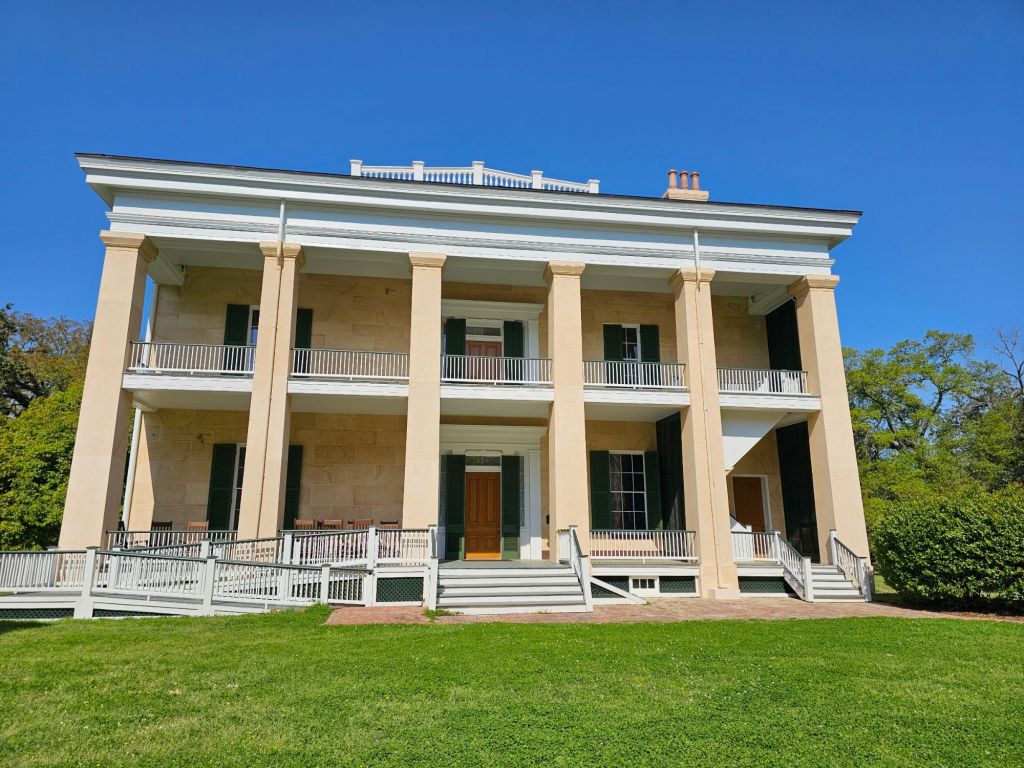
Melrose Estate was built in the late 18th century and is one of the most well-preserved antebellum homes in the region. The main house at Melrose is a beautiful example of Greek Revival architecture and is surrounded by lush gardens and grounds. The plantation has a rich history, including its role in the cotton industry and its use as a hospital during the Civil War. Today, Melrose is open to the public for tours and events, allowing visitors to step back in time and learn about the history of the American South.
Natchez is the prettiest of the cities we have visited in Mississippi so far. Situated on the bluffs of the Mississippi, it had stately homes and beautiful gardens, in full bloom with azaleas and irises at the moment.
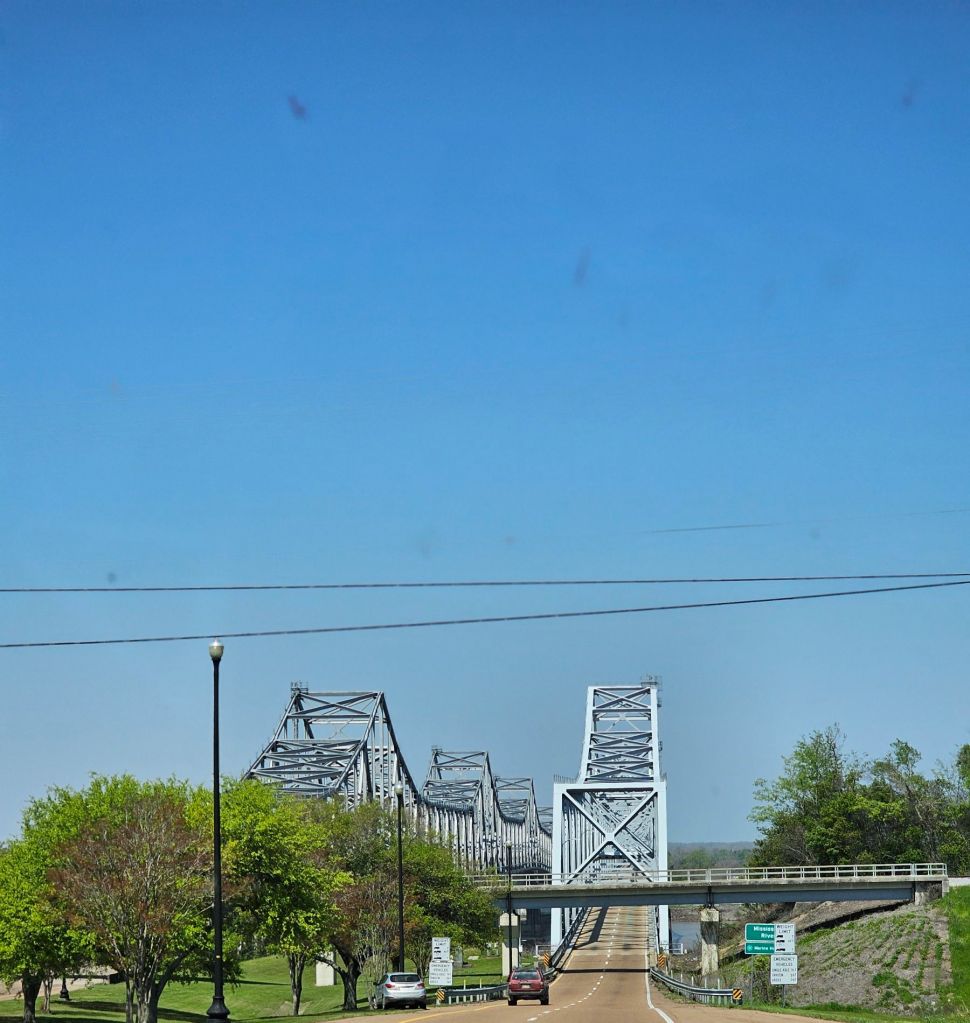
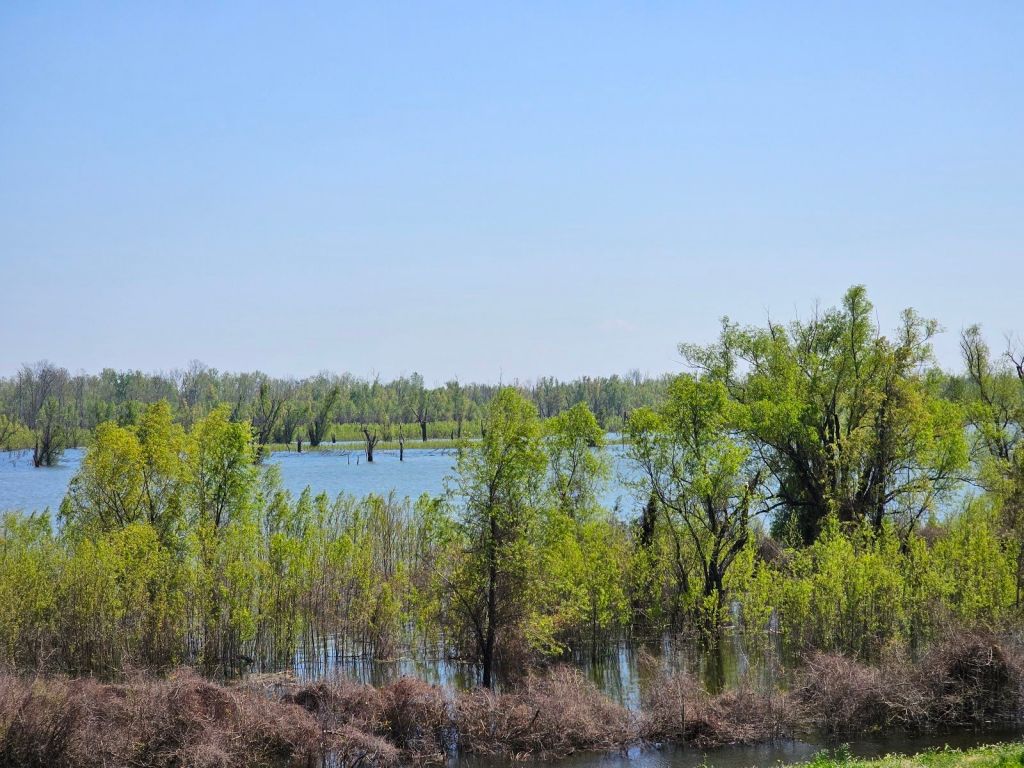
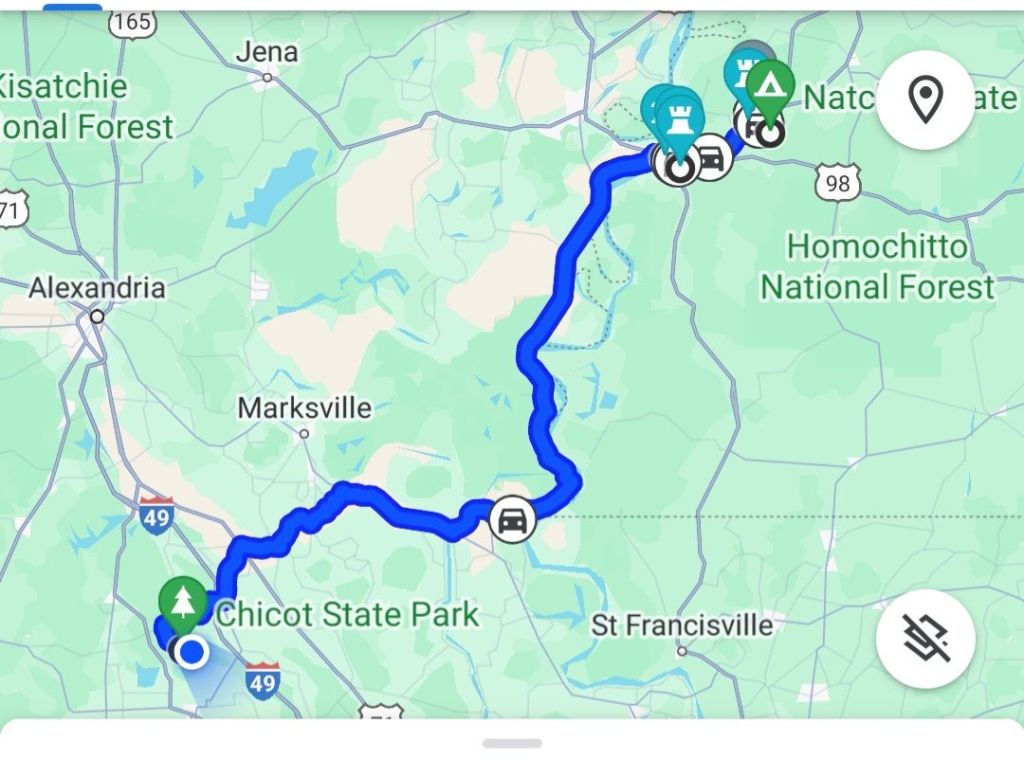
We crossed the river here into Louisiana where we headed south along the levees on the west Bank. Not much to see for the first hour except miles and miles of farmland waiting to be planted. We stopped for lunch atop one of the levees and arrived in our campsite about 4 pm. It’s a beautiful day and we have been out for several days, time to do a bit of hand laundry, baking for breakfast, make some ice tea and some tidying up.
We also have the BBQ out for the first time. It’s Saturday and the campground is FULL.
 Louise and Brian McLeod Travel Blog
You must be logged in to post a comment.