The rest of our family went home today, some of them having been in Europe for a couple of weeks. We are staying on until Thursday. We leave Paris today to visit the Normandy beaches near Caen.

Because our fathers both served in the Canadian armed forces during WWII, we are doing Juno Beach. My father served in England, France and Italy from 1939 to 1945. The full run of the War.
We took the train from Gare St-Lazare this morning to Caen and will rent a car tomorrow.
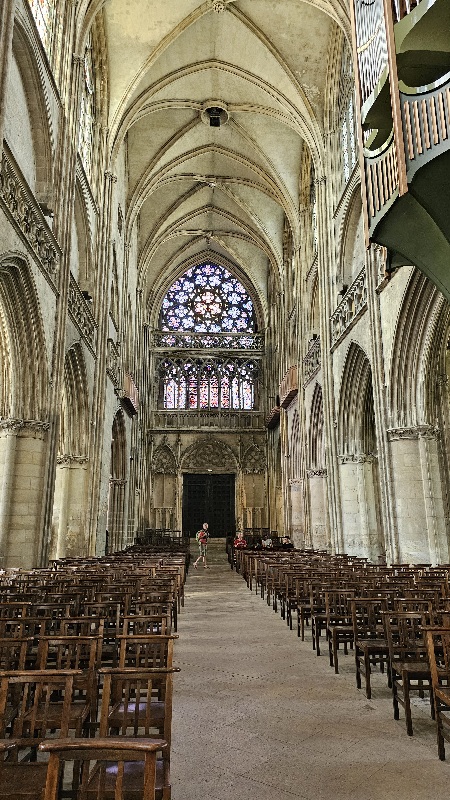
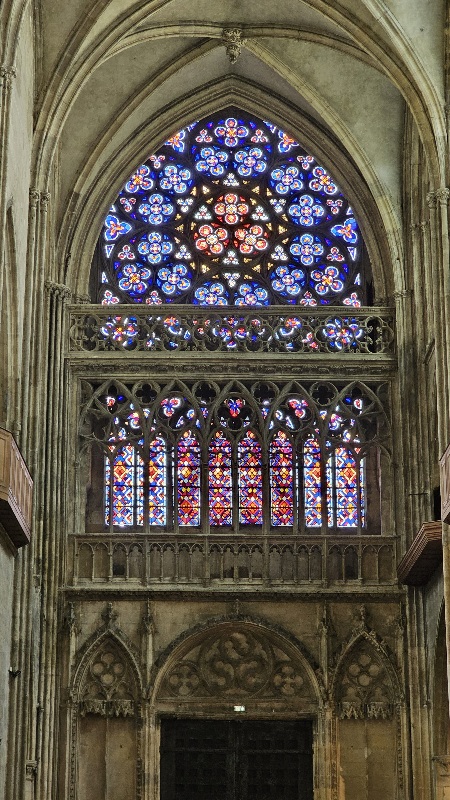
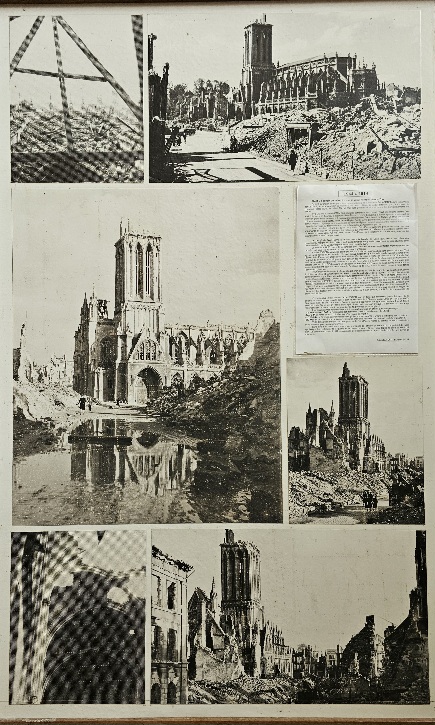
Caen itself was built by William the Conqueror (1066 And All That) to consolidate his base in Normandy and was heavily bombed / destroyed by the Germans during WWII. It has some very beautiful churches dating from the 13th century.

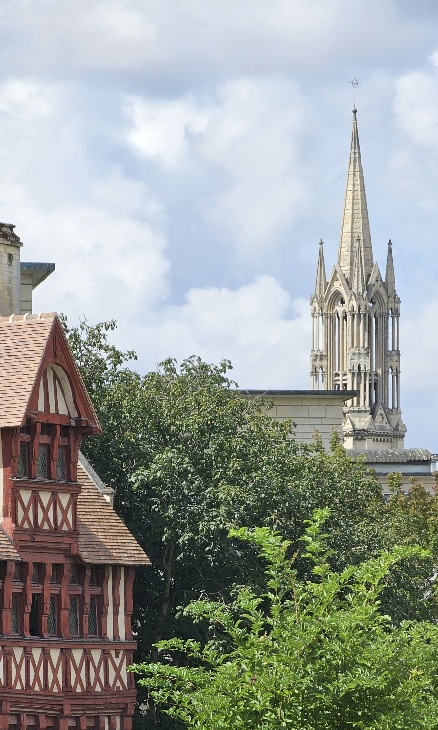
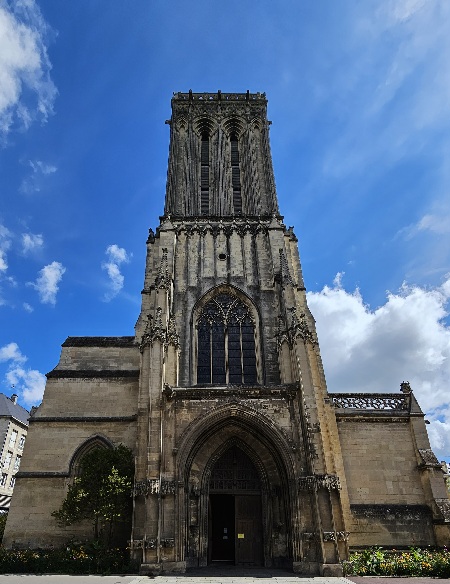
The first place of worship, dedicated to the Apostle John, was founded in the seventh century on a Roman road crossing the marshes of the lower valley of the Orne. In 1954-1956, monolithic sarcophagi made of Caen stone were discovered during work in the church. They testify to the probable existence of a small necropolis along the Roman road and an oratory founded nearby. Of this pre-Romanesque sanctuary, nothing remains.


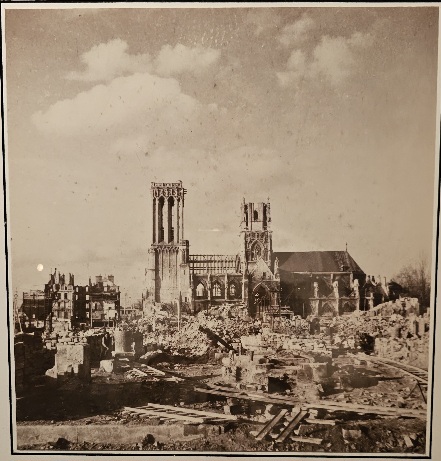


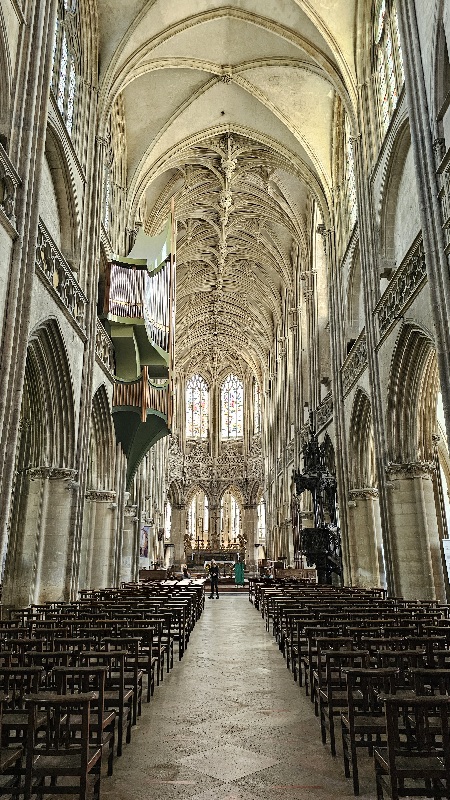
The construction of the present building took place between the early 13th and the 16th centuries. It was in this church that during the Middle Ages the main public ceremonies took place. The spire of the church was destroyed on 9 July 1944 by a British Royal Navy shell fired at German forces from HMS Rodney, and has since been rebuilt.

The castle was built c. 1060 by William the Conqueror (William of Normandy), who successfully conquered England in 1066. His son Henry I then built the Saint George’s church, a keep (1123) and a large hall for the ducal Court.
On Christmas 1182, a royal court celebration for Christmas in the Aula of Caen Castle brought together Henry II and his sons, Richard the Lionheart and John Lackland, receiving more than a thousand knights.
Caen Castle, along with all of Normandy, was recaptured by the French Crown in 1204. Philip II reinforced the fortifications.
The castle saw several engagements during the Hundred Years’ War (1346, 1417, 1450). The keep was pulled down in 1793 during the French Revolution, by order of the National Convention.
The castle, which was used as a barracks during World War II, was bombed in 1944 and seriously damaged.
The castle was constructed on a hillock and is now in the middle of the city. The keep, now razed, had a large square section with round towers at each corner. As the castle, it was also surrounded by a moat. The dry moat still provides a circuit for walkers. With an area of 5.5 hectares, it is one of the largest castles in Western Europe. It remained an essential feature of Norman strategy and policy.
 Louise and Brian McLeod Travel Blog
You must be logged in to post a comment.