We are exploring the north shore of Lake Superior via provincial campgrounds. The scenery as you drive this portion of Hwy 17 is spectacular and rugged in places. This is the Canadian Shield aka the Laurentian Plateau.

The Canadian Shield (French: Bouclier canadien, also called the Laurentian Plateau, is a geologic shield, a large area of exposed Precambrianigneous and high-grademetamorphic rocks. It forms the North American Craton (or Laurentia), the ancient geologic core of the North American continent. Glaciation has left the area with only a thin layer of soil, through which exposures of igneous bedrock resulting from its long volcanic history are frequently visible. As a deep, common, joined bedrock region in eastern and central Canada, the Shield stretches north from the Great Lakes to the Arctic Ocean, covering over half of Canada and most of Greenland; it also extends south into the northern reaches of the United States.
The geology of ‘the Shield’ made it very difficult for creation transportation links such as the TransCanada Highway and the railroad, even more difficult than through the Rockies as it is much older.
We stopped at Wawa, ON to photograph the Wawa Goose, a Landmark icon in northern Ontario. The last time we were here was 50+ years ago, just a few years after the TransCanada highway was completed through this area.
Wawa, ON
This area was first developed for fur trading. In the late 19th century, both gold and iron ore were found and mined, leading to the region’s rise as the steel industry developed in Sault Ste. Marie, Ontario. From 1900 to 1918 the Helen Mine had the highest production of iron ore of any mine in Canada.

The community is known for its 8.5-metre (28-foot) metal statue of a Canada goose, which was built in 1960, and dedicated to the community in 1961. Wawa takes its name from the Ojibwe word for “wild goose”, wewe. Wawa was defined as wild goose in The Song of Hiawatha. On July 5, 2010, Canada Post made a commemorative stamp of the Wawa Goose as part of its Roadside Attractions collection. On July 1, 2017, a new Wawa Goose was unveiled to replace the second aging goose. The town is also known for snowmobiling and sport fishing.
Highway 17 and The Gap
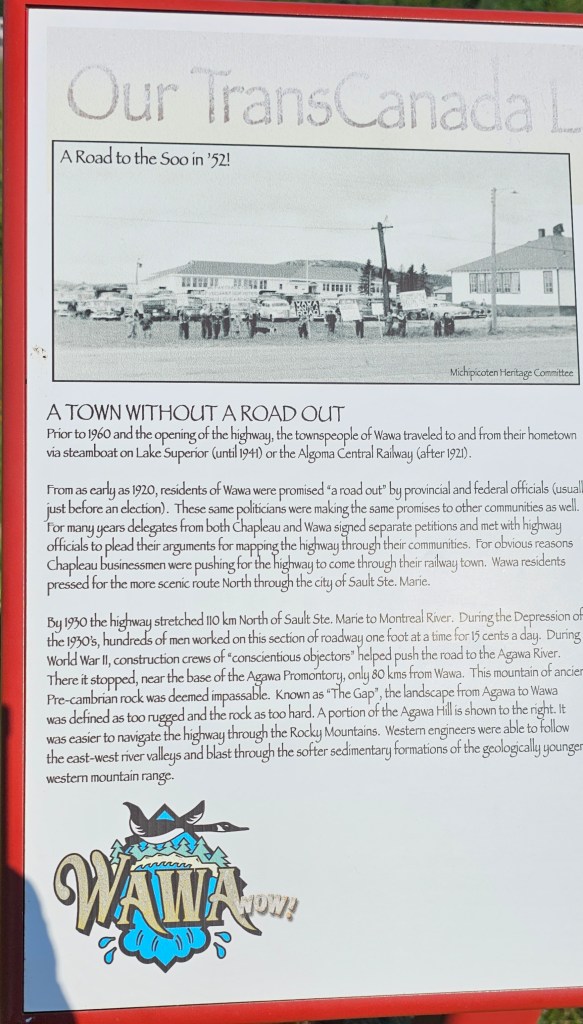
We have been following Highway 17 for a few days now. Highway 17 from Schreiber east towards Wawa had been under construction since the mid-1930s, but the harsh rugged terrain of Lake Superior’s north shore had prevented its swift completion. This left a gap of 165 miles between the Agawa River, about 150 miles north of Sault Ste Marie, and Marathon, appropriately called “The Big Gap”. The road was completed in 1960 at Wawa at the juncture of Highway 17 and Highway 101 towards Timmins, ON. Remember Timmins from the beginning of our trip? The Wawa Goose commemorates the completion of the TransCanada Highway through this area.
Amongst some of the most difficult terrain encountered in Canada, engineers blasted 2,087,234 cubic metres (2,730,000 cubic yards) of rock, removed 5,982,641 cubic metres (7,825,000 cubic yards) of earth, and cleared 6.97 square kilometres (1,720 acres) of forest in order to bridge the 266 kilometres (165 mi) of wilderness known as “the Gap”.
The “Big Gap” area was rugged, inaccessible, and still had stands of virgin timber, which required the clearing of a 50 metre (150 ft) right-of-way, even before road construction could begin. The first clearing contractor quit the job in frustration, and a second had to be hired. The area had a number of deep gorges, sprawling swamps and wide rivers that needed to be crossed by 25 newly-built bridges to be built.

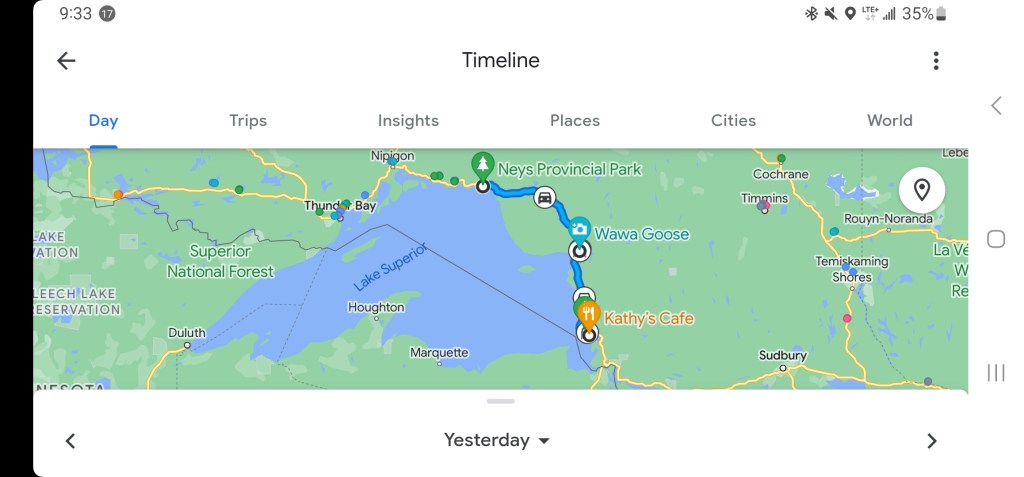
Our destination tonight is Pancake Bay Provincial Park along the eastern end of Lake Superior directly north of Michigan’s Upper Peninsula. W it occupies the nirthern side of a promontory. We drove over to the southern side first to have lunch at Kathy’s Cafe in Bachawana Bay. This was a cute little place on the bay. A room in the front of a house with a single community table and places outside to sit. No menu. Kathy will just make you what you want with what she has. We had home made beef and barley soup, grilled bacon and tomato sandwiches and the ubiquitous Ontario butter tarts while enjoying the company of Kathy and one other customer. Perfect.
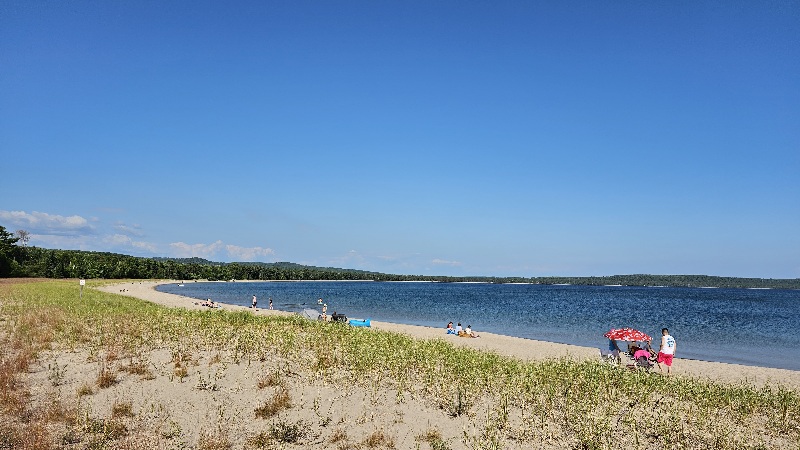
The part of Pancake Bay Provincial Park where we camped, is just that. A campground sandwiched between Hwy 17 and the natural beach of Pancake Bay. This is the first week of Jukt. The campground is full, lots of families. It’s still cool. The cold waters of Lake Superior affect the land temperature. It gets much warmer once you are away from the lakeshore.
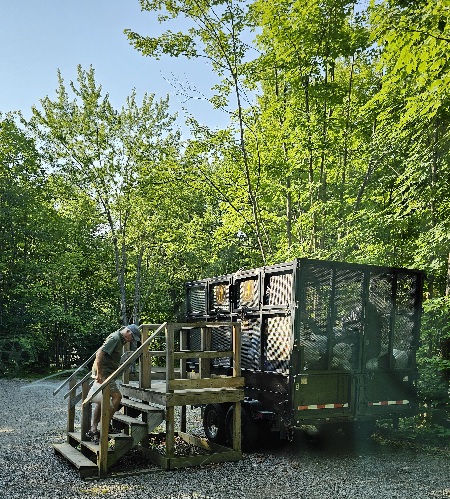
It was another lovely evening for an after dinner stroll.
Two more days and we will be back to Ottawa where we will meet up with our travel buddies. The days have gone by so fast!
 Louise and Brian McLeod Travel Blog
You must be logged in to post a comment.