Cool and damp this morning, indoor breakfast again.
Today is July 1, Canada Day, a day for all Canadians to celebrate and reflect on what is means to be Canadian. It is very appropriate to be in Canada today given our natural heritage and being so close to the end of our trip across this beautiful country.

Happy Canada Day, July 1!
Canada Day (French: Fête du Canada), formerly known as Dominion Day (French: Fête du Dominion), is the national day of Canada. A federal statutory holiday, it celebrates the anniversary of Canadian Confederation which occurred on July 1, 1867, with the passing of the British North America Act, 1867, when the three separate colonies of the United Canadas, Nova Scotia, and New Brunswick were united into a single dominion within the British Empire called Canada.
Originally called Dominion Day (French: Le Jour de la Confédération), the holiday was renamed in 1982, the same year that the Canadian constitution was patriated by the Canada Act, 1982, which severed the vestiges of legal dependence on the Parliament of the United Kingdom. Canada Day celebrations take place throughout the country, as well as in various locations around the world attended by Canadians living abroad.
Most communities across the country host organized celebrations for Canada Day, typically outdoor public events, such as parades, carnivals, festivals, barbecues, air and maritime shows, fireworks, and free musical concerts, as well as citizenship ceremonies. There is no standard mode of celebration for Canada Day.
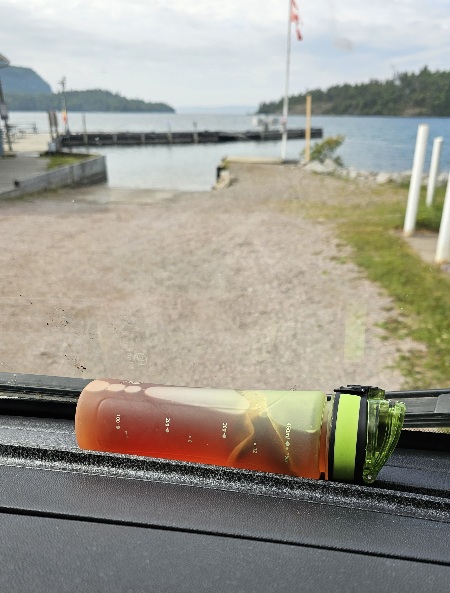
We have had to modify our plans a bit. Our campground for tonight near Wawa, ON has never confirmed our reservation even after repeated calls and emails. We were able to find an available site at Neys Provincial Park just an hour down the road. Given that this is not only a weekend, but a holiday weekend, our options were limited. It just means a longer day tomorrow.
We plan on spending the same as every other day on this trip, exploring. Today we will poke around the shores of Lake Superior and hopefully find some Canada Day celebrations. BTW, I have been collecting fabric on this trip and will make a Canada quilt when we get home.


We started off by back tracking to Rossport, ON. First time we have gone back to look at something since we started this trip. I wrote about Rossport yesterday and promised some photos.


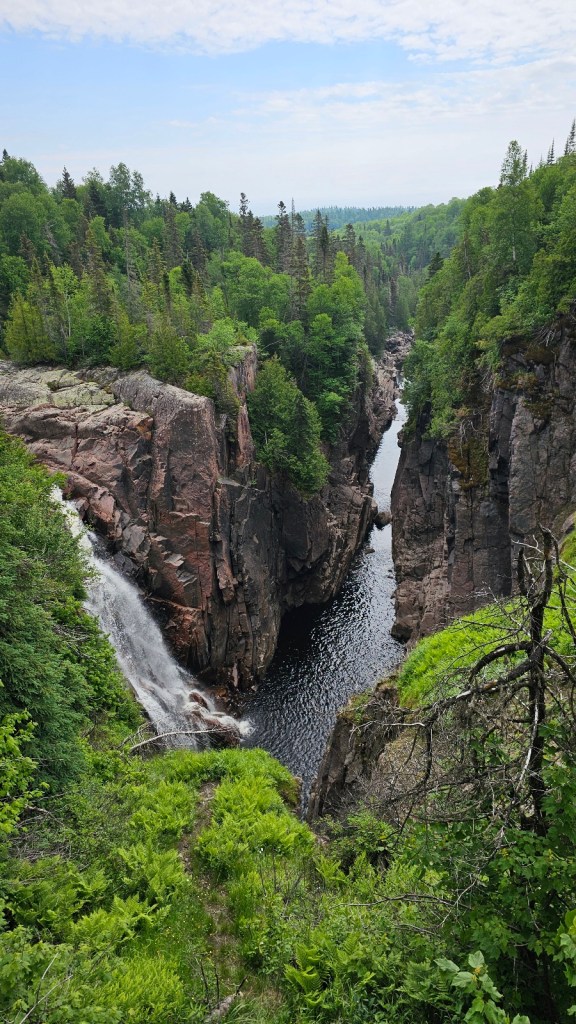
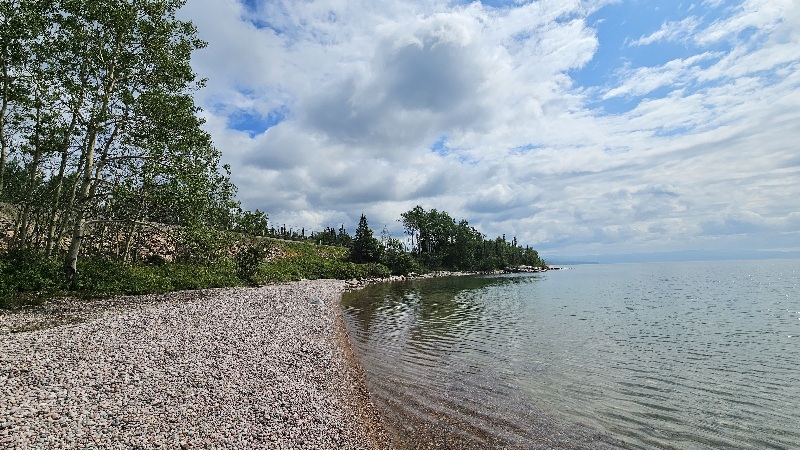
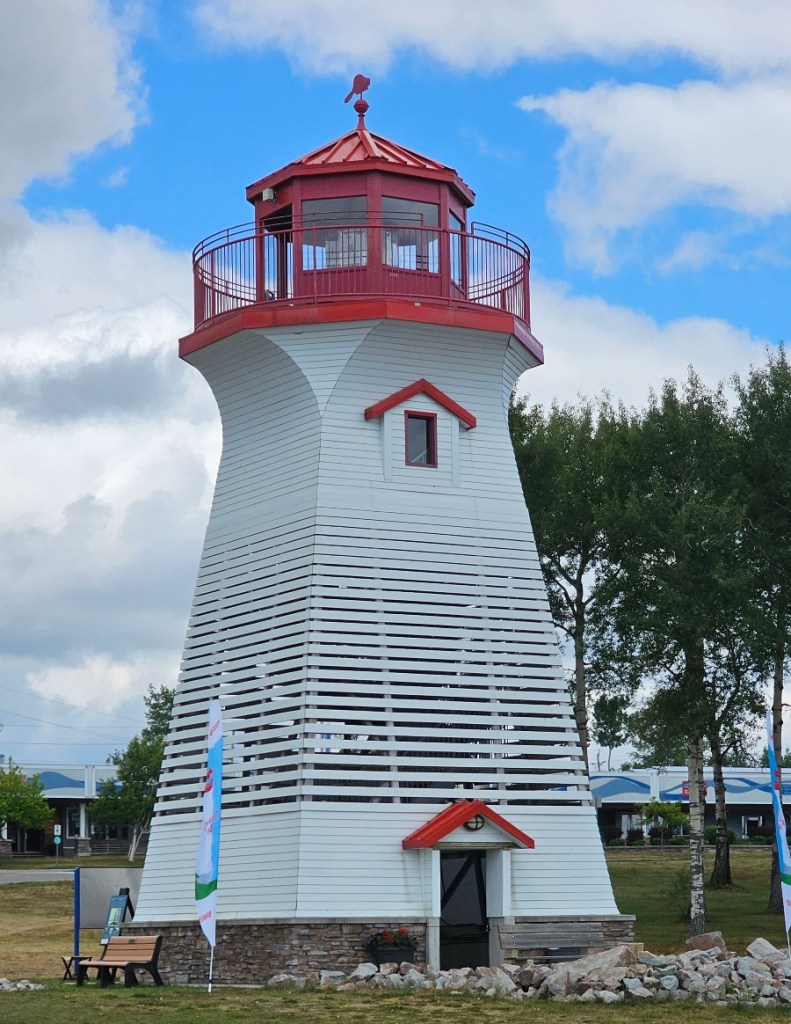

The Canada Parks guide we spoke to on the board, told us about conservation activities to preserve the coastal marine Landa.
Lake Superior National Marine Conservation Area (French: Aire marine nationale de conservation du Lac-Supérieur) is a National Marine Conservation Area (NMCA) on the north shore of Lake Superior in Ontario, and is a unit of the national park system. Established on September 1, 2015, it is the largest freshwater marine protected area in the world.
The conservation area extends 140 kilometres (87 mi) eastward from Thunder Bay, from Thunder Cape in the west, at the tip of Sleeping Giant Provincial Park, to Bottle Point in the east, and stretches southward to the Canada-US border, linking with Isle Royale National Park. The Nipigon River and Lake Nipigon lie to the north. The spawning and schooling waters of deep coldwater fish, such as whitefish, lake herring, walleye, and lake trout will be protected by this zone. Caribou foraging and calving areas are located on shore. Lake Superior is home to about 70 fish species.
Neys PP looks interesting. It is a natural environment park on the north shore of Lake Superior. Ontario PPs apparently are categorized by their use / reason for being: wilderness, recreation, cultural heritage, natural environment etc. Rainbow Falls is a recreation category park. Quetico PP is a wilderness park.
Neys Provincial Park is home to one of the hardest and rarest mineral complexes in North America. 7,500 years ago, the large Glaciers of the Laurentide Ice Sheet had finally melted away, filling in large bodies of water that covered 246,050 km². These bodies of water are the Great Lakes. The extremely cold and rough waters of Lake Superior have caused its rocky shores to be home to subarctic plant species and a rare herd of woodland caribou. The park is home to one of the most popular beaches on Lake Superior’s north shore and a model of a former German prisoner of war Camp at the Neys Visitor Centre.
During World War II, 35,046 prisoners of war and Japanese-Canadians were held in 26 main camps in Canada. The north shore of Lake Superior was the site of three such camps: Neys, Angler, and Red Rock.
Neys Camp 100 interned mostly German POWs, and some Japanese-Canadians between 1941-1946. The prisoners were forced to log in the Pic and Little Pic River valleys.
German POWs were divided into categories: the “greys” who were largely ordinary soldiers, and the “blacks” who were considered die-hard Nazis, considered high risks for violence or escape attempts. Neys Camp 100 was one of Canada’s nine camps which interred “black” prisoners. Hence the camp was enclosed by three barbed-wire fences and guard towers. During the time of the internment camp, there were few, if any, escapes for two main reasons: in summer months, dense forests and heavy, black flies deterred prisoners from walking through the bush, and in the winter, sub-zero cold weather deterred prisoners from venturing out. Also, Lake Superior was a natural barrier, considering its size and frigid waters.
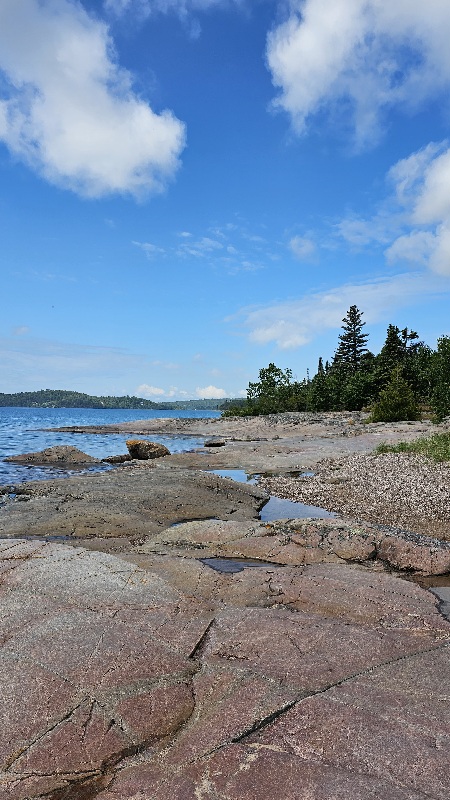
Neys Provincial Park is home to one of the hardest and rarest mineral complexes in North America. 7,500 years ago, the large Glaciers of the Laurentide Ice Sheet had finally melted away, filling in large bodies of water that covered 246,050 km². These bodies of water are the Great Lakes. The extremely cold and rough waters of Lake Superior have caused its rocky shores to be home to subarctic plant species. Woodland caribou, moose and bear are also found in the park.



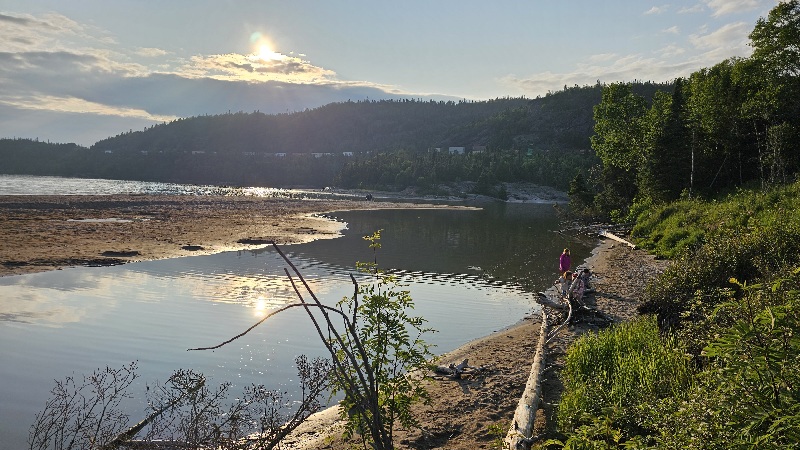
We had an absolutely glorious evening walk along the beach. I group if young people were celebrating Canada Day with a pick up volleyball game. Tomorrow is a longer day because we didn’t go as far today, but it was lovely to be able to take our time exploring this area. We were rewarded with finding local Canada Day celebrations and walks along scenic beaches. A perfect day.
 Louise and Brian McLeod Travel Blog
You must be logged in to post a comment.