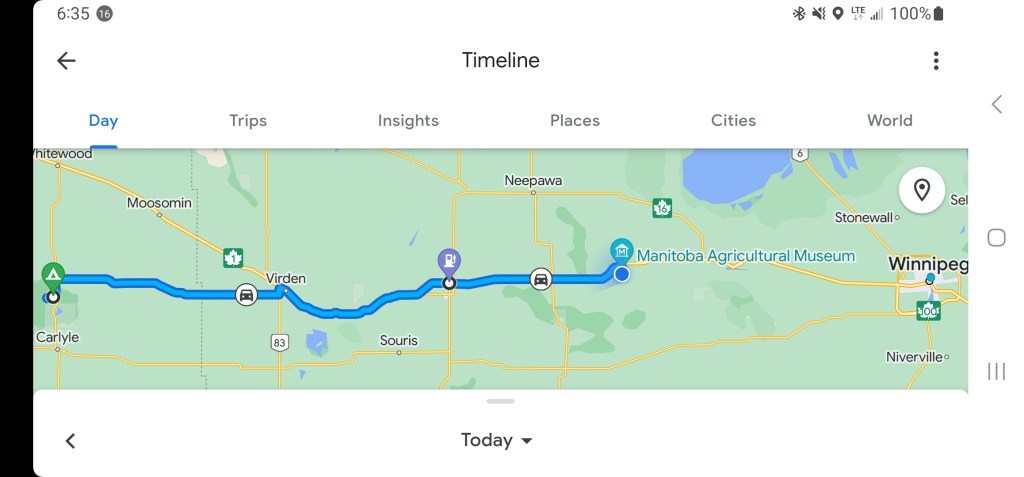
Another day with only about 2 1/2 hours of travel. We wanted to spend at least one night in Mabitoba on the way back.
Another morning when we could breakfast outside. Is this a trend developing? I certainly hope so.
We solved another family puzzle along the way.
Why did my grandfather come to Saskatchewan in the first place? ( if you have been following my blog, we found the cemetary where my paternal grandfather is buried in Stockholme SK) It was not originally to homestead in the usual sense of the word. He wasn’t a farmer but a very well educated son from a fairly wealthy family in England. My father had always told me that he and his brother came here to a place in southern Saskatchewan where the sons of the English well-to-do came to learn about the west but be more or less pampered while doing so.
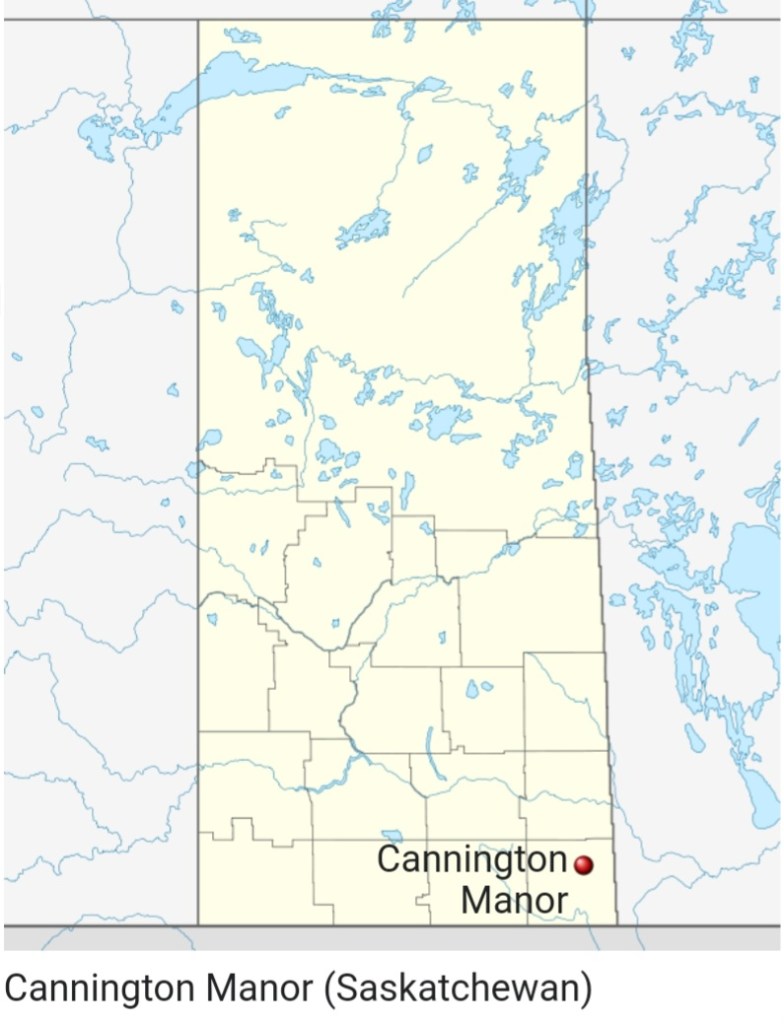
I could never remember the name of it until we passed a historic sign alluding to it this morning along Hwy 1 just east of Whitewood. I had a Eureka moment. It was a place called Cannington Manor and its history is explained on the internet pretty much as my father explained it. None of this is in the family written history and I have been perplexed from the start why it has my grandfather emigrating to Whitewood to homestead. He didn’t. I imagine he ended up in prosperous Whitewood to set up shop as watch maker / repair, the family business, when Cannington Manor went bust just 2 years after his arrival from England. NOW it all makes sense.
Below is the story we found online about Cannington Manor, almost exactly as my father told me. Interestingly enough, it’s now a Provincial Park.
Established in 1882, the village of Cannington Manor was an attempt by eastern settlers to recreate the aristocratic English lifestyle, all supported by agriculture.
Edward Michell (Captain) Pierce, an upper middle class Englishman who aspired to the life of a gentleman farmer, intending to establish a centre for agricultural and industrial development, founded a village named “Cannington Manor” after Cannington in Somerset, England. To further his ambitions, Pierce wrote letters to English newspapers promoting the West as a place of opportunity where, with little capital, families could support themselves in the style of a landed gentry. As a result, a number of middle class English were persuaded to settle at Cannington Manor. This “English Group” cultivated a lifestyle that emulated refined Victorian Society and inspired much of the legend that came to surround the settlement.
“With a few hundreds a year, (a gentleman) can lead and enjoy an English squire’s existence of a century ago!”, he wrote in one newspaper notice, according to Patrick Dunae’s book Gentlemen Emigrants.
The cultural and recreational life emulated English upper class society. Thoroughbred racing, polo matches, theatrical plays, fox hunting, billiards, soccer, and tennis were all enjoyed by the colony students and settlers. This was a contrast to the neighbouring homesteaders who were barely eking out a living proving their land and making improvements to earn land title grants from the Dominion Government.
Between 1901 and 1902, the CPR regional branch line was constructed 10 km (6.2 mi) south of the village rather than through the village. During a time of travel by horseback this distance was detrimental to the growth of the community. The passing of the founder, a few years earlier, a drought and low grain prices soon made it unfeasible for settlers to continue the lifestyle at Cannington Manor.
And there it is… all laid out and making perfect sense… now.
Our destination today was the Manitoba Agriculture Museum at Austin, MN and it has an RV park, of sorts. We can’t do all this driving through all this agricultural land without visiting an agricultural museum, can we.
Once we crossed the border into Manitoba, we lost another hour as Manitoba is in the Central Time Zone.
Manitoba Agriculture Museum
We spent about 2 hours on the museum grounds itself including a picnic lunch..

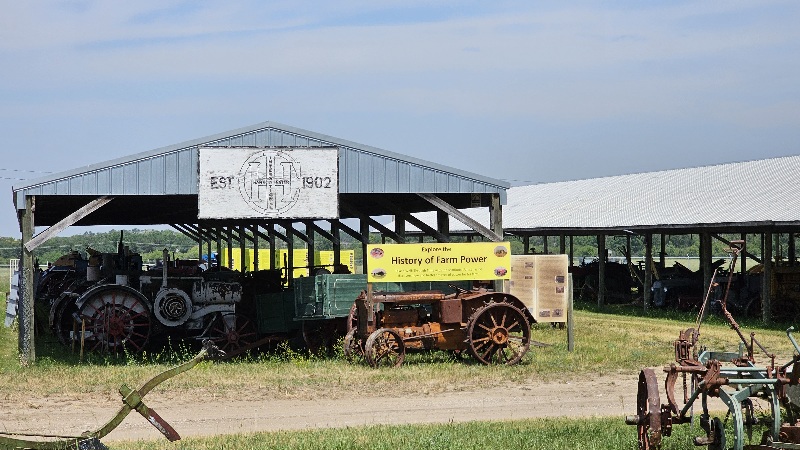
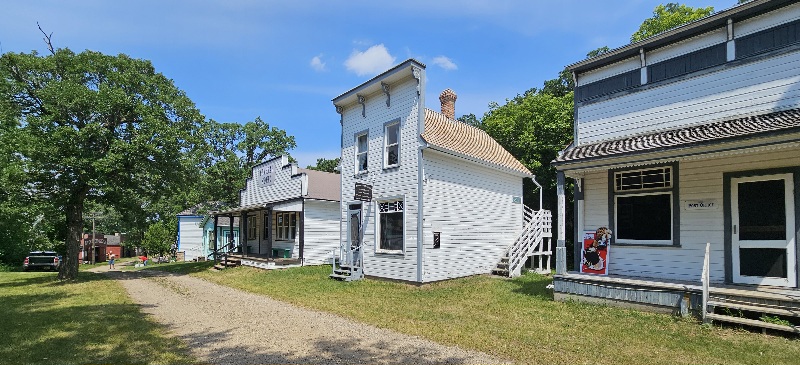
The Manitoba Agricultural Museum is dedicated to collecting vintage farm machinery and buildings from 1900 and before. Located on 50 acres near Austin, Manitoba, to date they have amassed over 500 pieces of machinery and a pioneer village consisting of more than 20 buildings complete with artifacts. This is Canada’s largest collection of vintage equipment.
The Manitoba Amateur Radio Museum is also located on the grounds. This museum is dedicated to collecting, restoring and operation antique communication equipment and now has over 3700 artifacts on display.
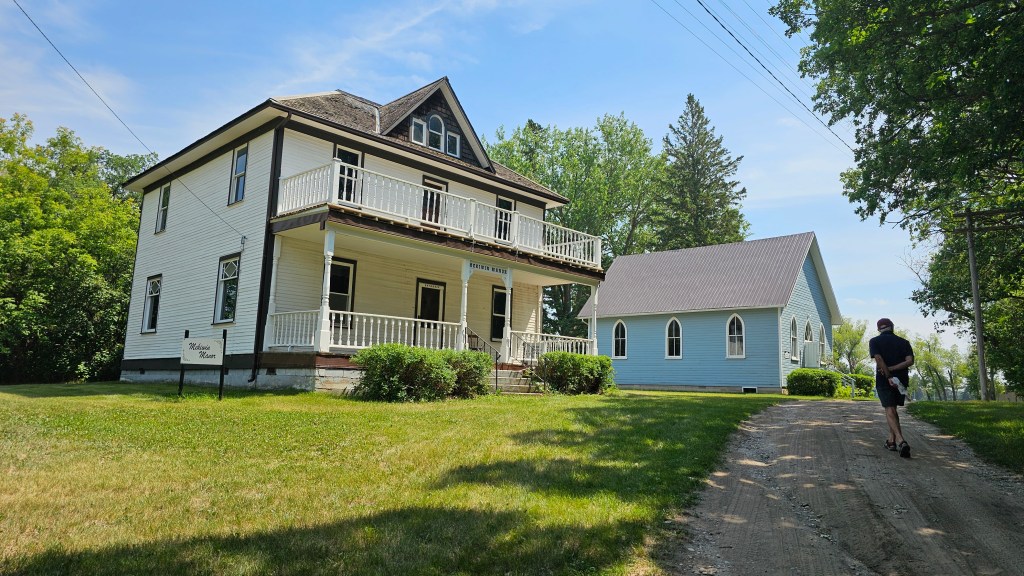
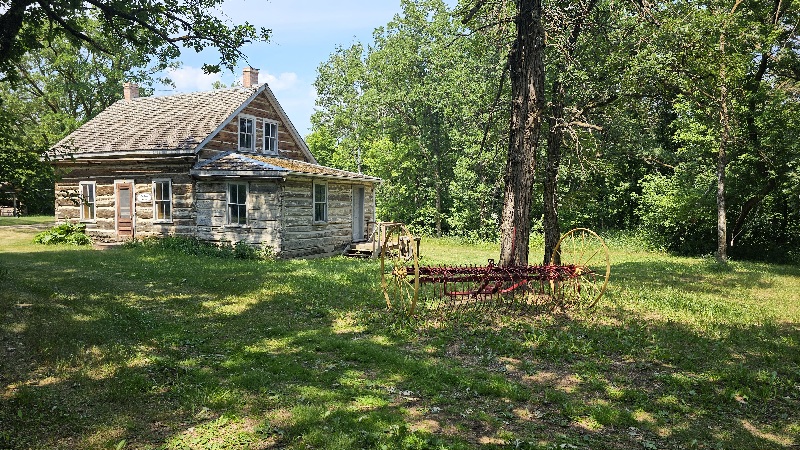
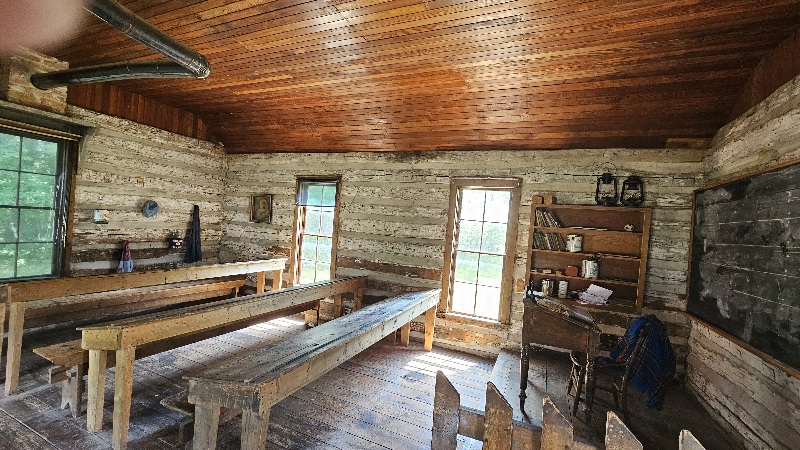
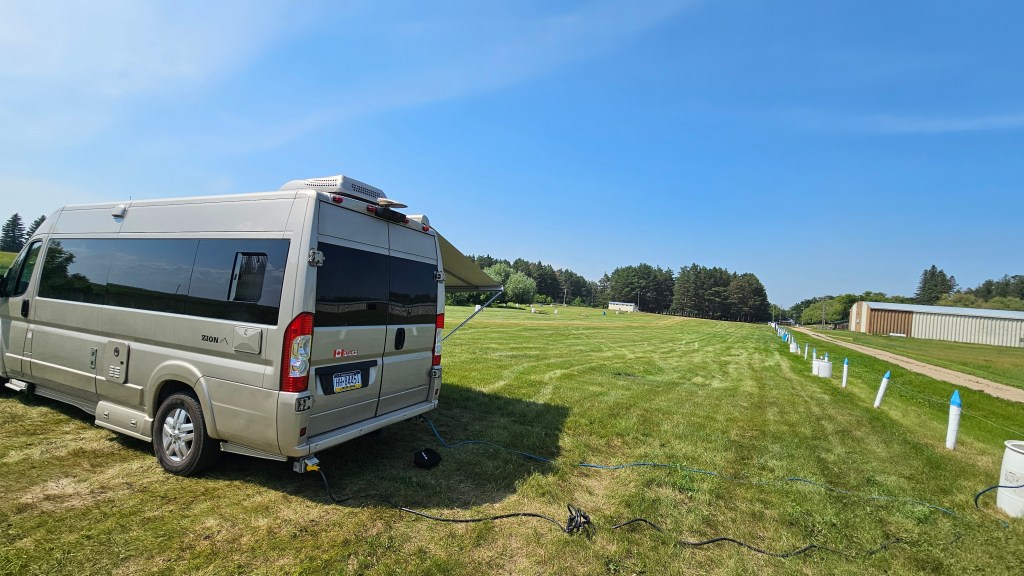
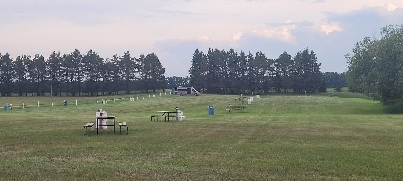
It was hot when we set up camp. We are in a grass field all by ourselves. We just found the fattest spot near water / electricity. Since no one is here but us, we took advantage of the situation and used our outdoor shower! What a treat.
Possible rain tonight and it has gotten colder as the day goes on. Sitting in a field all by yourselves is rather pleasant. We picked up icecream for an evening treat.
 Louise and Brian McLeod Travel Blog
You must be logged in to post a comment.