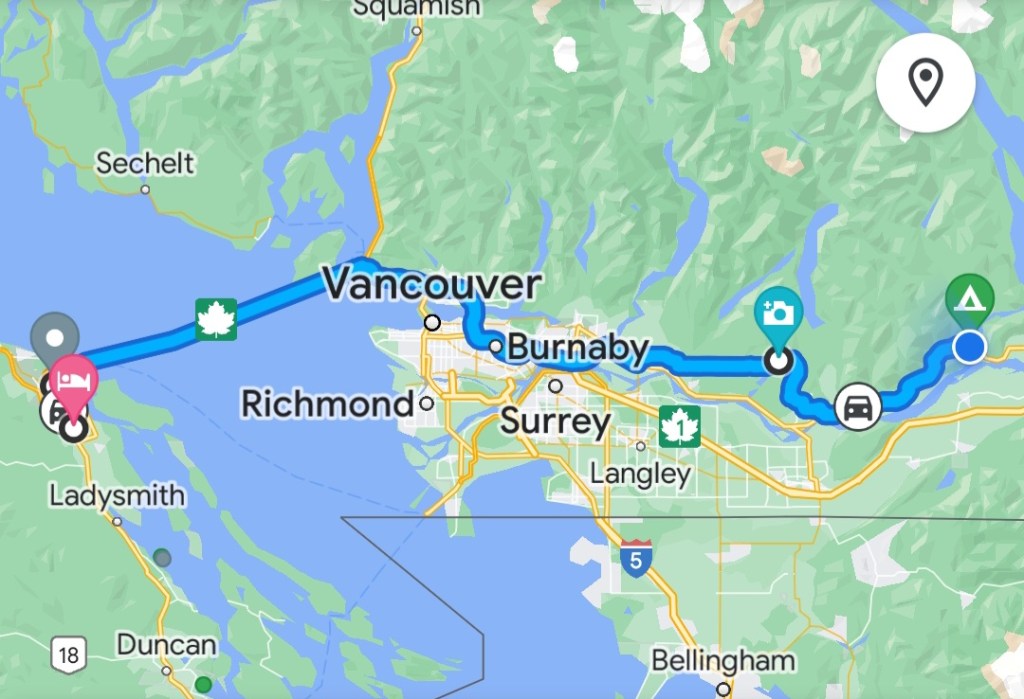
Time to leave Vancouver Island, the official start of the return east. We had booked the 11 am ferry from Nanaimo but as it turned out, we arrived at the departure area in time to take the 9:40 ferry. This gives us an extra hour and half on the mainland today.
It is cloudy, cool and rainy this morning.
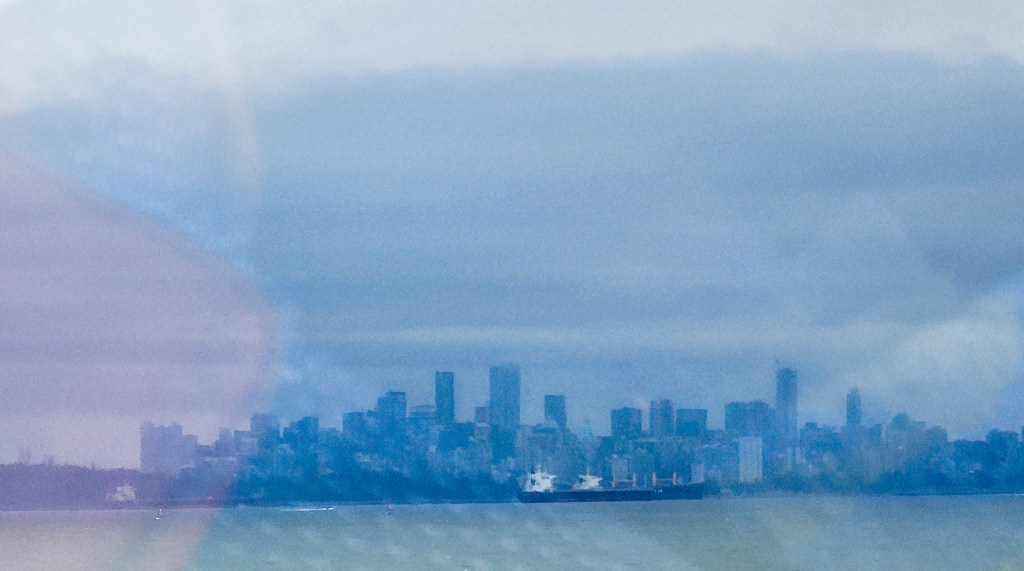
I have lots of cousins on my father’s side living in and around Vancouver most of whom I’ve never met and the ones I have met on previous visits are no longer with us. My cousins are children of my father’s older brothers and sisters.
We are not visiting the city on this trip. We have been here many times in the past. It’s a beautiful city and great place to tour but it needs its own dedicated destination. Ie fly in, fly out. We have other places we want to explore this time.
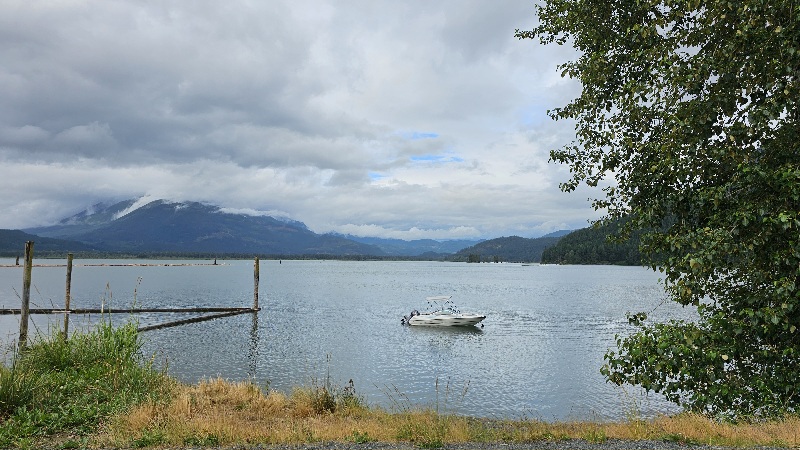
It took about 90 minutes to clear the traffic around Vancouver and we opted not to take Hwy 1, the TransCanada through Abbotsford but take a less busy route further north to our destination, Harrison Bay through Mission.
Once out of the Greater Vancouver area and it’s 3m people, we started getting into the lush farm land around Abbotsford. We are following the Fraser River Valley across BC.
It’s a cool drizzly day and we needed to find something indoors to do before arriving at our campsite.
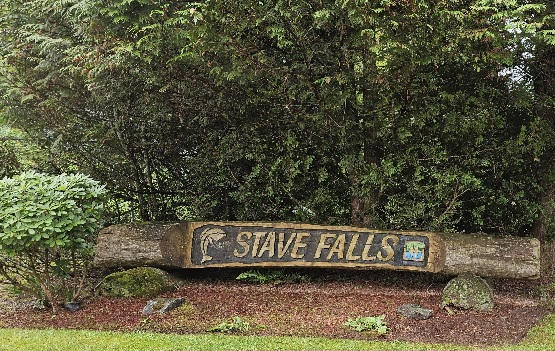
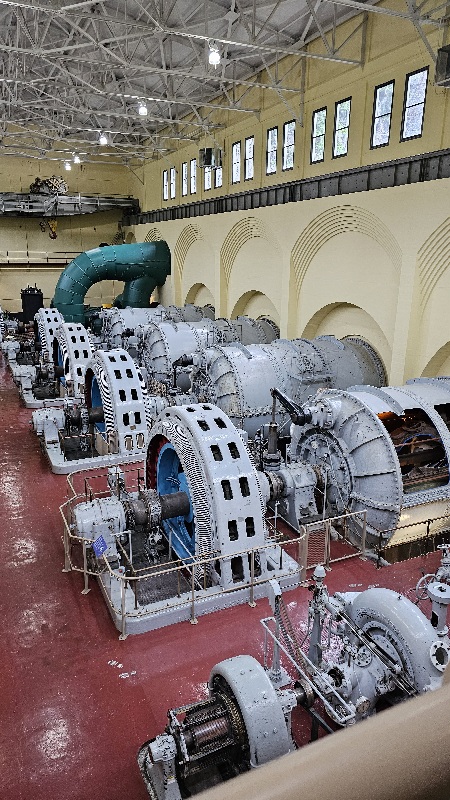
Don’t ask me how we find these places, but we came across something interesting at Stave Falls, the Stave Falls BC Hydro Electric Visitor Center. It took us well over an hour to do the fascinating tour of this 100 year old (retired) hydro electric facility.
The 100 year old powerhouse had historical displays, electricity demonstrations and interactive exhibits. This former generating facility is also a National Historic Site of Canada filled with archival photos, artifacts and the original mechanical and electrical components which helped power the province.
Stave Falls Dam is a dual-dam power complex on the Stave River in Stave Falls, British Columbia, Canada. The dam was completed in 1912 for the primary purpose of hydroelectric power production. To increase the capacity of Stave Lake, the dam was raised in 1925 and the Blind Slough Dam constructed in an adjacent watercourse 500 m (1,600 ft) to the north, which was the site of the eponymous Stave Falls. In 2000, the dam’s powerhouse was replaced after a four-year upgrade. The original Stave Falls powerhouse was once British Columbia’s largest hydroelectric power source.
Stave Falls Visitor Centre is located on the traditional territory of Kwantlen First Nation.
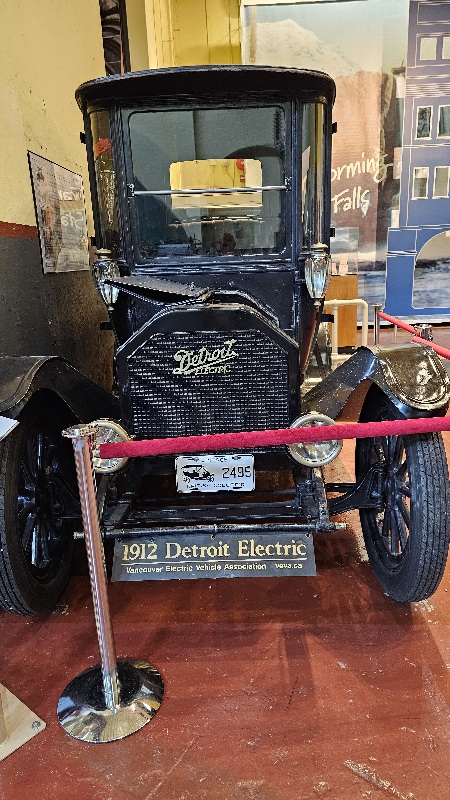
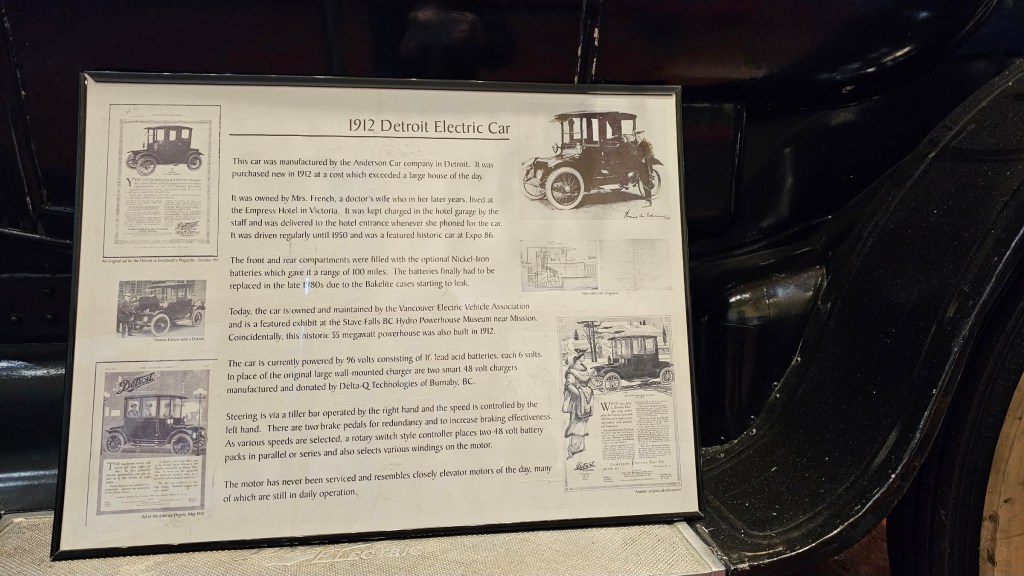
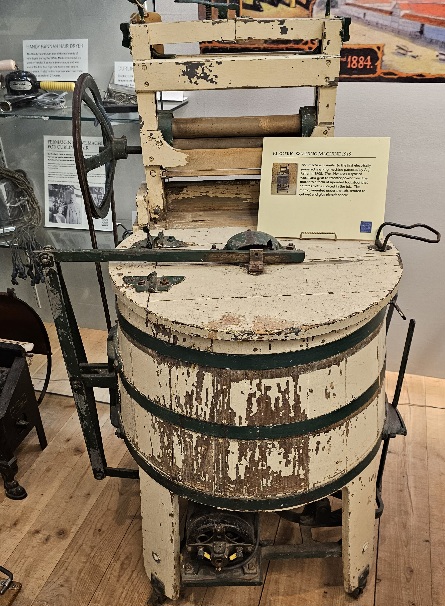
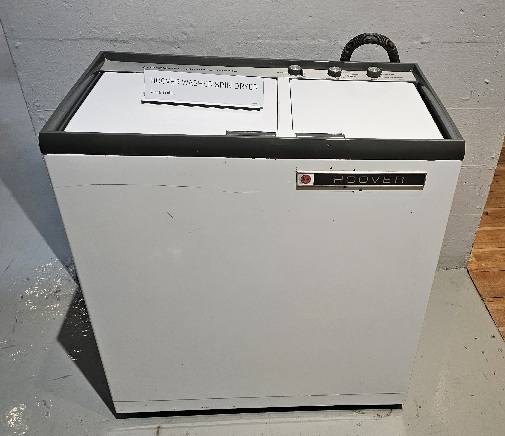
Many Canadian provinces historically derived their electric power from water sources … BC Hydro, Ontario Hydro (Niagara Falls being the leader in early development), Quebec Hydro. I grew up using the term ‘Hydro’ instead of ‘Electricity’. It took me a long time to stop using it when we moved to another country where the term was meaningless.
Vancouver is a major city in western Canada, located in the Lower Mainland region of British Columbia. The most populous city in the province has 662,248 people with 2.6 million in the Greater Vancouver area making it the third-largest metropolitan area in Canada. Greater Vancouver, along with the Fraser Valley, comprises the Lower Mainland with a regional population of over 3 million. Vancouver has the highest population density in Canada, with over 5,700 people per square kilometre, ranked fourth highest in North America (after New York City, San Francisco, and Mexico City).
Vancouver is one of the most ethnically and linguistically diverse cities in Canada: 49.3 percent of its residents are not native English speakers, 47.8 percent are native speakers of neither English nor French, and 54.5 percent of residents belong to visible minority groups. It has been consistently ranked one of the most livable cities in Canada and in the world. In terms of housing affordability, Vancouver is also one of the most expensive cities in Canada and in the world.
The beginnings of the modern city, which was originally named Gastown, grew around the site of a makeshift tavern on the western edges of Hastings Mill that was built on July 1, 1867, and owned by proprietor Gassy Jack. The original site is marked by the Gastown steam clock. Gastown then formally registered as a townsite dubbed Granville, Burrard Inlet. The city was renamed “Vancouver” in 1886, through a deal with the Canadian Pacific Railway. The Canadian Pacific transcontinental railway was extended to the city by 1887. The city’s large natural seaport on the Pacific Ocean became a vital link in the trade between Asia-Pacific, East Asia, Europe, and Eastern Canada.
As of 2016, the Port of Vancouver is the fourth-largest port by tonnage in the Americas, the busiest and largest in Canada, and the most diversified port in North America. While forestry remains its largest industry, Vancouver is well known as an urban centre surrounded by nature, making tourism its second-largest industry. Major film production studios in Vancouver and nearby Burnaby have turned Greater Vancouver and nearby areas into one of the largest film production centres in North America, earning it the nickname “Hollywood North“.
The city is located in the traditional and presently unceded territories of the Squamish, Musqueam, and Tsleil-Waututh (Burrard) peoples of the Coast Salish group. They had villages in various parts of present-day Vancouver, such as Stanley Park, False Creek, Kitsilano, Point Grey and near the mouth of the Fraser River. The region where Vancouver is currently located was referred to in contemporary Halkomelem as Lhq’á:lets, meaning “wide at the bottom/end”.
The explorer and North West Company trader Simon Fraser and his crew became the first-known Europeans to set foot on the site of the present-day city. The Fraser Gold Rush of 1858 brought over 25,000 men, mainly from California, to nearby New Westminster (founded February 14, 1859) on the Fraser River, on their way to the Fraser Canyon, bypassing what would become Vancouver.
The City of Vancouver was incorporated on April 6, 1886, the same year that the first transcontinental train arrived.
There are five public universities in the Greater Vancouver area, the largest and most prestigious being the University of British Columbia (UBC) and Simon Fraser University (SFU), with a combined enrolment of more than 90,000 undergraduates, graduates, and professional students in 2008. UBC often ranks among the top 50 best universities in the world and is ranked among the 20 best public universities in Canada. SFU consistently ranks as the top comprehensive university in Canada and is among the 300 best universities in the world.
The other public universities in the metropolitan area around Vancouver are Capilano University in North Vancouver, Emily Carr University of Art and Design, and Kwantlen Polytechnic University whose four campuses are all outside the city proper. Six private institutions also operate in the region: Trinity Western University in Langley, UOPX Canada in Burnaby, and University Canada West, NYIT Canada, Fairleigh Dickinson University, Columbia College, and Sprott Shaw College, all in Vancouver.
 Louise and Brian McLeod Travel Blog
You must be logged in to post a comment.