Coffee and breakfast outside again this morning!
We have arranged for a ‘Metis guide’ to walk us around the site and talk about the history of the area. Our guide was a young university student working here as a ‘live actor’, registered Metis of Scottish/Cree decent rather than the usual French. We have enjoyed meeting and talking to the students working in these ‘live history’ parks. Our guide this morning told us he is working here to acquaint himself with his own ancestry.
Our tour wasn’t until 11 am so we took a couple of hours to do our weekly chores. It’s warm, sunny and breezy.
Métis
Métis are people of mixed European and Indigenous ancestry, and one of the three recognized Aboriginal peoples in Canada. The use of the term Métis is complex and contentious, and has different historical and contemporary meanings. Their historical homelands includes Canada’s three Prairie Provinces, as well as parts of British Columbia, the Northwest Territories, Northwest Ontario and the Northern United States. They have a shared history and culture, deriving from specific mixed European (primarily French) and Indigenous ancestry, which became distinct through ethnogenesis by the mid-18th century, during the early years of the North American fur trade.
While the Métis initially developed as the mixed-race descendants of early unions between First Nations and colonial-era European settlers (usually Indigenous women and male French settlers), within generations (particularly in central and western Canada), a distinct Métis culture developed. The women in the unions in eastern Canada were usually Algonquin and Ojibwe, and in western Canada they were Saulteaux, Cree, Ojibwe, Nakoda and Dakota/Lakota or of mixed descent from these peoples. Their unions with European men engaged in the fur trade in the Old Northwest were often of the type known as marriage à la façon du pays (“according to the custom of the country”).
In Canada, the Métis, with a population of 624,220 as of 2021, are one of three major groups of Indigenous peoples that were legally recognized in the Constitution Act of 1982, the other two groups being the First Nations and Inuit.
The Red River Cart
One of the items on display here was a Red River Cart which was developed by the Metis to haul cargo and basically replaced the canoe.
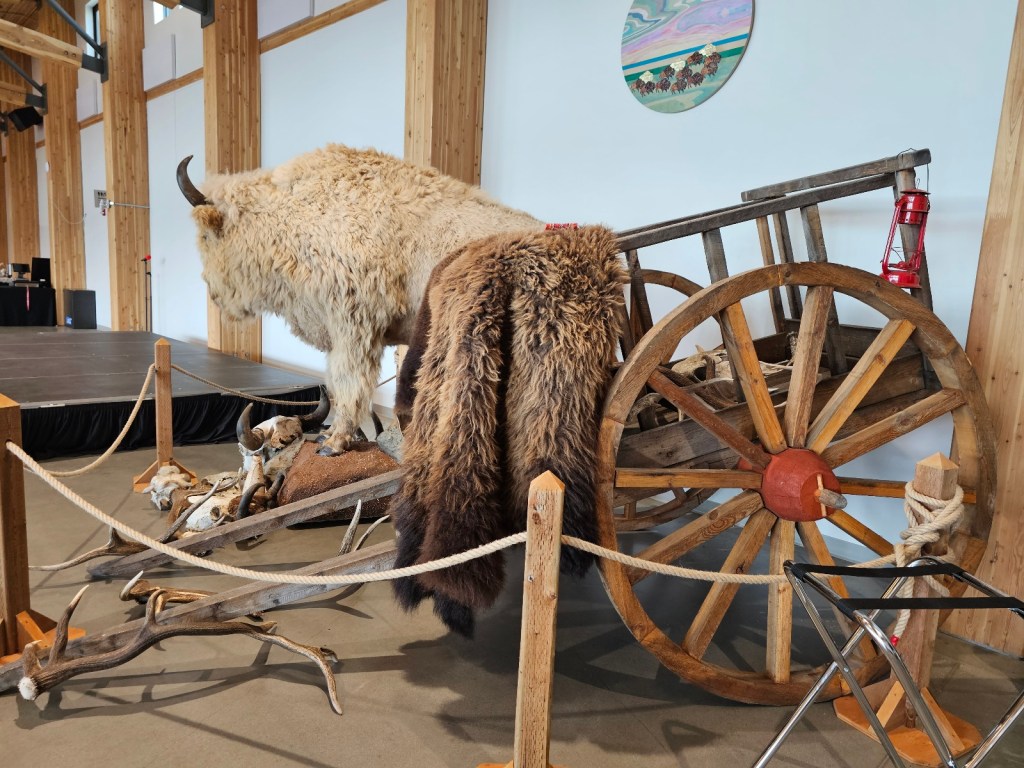
The Red River cart is a large two-wheeled cart made entirely of non-metallic materials. Often drawn by oxen, though also by horses or mules, these carts were used throughout most of the 19th century in the fur trade and in westward expansion in Canada and the United States, in the area of the Red River and on the plains west of the Red River Colony. The cart is a simple conveyance developed by Métis for use in their settlement on the Red River in what later became Manitoba. With carts, the Metis were not restricted to river travel to hunt bison. The Red River cart was largely responsible for commercializing the buffalo hunt.
The Ceinture Fléchée
The ceinture fléchée or L’Assomption or arrowed sash is a type of colourful sash, a traditional piece of Québécois clothing linked to at least the 17th century. The Métis also adopted and made ceintures fléchées and use them as part of their national regalia. Typical sashes are about 25cm (12 inches wide) and can be 2 m. (2 yards) long and were originally used by the French voyageurs to keep their woolen coats closed in the winter. The Metis used the sash as a belt to hold coats closed, and also as a towrope, tumpline, towel, and even a sewing kit.
The patterns vary.
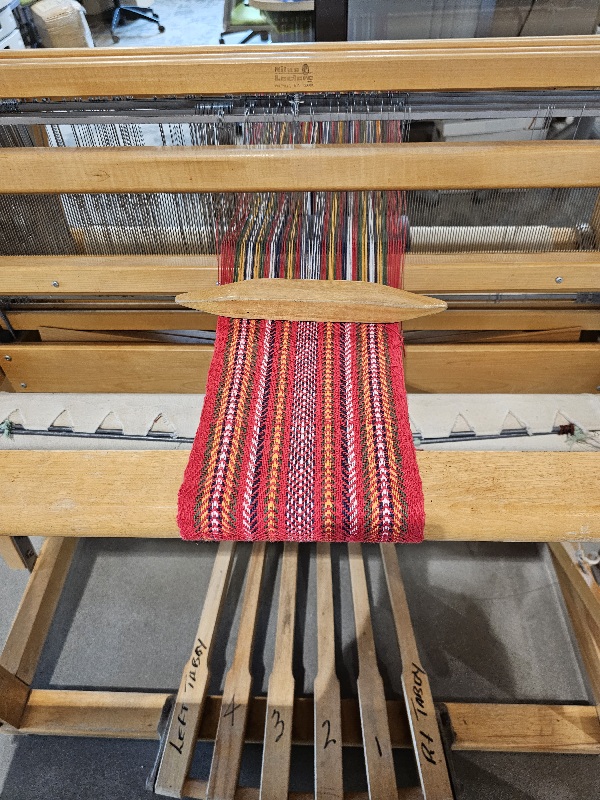
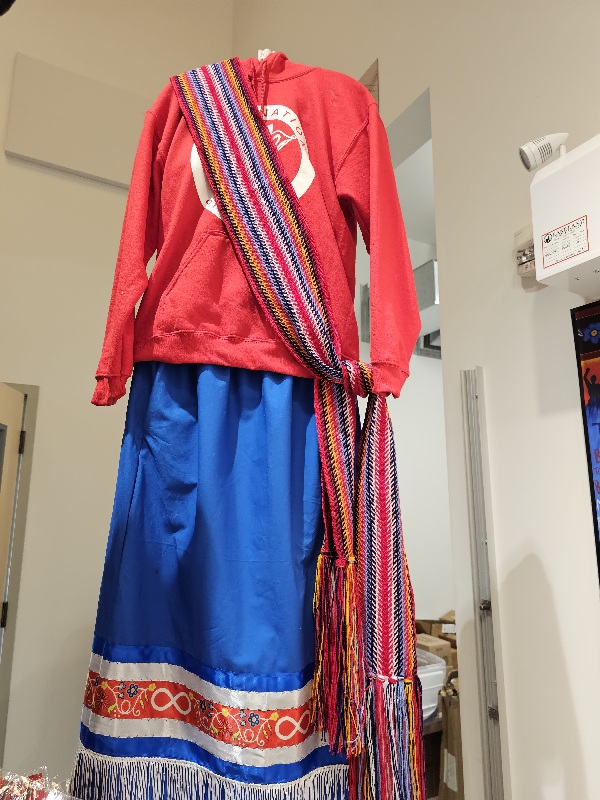
The arrow sash was part of the traditional costume of the Lower Canada habitant at least from 1776 on. The coloured sash was brought to western Canada by the men working for the North West Company. These voyageurs wore their sashes when leaving Lower Canada and travelling for the fur company. Their sashes attracted the attention of several nations with whom they exchanged goods and soon these people wished to possess such sashes. The company then had many sashes woven in Montreal and area with the fine worsted wool it imported from England.
Québécois and Métis communities share the sash as an important part of their distinct cultural heritages, nationalities, attires, histories and resistances. They were originally made using a form of Arrowed finger weaving.
Metis Bead Work
The Métis are known as the “flower beadwork people” for their distinct style of beading. Once made available through trade, beading had become a signature medium of artistry and decoration by Métis woman. Métis beadwork has decorated clothing, personal items, and more, worn by both men and women. Known for their floral embroidery, some designs are linked to Métis families as far back as the 1800s. For hundreds of years, Metis women have practiced this art and have adorned nearly every article they could get their hands on. From the well known moccasins to vests, from mittens to saddle bags and tobacco pouches, these artistic pieces have allowed for creative expression and for many a decent living for their families.
The Metis Flag
The Métis flag predates the Flag of Canada by at least 150 years, and is the oldest patriotic flag that is indigenous to Canada. The blue background flag has been accepted by the Métis National Council as the official flag of the Métis Nation.

The flag shows a white infinity symbol on a field of either blue or red. There are many interpretations of what the colours and symbol mean.
- The faith that Métis culture shall live on forever, and the mixing of the European immigrants and the First Nations peoples, with the two conjoined circles symbolizing the unity of two cultures.
- Another possible interpretation of the infinity symbol is that it relates to traditional Métis dances, such as the quadrille, in which dancers move in a figure-eight pattern.
- There might also be a connection to Celtic knotwork and Scottish influences that include Celtic knots, figure of eight in Scottish country dance, jewellery, etc.
- Others have suggested that the symbol is derived from the Plains First Nations Sign Language for Métis (reported as the symbol for “cart” combined with the symbol for “Man” in reference to the Métis’ use of the Red River cart), with the symbol for cart being formed by joining the thumb and forefingers on each hand with the hands held together to form two circles.
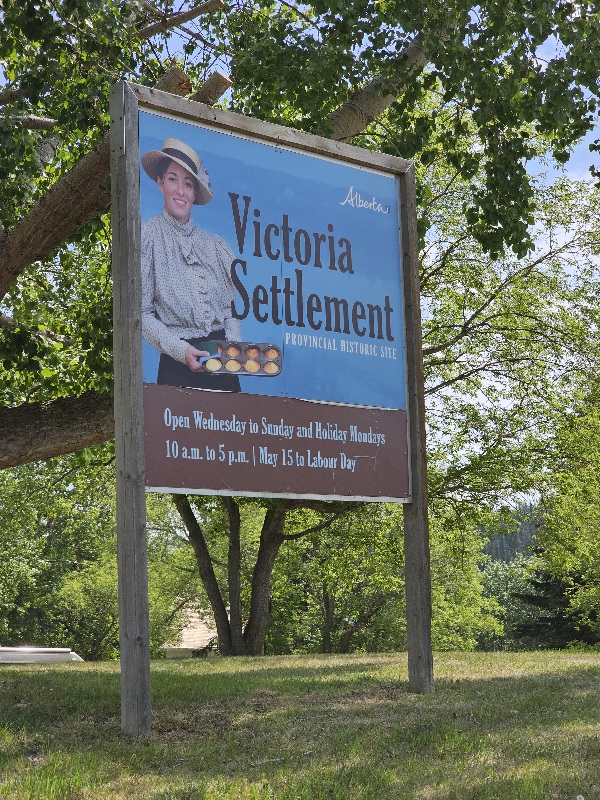
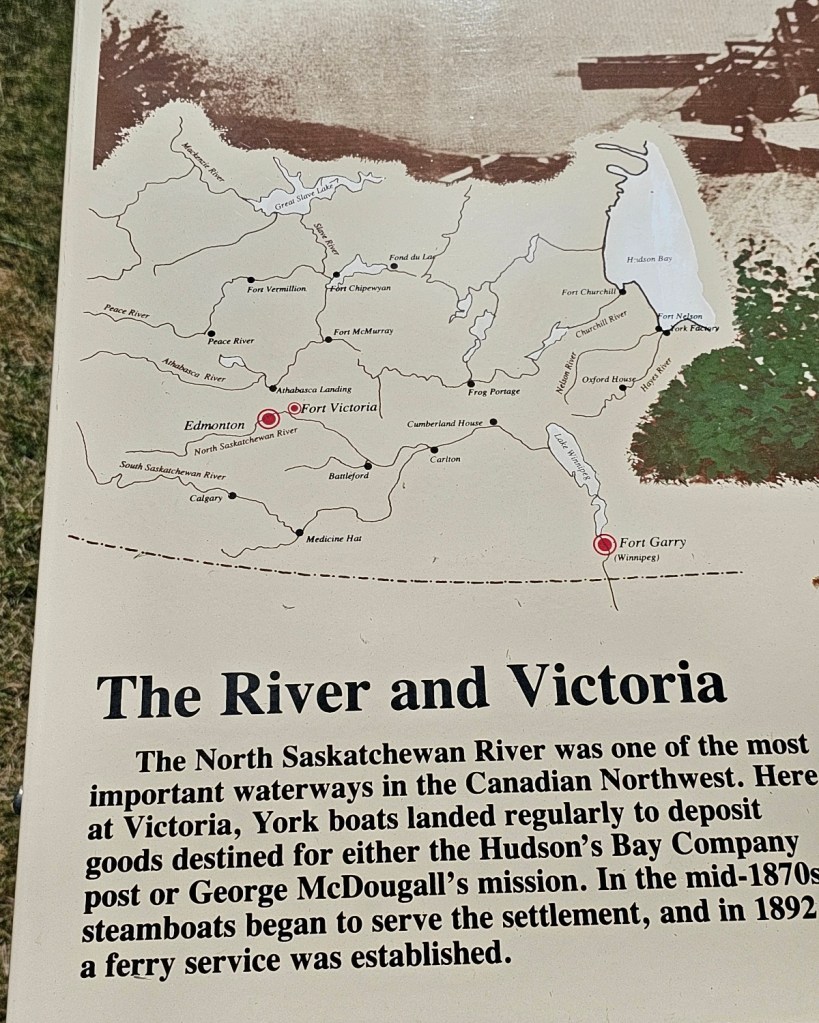
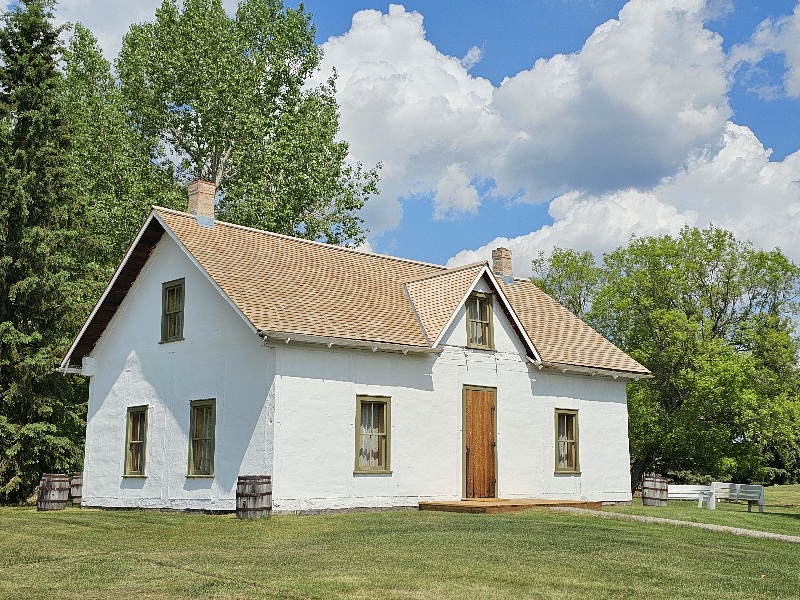
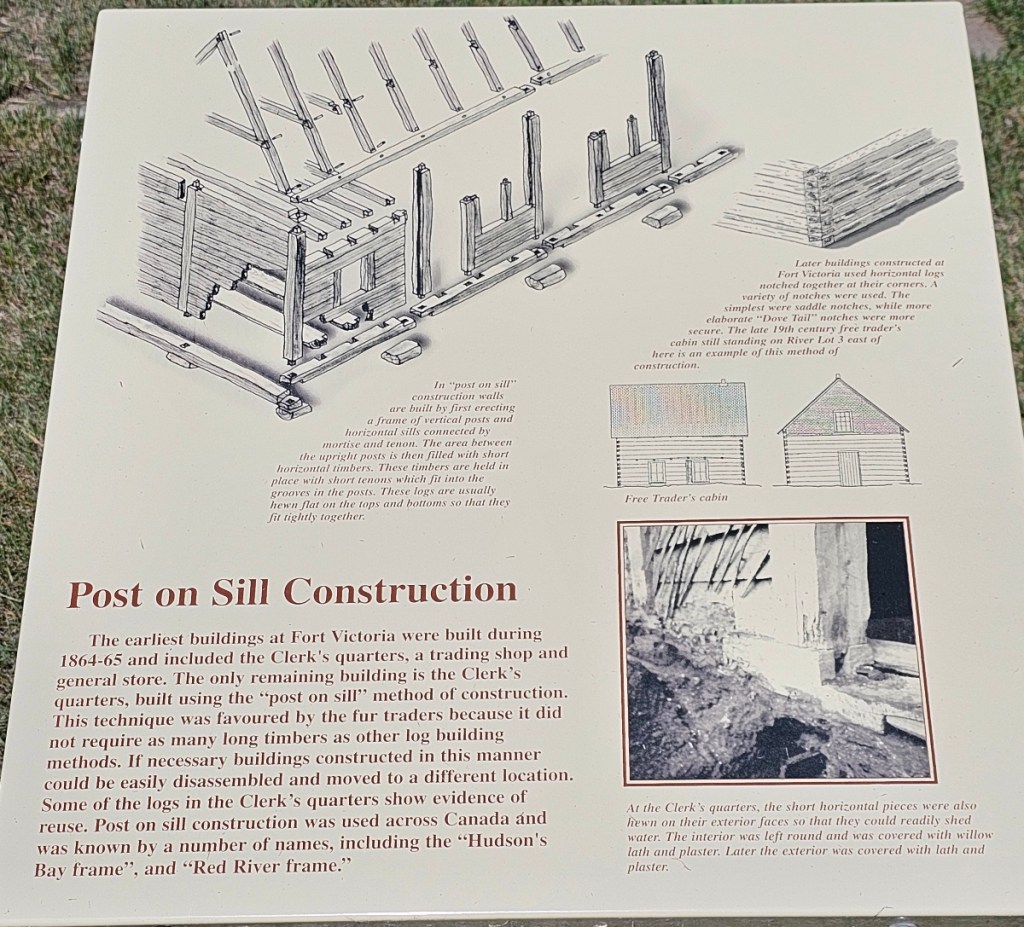
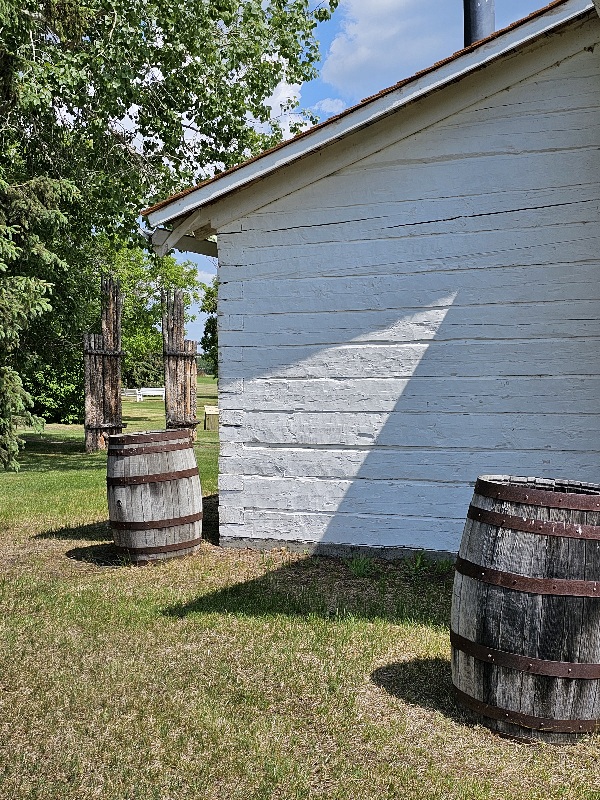
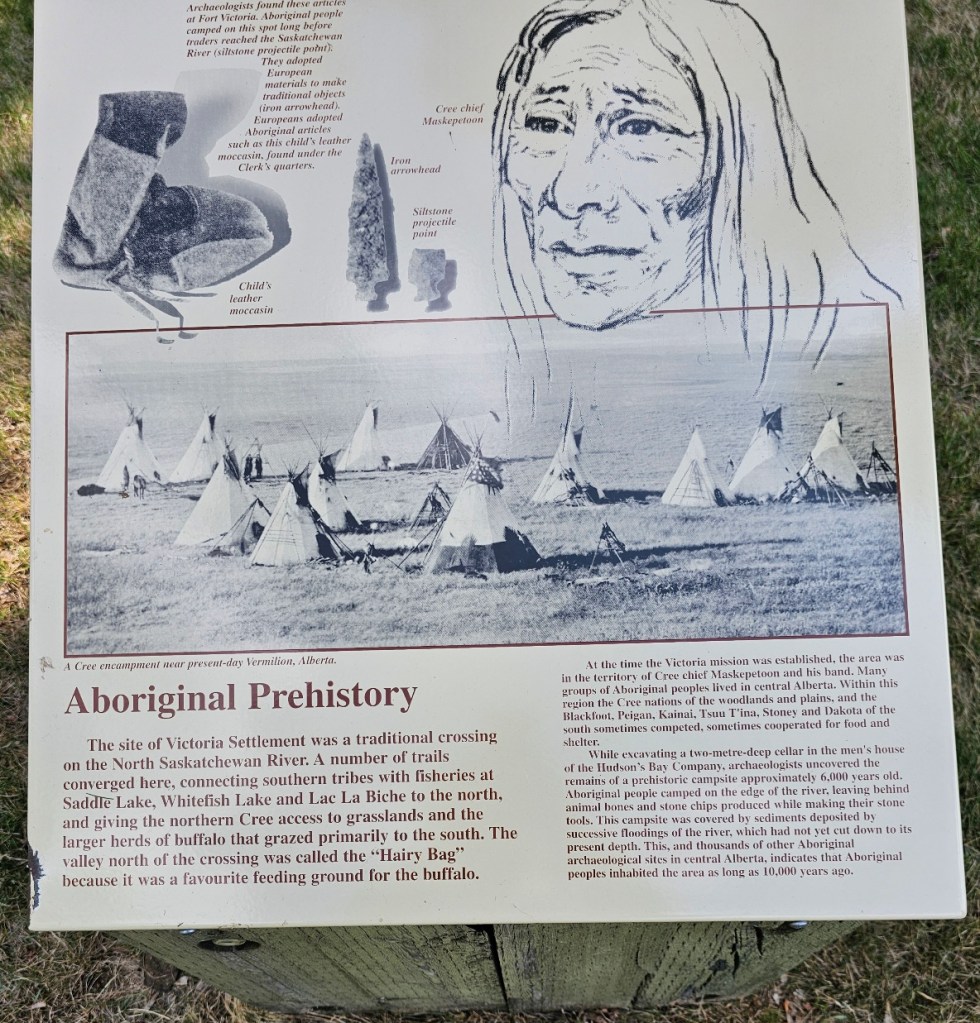
About 3 miles further along the road we found Victoria Settlement, another Hudsons Bay Post.
We had a late lunch at the Cafe in Metis Crossing and then headed towards Edmonton, an uneventful drive. Pur campground for tonight is in a city park on the southern end of Edmonton. Nicely treed and not many campers here as its midweek. Tomorrow we’ll spend the day in Edmonton. I’ve never been here before. We don’t do cities well unless it’s a destination. We may just spend the day at the world famous Edmonton Mall! It has the world’s first indoor amusement park. I’m in the mood to do something totally off the wall for a change.
More about Edmonton tomorrow.
 Louise and Brian McLeod Travel Blog
You must be logged in to post a comment.