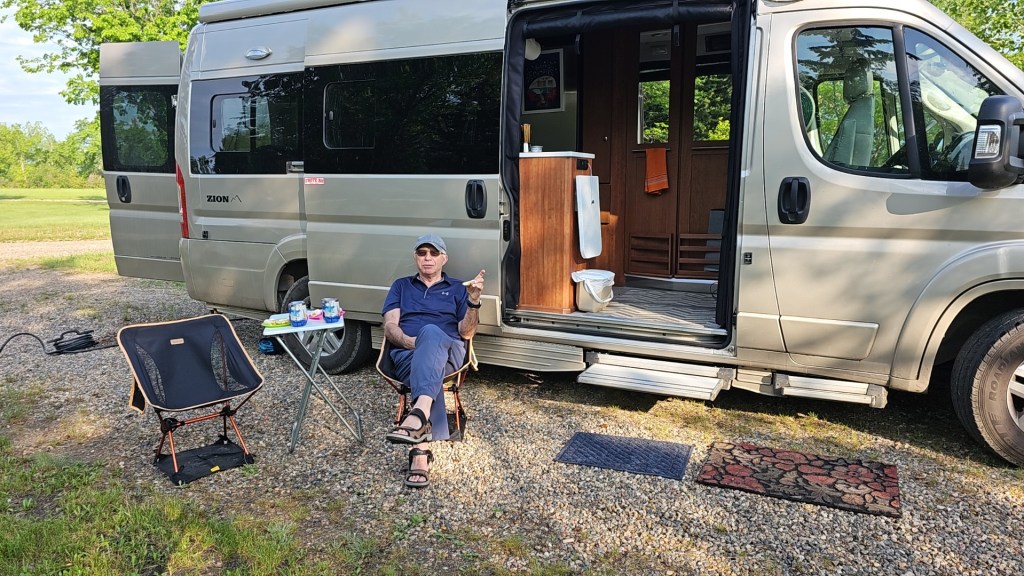
Absolutely gorgeous morning, full sunshine, no wind, very happy birds serenading us. We had breakfast outside for the first time since we left home.
Bird sightings: king bird, killdeer, coots, magpies, same ducks and geese as before,
Lloydminster is a city in Canada which has the unusual geographic distinction of straddling the provincial border between Alberta and Saskatchewan. The city is incorporated by both provinces as a single city with a single municipal administration. Lloydminster is the traditional homeland of the Plains Cree, Wood Cree, Dene, Saulteaux and Homeland of the Metis.
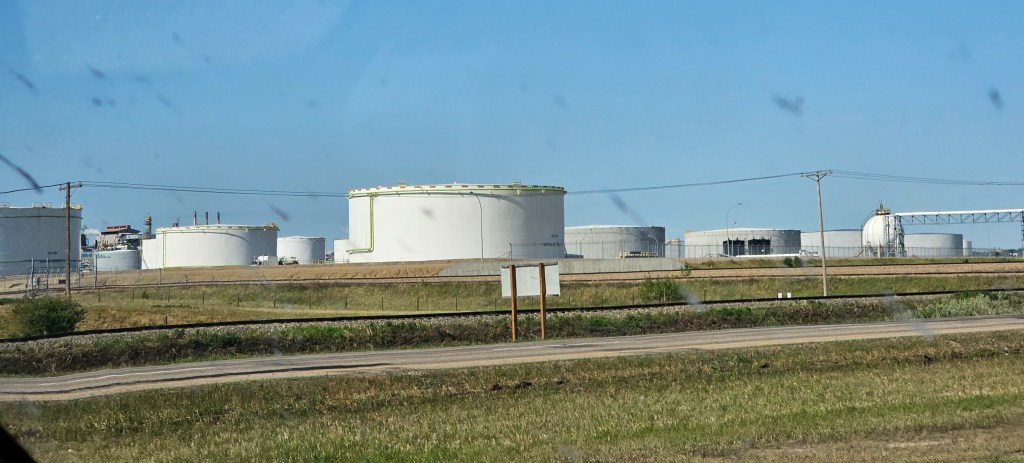
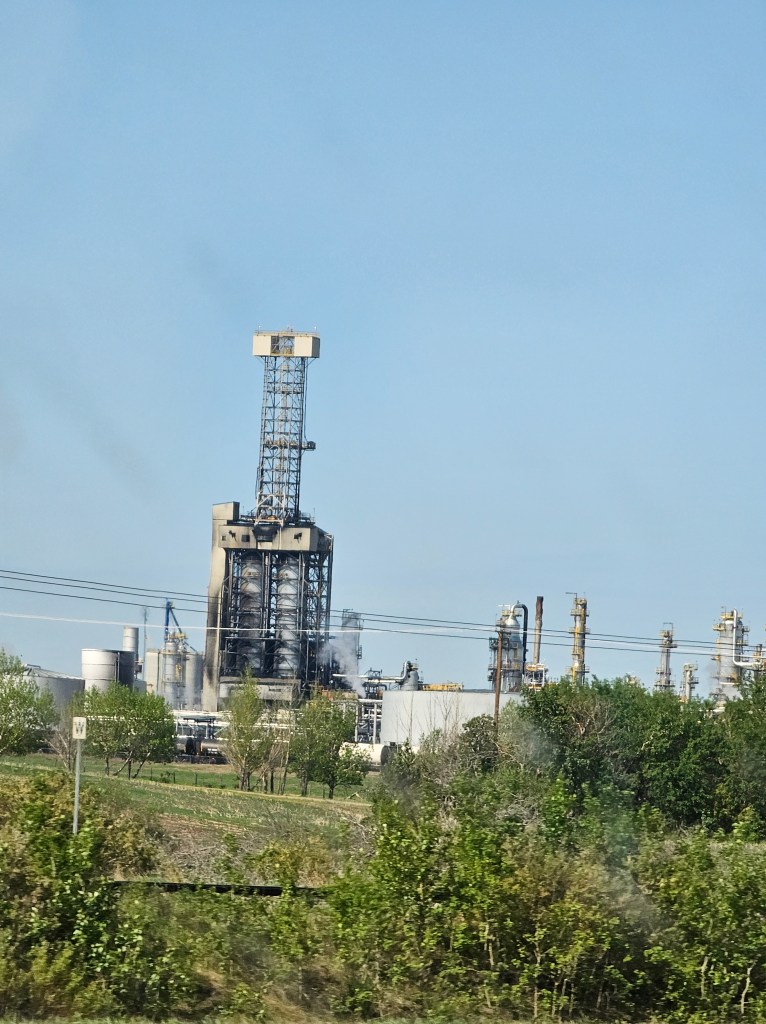
The local economy is driven primarily by the petroleum industry. Agriculture remains an important economic activity. The Husky Lloydminster Refinery is also located in the community. An issue in business is the sales tax. The only sales tax applicable in Alberta is the federal Goods and Services Tax (GST). Saskatchewan has, in addition to GST, a provincial sales tax (PST). To ensure that business will not float away from the Saskatchewan side in favour of lower prices in Alberta, PST does not apply in the Saskatchewan side of the city with the exception of hotels, vehicle registration and utility services.
My father’s oldest sister lived and worked in Lloydminster.
Vegreville, AB
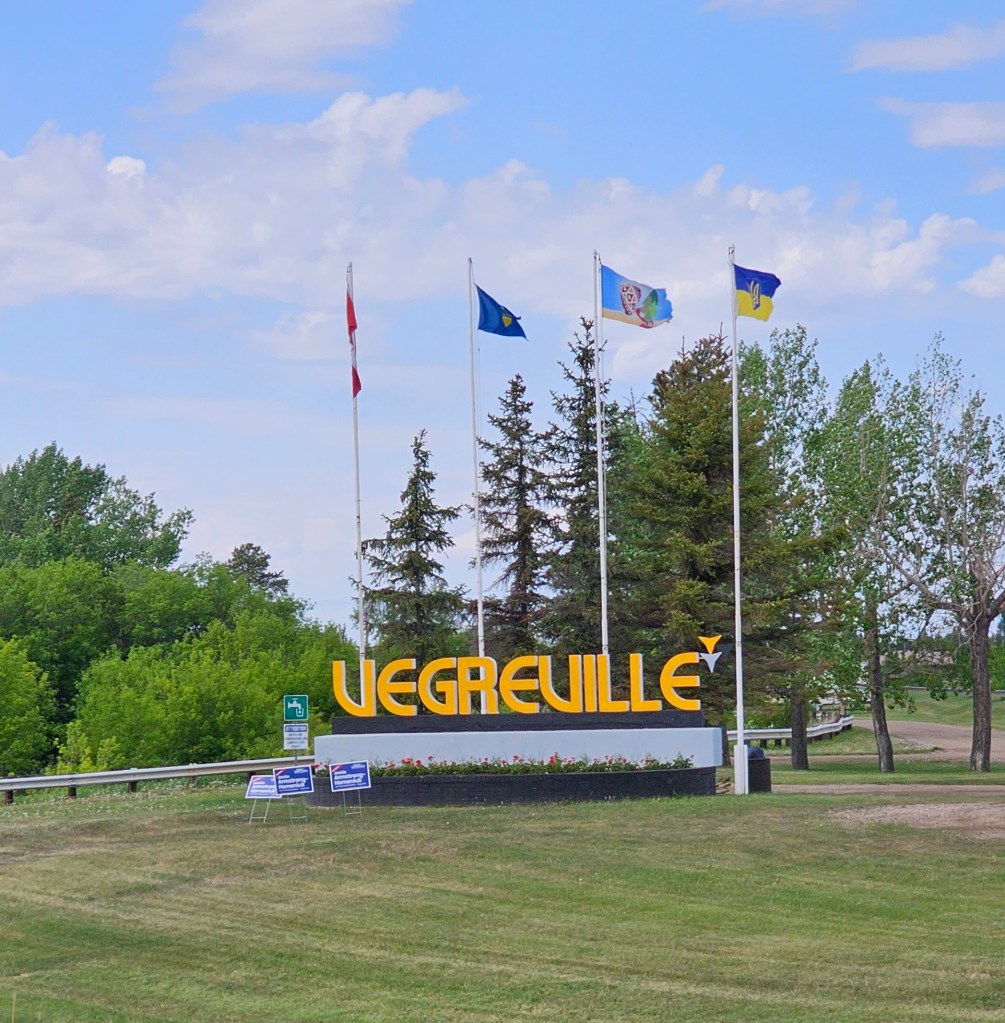
We stopped for lunch in Vegreville because we wanted to eat parodies. I also wanted to see the Vegreville Easter Egg ( see below) that I had heard so much about.
The Vegreville egg is a giant sculpture of a pysanka, a Ukrainian-style Easter egg. The work by Paul Maxym Sembaliuk is built of an intricate set of two-dimensional anodized aluminum tiles in the shape of congruent equilateral triangles and star-shaped hexagons, fashioned over an aluminum framework. The egg is 31 ft (9 m) long and three and a half storeys high, weighing in at 2.5 t (5,512 lb). It is the second largest pysanka in the world (the biggest one was built into part of the Kolomyia Pysanka Museum in Ukraine, in 2000).
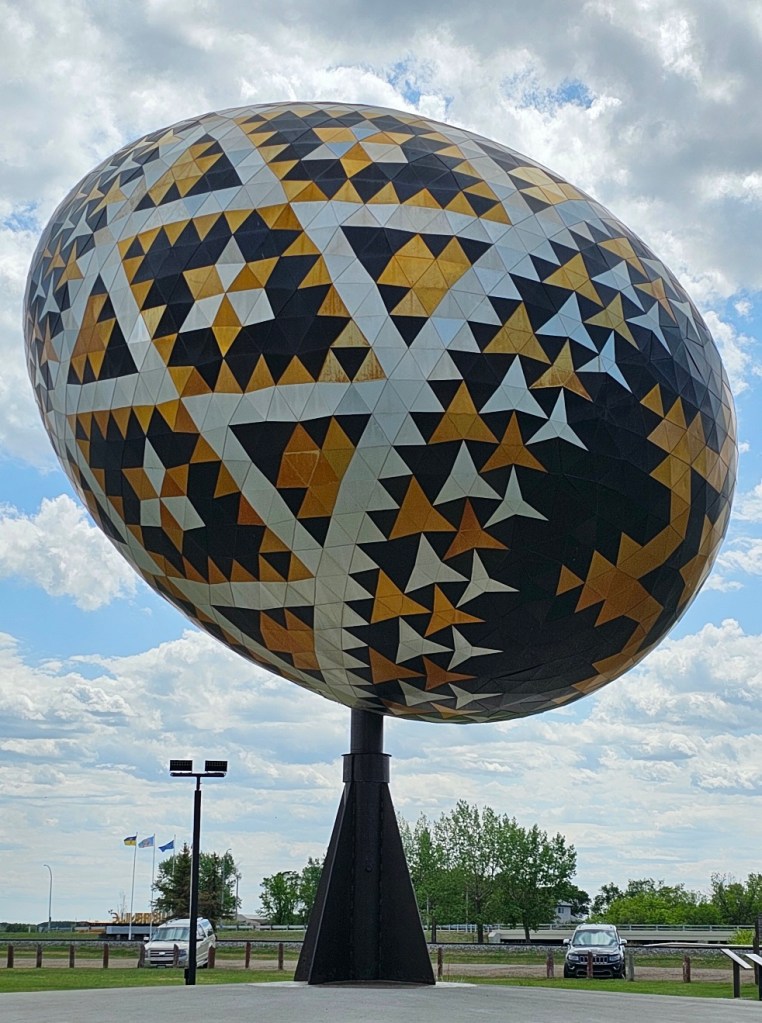
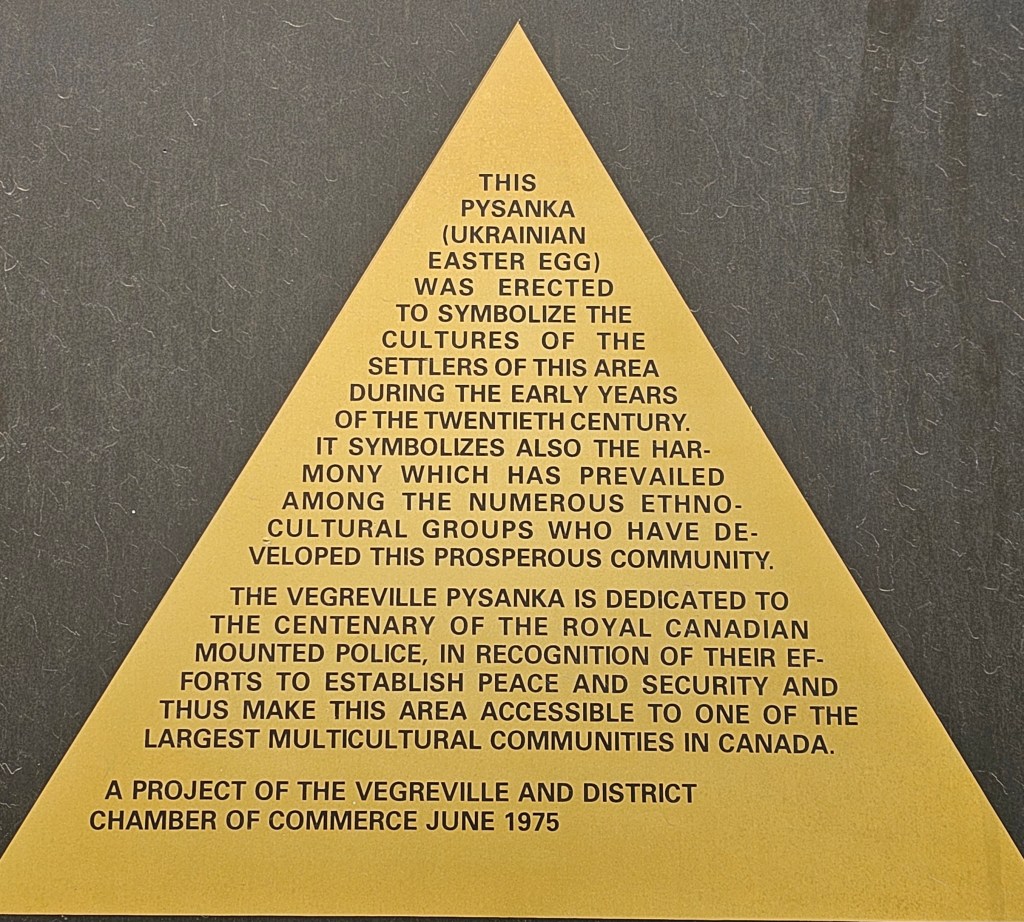
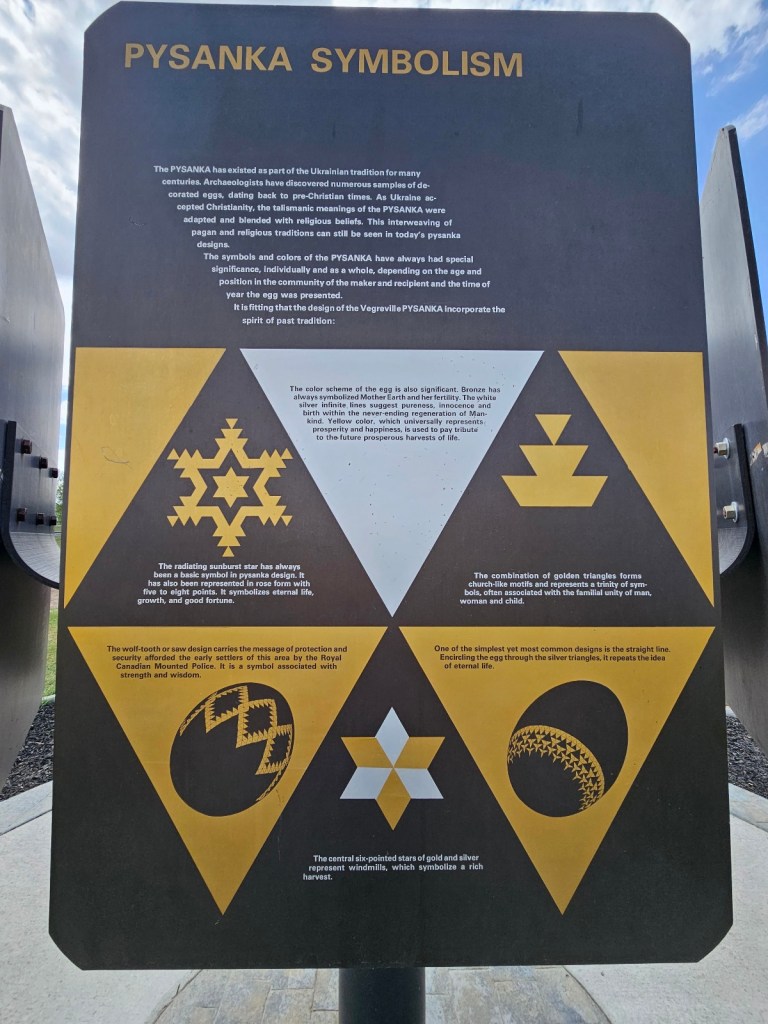
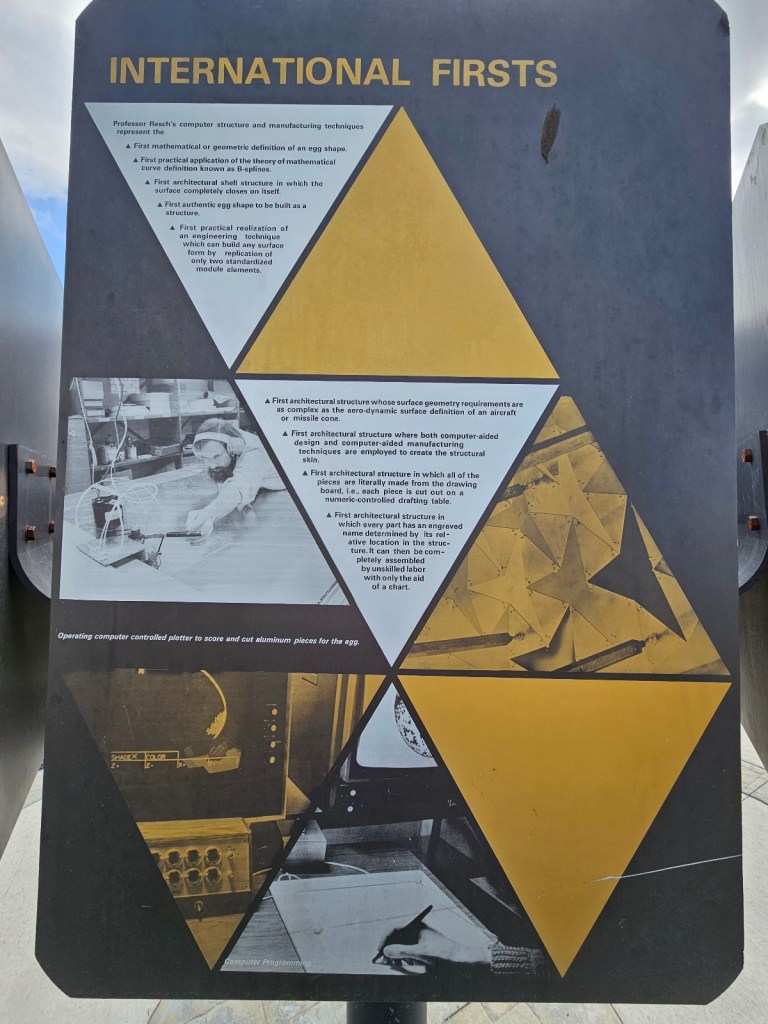
Vegreville is on the TransCanada Hwy about an hour and a half east of Edmonton, AB. A large percentage of Vegreville’s population is of Ukrainian Canadian descent, and it is home to the Vegreville egg, the world’s second largest pysanka (Ukrainian Easter egg).
The Pysanka Festival is an annual cultural event in Vegreville, Alberta, that celebrates the region’s rich Ukrainian heritage. Held over a weekend in July, the festival features a wide range of activities and attractions, including folk art workshops, live musical performances, traditional Ukrainian dance performances, and a diverse selection of ethnic cuisine.
Vegreville functions as a key economic center for the northeastern and east-central regions of the province, with its diverse economic sectors encompassing agriculture, energy, and retail industries. As a significant agricultural hub, Vegreville boasts a thriving farming community that cultivates a variety of crops and supports livestock production. The local energy sector, primarily driven by oil and gas extraction, plays a crucial role in the area’s economic growth
Ukrainians in Canada
The first two Ukrainian settlers arrived in Canada in 1891 followed by tens of thousands until the start of the First World War. Most Ukrainian immigrants of this period were identified on government records as Poles, Russians, Austrians, Bukovinians, Galicians and Ruthenians, arriving from provinces in the Austro-Hungarian Empire. The vast majority of these immigrants settled in Manitoba, Saskatchewan, and Alberta. They were primarily farmers and labourers who were looking for a better life and economic opportunities. By 1914, there were also growing communities of Ukrainian immigrants in eastern Canadian cities, such as Toronto, Montreal, Hamilton, and Windsor.
The second large wave of immigration from Ukraine occurred after the First World War. These immigrants were welcomed by the already established Ukrainian communities.
From 1945 to 1952, most Ukrainians coming to Canada were political refugees and Displaced Persons, In the aftermath of World War II, many Ukrainians who had been displaced by the war began to immigrate to Canada. These immigrants were often refugees who had been forced to flee their homes and were looking for a safe haven. In the 1950s and 1960s, many Ukrainians who had been living in displaced persons camps in Europe were given the opportunity to immigrate to Canada.
When I was growing up in Hamilton, ON during this time, there were many recently arrived Ukrainian families in our neighborhood. It wasn’t unusual to hear Ukrainian being spoken just about anywhere. Hamilton was a city of heavy industry and offered lots of job opportunities for immigrants.
After the dissolution of the USSR in 1991, emigration from Ukraine increased. Rising levels of corruption, the dismantlement of some social services, low-paying employment and loss of jobs in Ukraine, made immigration attractive once again. Many Ukrainians saw Canada as a land of opportunity and a place where they could build a better life for themselves and their families
Canada has the world’s third-largest Ukrainian population behind Ukraine itself and Russia. Having been separated from Ukraine, Ukrainian Canadians have developed their own distinctive Ukrainian culture in Canada.
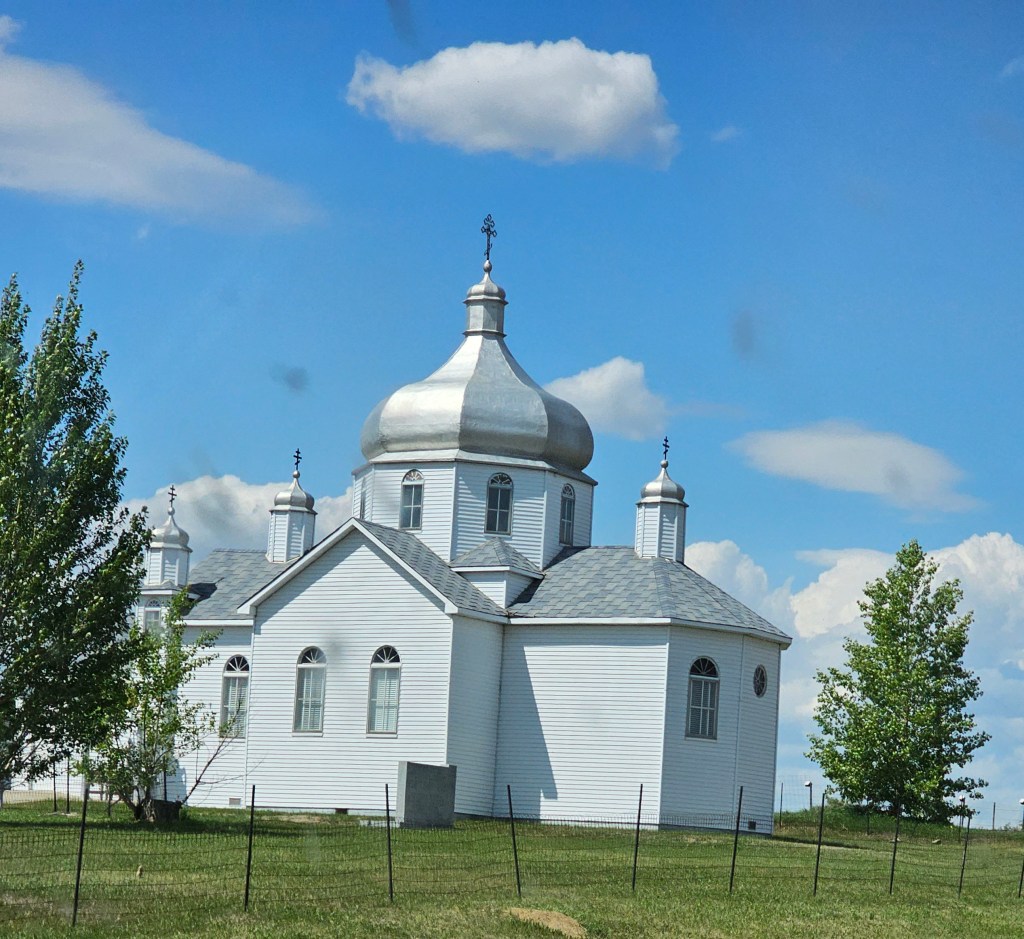
Our campground tonight is at Metis Crossing about an hour and a half east of Edmonton. It is a very new experiential Metis site. Stay tuned until tomorrow as we are still figuring out exactly what’s here. We are basically camping in a farm field with sheep and chickens. We have the entire campsite to ourselves, well, except for the sheep.
There was a little bit of rain around 5 pm but the sun soon came out again and we walked through a couple of the historic buildings here and down to the river ( the North Saskatchewan). Watery sunset tonight. It might rain over night. We were able to BBQ and eat outside.
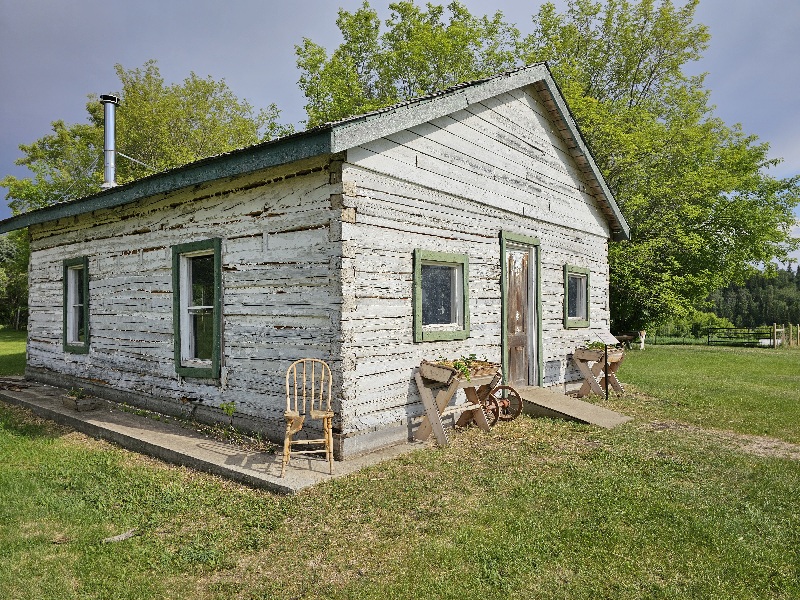
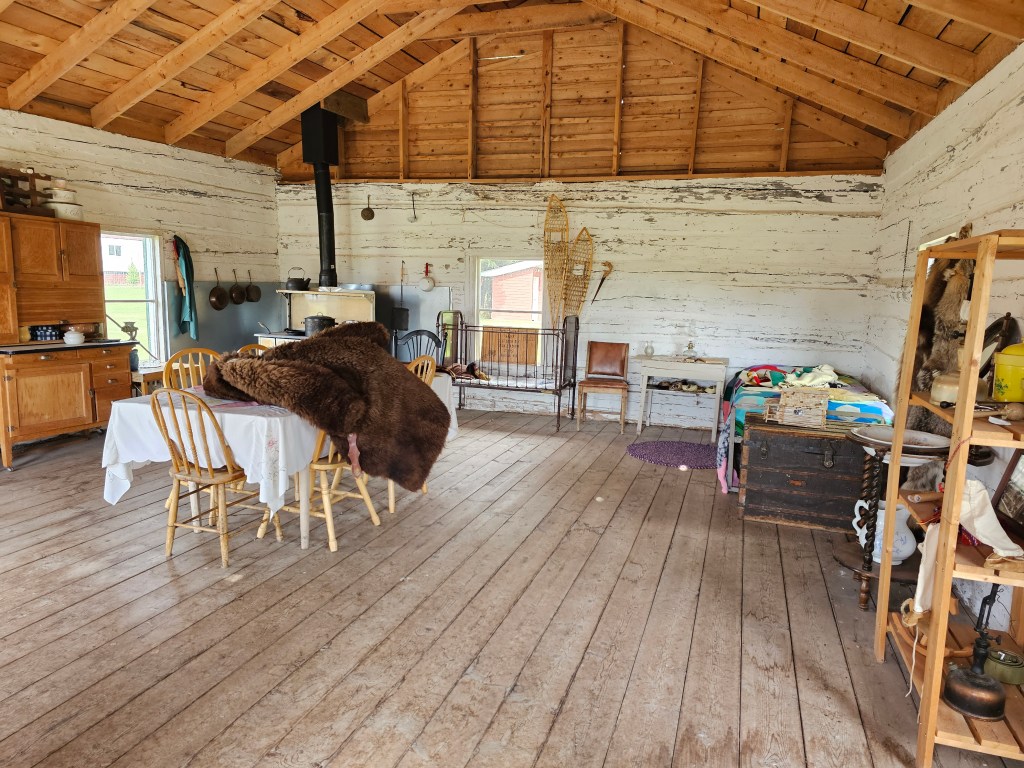
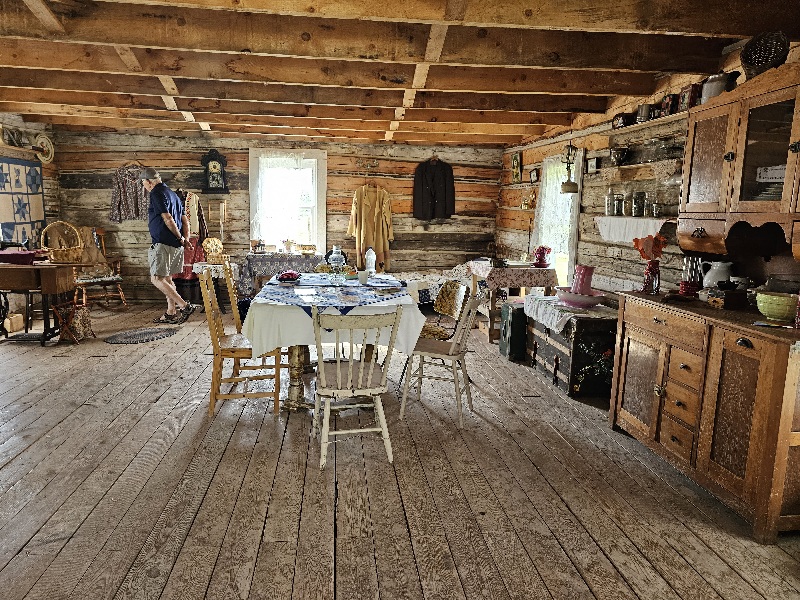
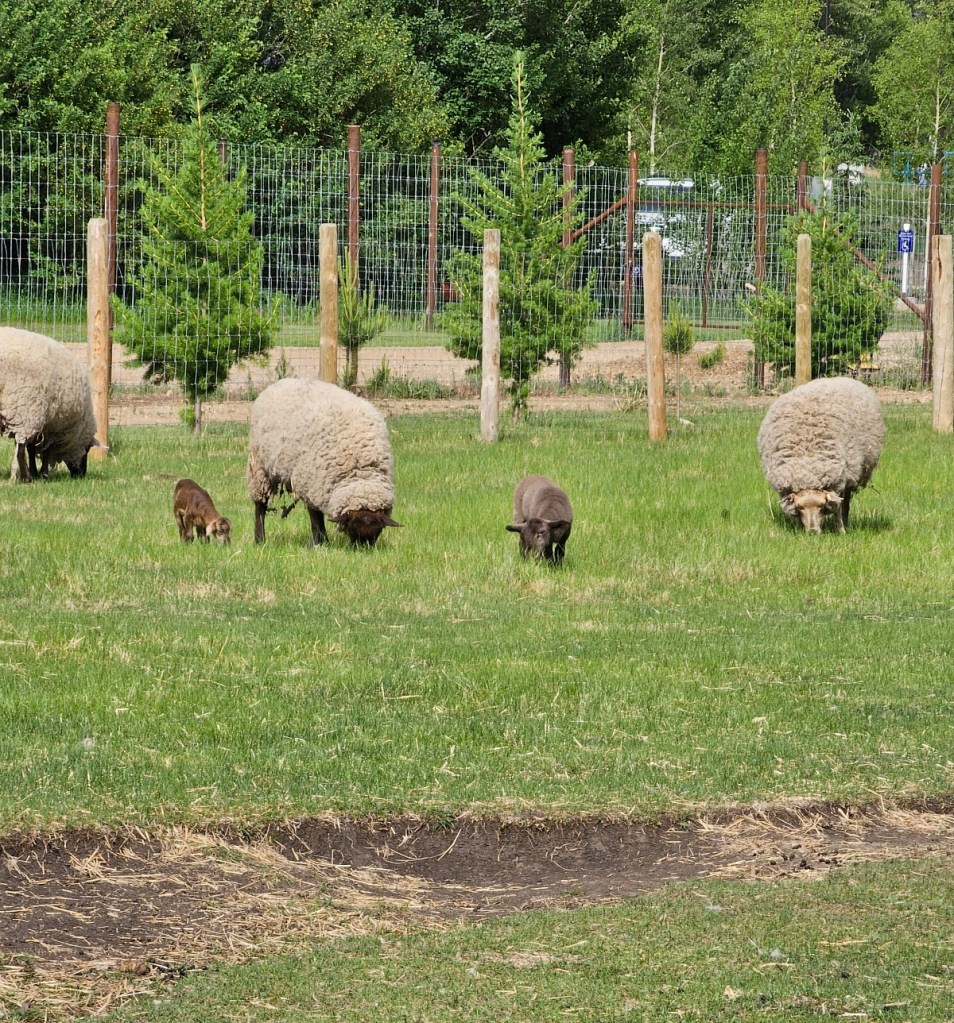
It’s actually quite eerie to have an entire campground all to yourselves.
 Louise and Brian McLeod Travel Blog
You must be logged in to post a comment.