This is another day when we don’t have far to travel. This is a day we built into the schedule for rest, van clean up etc and we did not have a place to stay particularly. Rather than staying an extra night in Saskatoon, we decided to give ourselves a couple of hours on the road because tomorrow we head towards Edmonton and it will be a long day.
We woke later than usual ( or at least I did) and had a casual Sunday morning breakfast of pancakes, sliced bananas, bacon and lattes.
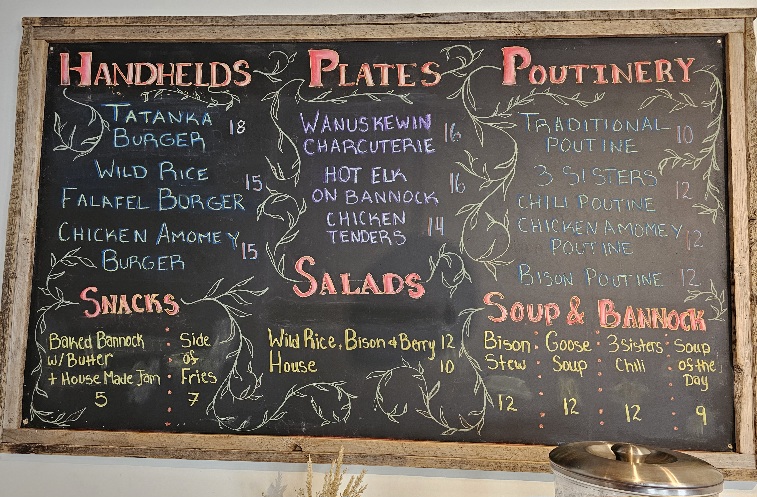
We drove north of Saskatoon to Wanuskewin Heritage Park, something we found yesterday while searching for things to do around Saskatoon without going into the city itself. Not knowing what to expect, we spent the better part of 4 hours there, including lunch which was somewhat on the native side.
Wanuskewin Heritage Park
Over six thousand years ago, Wanuskewin echoed with the thundering hooves of bison and the voices of Indigenous peoples from across the Northern Plains; the land still echoes with these stories that Wanuskewin is proud to share with the people.
Wanuskewin Heritage Park sits above the Opimihaw Creek and the South Saskatchewan River near Saskatoon – a window into a part of Canada’s history that remains largely undiscovered and is unlike any other National Historic Site in Canada. Wanuskewin’s uniqueness is not just the fact that there exists evidence of ancient peoples, but rather the composition of many different aspects of habitation, hunting and gathering, and spirituality – all in one place.
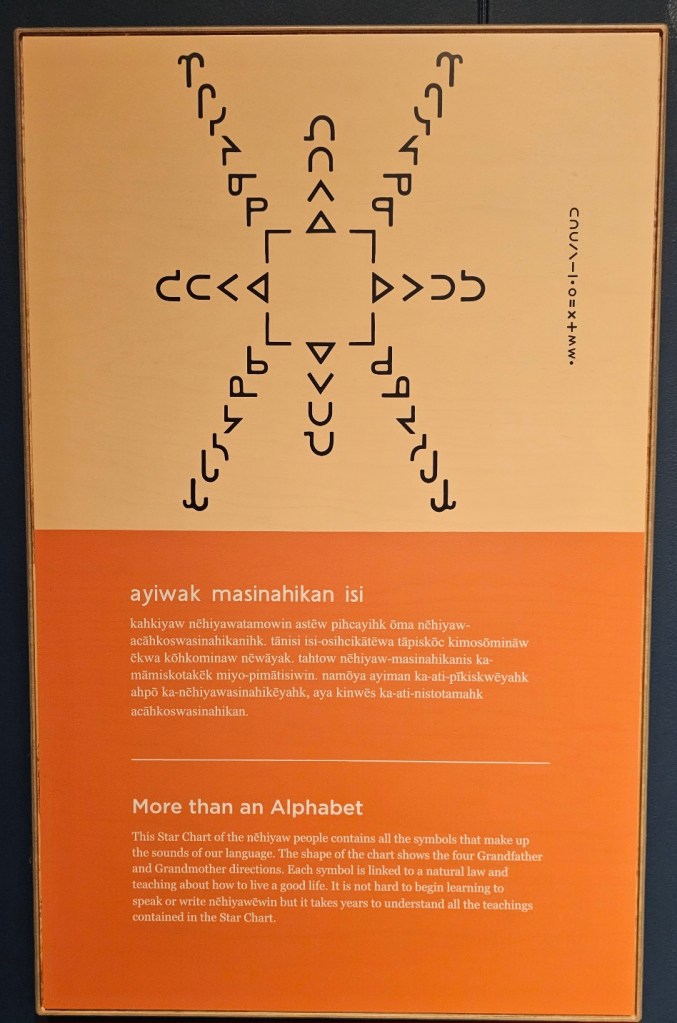
Wanuskewin Heritage Park is an archaeological site and non-profit cultural and historical centre of the First Nations just outside the city of Saskatoon, Saskatchewan. The faculty’s name comes from the Cree language word ᐋᐧᓇᐢᑫᐃᐧᐣ or wânaskêwin, meaning, “being at peace with oneself”. The site is a National Historic Site of Canada due to the importance of its archaeological resources representing nearly 6000 years of the history of the Northern Plains peoples.
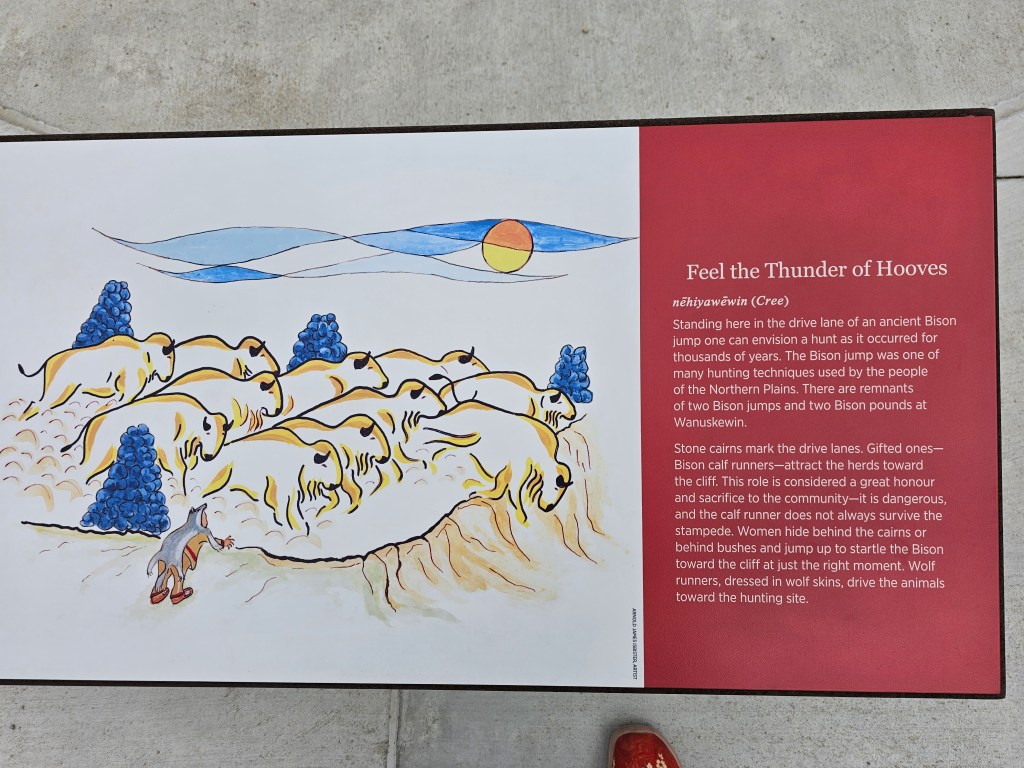
Wanuskewin sits where the Opimihaw Creek which is notable for its valley, carves into the river bank of the Sakatchewan Riverand is filled by wetland and various fauna. Many First Nations people historically used the valley as a buffalo jump, and so it is a notable site for archaeology. There are around 20 dig sites situated around the creek in the park; some of the dig sites date back as far as 6,400 years, predating the Pyramids of Giza in Egypt.
For more than 6,000 years people have gathered at this place. The migratory nations who roamed the Northern Plains came to hunt bison, gather food and herbs, and to find shelter from the winter winds. Some of the sites uncovered date back thousands of years. Wanuskewin is also the site of an arrangement of boulders called a medicine wheel, of which fewer than 100 remain on the northern plains.
Bison
In December of 2019, Wanuskewin partnered with Parks Canada to welcome bison back to their original prairie home. A herd of plains bison were reintroduced to this historic bison hunting ground for numerous Indigenous groups in December 2019 when six calves were brought from Grasslands National Park. Later that month, one bull and four pregnant cows travelled from South Dakota. The bull comes from a wild herd in Yellowstone National Park. The herd grew by one on 22 April 2021 when for the first time a calf was born on the territory since 1876. On 12 September 2021, a male calf was born; bringing the total number of bison at Wanuskewin. The herd is expected to grow to 50 animals.
Hoop Dancing
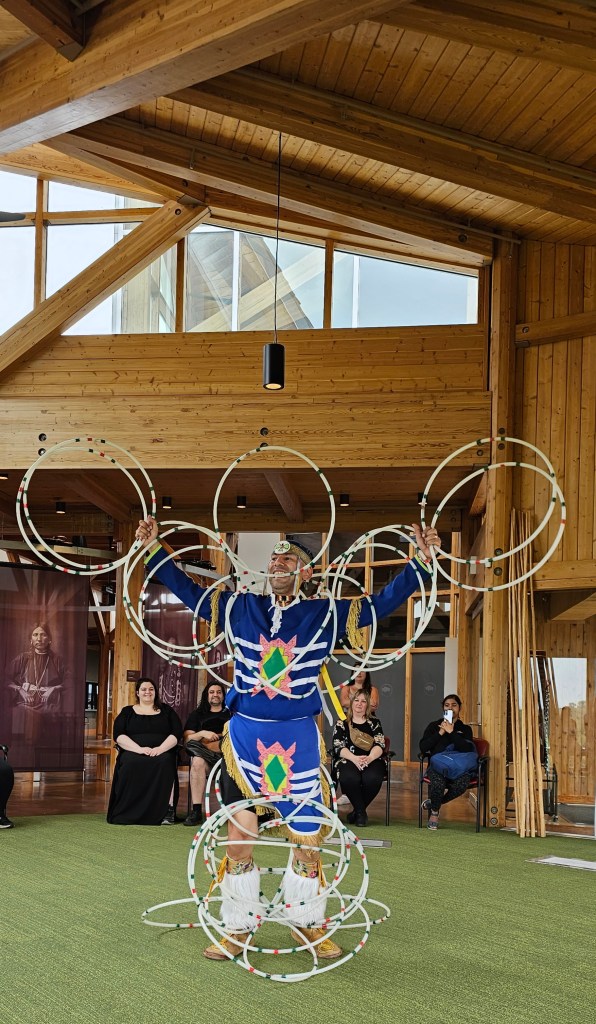
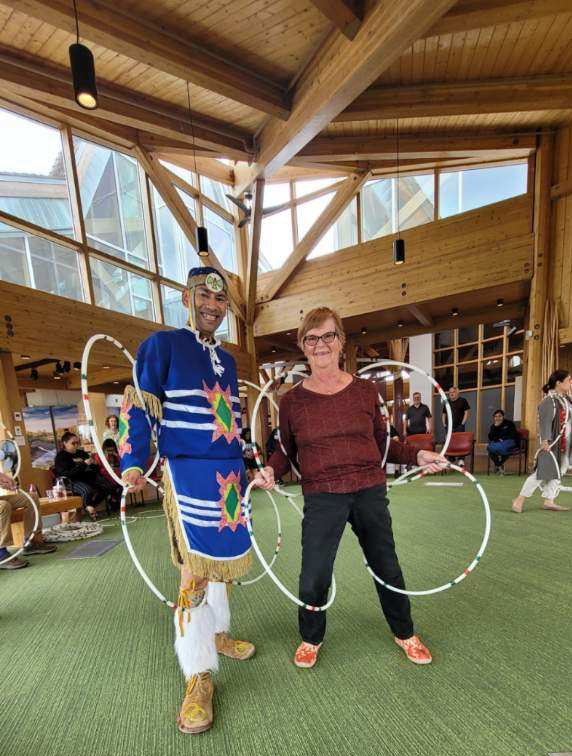
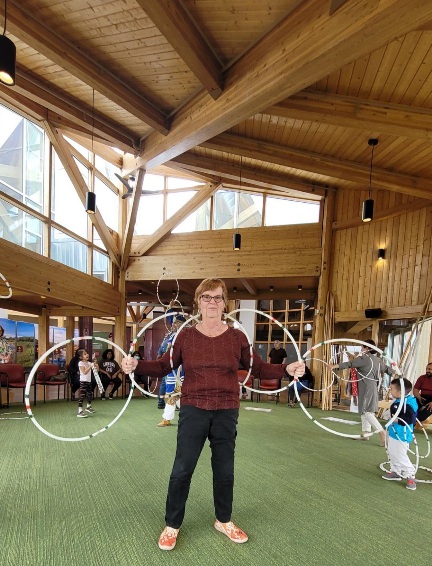
Native American Hoop Dance is one of the individual dances, and it is performed as a show dance in many tribes. It features a solo dancer dancing with a dozen or more hoops and using them to form a variety of both static and dynamic shapes (poses and moves). Most of the hoop dances in tribes across North America belong to modern hoop dance, which was invented in 1930. It come from Taos Pueblo in New Mexico but has spread to include most native ceremonies. The shapes created by the dancer using the hoops depict things from nature: birds, flowers, snakes, butterflies, turtles etc. In elaborate sequences of moves, the hoops are made to interlock, and in such a way they can be extended from the body of the dancer to form appendages such as wings and tails.
The hoops symbolizes the “never-ending cycle of life,” having no beginning and no end.
We spent two days in Albuquerque, NM several years ago at the hoop dancing competition. It was a pleasant surprise to see this here in Saskatchewan.
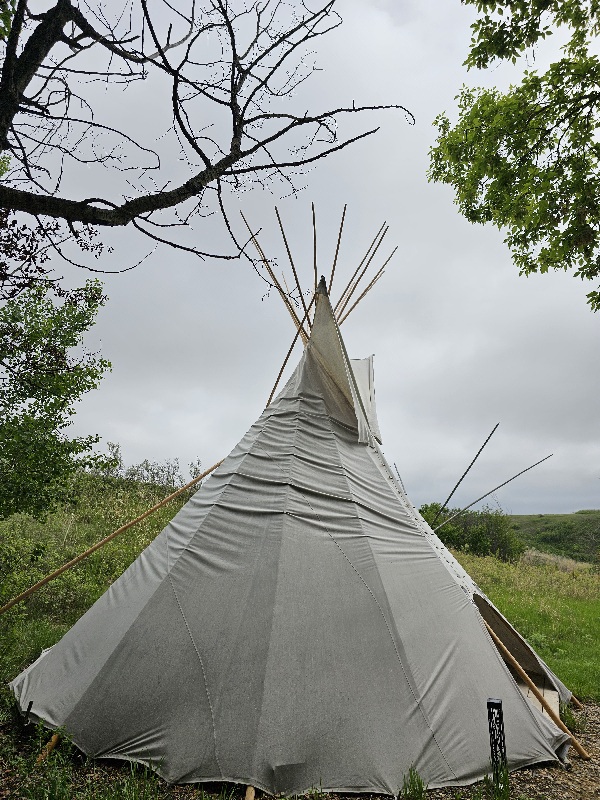
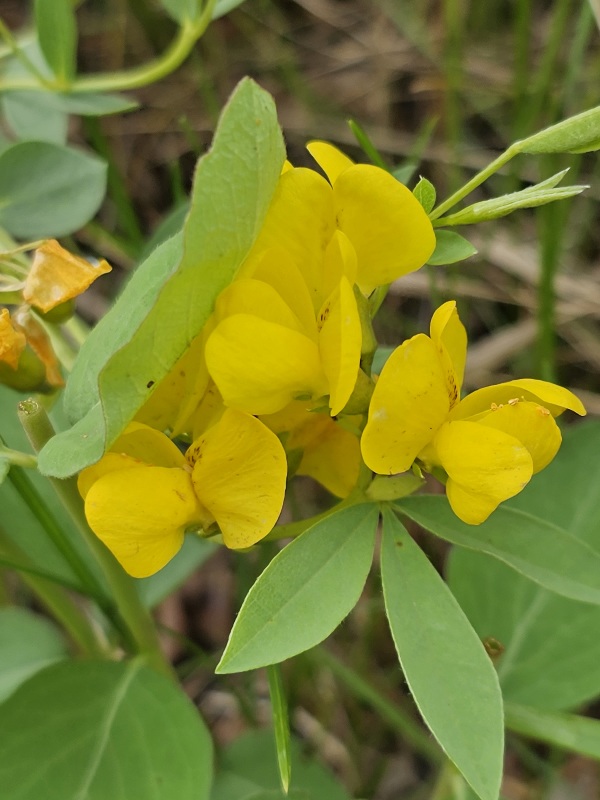
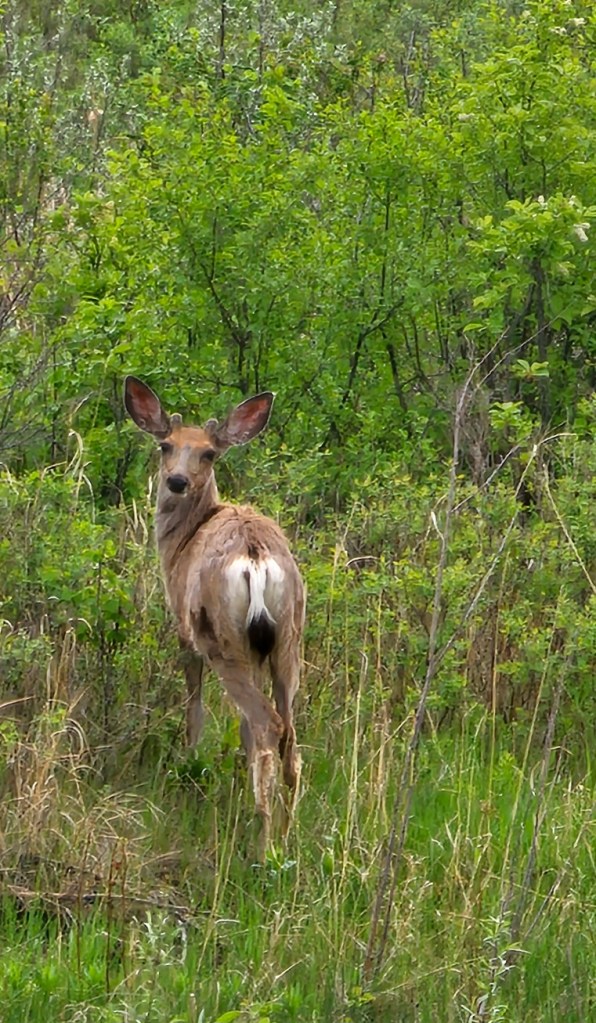
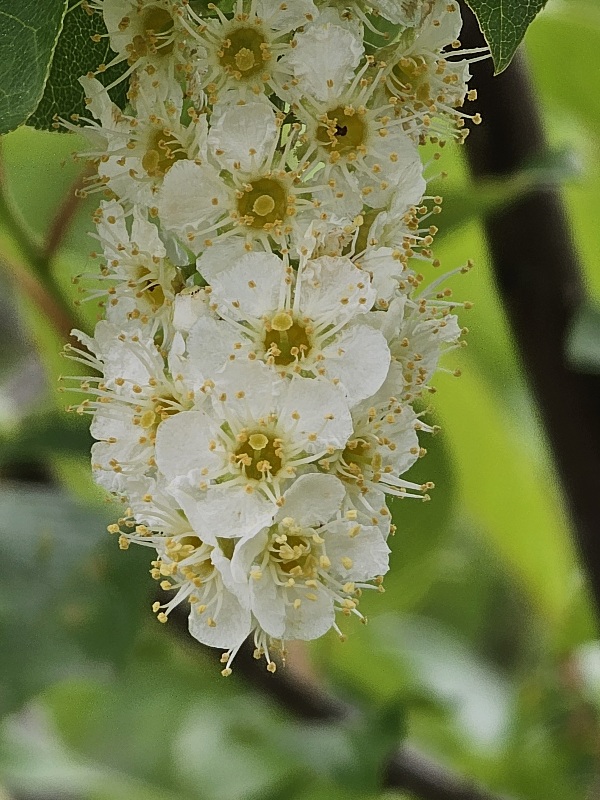
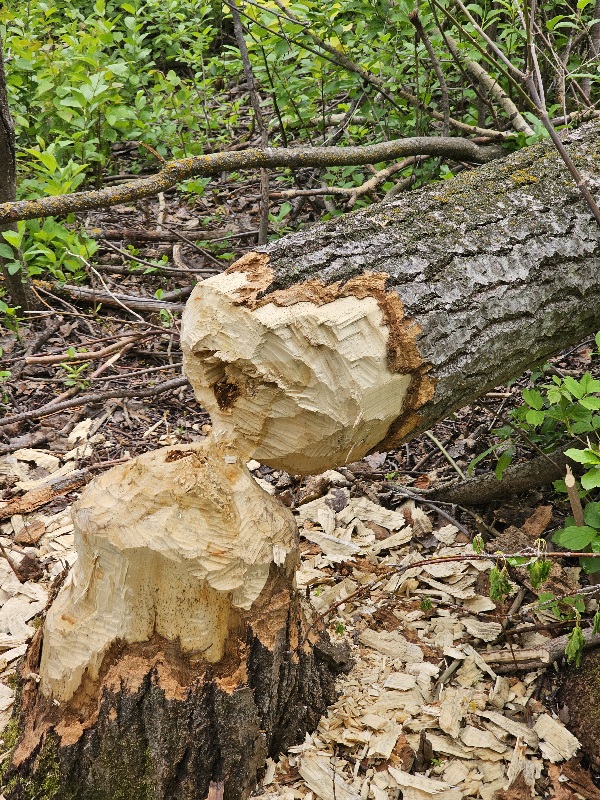
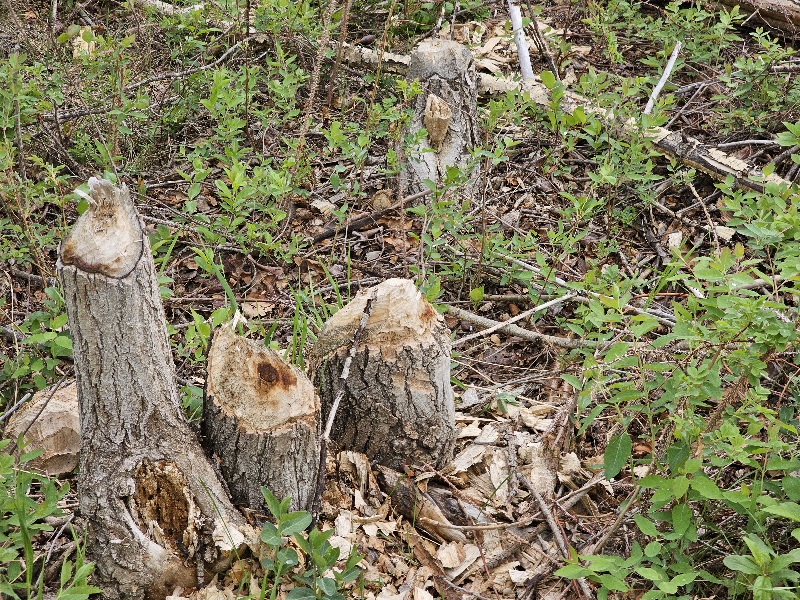
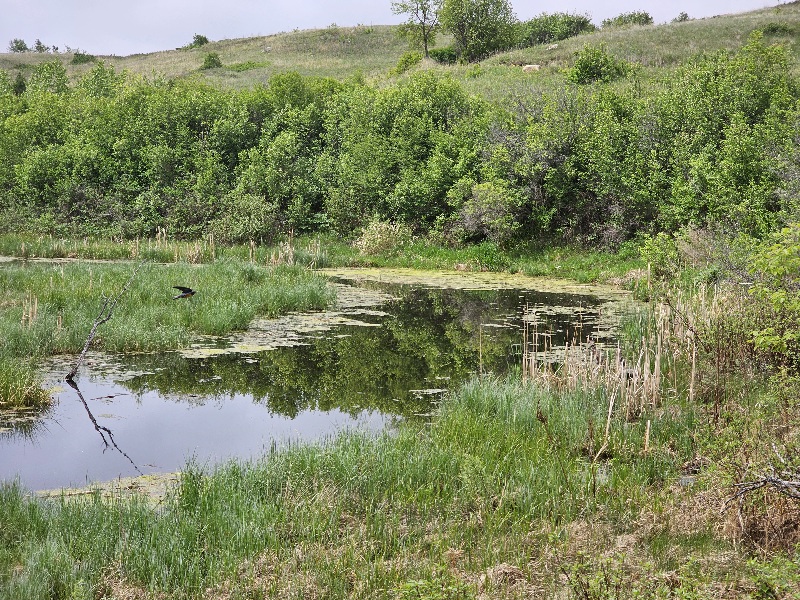
On the walking trails at Wanuskewin:

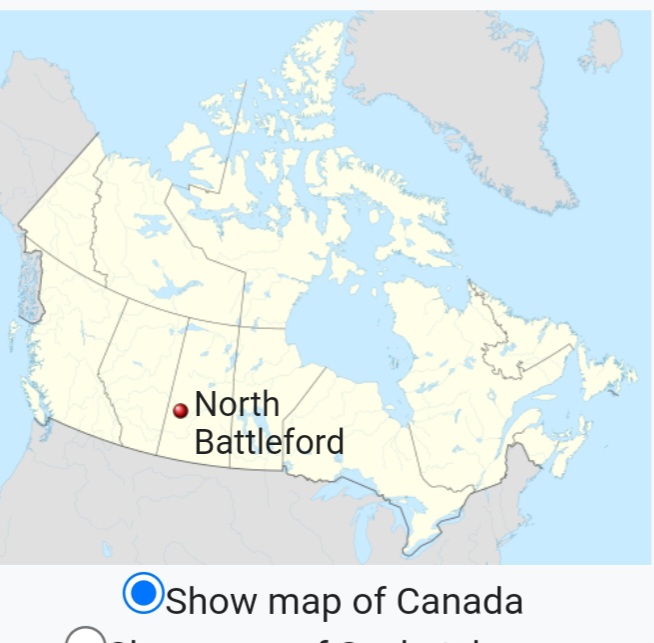
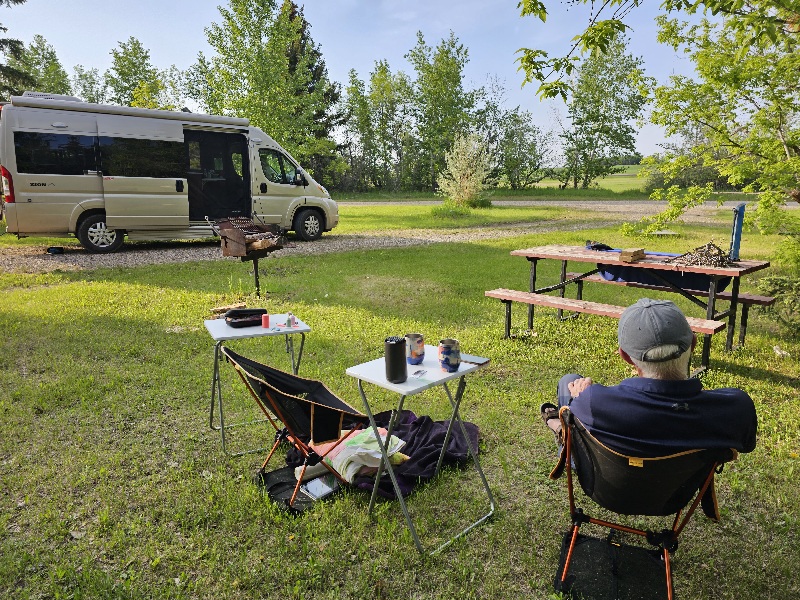
We were debating about spending the night in a hotel as a change of pace (and the promise of a nice long shower) somewhere in the Battlefords about 2 hours west of Saskatoon but the sun has finally come out and it seems we will have a nice evening to spend outside. Also we have leftovers in the fridge we need to clean up. It actually takes more work to move into a hotel than it does to set up camp. We found a decent campground just east of North Battleford and there is almost no one here and very few bugs.
 Louise and Brian McLeod Travel Blog
You must be logged in to post a comment.