It’s cold this morning, below freezing and windy. Going to be a chilly ride across the river today. Also, checkout for the hotel is 11 am so we need to leave our backpacks somewhere do we don’t have to carry them around all day.
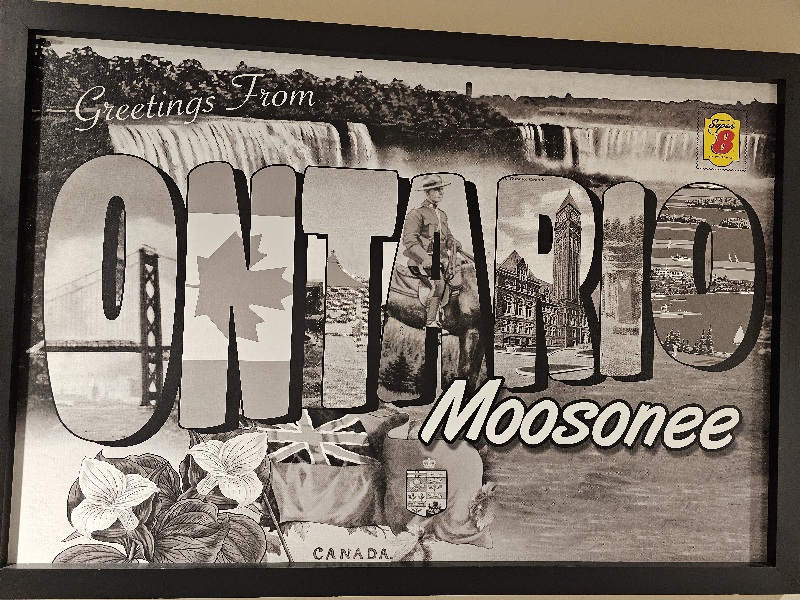
Breakfast in the hotel was included but sparse, only bread, cereal and waffles no protein based foods. Fortunately we bought yogurts yesterday. That 4-pack we didn’t want to buy yesterday turned out to be just right. We also have an orange.
We have to be at the town docks for 10 am. Hopefully it will warm up a bit (???).
And it didn’t… warm up I mean.. Temperatures with wind chill are in the low 20s. We didn’t have much left in our backpacks to worry about carrying because we were wearing everything we brought.
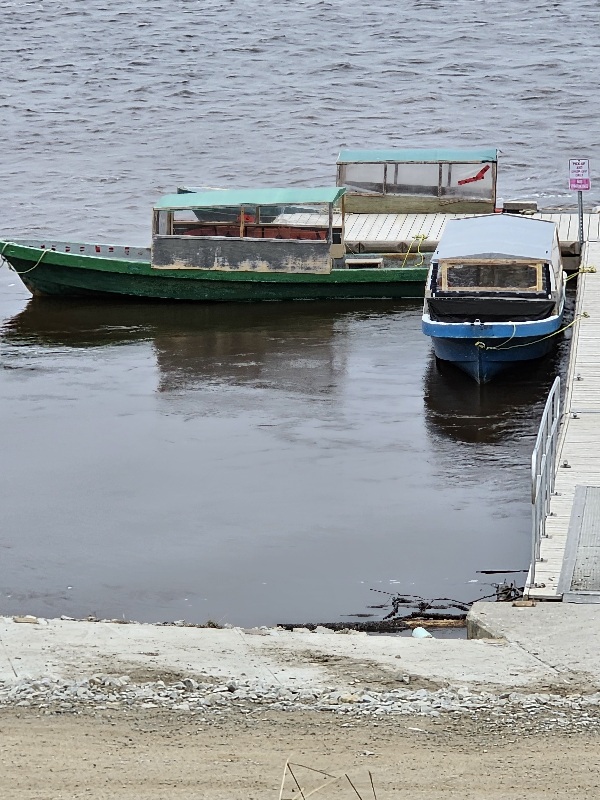
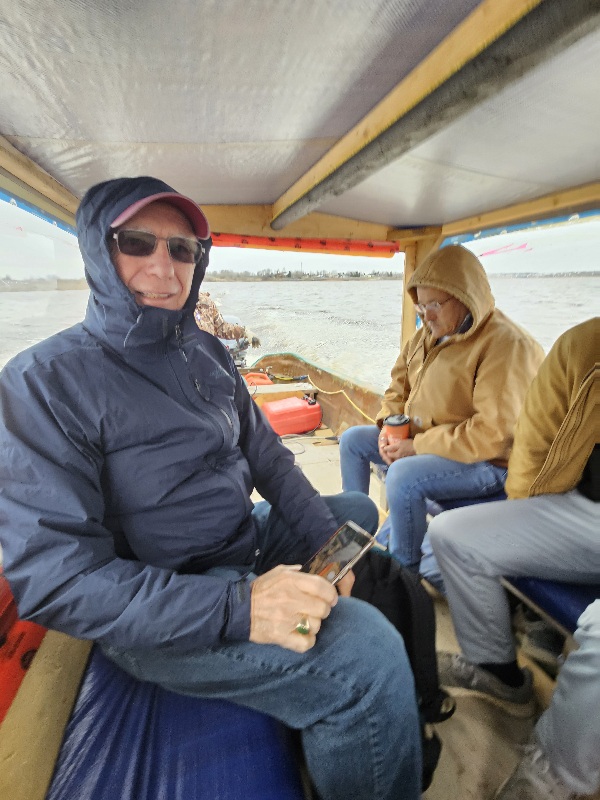
We had arranged with our water taxi driver to have someone pick us up on Moose Factory and be our guide / driver for a couple of hours. He was very knowledgeable and gave us a great tour of the area. Having a local guide gives us the opportunity to learn things and ask a lot of questions.
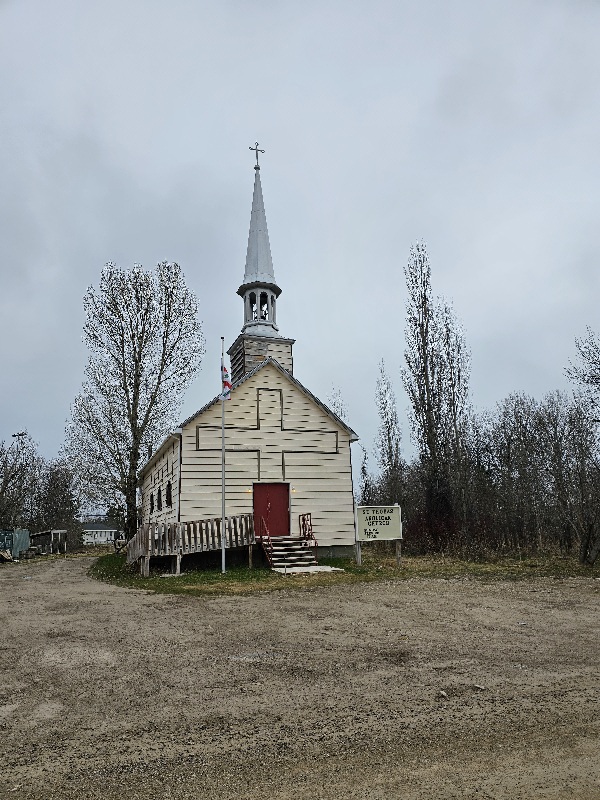
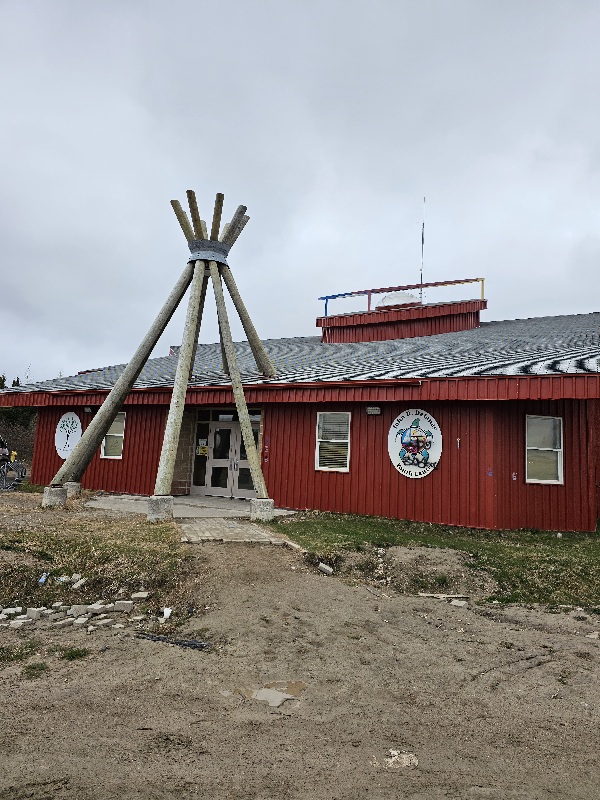
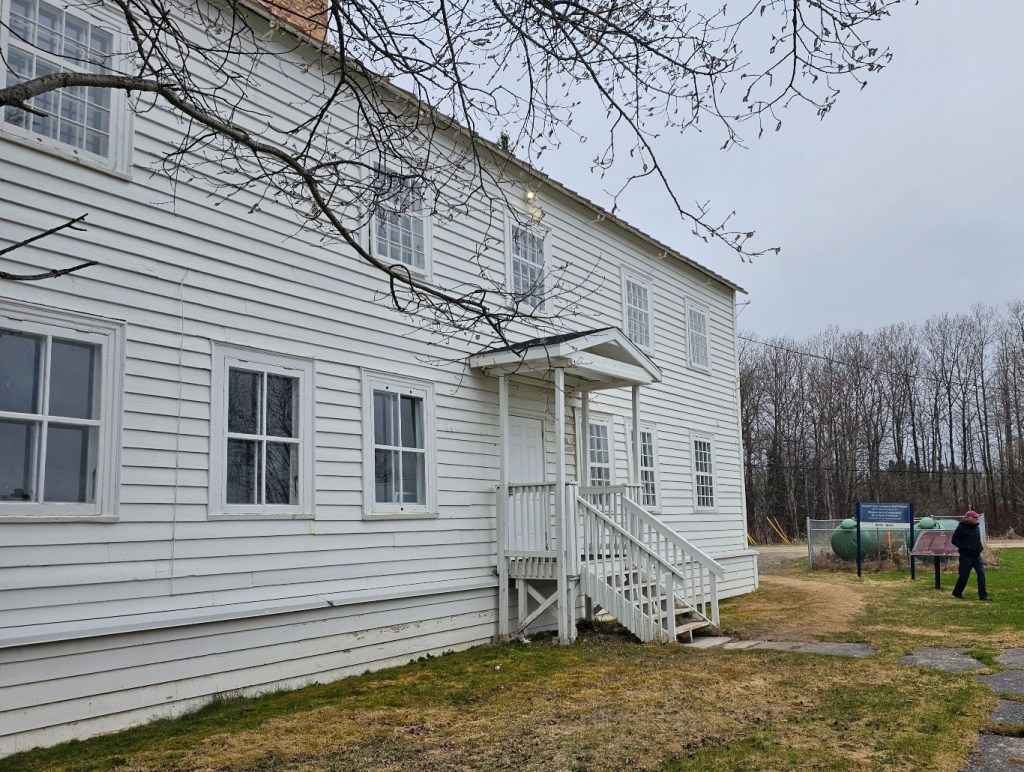
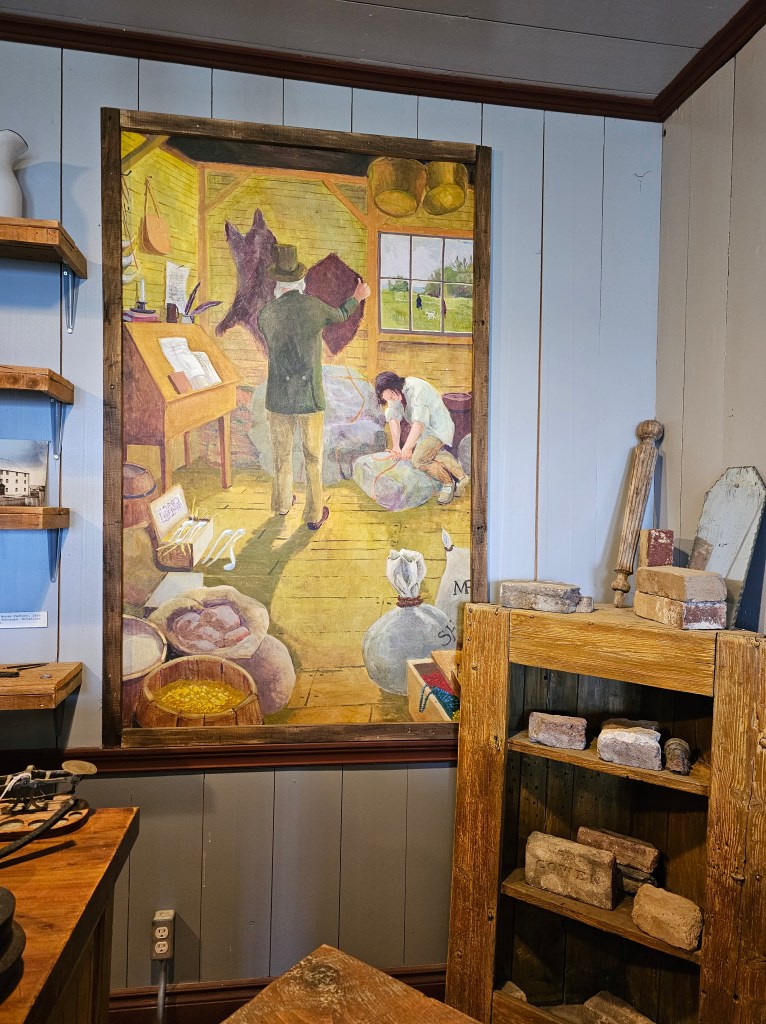
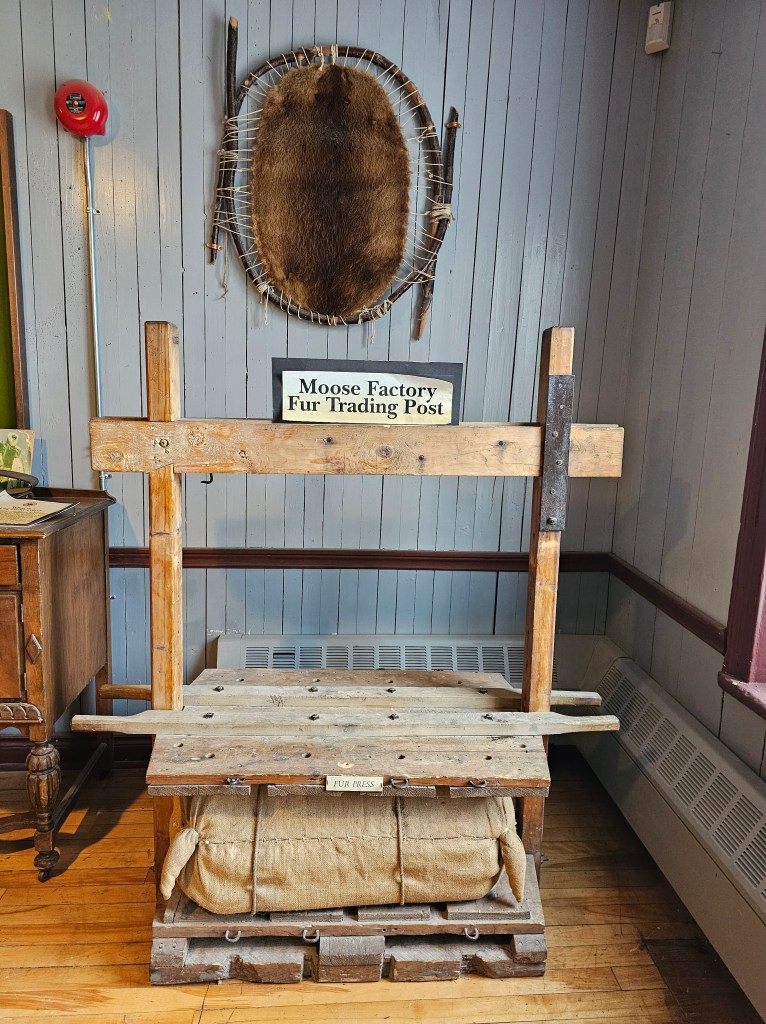
The curator at the Cree interpretive center offered to open up the Hudson’s Bay Staff House for us. Very accommodating people.
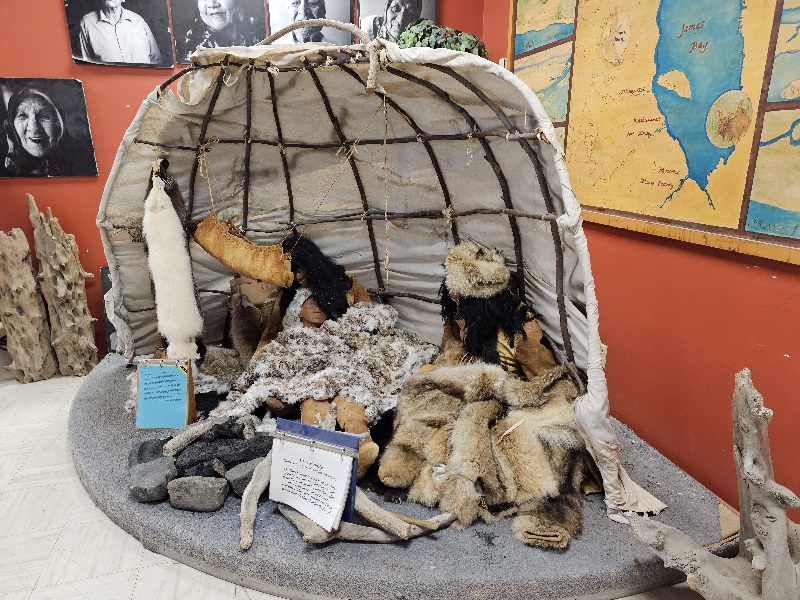
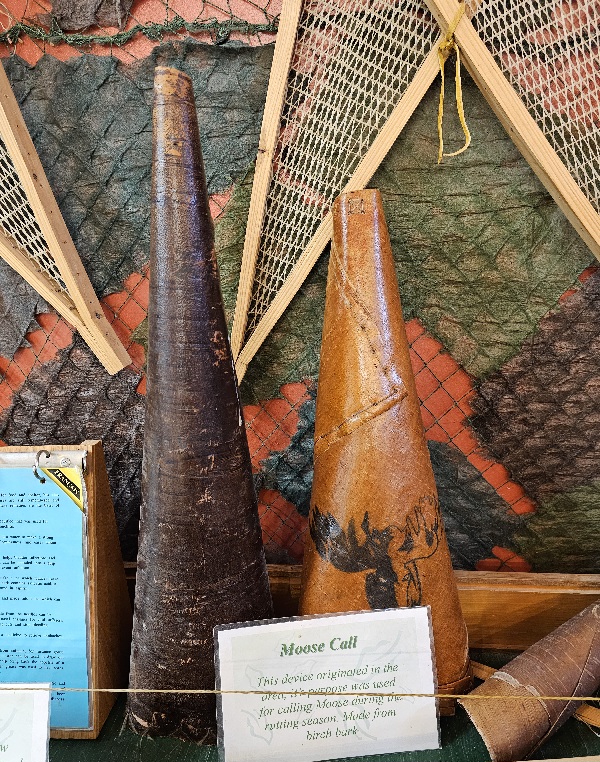
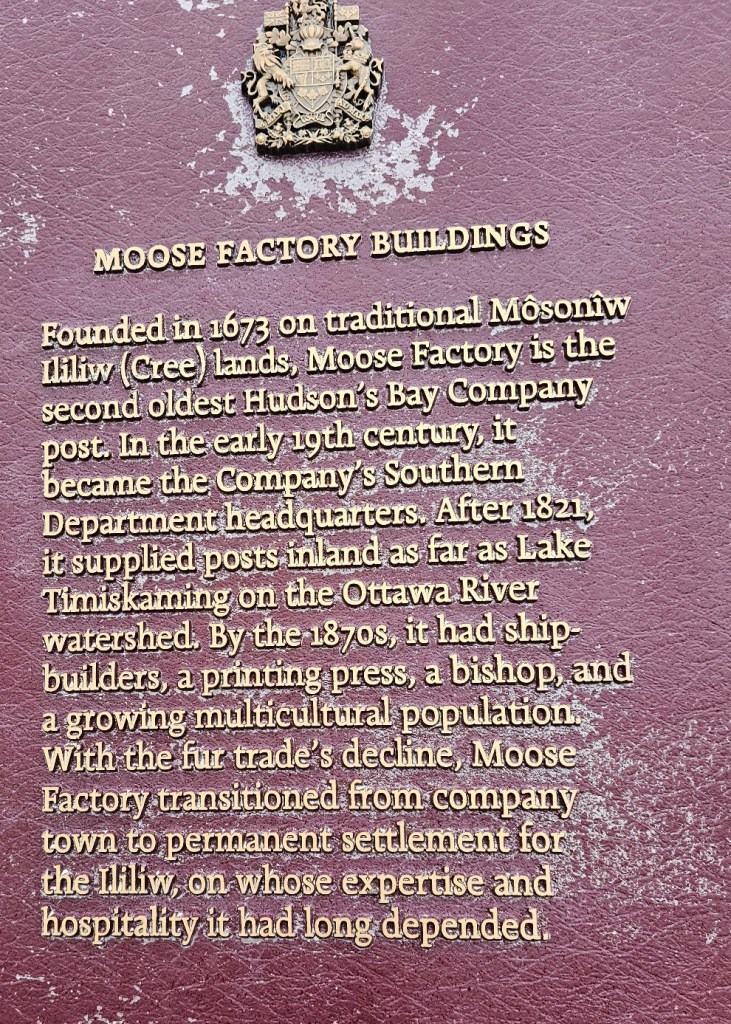
Moose Factory
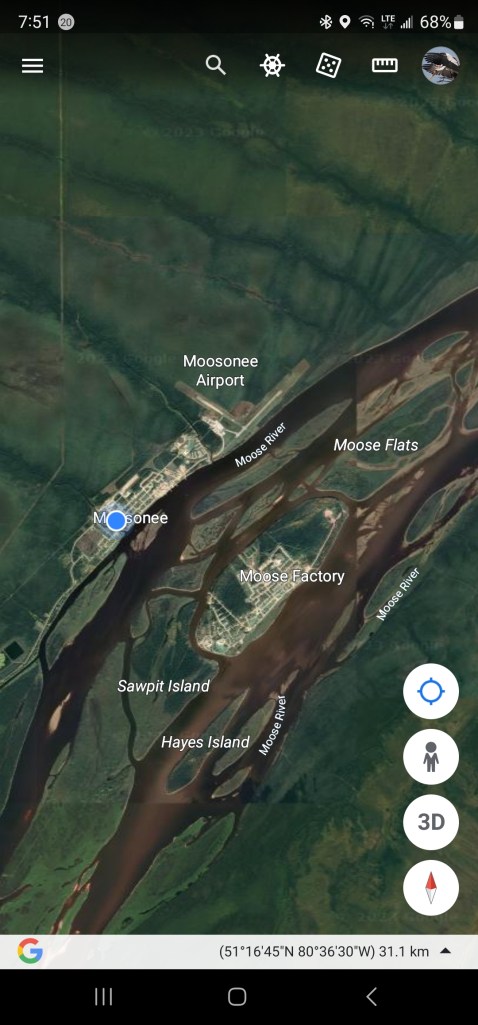
Moose Factory Island is an island in the Moose River, Ontario, Canada, about 16 kilometres (10 mi) from its mouth at James Bay. It is adjacent to the community of Moosonee across the Moose River, from which it is accessible by water taxi. The island is home to the community of Moose Factory. This town is associated with the entire island, but politically, the island is divided into two entities with Factory Island 1 an Indian reserve that makes up the northern two-thirds of the island, belonging to the Moose Cree First Nation (population: 1451) and North Cochrane District home to the historic Hudson’s Bay Company post and government services (population: 1007).
Being situated close to James Bay, Moose Factory Island is affected by the Arctic tides which rise and fall twice daily, varying as much as 2.5 metres (8.2 ft) from high to low tide.
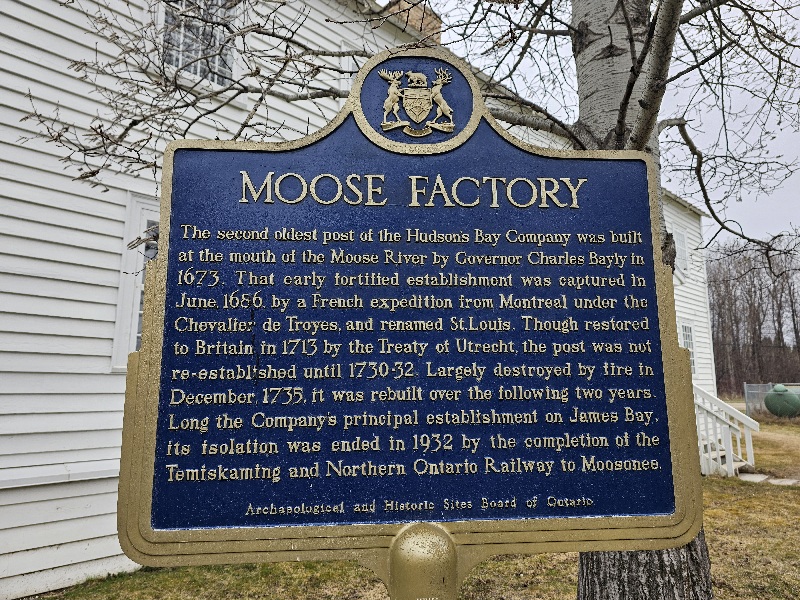
It was the first English-speaking settlement in lands now making up Ontario and the second Hudson’s Bay Company post to be set up in North America after Fort Rupert. On the mainland, across the Moose River, is the nearby community of Moosonee, which is accessible by water taxi in the summer, ice road in the winter, and chartered helicopter in the off-season (break-up or freeze-up).
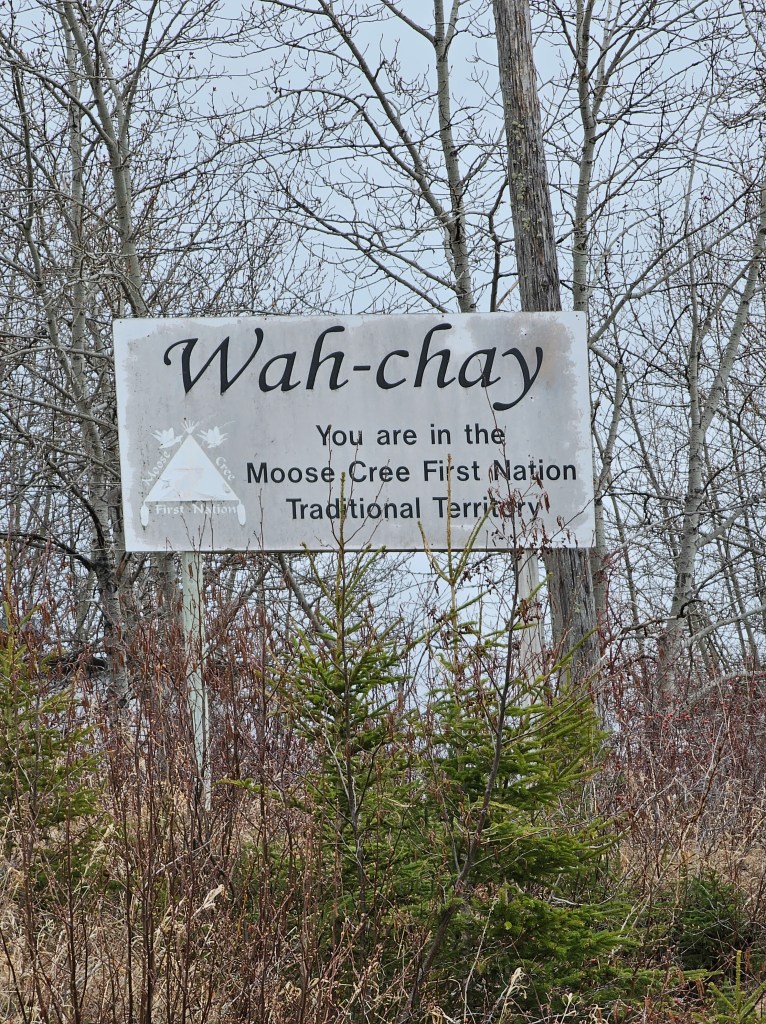
The settlement is mainly inhabited by the Cree, The Cree (Cree: néhinaw, néhiyaw, nihithaw, etc.; French: Cri) are a North American Indigenous people. They live primarily in Canada, where they form one of the country’s largest First Nations.
In Canada, over 350,000 people are Cree or have Cree ancestry. The major proportion of Cree in Canada live north and west of Lake Superior, in Ontario, Manitoba, Saskatchewan, Alberta, and the Northwest Territories. About 27,000 live in Quebec. In the United States, Cree people historically lived from Lake Superior westward. Today, they live mostly in Montana. The documented westward migration over time has been strongly associated with their roles as traders and hunters in the North American fur trade.
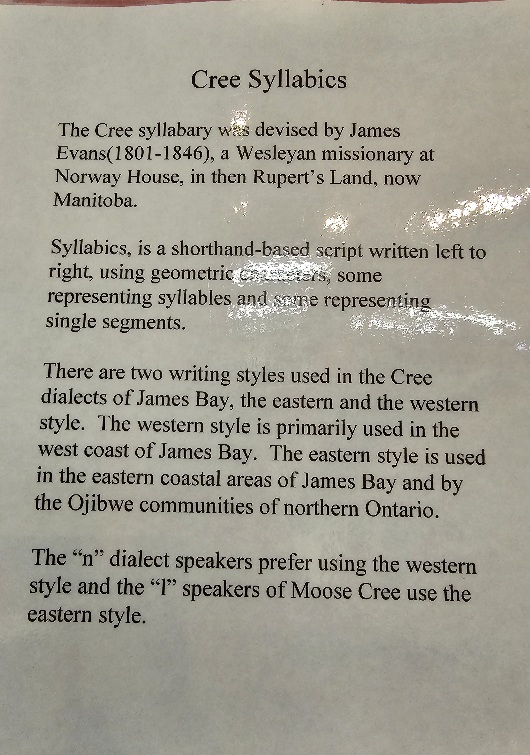
The Hudson’s Bay Company (HBC; French: Compagnie de la Baie d’Hudson) is a Canadian retail business group. A fur trading business for much of its existence, it became the largest and oldest corporation in Canada, and now owns and operates retail stores across the country. The company’s namesake business division is Hudson’s Bay, commonly referred to as The Bay (La Baie in French).
The term “Factory” refers to the jurisdiction of a factor (a business agent or merchant in charge of buying or selling) of the Hudson’s Bay Company.
We got back to the mainland and had lunch at the only place open, KFC / Pizza Hut. We shared a chicken sandwich. That also would have been the only choice on Moose Factory. We are spending the remainder of our afternoon in the lobby of our hotel having already checked out. We get the train back to Cochrane at 5 pm. There was snow in the area as we walked around town.
This was a good first pass at learning about how our northern communities live on the margins of civilization. The local hospital which was a former TB hospital built in the 1950 is connected via helicopter to major health facilities to the south. Our guide’s son and girlfriend are both helicopter paramedics. A new hospital is being built in Moosonee.
At times high school students have to travel back and forth between the two communities for school via water taxi, winter road or helicopter. A helicopter ride is $45 each way. The water taxi is $20. Who pays for this?
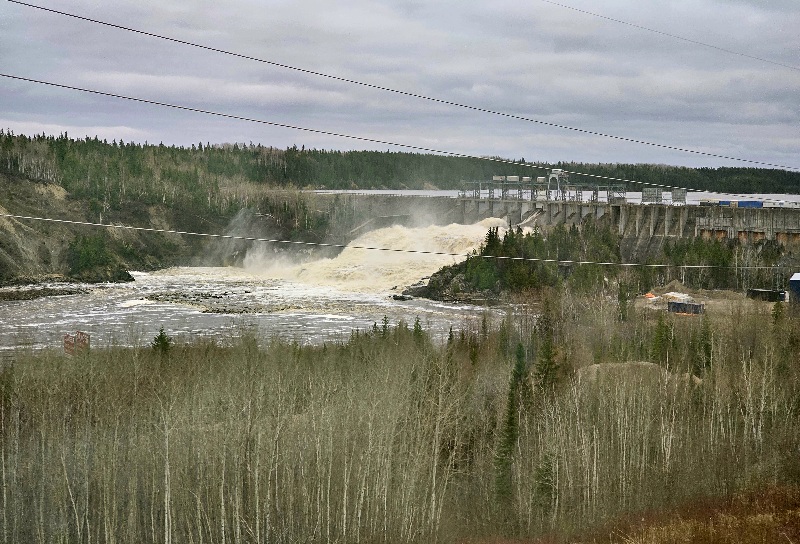
The winter road is only open for about 2 months of the year when it’s good and frozen. There is a lot of water to negotiate in this country. Trucks will often break through the ice or get stuck in the mud.
Cars and trucks regularly ‘take the train’.
You can’t have paved roads if there is no asphalt available.
Our guide still runs a trap line where he will get fox, beaver, other small fur bearing animals, wolf, bear, and the occasional moose. He sells the pelts at fur auctions in Ottawa or Toronto.
In Canada, formal trapping territories assigned by the state are typically called “registered traplines” (RTLs), though each province administers its own system; they have been common across Canada since the 1930s. Registered traplines provide Aboriginal peoples with legal rights to a piece of land off-reserve, a potential economic livelihood, and a connection to a traditional lifestyle and are considered of the utmost importance for many First Nations communities. As of 2013 Ontario has more than 2,800 registered traplines on Crown land.
Our guide also told us that his mother spent 11 years living in a residential school where she wasn’t allowed to speak her own language.
Canada’s Shame: Residential schools were government-sponsored religious schools that were established to assimilate Indigenous children into Euro-Canadian culture. Although the first residential facilities were established in New France, the term usually refers to schools established after 1880. Residential schools were created by Christian churches and the Canadian government as an attempt to both educate and convert Indigenous youth and to assimilate them into Canadian society. However, the schools disrupted lives and communities, causing long-term problems among Indigenous peoples. Overall, students had a negative experience at the residential schools, one that would have lasting consequences. Students were isolated and their culture was disparaged or scorned. They were removed from their homes and parents and were separated from some of their siblings, as the schools were segregated according to gender. In some cases, they were forbidden to speak their first language, even in letters home to their parents. The attempt to assimilate children began upon their arrival at the schools: their hair was cut (in the case of the boys), and they were stripped of their traditional clothes and given new uniforms. In many cases they were also given new names. Christian missionary staff spent a lot of time and attention on Christian practices, while at the same time they criticized or denigrated Indigenous spiritual traditions.
Truth and Reconcilation: The last residential school closed in 1996. Since then, former students have demanded recognition and restitution, resulting in the Indian Residential Schools Settlement Agreement in 2007 and a formal public apology by Prime Minister Stephen Harper in 2008. The Truth and Reconciliation Commission of Canada was a truth and reconciliation commission active in Canada from 2008 to 2015, organized by the parties of the Indian Residential Schools Settlement Agreement.
There is snow in the air as we board the train. It snowed in Cochrane today so we will be interested to see what’s there when we arrive. The temperatures will drop even lower tonight.
 Louise and Brian McLeod Travel Blog
You must be logged in to post a comment.