It was sunny but cold when we left camp but the weather soon deteriorated to rainy squalls for most of the 6 1/2 hour drive. The weather had been very wet when we left home having rained most of the previous Friday, Saturday and Sunday.
The day’s drive took us on our usual route up Hwy 15/99 in PA, a spectacular scenic drive near PA’s ‘grand canyon’, Hwy 17/86 (the southern tier of NY) and cross country to Buffalo, NY crossing into Canada at Niagara Falls.
So, here’s the thing. We didn’t stop in Niagara Falls, a typical tourist stop for most Americans. Indeed, it might be one of the few places in Canada most identified by Americans. I grew up in Hamilton, ON just a few miles north of ‘the falls’ ( see map below). We have been there so many times and the falls are indeed spectacular but we didn’t feel the need to stop. From Niagara we drove along the QEW (Queen Elizabeth Way, Canada’s first 4 lane highway and the only one without a number), around Hamilton and west towards London,ON (actually Komoka, ON) where we will spend 2 days with our youngest daughter.
I went back into my files and found some photos taken from 2017 when we last visited with grandchildren, just because I thought I should include them as part of the whole Canadian trip. I will however talk a little bit about the Niagara Peninsula and it’s unusual micro climate.

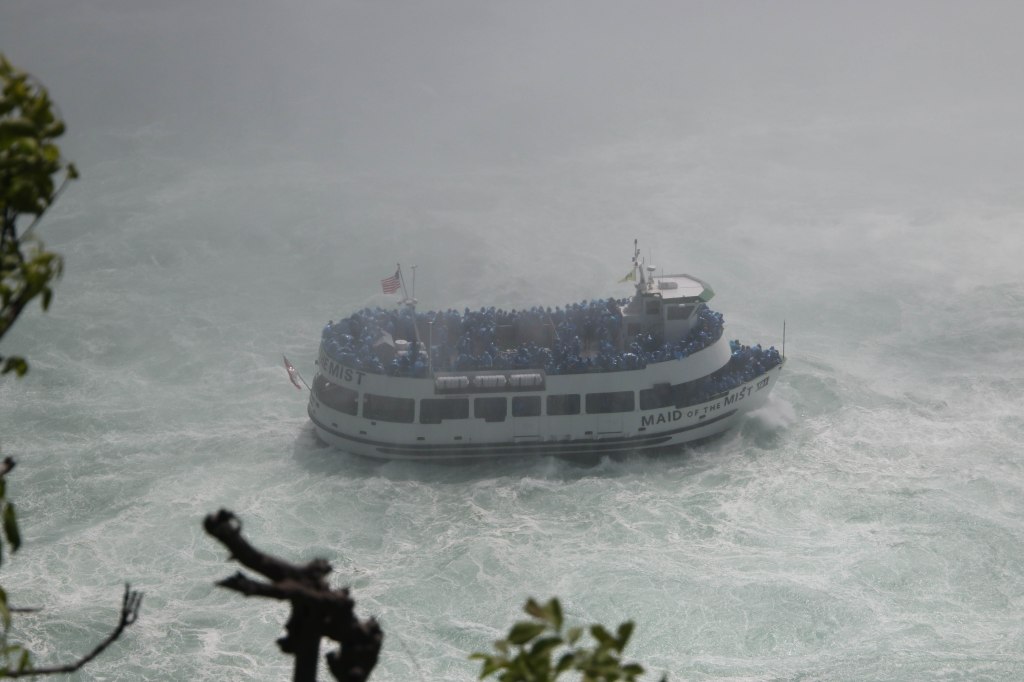
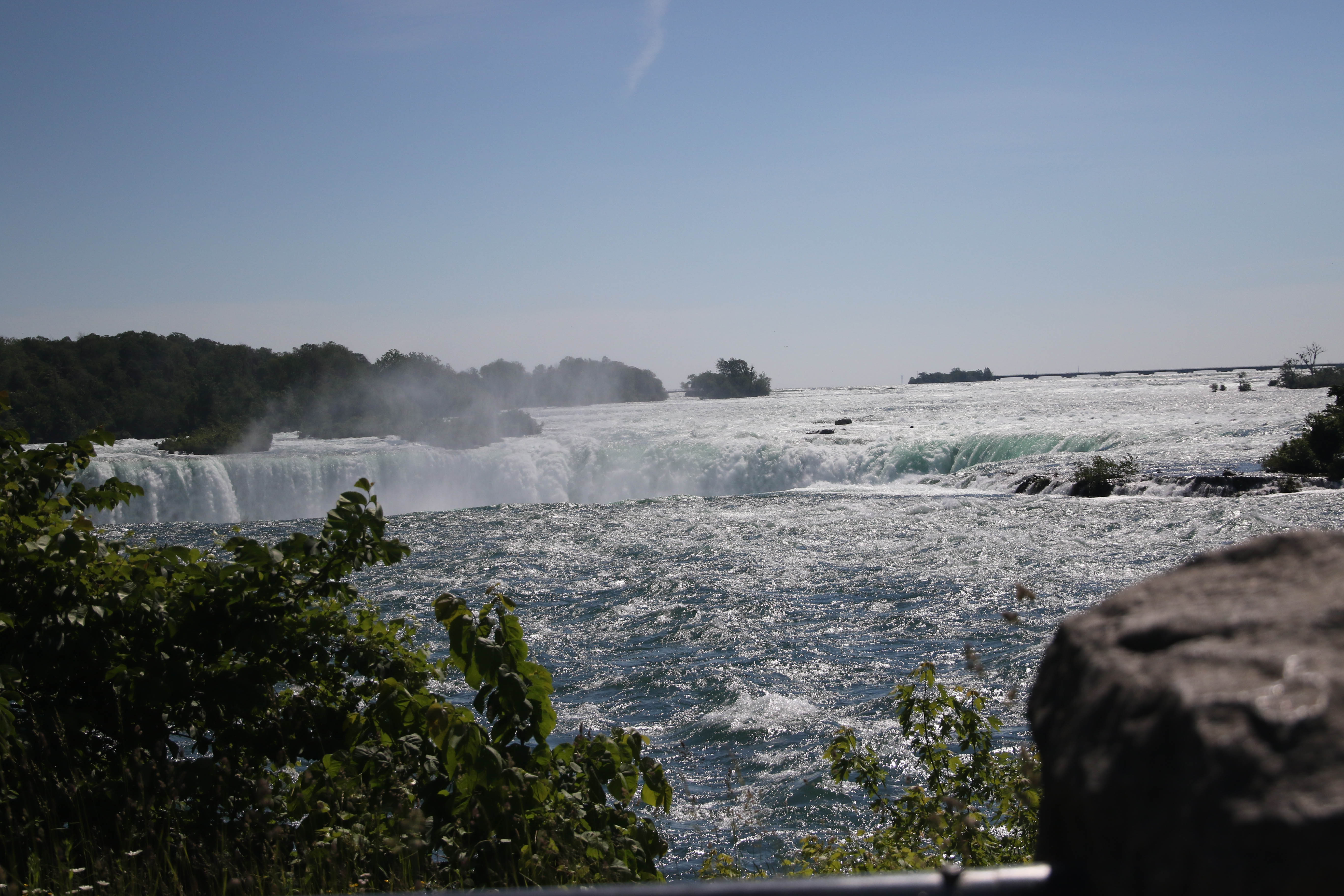
The Niagara Peninsula is an area of land lying between the southwestern shore of Lake Ontario and the northeastern shore of Lake Erie, in Ontario, Canada. Technically an isthmus rather than a peninsula, it stretches from the Niagara River in the east to Hamilton, Ontario, in the west. The peninsula is located in the Golden Horseshoe region of Southern Ontario, and has a population of roughly 1,000,000 residents.

The Niagara Peninsula has a unique micro climate moderated by the Niagara Escarpment and Lake Ontario. As I was growing up in this area, the peninsula was one of the few areas in Canada where you could grow what I call ‘ soft fruit’ trees — cherries, peaches etc. Now the agricultural landscape has been transformed to grapes and the many wonderful / world class Ontario wineries that produce some of the world’s best ice wines. More recently, we are seeing acres of greenhouses growing cannabis! We seem to be progressing predictably with our ‘addictive’ agricultural growth requirements.
In the winter, when I could go to school only wearing a heavy sweater, a few miles away Buffalo, NY situated at the eastern end of Lake Erie, would be experiencing a blizzard.
Hamilton, ON situated at the tip of eastern Lake Ontario was historically a city of heavy industry… in the 50s there were 2 steel foundries, International Harvester where my father and uncle worked, Dominion Glass, Studebaker, Lever Brothers, National Steel Car among others and all the air pollution that goes with it. Today it is home to the Royal Botanical Gardens and one of the best universities in the province and an excellent university hospital health system. Some famous entertainers also hale from Hamilton including Martin Short and ballet great Karen Kain.
From wikipedia: Hamilton is a Canadian port city on the western tip of Lake Ontario. The Niagara Escarpment, a huge, forested ridge known locally as “the mountain” and dotted with conservation areas and waterfalls, divides the city. The long-distance Bruce Trail runs along the escarpment. HMCS Haida, a naval warship on the city’s lakefront, and the Canadian Warplane Heritage Museum, trace Canada’s military past.
Komoka, ON is a former rail town where the 2 major rail lines in Canada cross (twice) forming a diamond, the center of which formed the town center.
 Louise and Brian McLeod Travel Blog
You must be logged in to post a comment.