The Kolomoki Mounds is one of the largest and earliest Woodland period earthwork mound complexes in the Southeastern United States and is the largest in Georgia. Constructed from 350CE to 600CE, the mound complex is located in southwest Georgia, in present-day Early County near the Chattahoochee River.
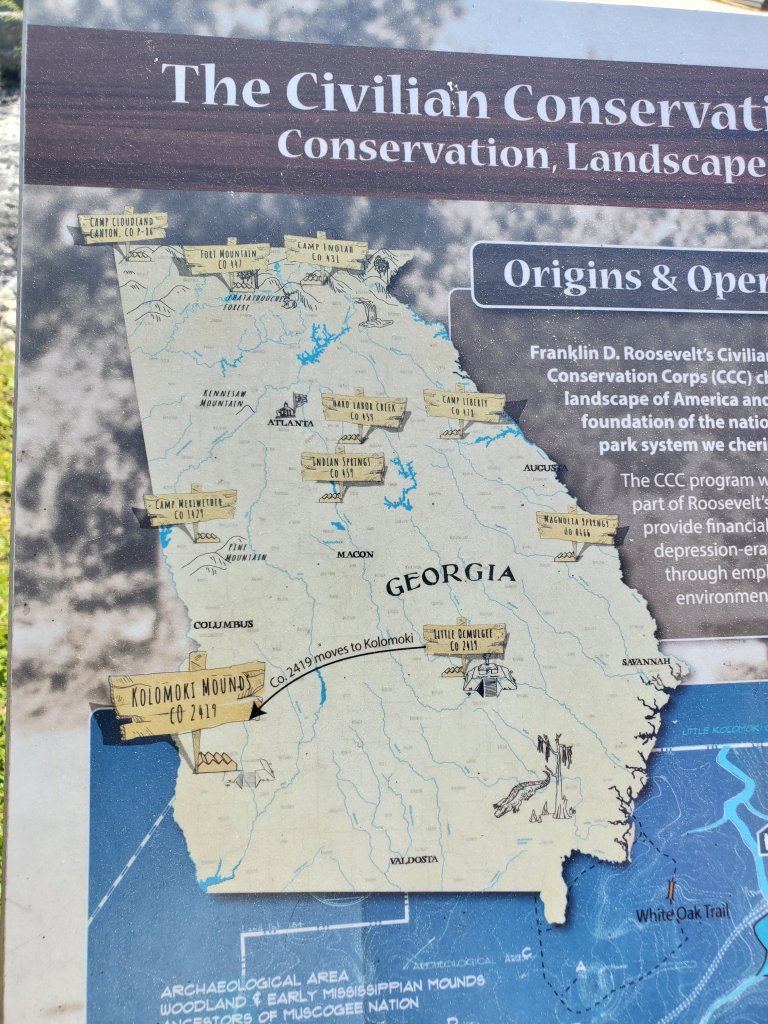
In the early millennium of the Common Era, Kolomoki, with its surrounding villages, Native American burial mounds, and ceremonial plaza, was a center of population and activity in North America. The eight visible mounds of earth in the park were built between 250-950 CE by peoples of the Swift Creek and Weeden Island cultures. These mounds include Georgia’s oldest great temple mound, built on a flat platform top; two burial mounds, and four smaller ceremonial mounds.
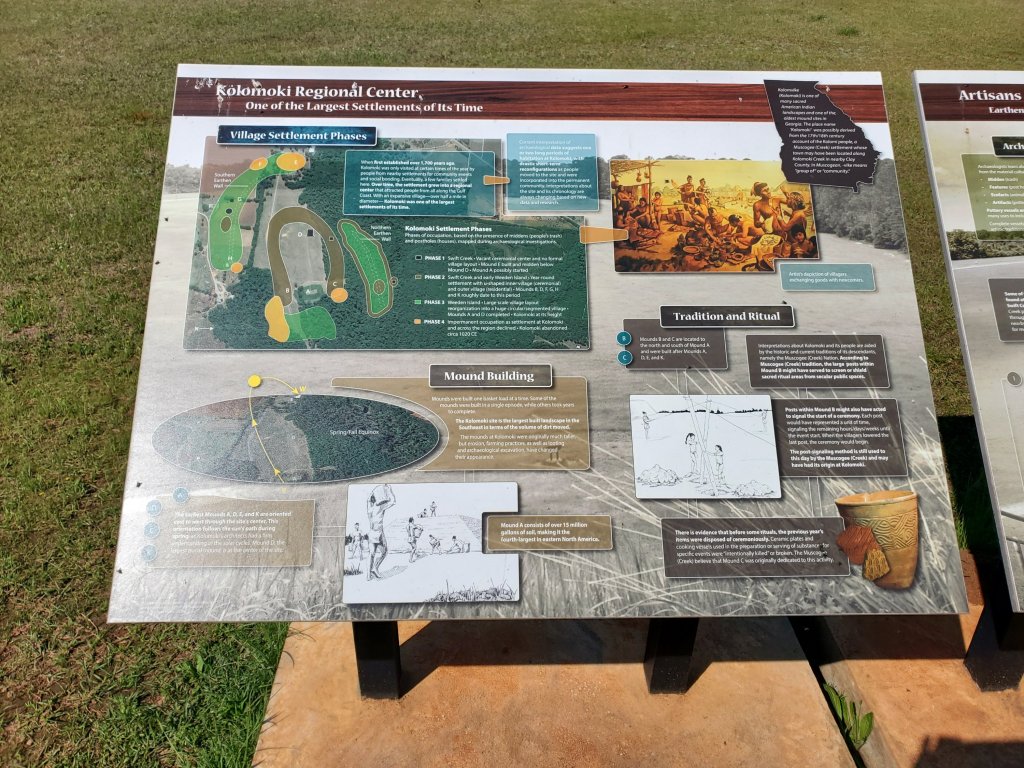
As with other mound complexes, the people sited and built the earthworks according to a complex cosmology. Researchers have noted that several mounds are aligned according to astronomical events. For example, mounds A, D, and E, which form the central axis of the site, align with the sun at the spring equinox. Mounds F and D form an alignment with the sun at the summer solstice.
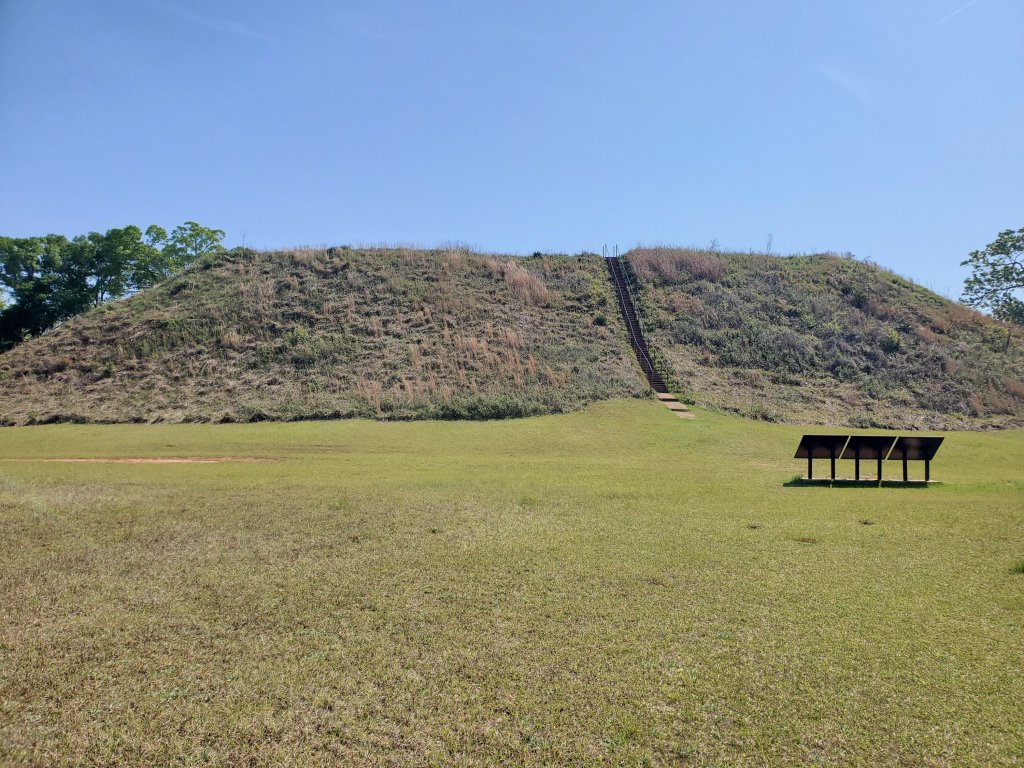
Temple Mound
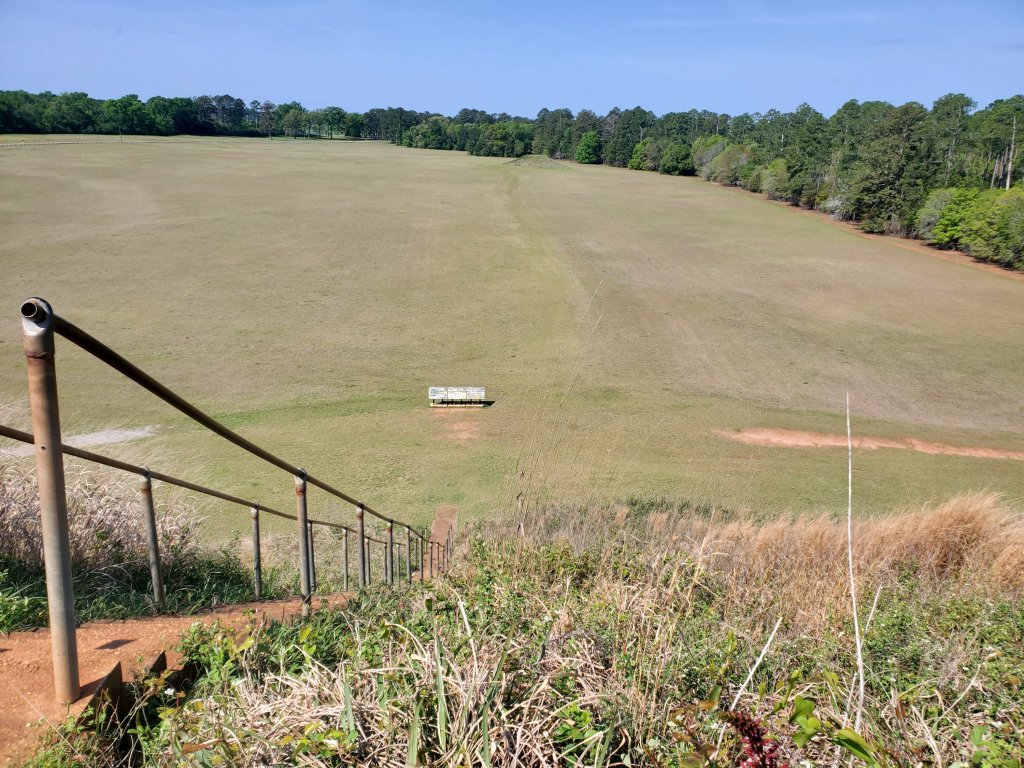
The Temple Mound is 56 feet (17 m) high and measures 325 by 200 feet (61 m) at the base. Research indicates that it would have taken over two million basket loads carried by individual workers, each holding one cubic foot of earth, to build this mound. The southern half of the mound is three feet higher and was probably the temple platform. From the top of the steps, most of the Kolomoki Archaeological Area can be viewed. Approximately 1,500 – 2,000 residents lived in a village of thatched houses that were built around the large plaza in the center of the complex. It was a place for public ceremonial activities and rituals, including games
Mound D
Mound D is one of the eight visible mounds at the Kolomoki site. It is a conical mound that is 20 feet (6.1 m) high from the ground. It is centrally located at Kolomoki. Archeologists discovered the remains of 77 burials and ceremonial pottery here. The effigy pottery discovered was shaped in various animal and bird shapes, such as deer, quail and owls.
Mound D was constructed in several stages, each time increasing in size. It began as a square-platform mound that was about 6 feet (1.8 m) tall. This original platform mound was built from yellow clay. Sixty pottery vessels were placed on the east wall including the above effigy pottery.
After many subsequent burials and the addition of more yellow clay in layers, the mound was shaped as a larger circular mound about 10 feet (3.0 m) tall. These burials took place on the eastern side of the mound, and the skulls face eastward, the direction of the rising sun, apparently for religious reasons. Burial objects made from iron and copper and pearl beads were included as ceremonial objects with the burials. Finally, the entire mound was covered with red clay
Kolomoki was founded by a people, whose descendants were part of the Creek Confederacy 1700 years later. However, the town’s second (Weeden Island) phase represents immigration by Southern Arawaks. It is highly likely that the founders of the original Late Woodland village at Cahokia were descended from Kolomoki. Excavations in these mounds revealed the remnants of large wooden posts that were probably used in religious ceremonies by the Swift Creek and Weeden Island Indians.
Regardless of the particular age, form, or function of individual mounds, all had deep meaning for the people who built them. Many earthen mounds were regarded by various American Indian groups as symbols of Mother Earth, the giver of life. Such mounds thus represent the womb from which humanity had emerged.
The Museum is built around Mound E a burial mound in east / west axis on the solstuces to A and D. It has been excavated with the burial tomb exposed and the placement of the funerary pottery amongst other things. A 15 minute movie explained the building of the mounds and the village that eventually formed around them. The population diminished over time as inhabitants moved to larger populated areas or because increased farming reduced the need for village living.
Kolomoki was situated between two large populations to the north and to the south and would have experienced a fair amount of trade. There did not appear to be much in the way of fortifications. Life must have been relatively peaceful ( my guess only).
 Louise and Brian McLeod Travel Blog
You must be logged in to post a comment.