Gorgeous 17 mile drive out of Okefenokee, sunny and warm. This time we are heading west along the Georgia side of the Florida panhandle north of Tallahassee. Great blue herons and egrets are feeding in the swampy ‘ditches’ along the road.
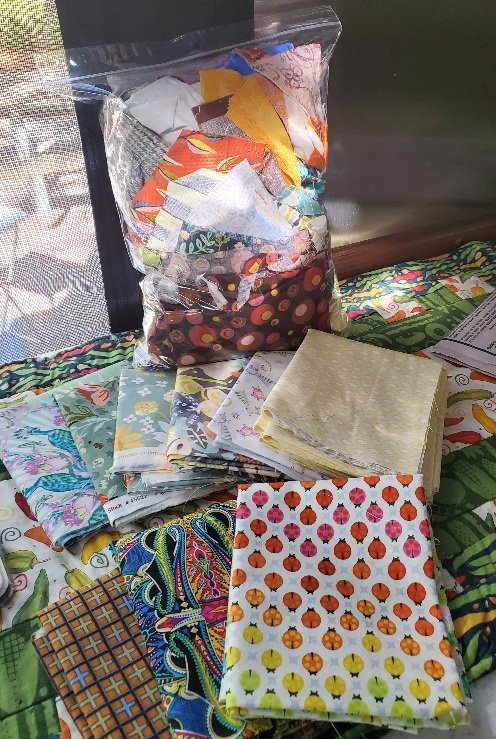
We stopped in the city of Valdosta where we found a quilt shop for me to spend a delirious half hour in. I came away with a bag of scraps (my favorite), some beautiful fat quarters and batting ( which was a good price).
We stopped in Thomasville for lunch. We found a southern cooking restaurant and ate hushpuppies, shrimp and grits, and grilled salmon. Scrumptious. Which meant dinner was salad and cold chicken.
We have also been in the habit of heating up the boiled peanuts I bought a few days ago and eating them as a pre-dinner snack. They are rather addictive.
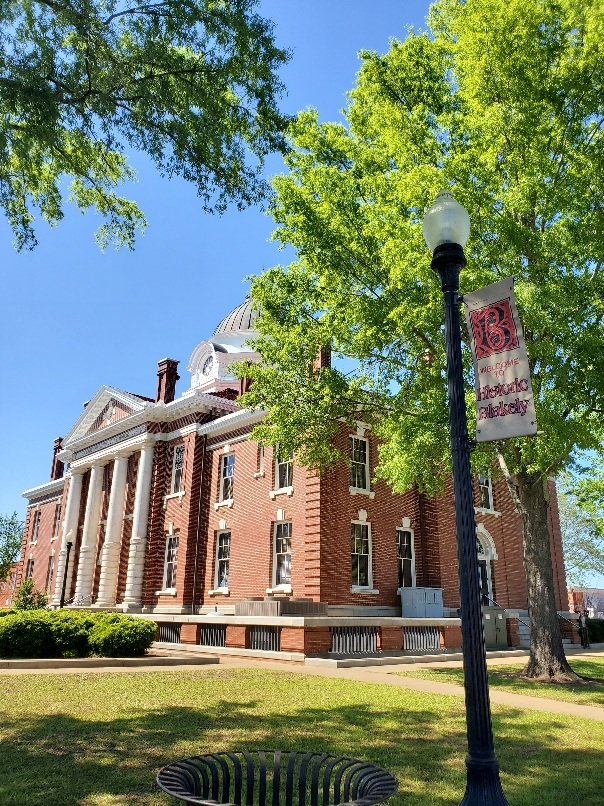
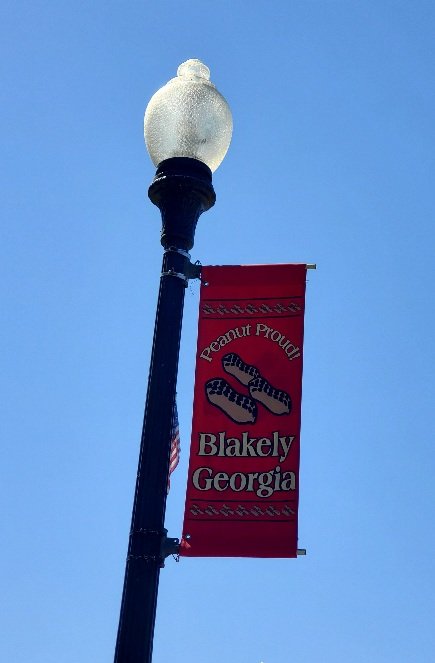
Crops have changed from pine trees to more recognizable agricultural products, wheat, pecan orchards, and the ever present peanut. In fact Blakely, just 4 miles from our campsite claims to be the peanut capital. The soil is red and sandy. We have also observed lots and lots of beehives, usually with the pine groves. We’ve also seen them being moved around on trucks.
Pecan trees, a member of the hickory family, are larger and taller than I expected. They can grow to as tall as 132 feet. Pecans are one of the last of the ‘nut’ producing trees to be domesticated, only after the arrival of the white man to this continent. The pecan is actually a fruit in the drupe family (like a peach ) and is difficult to grow since it requires 2 varietals to germinate each other and because they are so large, require a lot of space to grow properly. It is cultivated mainly in Mexico, Texas, New Mexico and Georgia.
Peanuts: according to Wikipedia, The peanut, native to South America, is a legume crop grown mainly for its edible seeds. It is widely grown in the tropics and subtropics, important to both small and large commercial producers. It is classified as both a grain legume and, due to its high oil content, an oil crop. World annual production of shelled peanuts was 44 million tonnes in 2016, led by China with 38% of the world total. Atypically among legume crop plants, peanut pods develop underground (geocarpy) rather than above ground. Peanuts are similar in taste and nutritional profile to tree nuts such as walnuts and almonds, and, as a culinary nut, are often served in similar ways in Western cuisines. The botanical definition of a nut is “a fruit whose ovary wall becomes hard at maturity.” Using this criterion, the peanut is not a nut. However, peanuts are usually categorized as nuts for culinary purposes and in common English more generally
In the English-speaking world, peanut growing is most important in the United States. It was mainly a garden crop for much of the colonial period before shifting to mostly animal feedstock until human consumption grew in the 1930s. The United States Department of Agriculture initiated a program to encourage agricultural production and human consumption of peanuts in the late 19th and early 20th centuries. Peanut butter was developed in the 1880s and 1890s in the United States and Canada.
Peanut production in the United States is divided into three major areas: the southeastern United States region which includes Alabama, Georgia, and Florida; the southwestern United States region which includes New Mexico, Oklahoma, and Texas; and the third region in the general eastern United States which includes Virginia, North Carolina, and South Carolina. In Georgia, Naomi Chapman Woodroof is responsible for developing the breeding program of peanuts resulting in a harvest almost five times greater.
Our campsite is situated on the site of the Kolomoki Indian mounds which I will write about tomorrow. Situated on a small lake, it’s a small picturesque state park with playgrounds and a beach. We can see the water from our site. Tomorrow we will walk the mounds and learn the history of the native peoples who lived here 1, 000 years ago.
I am several days late with this blog as we had little network on the road yesterday and again, wifi only at the ranger station at the campsite.
 Louise and Brian McLeod Travel Blog
You must be logged in to post a comment.