Another beautiful morning. Being able to drink our morning coffee outside is definitely spoiling us. That and being able to stay out until bedtime!
Did a little cleanup of the van, which we have decided to give a name to. We are calling it Impulse as we bought it on impulse.
The nearest anything is 17 miles away so we are confined to activities in the park, which is a swamp interspersed with islands one of which is our campground. There are shortish walking trails and boardwalks but the best way to see anything is by boat… skiffs, canoes, kayaks all for rent and the boat tour that’s offered 3 times a day.
We did a boat tour this morning and will do it again tomorrow. Alligators, herons, egrets, waterlilies and other swamp flora and fauna are best seen from the water. We had our big lenses out and will post photos when we have internet again.
We found wifi at the ranger station so I can post a couple of photos.

We were fortunate enough to spot an American Bittern in alarm pose. When frightened it puts its head straight up in the air such that it blends in with its background. It is a well-camouflaged, solitary brown bird that unobtrusively inhabits marshes and the coarse vegetation at the edge of lakes and ponds. In the breeding season it is chiefly noticeable by the loud, booming call of the male. The nest is built just above the water, usually among bulrushes and cattails, where the female incubates the clutch of olive-colored eggs for about four weeks. The young leave the nest after two weeks and are fully fledged at six or seven weeks.
The American bittern feeds mostly on fish but also eats other small vertebrates as well as crustaceans and insects. It is fairly common over its wide range, but its numbers are thought to be decreasing, especially in the south, because of habitat degradation
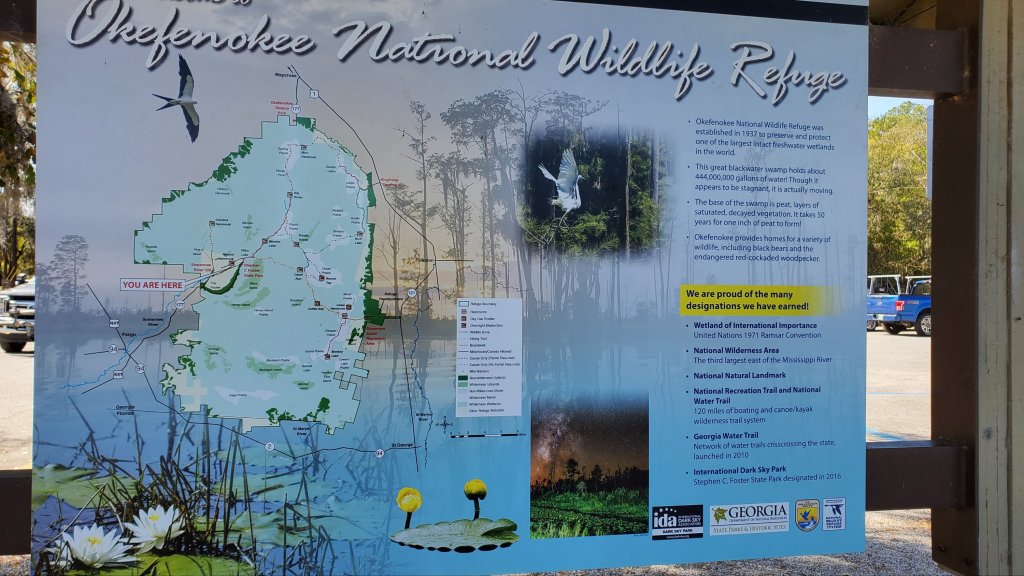
Stephen C. Foster State Park
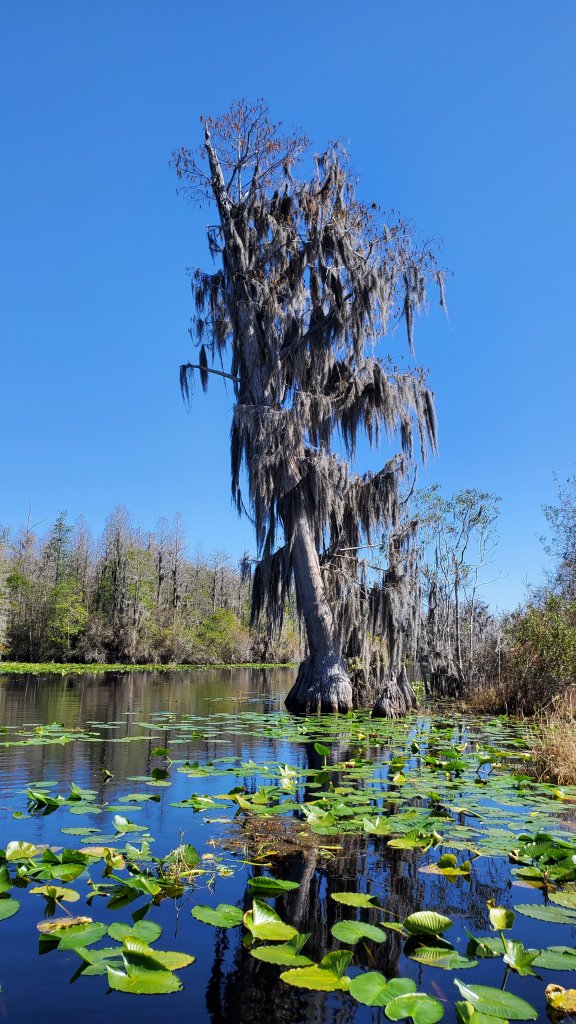
This remote park, named after songwriter Stephen C. Foster, is a primary entrance to the legendary Okefenokee Swamp—one of Georgia’s seven natural wonders. Spanish moss-laced trees reflect off the black swamp waters, while cypress knees rise upward from the glass-like surface. Alligators, turtles, raccoons, black bears, deer, ibis, herons, wood storks, red-cockaded woodpeckers and numerous other creatures make their homes in the 402,000 acre refuge. Stargazers appreciate the particularly dark sky.
Officials estimate that 12,000 of the country’s alligators live within the refuge.
Dark Sky Over Stephen C. Foster
Stephen C. Foster State Park is a certified dark sky park by the International Dark Sky Association located in the middle of the Okefenokee Swamp, with minimal light pollution.
Swamps, Marshes, Bogs and Fens
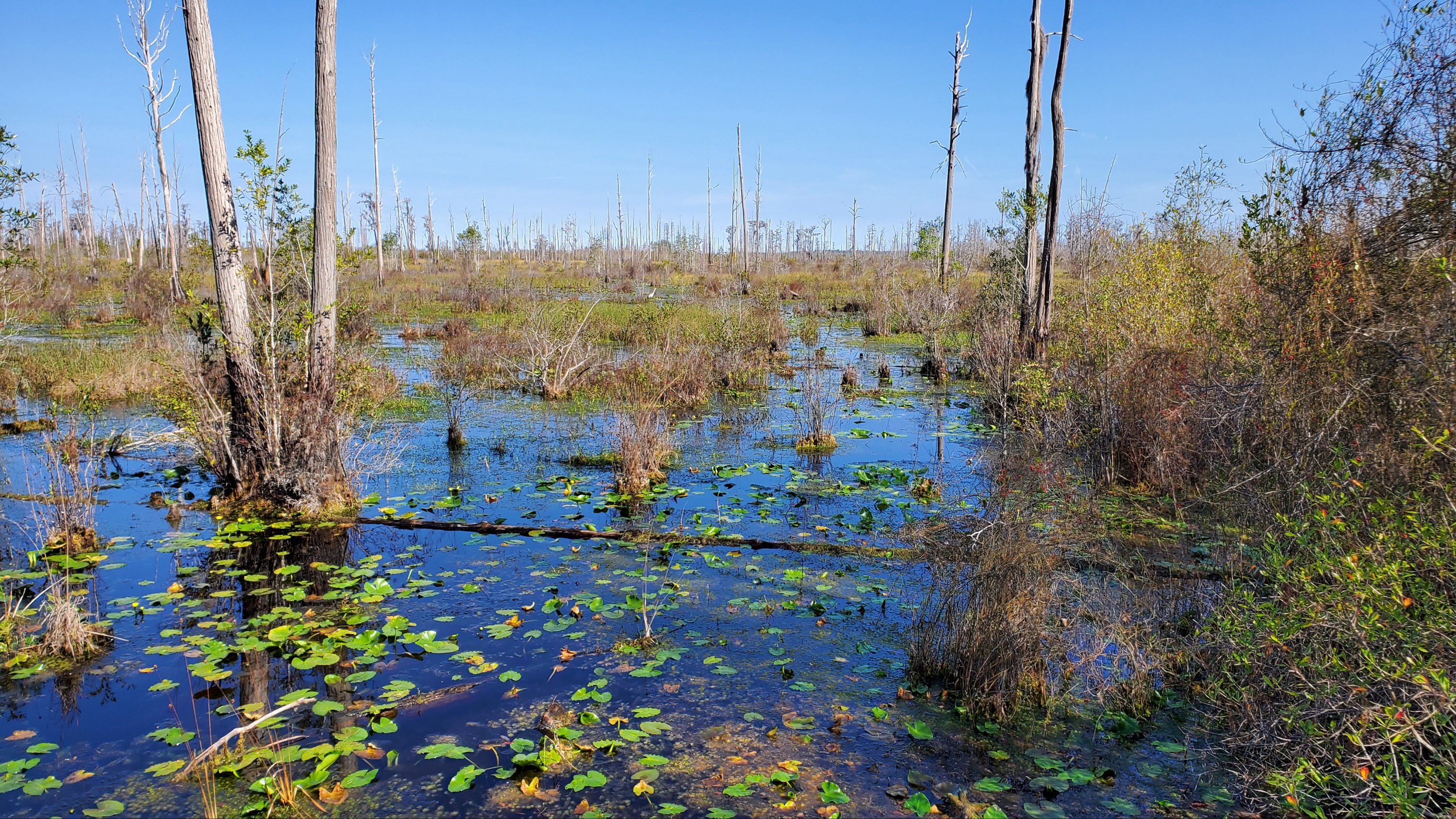
Swamp: A swamp is an area permanently covered in water and dominated primarily by water-tolerant trees. Rain and flooding cause the water level to change, but in any case, a swamp remains wet. You are likely to find fish, amphibians and reptiles in this ecosystem.
Marsh: This wetland type is dominated by grasses rather than trees. The soil tends to be waterlogged and muddy, making it perfect for herbaceous plant life. Marshes are most often found near the banks of rivers and lakes, where they are likely to be covered frequently (but not continuously) in water.
Bogs collect excess rainwater and accumulate dead plant material and eventually form a dense, spongey mat on top of the water with grass and moss and sometimes trees growing in it. Because bogs are home to lots of decaying plant matter and moss, the mat and underlying water is usually acidic and has low oxygen levels. They are home to a huge variety of insects and amphibians and even some carnivorous plants like the venus fly trap and pitcher plant. A bog can be a peat forming ecosystems as vegetation sinks and compacts over time.
Fens: A fen is a type of peat-accumulating wetland fed by mineral-rich ground or surface water. It is one of the main types of wetlands along with marshes, swamps, and bogs. Bogs and fens, both peat-forming ecosystems, are also known as mires. Fens are highly biodiverse ecosystems and often serve as habitats for endangered or rare species, with species composition changing with water chemistry. Fens can be found around the world, but the vast majority are located at the mid to high latitudes of the Northern Hemisphere. They are dominated by sedges and mosses. As Fens build up peat, they become more acidic and transition to bogs over time.
 Louise and Brian McLeod Travel Blog
You must be logged in to post a comment.