After a leisurely pickup, we headed to a nearby Walmart to buy shorts and Tshirts before heading to our next destination. The weather is much warmer, actually hot, than we had anticipated.
After leaving our campsite, we only drove through 2 small towns and the northeast corner of Florida before arriving at our destination in the Okefenokee National Wildlife Refuge. It’s quite out in the middle of nowhere and the drive across was rather boring… nothing but agricultural pine and sand. It is 86 F.
Okefenoke wildlife refuge
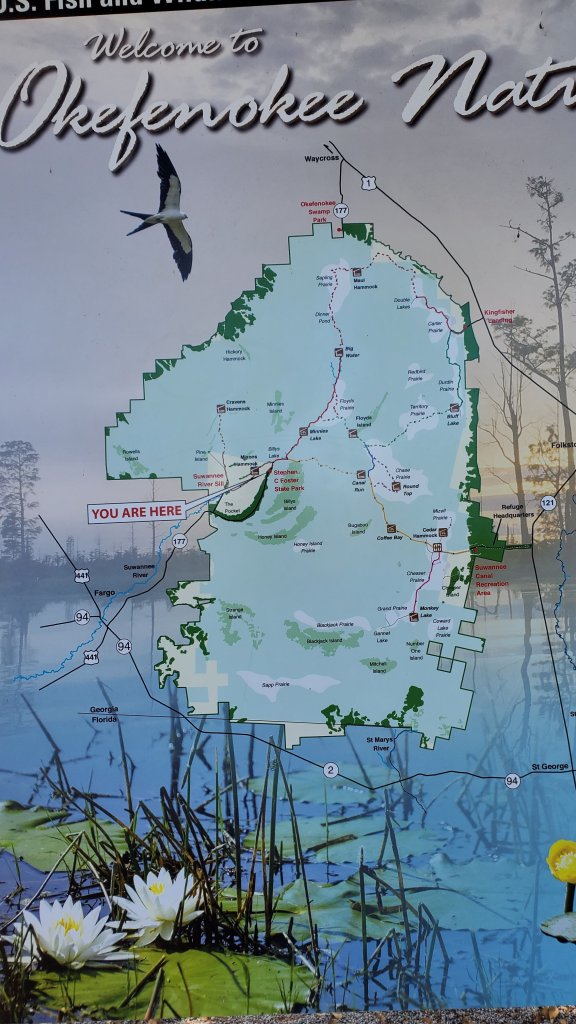
The Okefenokee Swamp is a shallow, 438,000-acre (177,000 ha), peat-filled wetland straddling the Georgia–Florida line. A majority of the swamp is protected by the Okefenokee National Wildlife Refuge and the Okefenokee Wilderness. The Okefenokee Swamp is considered to be one of the Seven Natural Wonders of Georgia. The Okefenokee is the largest “blackwater” swamp in North America.
The Okefenokee Swamp is home to many wading birds, including herons, egrets, ibises, cranes, and bitterns, though populations fluctuate with seasons and water levels. The swamp also hosts numerous woodpecker and songbird species. Okefenokee is famous for its amphibians and reptiles such as toads, frogs, turtles, lizards, snakes, and an abundance of American alligators, including the oldest known alligator named Okefenokee Joe who died in September 2021. It is also a critical habitat for the Florida black bear.
The earliest known inhabitants of the Okefenokee Swamp were the Timucua-speaking Oconi, who dwelt on the eastern side of the swamp. The Spanish friars built the mission of Santiago de Oconi nearby in order to convert them to Christianity.
Modern-day longtime residents of the Okefenokee Swamp, referred to as “Swampers”, also known as ‘crackers’, are of overwhelmingly English ancestry. Due to relative isolation, the inhabitants of the Okefenokee used Elizabethan phrases and syntax, preserved since the early colonial period when such speech was common in England, well into the 20th century.
The Suwannee Canal was dug across the swamp in the late 19th century in a failed attempt to drain the Okefenokee. On the west side of the swamp, at Billy’s Island, logging equipment and train tracks and other artifacts remain of a 1920s logging town of 600 residents.
The name “Okefenokee”, which means Trembling Earth, has appeared many times in American pop culture, including Walt Kelly‘s comic strip Pogo, where the characters made their home in the Okefenokee Swamp, and Scooby-Doo, in which Scooby-Dum comes from the Okefenokee as well.
We have arranged for a boat tour tomorrow.
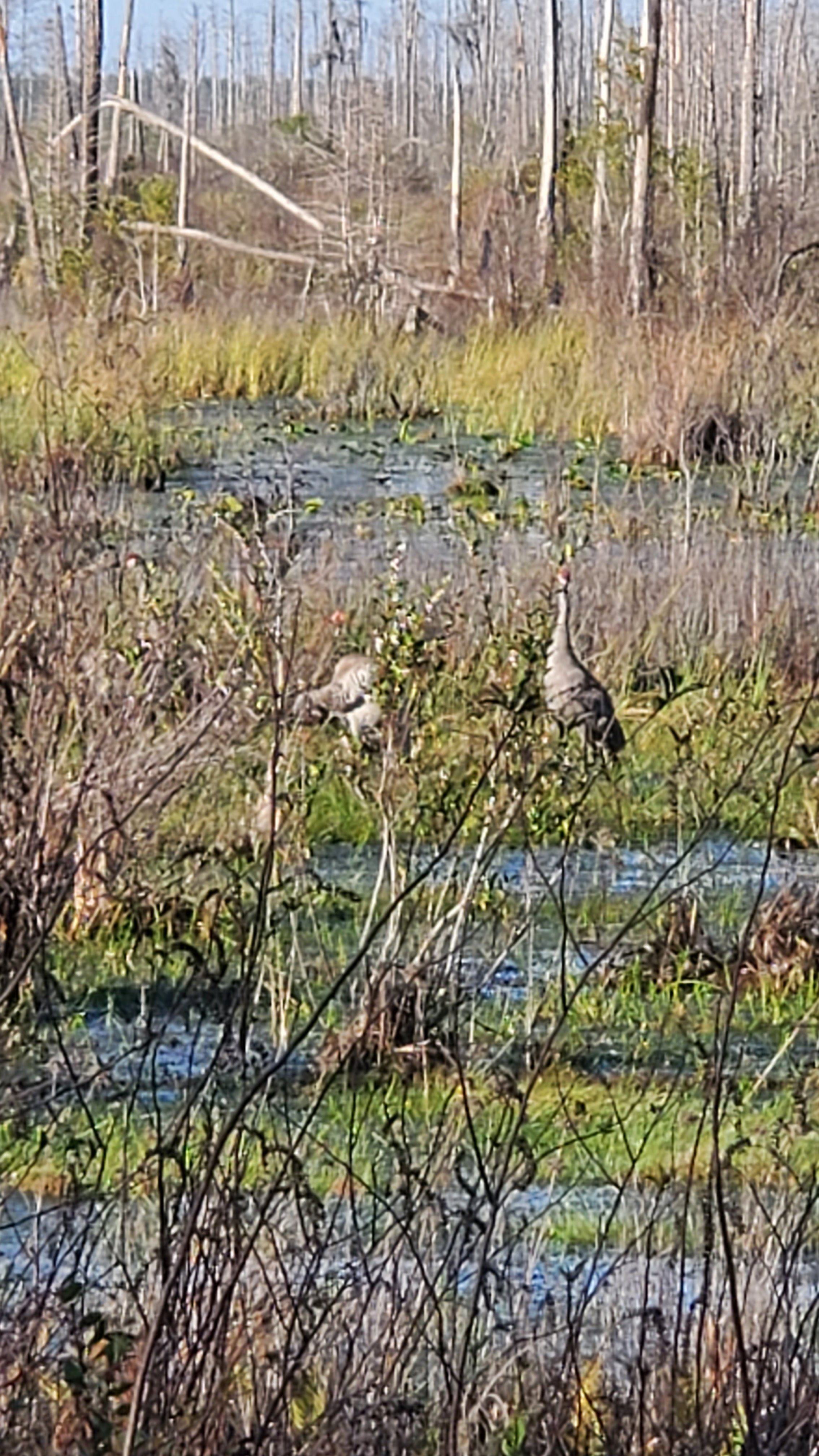
Birds spotted on our boardwalk walk tonight: white ibis, black and white ibis, snowy egrets, Sandhill cranes, bittern (we think), catbirds. We need to come back tomorrow with our long lenses. It was a pleasant surprise to see the Sandhills. We have photographed them many times in New Mexico.
It’s impressive to watch the ibises flying into the trees. We can hear the Sandhills communicating.
This is a designated Dark Sky area.. ie no ambient light at night. The stars are incredible!
 Louise and Brian McLeod Travel Blog
You must be logged in to post a comment.