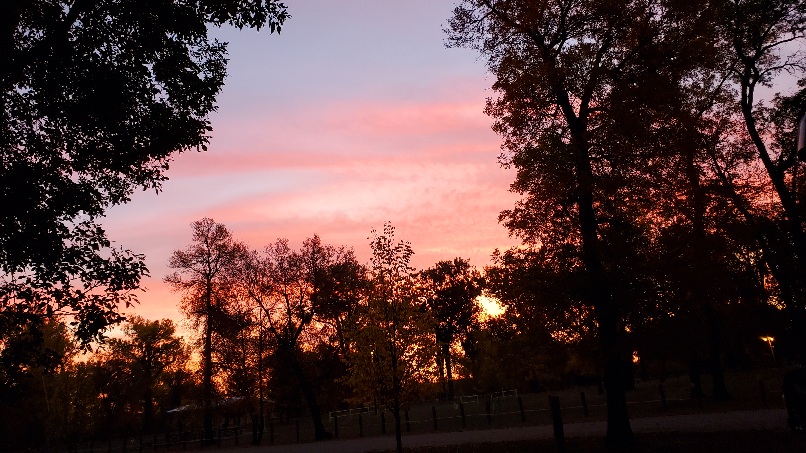
We slept last night with the back doors open. Unusually, the temperature didn’t drop with sunset as has been the case so far. Rain is predicted here for later in the day… badly needed.
As we traveled south east towards Bismarck we passed at least two electric power producing facilities. Coupled with the oil drilling we have seen, I looked up ND’s energy supply/resources. It is a net exporter of electrical energy. There is a small wind farm in the area we are driving through now.
- In 2020, North Dakota ranked second in the nation, after Texas, in both crude oil production and proved crude oil reserves.
- North Dakota is one of the top 10 ethanol-producing states, and its five ethanol plants with nearly 500 million gallons in production capacity provide about 3% of the nation’s fuel ethanol.
- North Dakota has almost 3% of U.S. natural gas reserves, and in 2020 the state accounted for 2.5% of U.S. natural gas gross withdrawals.
- North Dakota contains the world’s largest known deposit of lignite, and it is a top-10 coal producing state, accounting for 4% of U.S. total coal production.
- In 2020, coal-fired power plants provided 57% of North Dakota’s electricity generation, and wind energy accounted for 31%, which was the fifth-highest share from wind power for any state
We are now back to the Missouri River but we say goodbye to it soon.
The Missouri River
Just west of Bozeman, Montana—where the Gallatin, Jefferson, and Madison rivers converge at Three Forks—America’s longest river is born. The Missouri River will travel more than 2,300 miles before it joins the Mississippi in its namesake state at St. Louis, forming the world’s fourth longest river system as it rolls south to the Gulf of Mexico.
Considered the “Center of Life” for the Great Plains, the Missouri has served as the main artery for exploration, food, trade, and transportation for millions of people over thousands of years. About one-fourth of all the agricultural land in the U.S. is found in the Missouri River watershed, which provides more than one-third of the country’s wheat, flax, barley, and oats. Its significance to American culture past and future cannot be ignored.
Src:
Missouri River – American Rivers
https://www.americanrivers.org/river/missouri-river/
It did rain for a bit so we could finally use our raincoats – for all of 5 minutes. A thunderstorm came up while we were purchasing groceries but we were able to get back to the van before it descended for real. Other than the rain / grabble in the Tetons this is the first real rain since Indiana. There is a definite change in the weather.
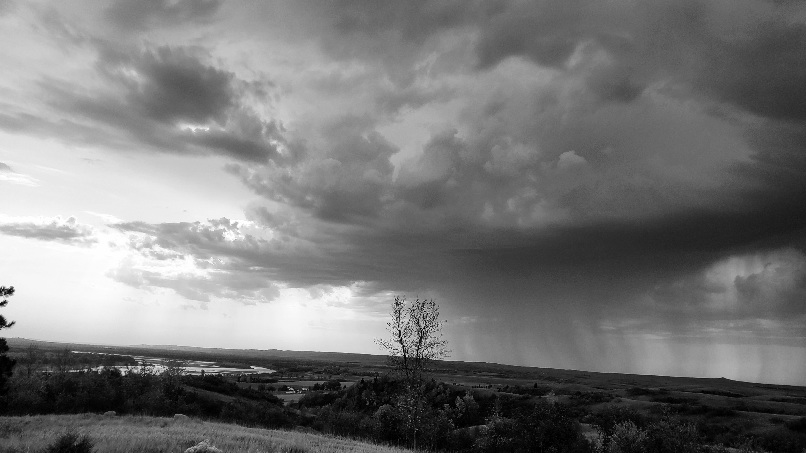
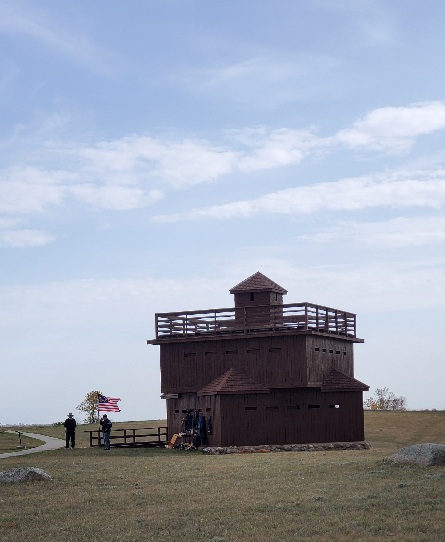
Fort Abraham Lincoln, Mandan, ND
Fort Abraham Lincoln State Park, established in 1907, is the oldest state park in ND.
Old Fort Abraham Lincoln and Fort McKeen have blockhouses, furnished barracks and commanding officer’s quarters (which were closed).
The Fort was built at the site of an abandoned Mandan Indian Village – On-a-Slant – which now has reconstructed earthlodges.
The Mandan are a Native American tribe of the Great Plains who have lived for centuries primarily in what is now North Dakota. They are enrolled in the Three Affiliated Tribes of the Fort Berthold Reservation (Arikari, Hidatsa, Mandan). About half of the Mandan still reside in the area of the reservation; the rest reside around the United States and in Canada
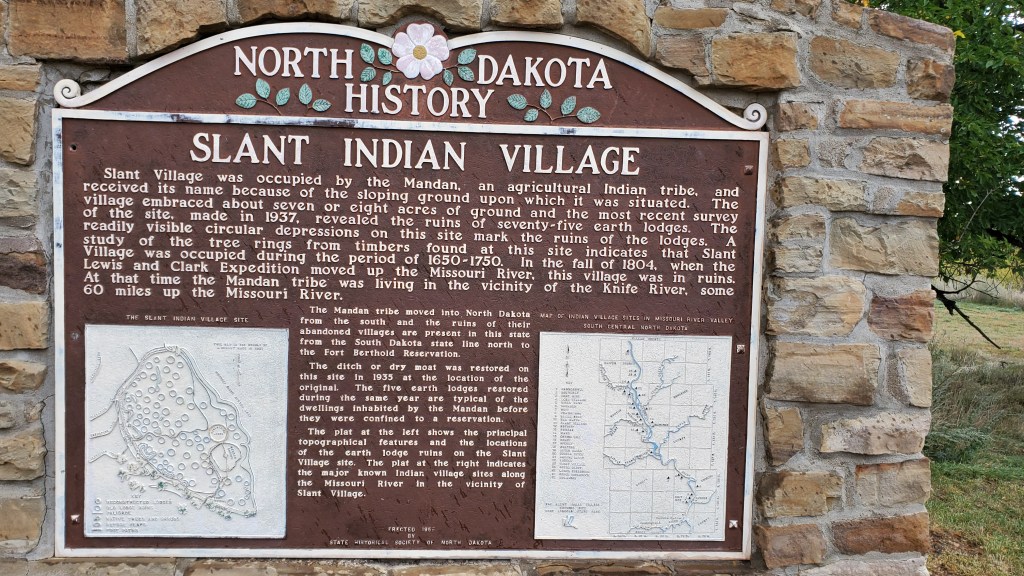
The Mandan historically lived along both banks of the Upper Missouri River and two of its tributaries—the Heart and Knife rivers— in present-day North and South Dakota. Speakers of Mandan, a Siouan language, they developed a settled, agrarian culture. They established permanent villages featuring large, round, earth lodges, some 40 feet (12 m) in diameter, surrounding a central plaza. Matrilineal families lived in the lodges. The Mandan were a great trading nation, trading especially their large corn surpluses with other tribes in exchange for bison meat and fat. Food was the primary item, but they also traded for horses, guns, and other trade goods
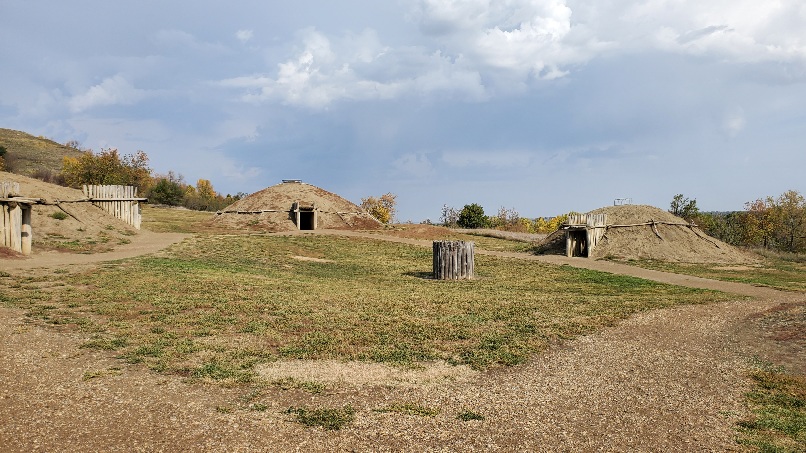
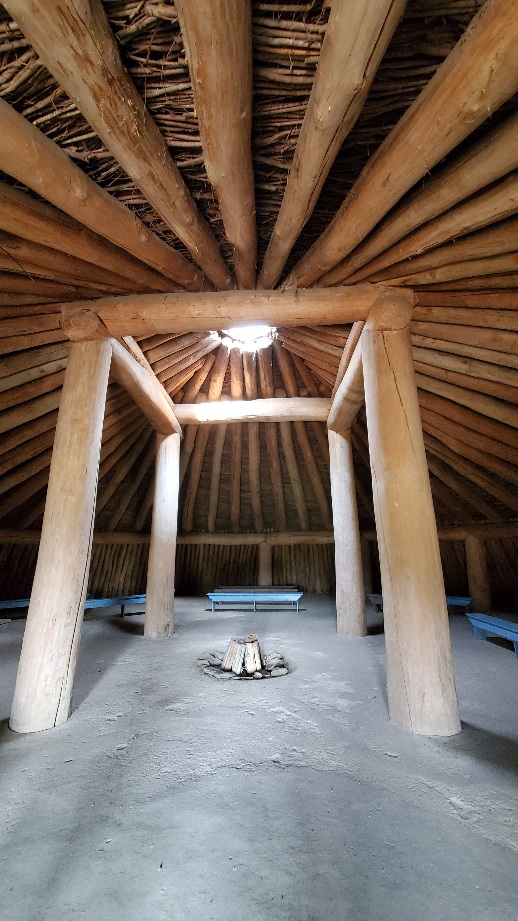
In the mid-20th century the Three Affiliated Tribes lost more than one-fourth of their reservation to the waters rising behind the Garrison Dam on the Missouri River. Tribal members, who had been farming in the fertile river bottomlands, were relocated to the arid Plains uplands, deeply depressing the reservation economy.
As we travel east through ND is definitely getting greener and more water. Crops are being taken off now.
The watercourses and ponds are filled with water birds. So far we have spotted ducks (kind?), grebes, Canada geese, cormorants, terns, an occasional egret and snow geese. When we stopped for lunch at a rest stop I94, the trees were full of noisy starlings. They must be migrating.
It is a balmy, slightly overcast 87F.
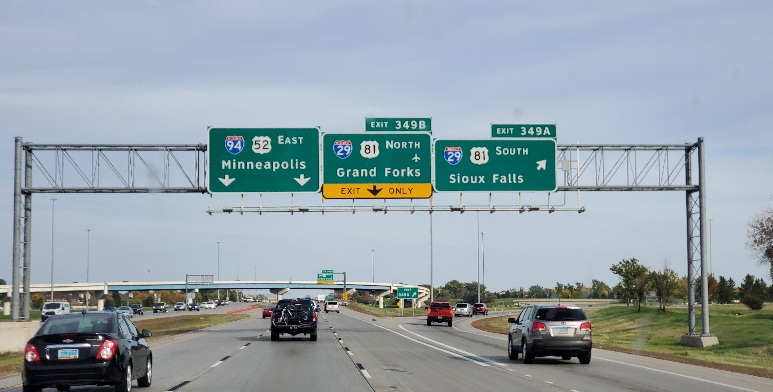
Traffic got significantly heavier after this interchange. We haven’t seen heavy traffic since Jackson, WY! We crossed the Red River into Minnesota at rush hour.
Comfortably settled into our campsite. It is the end of the season and the washrooms are closed up other than the vault toilets. Good thing we have our own.
The setting up routine is firmly established now and it only takes us less than 10 minutes from the time we roll in and about half an hour to pack up in the morning because we clean up first. A little longer if we need to ‘dump’.
Modern Nomads
What we have come to appreciate on this trip is the number of people who use RVs as their permanent homes and how many have itinerant jobs. Last night our camp host was a seasonal NPS ranger constantly changing national parks. Today our neighbor came over to introduce himself. He and his wife have been here for a month on a project they are doing together. Many are seasonal workers with particular skill sets that cause them to go where the jobs are. I have heard many stories of people who have lost their jobs and homes due to covid and an RV is their only choice. Over 1 000 000 Americans live in an RV. Truly the modern version of nomads.
 Louise and Brian McLeod Travel Blog
You must be logged in to post a comment.